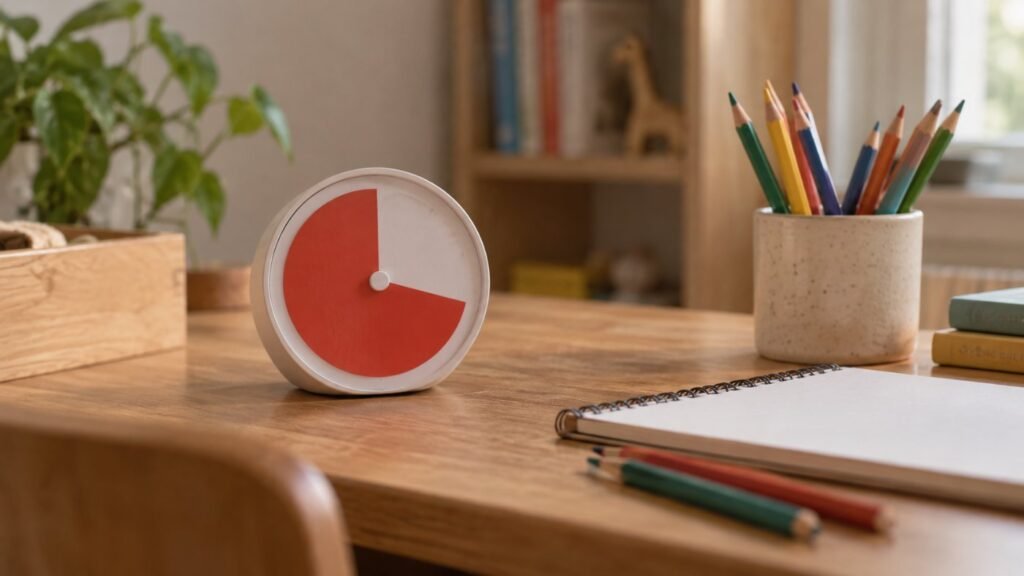
Quick answer: The best visual timers for kids with ADHD and autism show time as a shrinking color disk or changing light, run silently, and are simple to set. Our top pick for most families and classrooms is the Time Timer MOD, a small, silent 60-minute timer with a protective case. For whole-class use, choose the Time Timer Original 8″, and for a budget digital option, the Time Timer TWIST. Below we compare 5 visual timers, explain how we chose them, and share how to use them at school and at home.
Transparency note: This guide is independent. We are not paid by any brand, and links go to the official manufacturer pages. Our picks are based on published product features, accessibility for neurodivergent kids and common feedback from teachers and parents. Prices change often, so check the brand site before buying.
In this guide
Why Visual Timers Help Kids With ADHD and Autism
“Five more minutes” means very little to a child who cannot feel time passing. Many kids with ADHD experience time differently, and many autistic kids find transitions stressful when they cannot predict what comes next. A visual timer turns time into something a child can see: a red disk that shrinks, or a light that changes from green to yellow to red. The CDC lists classroom strategies such as clear routines and organizational supports as helpful for students with ADHD, and visual supports are recognized as an evidence-based practice for autistic learners. A good visual timer is one of the simplest tools to put those ideas into action, whether you are supporting executive function at home or planning executive function accommodations in an IEP.
Quick Picks: Best Visual Timers for Kids
| Category | Our pick | Why |
|---|---|---|
| Best overall | Time Timer MOD | Small, silent, durable case, easy to carry |
| Best for classrooms | Time Timer Original 8″ | Large disk, magnetic, visible to a group |
| Best for on the go | Time Timer Original 3″ | Pocket size with a protective flip cover |
| Best budget digital | Time Timer TWIST | Simple twist to set, magnetic, up to 90 minutes |
| Best traffic-light style | Learning Resources Time Tracker | Green, yellow and red lights for young kids |
How We Chose the Best Visual Timers for Kids
To pick the best visual timers for kids with ADHD and autism, we focused on what matters most for neurodivergent kids, based on our experience in special education:
- Visual clarity: Can a child understand the time left at a glance?
- Sound: Is it silent while running? Can the end alarm be turned off or softened?
- Ease of use: Can a child set it alone?
- Durability: Will it survive drops, backpacks and busy classrooms?
- Flexibility: Does it work for transitions, homework, routines and breaks?
Free resource
Executive Functioning Skills Toolkit
10 printable tools to help students plan, focus, start tasks and stay organized.
The 5 Best Visual Timers for Kids With ADHD and Autism
1. Time Timer MOD (Best Overall)
Best for: Individual students, homework, desks and backpacks
The Time Timer MOD is a compact 60-minute visual timer, about 3.6 inches square, with the classic red disk that shrinks as time passes. It runs silently with an optional alert, uses one AA battery and comes in a removable silicone case that protects it from drops. The Education Edition includes access to the Time Timer app.
| Pros | Cons |
|---|---|
|
|
See the Time Timer MOD on the official site
2. Time Timer Original 8″ (Best for Classrooms)
Best for: Small groups, classroom whiteboards, kitchens
The Original 8″ is the timer many special education teachers know best. Its large 8-inch face is easy to see across a table or small group. Strong magnets hold it on a whiteboard or fridge, fold-out legs let it stand on a desk, and it runs silently with an optional end alert. A slot on top holds dry-erase cards for First/Then routines.
| Pros | Cons |
|---|---|
|
|
See the Time Timer Original 8″ on the official site
3. Time Timer Original 3″ (Best for On the Go)
Best for: Travel, therapy sessions, appointments, older kids
The pocket-sized Original 3″ is about 3 inches across and fits in a pencil pouch or bag. A clear flip-top cover protects the disk and doubles as a stand. It counts down silently with an alert you can switch off, and includes a dry-erase activity card.
| Pros | Cons |
|---|---|
|
|
See the Time Timer Original 3″ on the official site
4. Time Timer TWIST (Best Budget Digital)
Best for: Older kids, teens, kitchen routines, longer tasks
The TWIST is a digital timer you set by turning the outer ring, from 1 second up to 90 minutes. It has a magnetic back, a kickstand, a pause button and an alert with off, low and high volume settings. The display flashes when time is up, which helps kids who miss sounds.
| Pros | Cons |
|---|---|
|
|
See the Time Timer TWIST on the official site
5. Learning Resources Time Tracker (Best Traffic-Light Style)
Best for: Young children, preschool, classroom work periods
The Time Tracker uses color-changing lights, green, yellow and red, plus an LCD countdown, so kids can see when time is almost up. Optional sound alerts can signal transitions. It runs on 4 AAA batteries or an AC adapter sold separately. Some reviewers mention battery life and sound issues, so test it before relying on it daily.
| Pros | Cons |
|---|---|
|
|
Best Visual Timers for Kids: Comparison Table
| Timer | Type | Max time | Sound | Best setting |
|---|---|---|---|---|
| Time Timer MOD | Color disk | 60 min | Silent, optional alert | Desk, home, backpack |
| Time Timer Original 8″ | Color disk | 60 min | Silent, optional alert | Classroom, small group |
| Time Timer Original 3″ | Color disk | 60 min | Silent, optional alert | Travel, therapy |
| Time Timer TWIST | Digital | 90 min | Adjustable volume | Teens, kitchen, homework |
| Learning Resources Time Tracker | Traffic lights | Adjustable | Optional sounds | Preschool, classroom |
How to Use a Visual Timer: In Class, At Home and in Daily Life
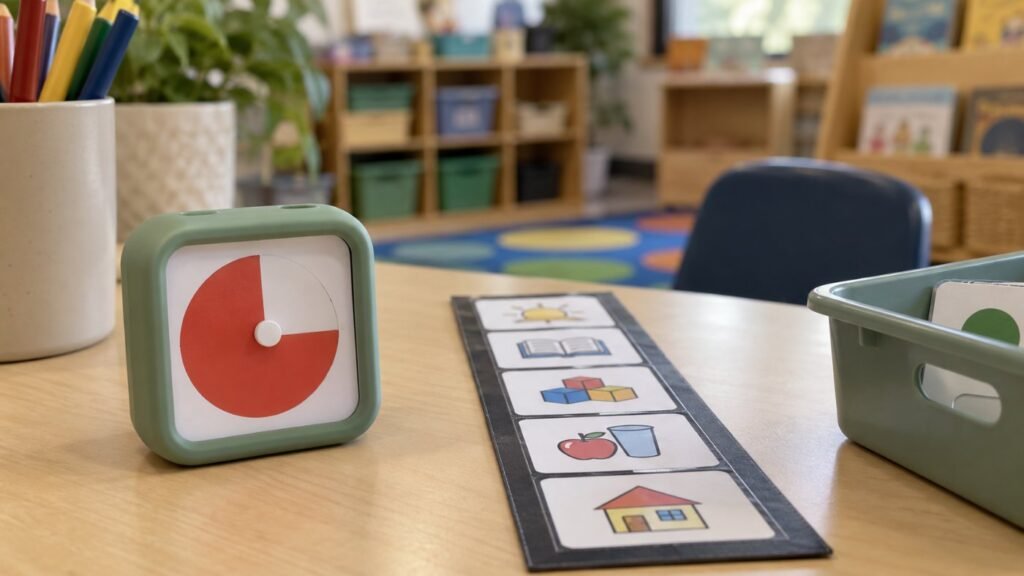
In class: Use the timer for work periods, centers and transitions. Pair it with a visual schedule and a calm corner so breaks have a clear start and end.
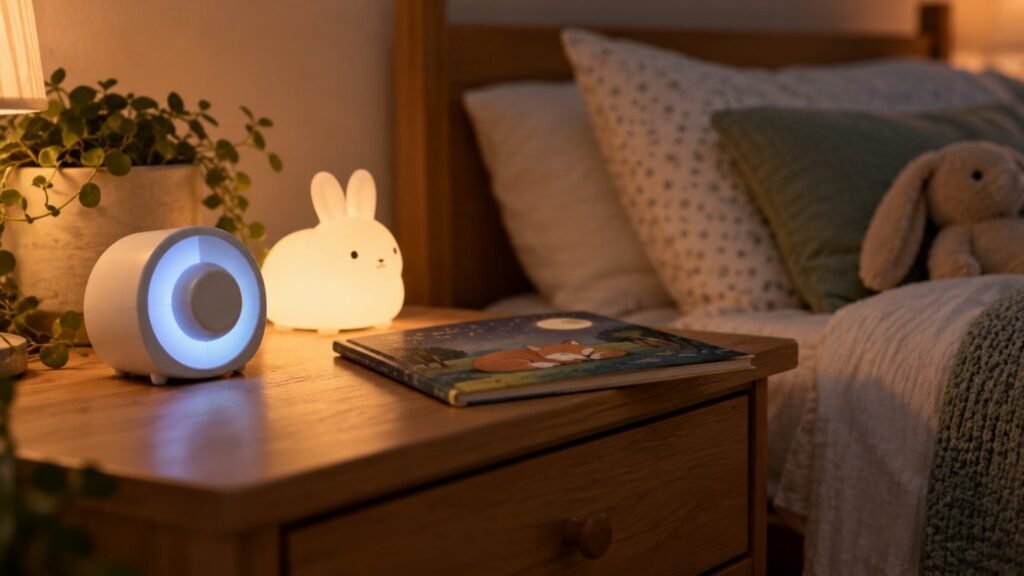
At home: Use it for homework chunks, screen time, getting dressed and bedtime routines. Let your child set it when possible to build ownership.
Even the best visual timers for kids work only when they are used consistently and introduced with care.
In daily life: Teens and adults can use visual timers for focus sessions, chores and self-care. Seeing time helps with time blindness at any age.
The BERMED Visual Timer Check
- B – Build trust: Start with short, fun timers so the timer is not linked only to stopping fun.
- E – Explain: Show what happens when the color disappears.
- R – Routine: Use the timer at the same moments every day.
- M – Model: Use a timer for your own tasks too.
- E – Easy alert: Choose silent or soft alerts for sensory-sensitive kids.
- D – Debrief: Praise effort and adjust the time if it was too long or too short.
| Do | Avoid |
|---|---|
| Give a warning before the timer ends | Using the timer only as a punishment |
| Let the child see and set the timer | Loud alarms for sound-sensitive kids |
| Pair it with a First/Then card | Changing the time without warning |
| Start with short intervals | Expecting instant success |
If transitions still lead to big reactions, read our guides to meltdown vs tantrum and autistic meltdowns in the classroom, and add a timer to the plan in your IEP goals.
Neuroaffirming tip: A timer is a support, not a stopwatch to rush a child. The goal is predictability and less anxiety, not faster compliance.
What is the best visual timer for a child with ADHD?
For most kids, a silent color-disk timer like the Time Timer MOD works best because it shows time shrinking at a glance and is small enough for a desk or backpack.
Are visual timers good for autistic kids?
Yes. Visual timers make time predictable, which can reduce anxiety around transitions. Choose a silent timer with a soft or optional alert for kids with sound sensitivity.
What age can kids start using a visual timer?
Many children can start around age 3 with short, simple intervals. Traffic-light timers are often easier for preschoolers, while teens may prefer digital timers.
Should the timer make a sound when time is up?
It depends on the child. Some kids need an alert, while others find sounds stressful. Timers with optional or adjustable alerts are the most flexible.
Can a visual timer be an IEP accommodation?
Yes. Visual timers are common accommodations for transitions, work periods and breaks, and they can support executive function and self-regulation goals.
5 Actions to Take This Week
- Choose one routine that often causes stress, such as homework or leaving the park.
- Pick a visual timer that fits the setting and your child’s sensory needs.
- Introduce it during a fun activity first.
- Use it at the same time every day for one week.
- Ask your child what helped and adjust the time or alert.
Sources