Table of Contents

The better someone masks, the less help they get. That is the painful paradox of masking: the more convincingly an autistic person appears “fine,” the more their exhaustion, sensory pain and support needs are overlooked, sometimes even by themselves.
This guide explains autistic masking clearly and without judgment: what it is, what it looks like, why people do it, what it costs and how to start unmasking safely. It is written for autistic and AuDHD teens and adults, late-diagnosed women, and the families, teachers and employers who want to make masking less necessary.
What Is Autistic Masking?
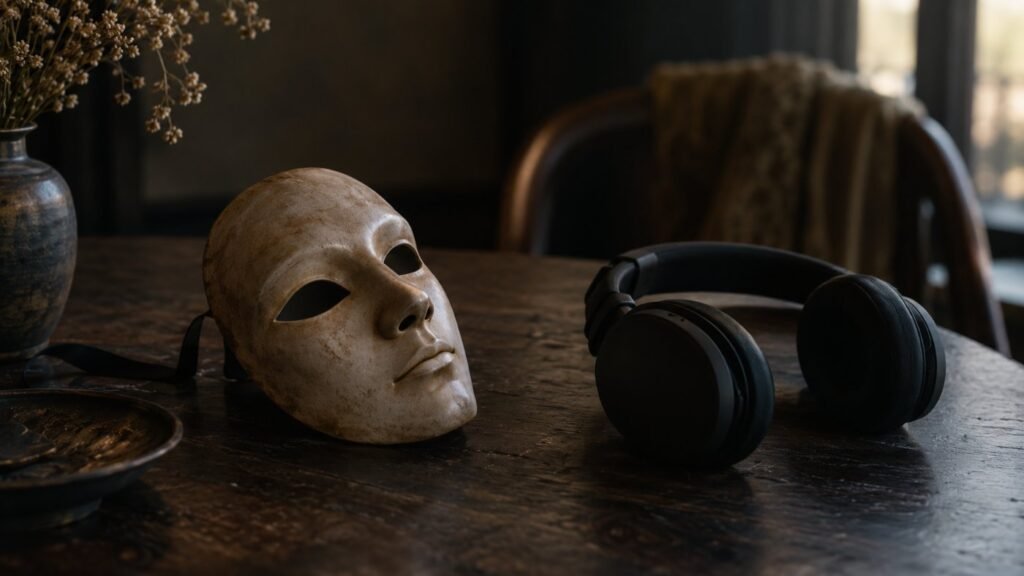
Masking (often called camouflaging in research) can be conscious, like rehearsing a phone call, or so automatic that people only notice it when they finally stop. Many autistic adults describe learning it in childhood after being teased, corrected or punished for natural autistic behavior.
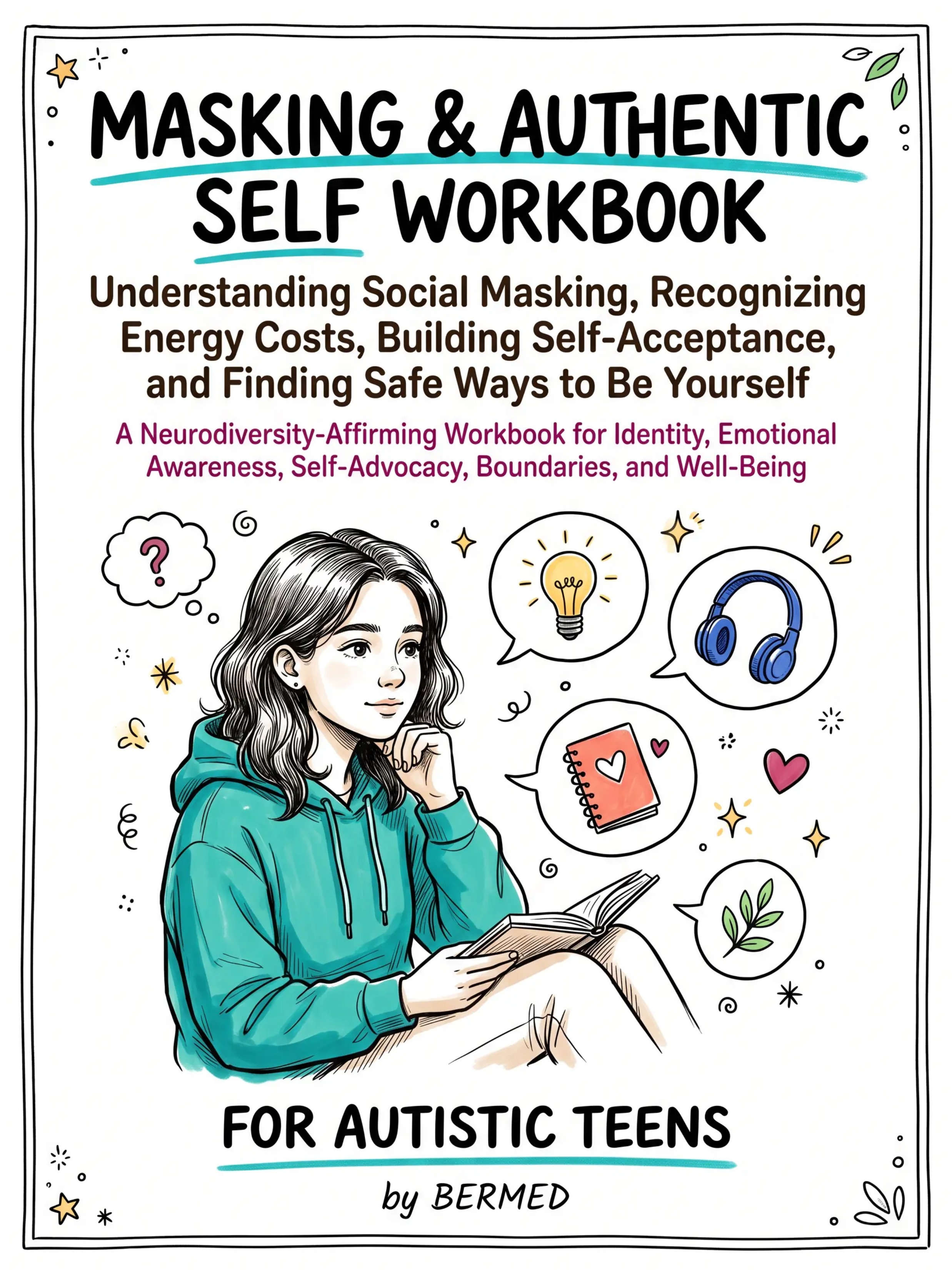
Free resource
Masking & Authentic Self Workbook for Autistic Teens
Gentle activities that help teens understand masking and build self-acceptance.
What Autistic Masking Looks Like
Scroll to see full table
| Type | Examples | Hidden effort |
|---|---|---|
| Social copying | Mirroring facial expressions, gestures and phrases | Constant monitoring of others |
| Scripting | Rehearsing conversations, jokes and small talk | Planning before and replaying after |
| Suppressing | Holding back stims, hiding interests, tolerating pain from noise or light | Ongoing sensory and physical strain |
| Forcing | Making eye contact, staying in loud places, joining group events | High energy cost every minute |
| Hiding needs | Not asking for breaks, help or accommodations | Needs pile up until collapse |
Why Autistic People Mask
- To fit in and connect, the main motivation reported by Hull and colleagues.
- To stay safe from bullying, exclusion or discrimination.
- To keep jobs and grades in environments not designed for autistic people.
- Because they learned to as children, before they knew they were autistic.
The Hidden Cost of Autistic Masking
Participants in the Hull study described exhaustion and threats to their sense of self as consequences of camouflaging. A 2025 co-twin control study in Molecular Autism linked heavier camouflaging to higher psychological and physiological stress. Autistic adults in Raymaker and colleagues’ (2020) research described masking as a contributor to autistic burnout, and the National Autistic Society notes that acceptance and embracing autistic identity help prevent it.
When the mask becomes too heavy, it can show up as shutdowns, meltdowns or long-term burnout. Our guides to autistic shutdown in adults and autistic burnout in adults explain these in depth.
Masking, Gender and Late Diagnosis
Research on gender differences in self-reported camouflaging has found that autistic women, on average, report more camouflaging than autistic men. This is one reason many girls are missed at school and diagnosed only in adulthood, often after a burnout. Our guides to autism in girls and AuDHD in adults explore this further.
The BERMED Safe Unmasking Path: 5 Steps
The Safe Unmasking Path
Five steps to reduce autistic masking at a pace that feels safe. There is no deadline and no single right way to unmask.
Notice the Mask
For one week, write down when you mask, what you do and how drained you feel afterward.
Find the Costliest Habit
Pick the behavior that costs the most energy, like forced eye contact or suppressing stims.
Start in Safe Spaces
Drop that one behavior at home or with one trusted person first.
Build Supports
Ask for adjustments that reduce the need to mask: written communication, quiet spaces, flexible breaks.
Reconnect With Yourself
Make time for stimming, special interests and people who accept you. These refill what masking drains.

How Others Can Help
Do This
- Accept stimming without comment
- Offer written options
- Skip forced eye contact rules
- Provide quiet spaces and breaks
- Ask what helps, and believe it
- Celebrate special interests
Avoid This
- “But you don’t look autistic”
- Praising someone for “seeming normal”
- Correcting harmless autistic behavior
- Judging needs by how well someone copes
- Forcing social events
- Sharing someone’s diagnosis without consent
In Class, At Home and in Life
IN CLASS
Students who mask all day often collapse at home. Teachers can reduce masking with movement breaks, permission to stim and non-verbal ways to ask for help. This also protects against autistic burnout in children.
AT HOME
Make home the place where nobody has to perform. A child or partner who can unmask at home recovers faster.
LIFE
Reducing autistic masking is not about rejecting every social skill. It is about choosing when to mask, instead of masking all the time by default.
Frequently Asked Questions About Autistic Masking
What is autistic masking?
Autistic masking, also called camouflaging, is hiding or compensating for autistic traits to fit in. It can include forcing eye contact, copying others, rehearsing conversations and suppressing stimming.
Why do autistic people mask?
Research found that autistic adults often mask to fit in and connect with others, and to avoid bullying, rejection or negative judgment. Many learn to mask in childhood without realizing it.
Is masking bad?
Masking can help people get through certain situations, but doing it constantly is costly. Research links it to exhaustion and stress, and autistic people describe it as a major contributor to autistic burnout.
Do women mask more than men?
Studies have found that autistic women, on average, report more camouflaging than autistic men, which may help explain why many autistic women are diagnosed later. But people of any gender can mask.
How do I start unmasking?
Start in safe places with safe people. Notice which masking behaviors cost the most energy, drop one at a time, allow stimming and breaks, and build supports at work or school that reduce the need to mask.
5 Actions You Can Take This Week
- Keep a masking log. Note when, how and the energy cost.
- Choose one habit to drop. Start with the most draining.
- Name one safe person. Unmask with them first.
- Ask for one adjustment. At work, school or home.
- Schedule joy. Time for stimming and special interests, guilt-free.
Sources
- Hull, L., Petrides, K. V., Allison, C., Smith, P., Baron-Cohen, S., Lai, M.-C., & Mandy, W. (2017). “Putting on My Best Normal”: Social Camouflaging in Adults with Autism Spectrum Conditions. Journal of Autism and Developmental Disorders. discovery.ucl.ac.uk
- Hull, L., Lai, M.-C., Baron-Cohen, S., Allison, C., Smith, P., Petrides, K. V., & Mandy, W. (2020). Gender differences in self-reported camouflaging in autistic and non-autistic adults. Autism. journals.sagepub.com
- The impact of camouflaging autistic traits on psychological and physiological stress: a co-twin control study (2025). Molecular Autism. pmc.ncbi.nlm.nih.gov
- Raymaker, D. M., et al. (2020). Defining Autistic Burnout. Autism in Adulthood. pdxscholar.library.pdx.edu
- National Autistic Society. Understanding autistic burnout. autism.org.uk