Table of Contents

A child in burnout often looks like a child who is “not trying.” That is exactly why burnout is missed. The child who held it together all year suddenly cannot get dressed, cannot face school and melts down over small things, and the adults around them push harder, which drains the little energy left.
This guide explains autistic burnout in children for parents: what it is, the signs to watch for, how it differs from depression and school refusal, and a gentle, practical recovery plan you can start at home this week.
What Is Autistic Burnout in Children?
A later study by Higgins and colleagues (2021) added that burnout brings withdrawal, executive function problems and a stronger expression of autistic traits, and that it is distinct from depression. Most of this research is with adults, but parents and clinicians increasingly recognize the same pattern in children, as discussed in a recent paper on recognizing autistic burnout in children beyond school avoidance.
Free resource
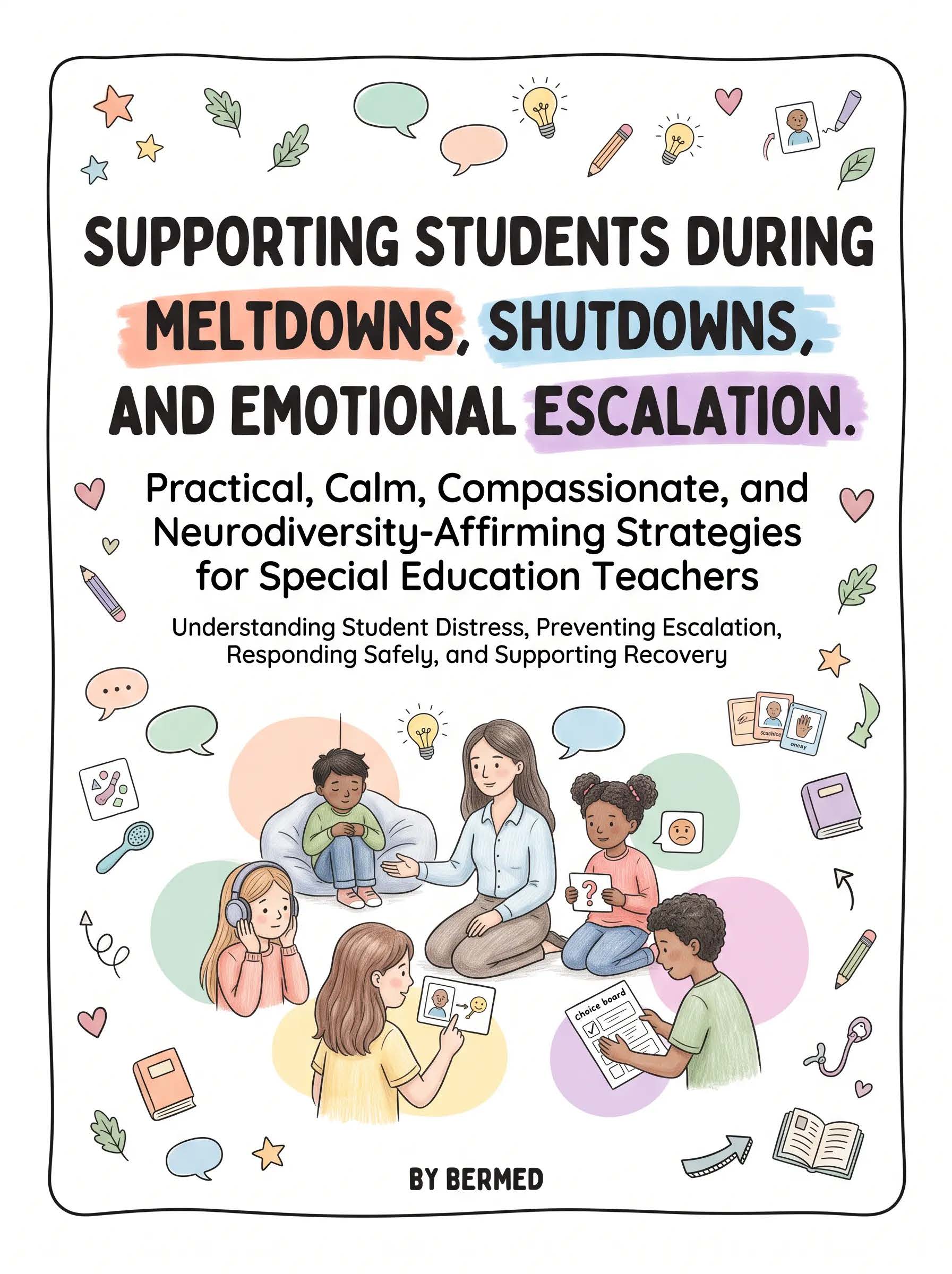
Supporting Students During Meltdowns and Shutdowns
A practical guide for calm, safe responses during emotional overload.
Signs of Autistic Burnout in Children Parents Often Miss
- Exhaustion that sleep does not fix.
- Losing skills: speech, self-care, schoolwork or routines that used to be easy.
- More meltdowns or shutdowns, often over small things.
- Lower tolerance for noise, clothing, food textures and change.
- Withdrawing from friends and activities they used to enjoy.
- School distress: stomachaches, refusing to go, or collapsing after school.
- More stimming or stronger autistic traits, as masking becomes impossible.
Many children, especially girls, mask so well at school that teachers see nothing while parents see the collapse at home. Our guide to autism in girls explains why.
Why Autistic Burnout Happens
- Masking: hiding stims, forcing eye contact and copying peers all day.
- Sensory overload: noisy classrooms, lunchrooms and buses.
- Too many demands without enough recovery time.
- Big transitions: a new school, puberty, a move, a new sibling.
- Unmet needs: no accommodations, or supports that stopped working.
The National Autistic Society notes that acceptance, adjustments at school and a lighter workload help prevent burnout.
Autistic Burnout vs Depression vs School Refusal
Scroll to see full table
| Feature | Autistic burnout | Depression | School refusal (anxiety) |
|---|---|---|---|
| Main driver | Chronic overload and masking | Low mood, hopelessness | Fear or anxiety about school |
| Interests | Special interests often still soothe | Loss of pleasure in most things | Usually enjoys home activities |
| Skills | Skill loss is common | Slowed, but not usually lost | Skills intact |
| What helps first | Rest and fewer demands | Professional treatment and support | Gradual, supported return |
These can overlap, and a child can have more than one. If you are unsure, ask your pediatrician or a psychologist who understands autism.
The BERMED Recharge Plan: 5 Steps
The Recharge Plan
Five steps for parents to support recovery from autistic burnout in children. Go slowly: recovery is measured in weeks, not days.
Drop the Extras
Pause non-essential demands: extra activities, chores, social events. Keep only what is truly necessary.
Protect Rest
Sleep, quiet time and unstructured downtime come first. Rest is treatment, not laziness.
Lower the Sensory Load
Dim lights, quieter spaces, comfortable clothes and safe foods reduce daily drain.
Allow Unmasking
Welcome stimming, special interests and scripts at home. These restore energy.
Rebuild Slowly
When energy returns, add one demand at a time and watch for warning signs.

If your child also shows strong anxiety around everyday demands, the approach in our guide to low-demand parenting can help during recovery.
Working With the School
Burnout often requires a temporary change at school. Ask for a meeting and bring specific examples. Supports to request include a reduced or flexible timetable, a quiet space, fewer transitions, reduced homework, and a staff member the child trusts. Our guide to IEP goals for autistic burnout shows how to put these into writing.

When to Get Professional Help
Contact your child’s doctor or a mental health professional if burnout lasts more than a few weeks, if your child stops eating or sleeping, talks about not wanting to be here, or if you are not sure whether it is burnout or depression. If your child is in immediate danger, call 988 in the US or your local emergency number.
In Class, At Home and in Life
IN CLASS
Teachers can lower demands quietly: fewer questions, written options, a calm space and permission to stim. Small changes reduce masking and save energy.
AT HOME
Home should be the place where your child does not have to perform. Learning the difference between meltdowns and tantrums helps you respond with calm instead of consequences.
LIFE
Children who learn early to notice their limits are better protected later. Many adults describe the same pattern, as in our guide to autistic shutdown in adults.
Frequently Asked Questions About Autistic Burnout in Children
What are the signs of autistic burnout in children?
Common signs include deep exhaustion, losing skills they had before, more meltdowns or shutdowns, lower tolerance for noise and change, withdrawing from activities they enjoyed, and refusing or being unable to go to school.
How long does autistic burnout last in children?
It varies. Some children recover in weeks, others need months. Recovery is usually faster when demands are lowered early and the child has real rest, not just a short break.
Is autistic burnout the same as depression?
No, although they can overlap. Research describes autistic burnout as exhaustion, loss of skills and lower tolerance to stimulation caused by chronic stress and too little support. A professional can help tell them apart, and a child can have both.
Is school refusal a sign of autistic burnout?
It can be. Many autistic children cannot go to school during burnout because the environment demands more than they have left. Treating it only as an attendance problem can make burnout worse.
How can parents help a child recover from autistic burnout?
Lower demands, protect sleep and downtime, reduce sensory load, allow special interests and stimming, work with the school on a reduced or flexible plan, and bring demands back slowly once energy returns.
5 Actions You Can Take This Week
- List current demands. Circle what can pause for a month.
- Protect one quiet hour a day. No questions, no tasks.
- Remove one sensory drain. Noise, clothing, lighting or food.
- Request a school meeting. Bring examples and ask for flexibility.
- Start an energy journal. Track good days, hard days and sleep.
Sources
- Raymaker, D. M., et al. (2020). Defining Autistic Burnout. Autism in Adulthood. pdxscholar.library.pdx.edu
- Higgins, J. M., Arnold, S. R. C., Weise, J., Pellicano, E., & Trollor, J. N. (2021). Defining autistic burnout through experts by lived experience. Autism. autismcrc.com.au
- Beyond School Avoidance: Recognising, Identifying, and Addressing Autistic Burnout in Children. pmc.ncbi.nlm.nih.gov
- National Autistic Society. Understanding autistic burnout. autism.org.uk