
Quick answer: A meltdown is not a tantrum, a choice, manipulation or a child “giving you a hard time.” It is an involuntary response to overwhelming stress, sensory input or emotion, when the nervous system has run out of ways to cope. During a meltdown, the goal is safety and calm, not consequences or lectures. Afterward, the child needs recovery time, and prevention starts with noticing the early signs before the breaking point.
In this guide
Few moments are harder for parents and teachers than a child’s meltdown. Screaming, crying, throwing, running or collapsing can look like defiance, and adults often feel pressure to “stop it” fast. But the way we understand a meltdown changes everything about how we respond. This guide uses 10 simple truths to explain what a meltdown is not, and what children really need instead.
What Is a Meltdown?
Key point: NHS Greater Glasgow and Clyde describes a meltdown as an intense response to an overwhelming situation that can temporarily cause a loss of control of behaviour, and says it should not be viewed as challenging behaviour; the best approach is often to allow space for the person to recover (NHS GGC).
Meltdowns are common in autistic children, and also happen in children with ADHD, anxiety, sensory processing differences and trauma histories. Guidance for parents from the Victorian Department of Health explains that meltdowns happen when children feel completely overwhelmed, and that adults can help by staying calm, giving space, saying less and waiting (Victoria Department of Health, Raising Children Network).
10 Truths About What a Meltdown Is Not
1. A meltdown is not choosing chaos
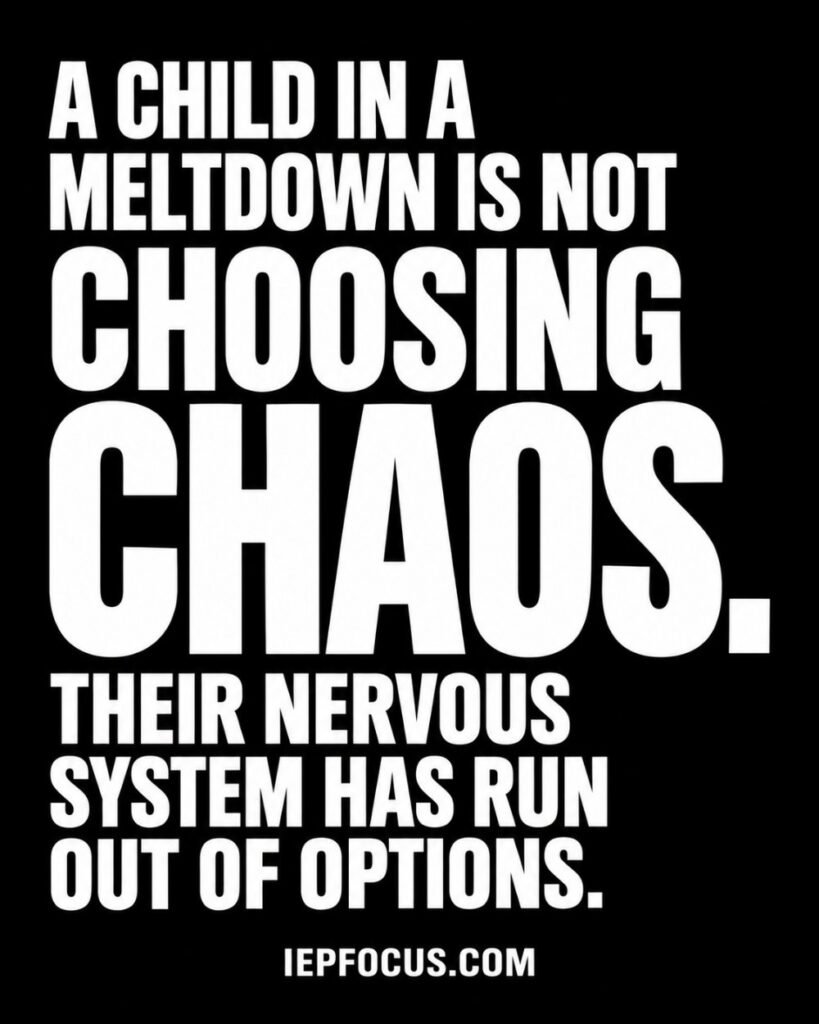
When a child melts down, it can look like they are deliberately creating chaos. In reality, their nervous system has run out of options. The thinking brain that plans, reasons and controls impulses goes offline under extreme stress, and the body switches into survival mode.
2. A meltdown is not as sudden as it looks
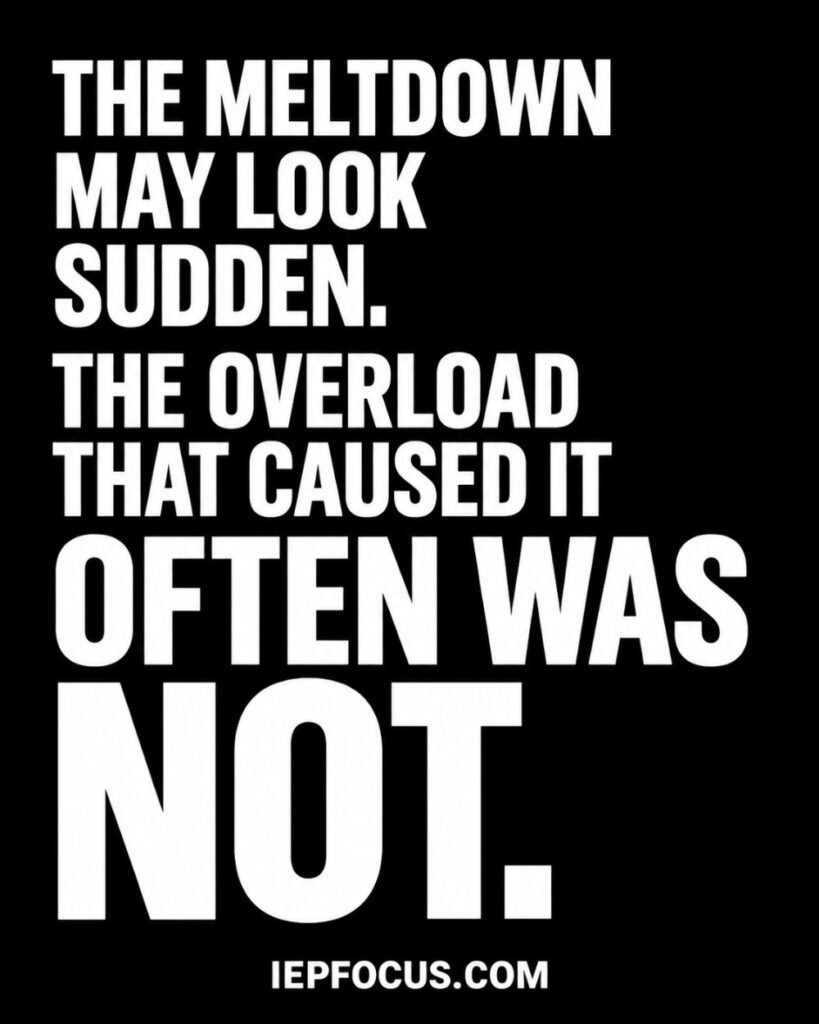
A meltdown may seem to come out of nowhere, but the overload behind it usually built up over hours: noise, transitions, hunger, demands, social effort, masking. The final trigger is often small. The stress that came before it was not.
3. A meltdown is not a child giving you a hard time
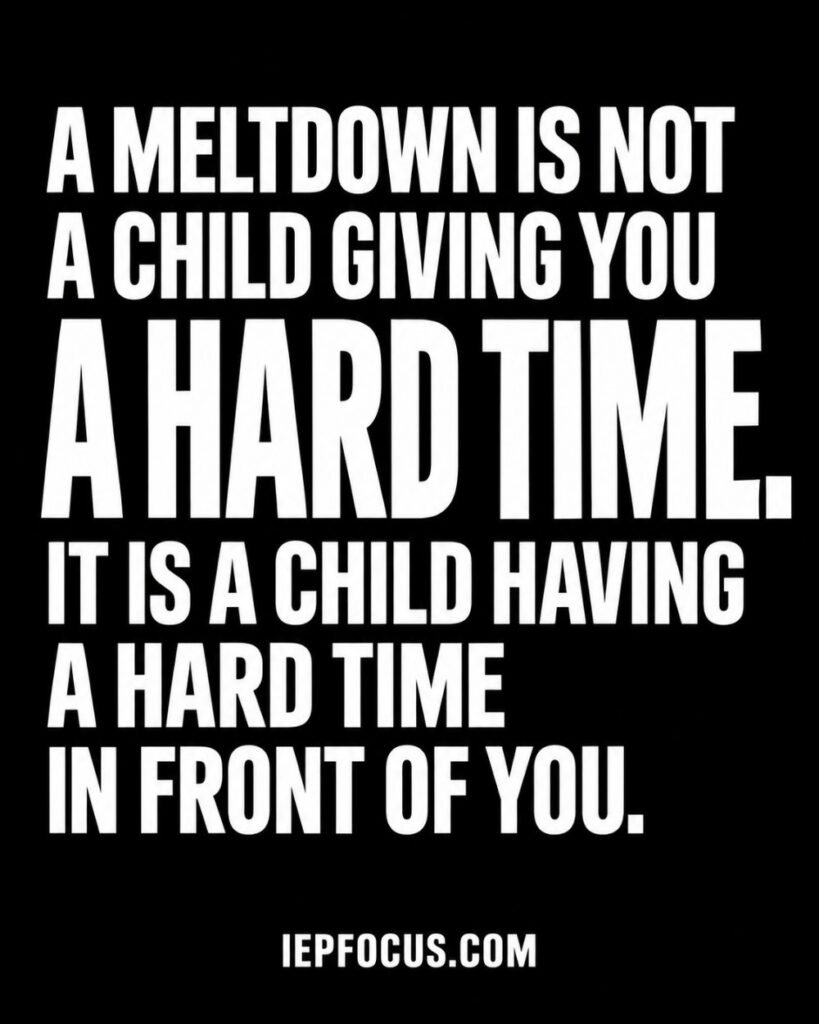
It is a child having a hard time in front of you. This shift in perspective helps adults respond with empathy instead of anger, which protects both the child and the relationship. See our guide behavior is communication.
4. A meltdown is not something consequences can stop
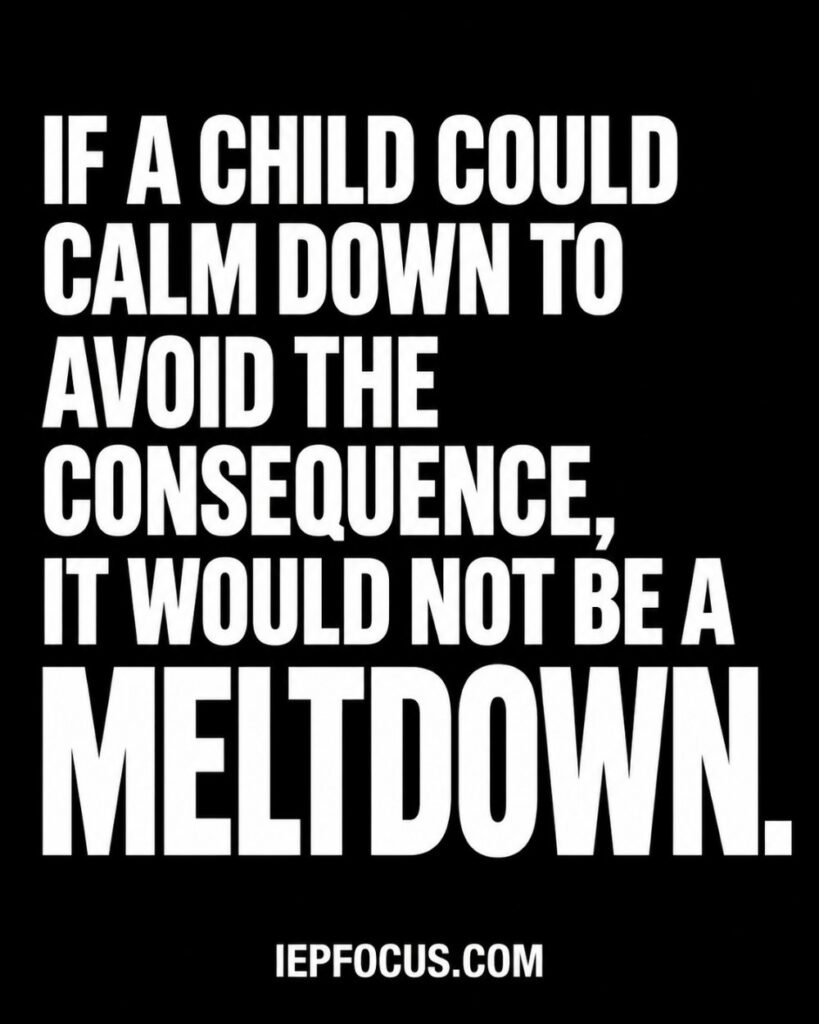
If a child could calm down to avoid the consequence, it would not be a meltdown. Threats, warnings or taking away privileges during a meltdown add stress to a brain that is already overwhelmed, and often make the episode longer.
5. A meltdown is not a teaching moment
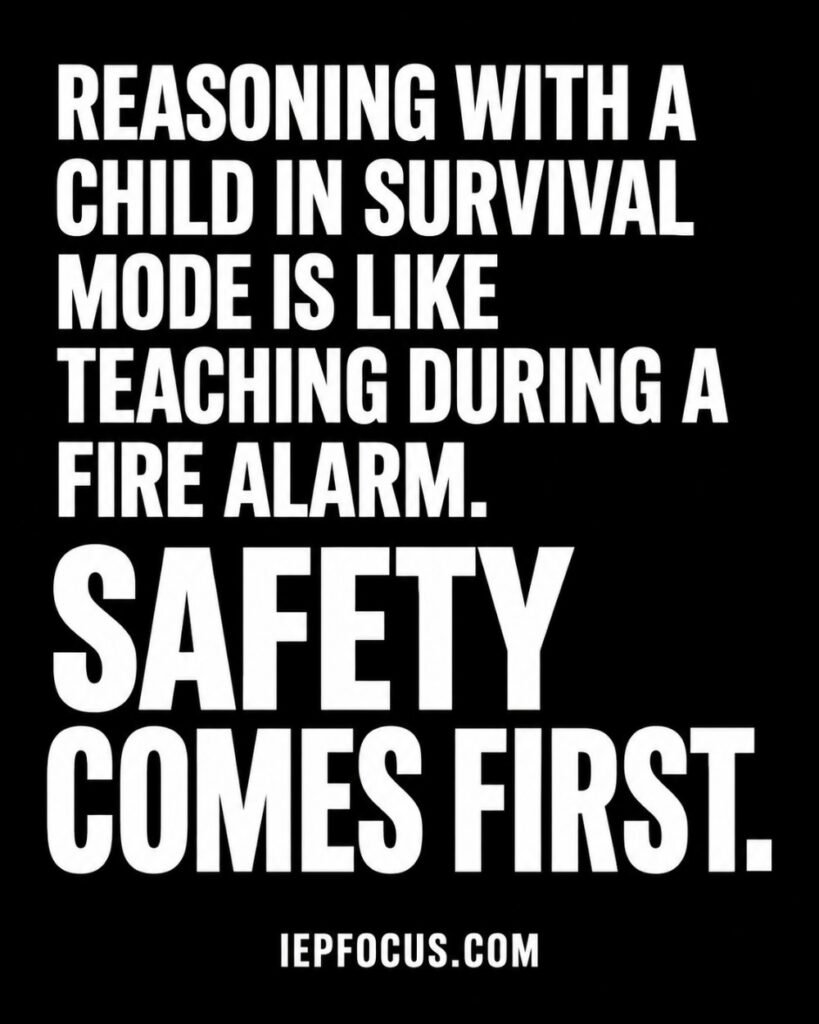
Reasoning with a child in survival mode is like teaching during a fire alarm. Safety comes first. Lessons, explanations and problem solving belong later, when the child is calm and connected again.
6. A meltdown plan does not start with consequences
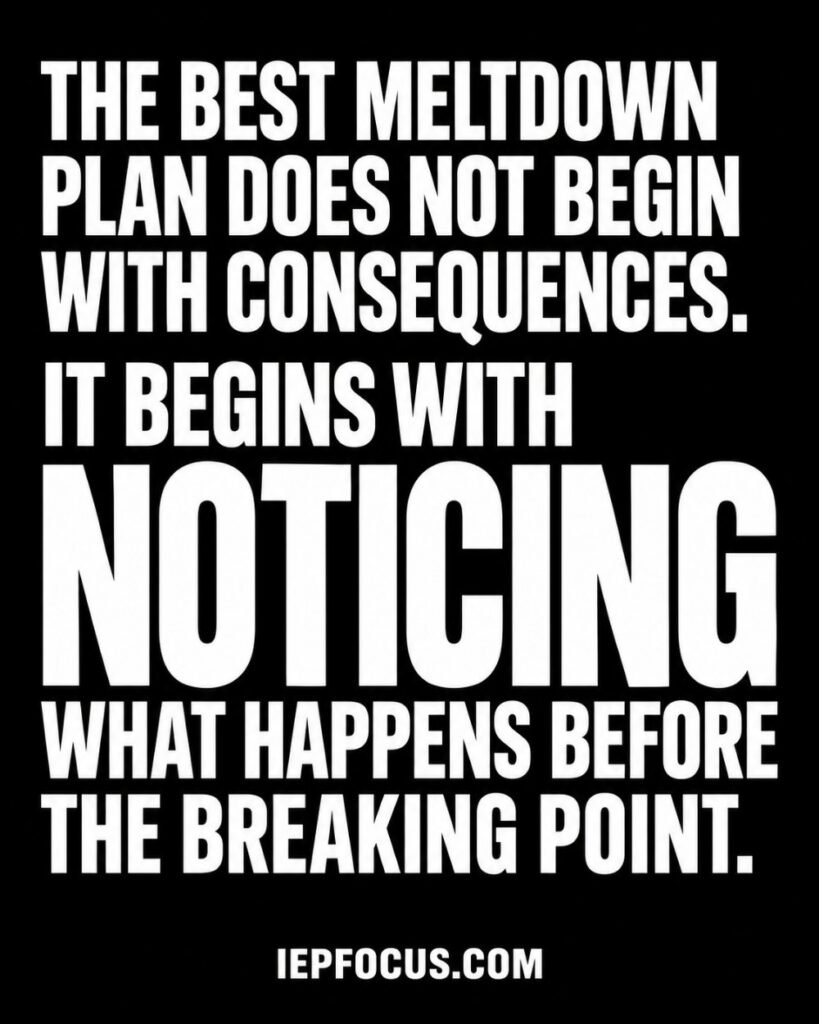
The best meltdown plan begins with noticing what happens before the breaking point: early signs such as pacing, covering ears, going quiet, repeating questions or rising irritability. Spotting these signs gives adults a chance to reduce demands and offer support before overload peaks.
7. A meltdown is not a power struggle to win
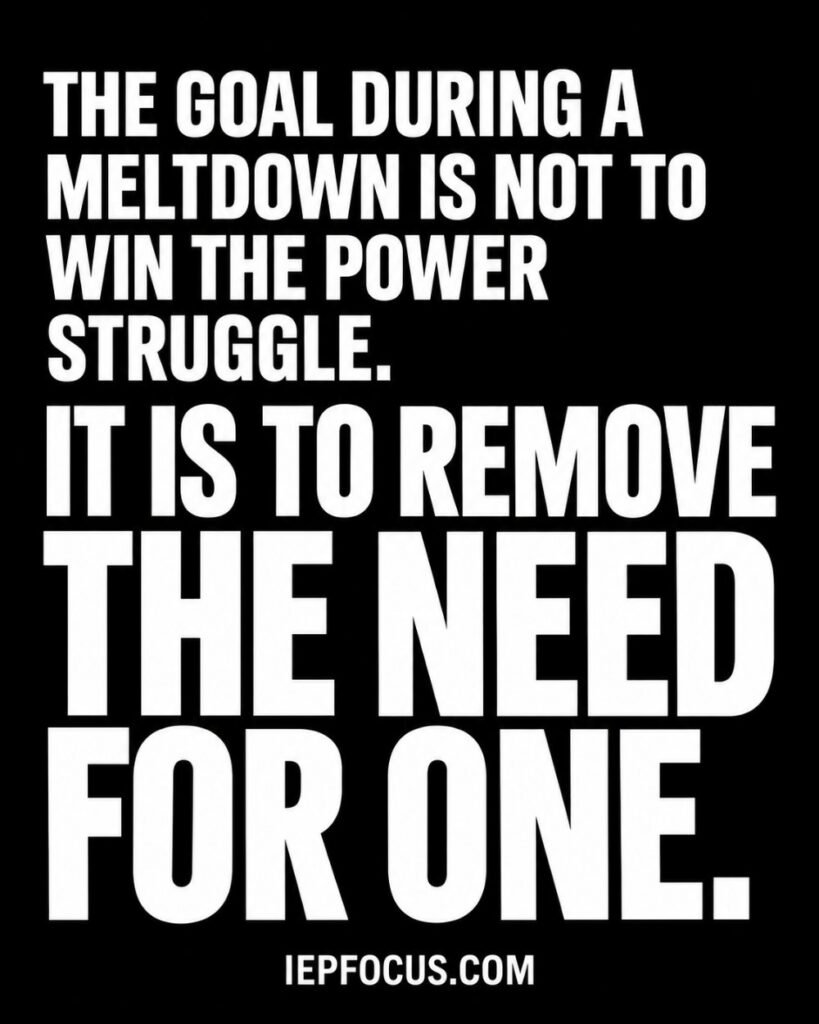
The goal during a meltdown is not to win. It is to remove the need for a power struggle at all. Lower your voice, reduce words, give space and keep everyone safe. Calm adults help children’s bodies calm down. See co-regulation strategies.
8. The end of a meltdown is not the end of the need
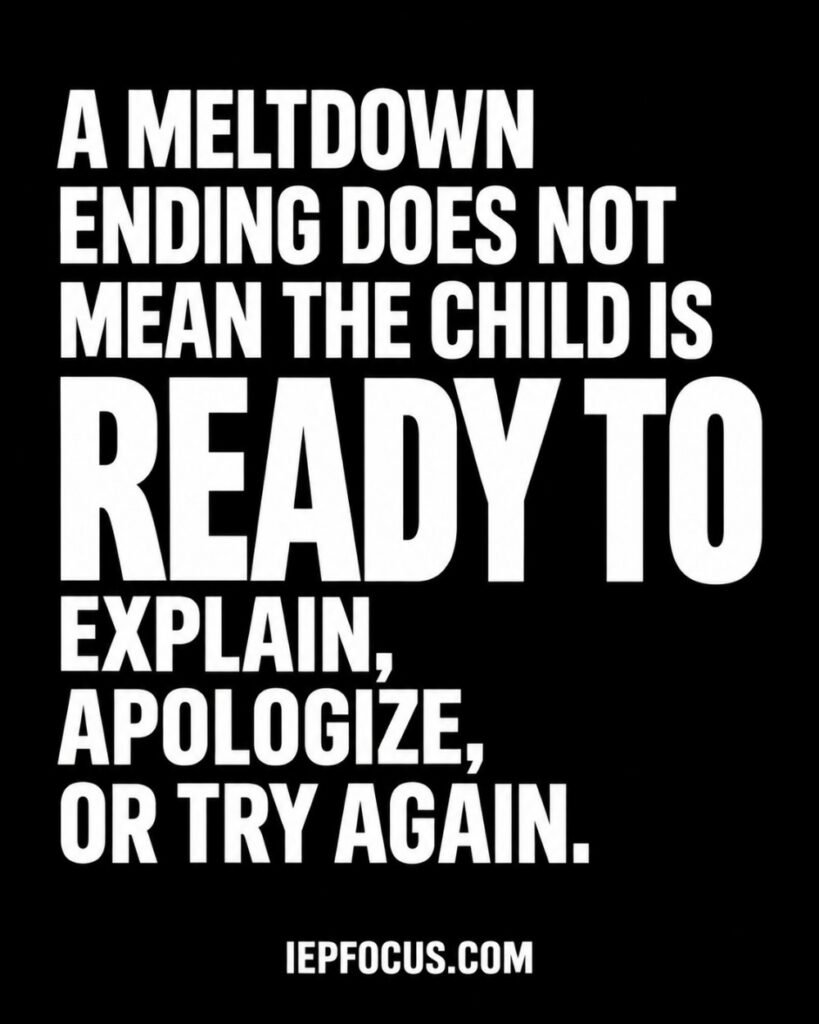
A meltdown ending does not mean the child is ready to explain, apologize or try again. Their body and brain are still recovering. Pushing for an immediate apology or a return to work can trigger a second episode.
9. Recovery is not optional
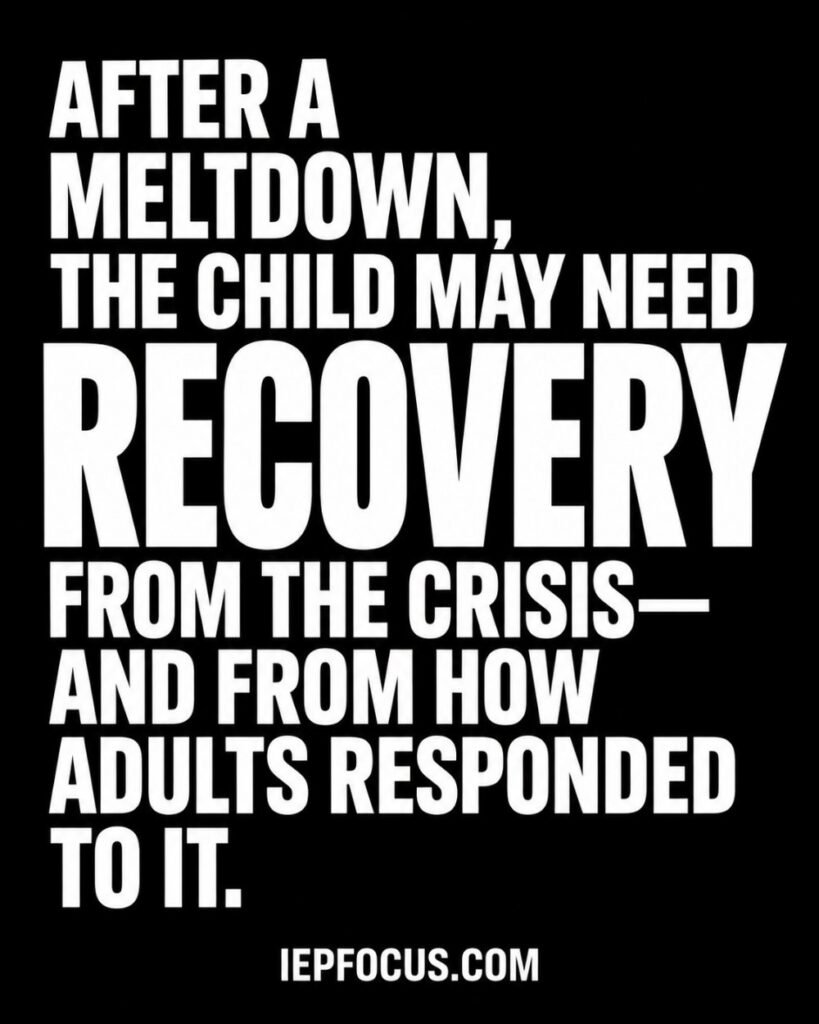
After a meltdown, the child may need recovery from the crisis and from how adults responded to it. Many children feel exhausted, embarrassed or ashamed. Quiet time, comfort, water, a snack and a gentle reconnection help them feel safe again.
10. A meltdown is not an overreaction
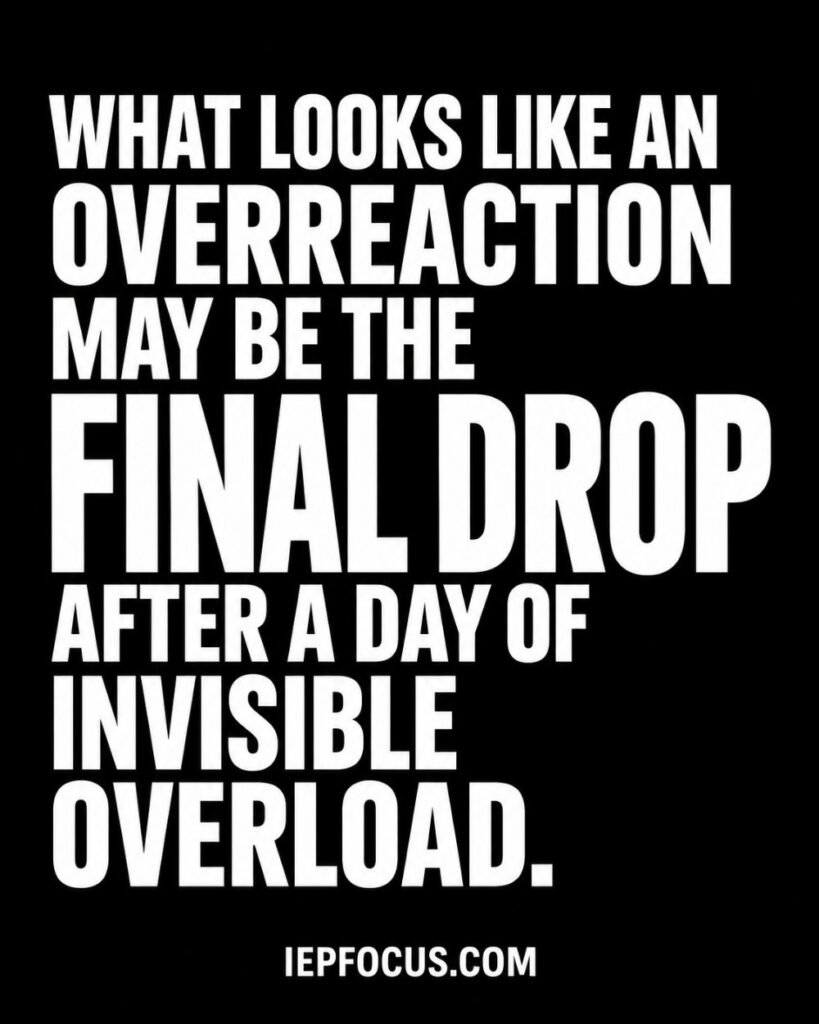
What looks like an overreaction may be the final drop after a day of invisible overload. A spilled drink or a changed plan can be the last straw for a child who has been holding it together for hours, often at school, where masking is common.
Meltdown vs Tantrum at a Glance
| Meltdown | Tantrum | |
|---|---|---|
| Cause | Overwhelm: sensory, emotional or cognitive overload | Frustration about a want or limit |
| Control | Involuntary; the child cannot simply stop | Some control; may stop when the goal is met |
| Audience | Happens with or without an audience | Often checks for adult reaction |
| Ends | When the nervous system calms, often slowly | Often when the need is met or ignored |
| Needs | Safety, calm, space, recovery | Calm, consistent limits and teaching |
For a full comparison, read meltdown vs tantrum.
What Helps During a Meltdown
Safe, calm, quiet, wait
What to say (and not say)
Say: “You’re safe. I’m here.” “I’ll wait with you.” “We can talk later.”
Avoid: “Stop it right now.” “If you don’t calm down…” “Why are you doing this?”
What Helps After a Meltdown
- Offer quiet time in a calm space. See calm corner in the classroom.
- Provide water, a snack or a comfort object.
- Reconnect warmly before discussing anything.
- Delay reflection until the child is truly calm, sometimes hours later.
- Look for patterns: what happened before?
- Avoid shaming, public retelling or punishment for the meltdown itself.
Prevention Checklist
| Early sign | Possible support |
|---|---|
| Covering ears, squinting | Reduce noise and light, offer headphones |
| Pacing, restlessness | Movement break, heavy work |
| Going quiet or withdrawn | Check in privately, lower demands |
| Repeating questions | Visual schedule, clear information about what is next |
| Irritability, short answers | Snack, water, short break, fewer words |
Sensory overload is a common driver. Read sensory overload in children.
Real-Life Example
Case story
Sami, 8, is autistic and melted down almost every afternoon at pick-up. His teacher used to send notes home about “bad behavior.” After tracking the day, the team noticed a pattern: a noisy cafeteria, a loud assembly and a long writing task, all before 2 p.m. They added headphones at lunch, a quiet break after recess and a visual schedule. At home, his parents offered a snack and quiet time before any questions. Afternoon meltdowns dropped from five a week to about one.
Related: Read our guides on autistic meltdowns in the classroom and AuDHD meltdowns.
What a Meltdown Is Not: FAQ
Is a meltdown a tantrum?
No. A meltdown is an involuntary response to overwhelm, while a tantrum is usually linked to frustration about a want or limit.
Should I give consequences for a meltdown?
Consequences do not stop a meltdown. Focus on safety during the episode and on prevention afterward.
Can a child control a meltdown?
Not once it has started. Over time, children can learn to notice early signs and ask for help.
How long do meltdowns last?
It varies, from a few minutes to much longer, and recovery can take hours.
Do only autistic children have meltdowns?
No. They are common in autism but also happen with ADHD, anxiety, sensory differences and trauma.
In short: A meltdown is not a choice, a tantrum or a battle to win. It is a nervous system that has run out of options. Respond with safety and calm, allow recovery and prevent future meltdowns by noticing what happens before the breaking point. Explore more in our Conditions section.
Was this article helpful?
Tap a star to rate
Sources
- NHS Greater Glasgow and Clyde. Autistic Meltdowns and Shutdowns
- Victoria Department of Health and Raising Children Network. Meltdowns: Autistic Children and Teenagers
- Harvard Center on the Developing Child. InBrief: Executive Function
This article is educational and does not replace professional advice.

