Table of Contents

Many children who seem to explode “out of nowhere” are not ignoring warning signs. They simply cannot feel them yet. Their stomach was tight, their heart was racing and their hands were hot, but those signals never reached the part of the brain that says, “I’m getting upset.”
This guide explains interoception and emotional regulation for parents: what interoception is, why it matters so much for autistic, ADHD and anxious children, and simple, playful activities to help your child read their body and calm down earlier.
What Is Interoception?
We often learn about five senses, plus balance and body position. Interoception is the less famous eighth sense, and it shapes almost everything: when we eat, when we rest, and how we recognize our own emotions.
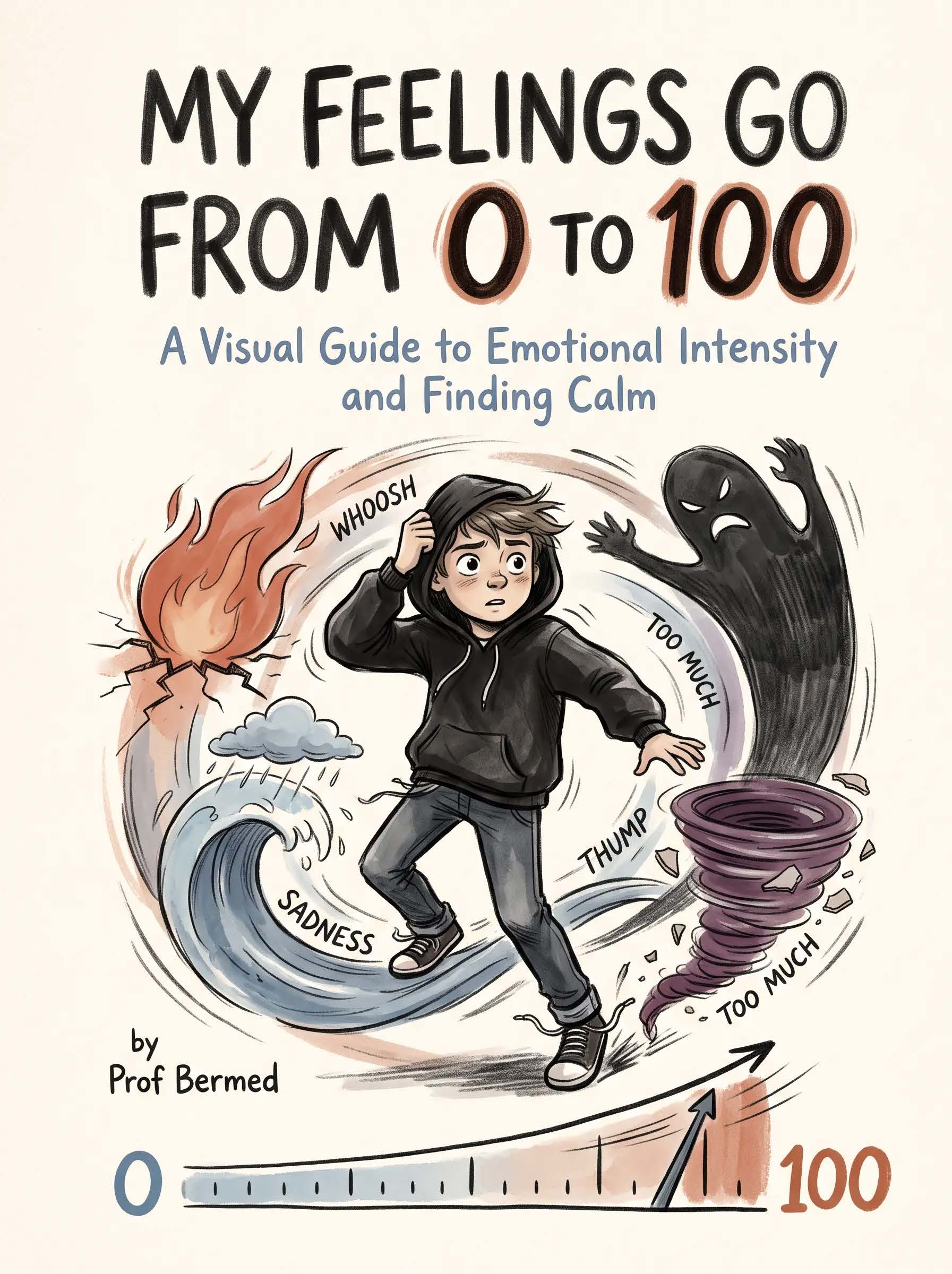
Free resource
My Feelings Go From 0 to 100
A visual comic guide to big feelings and calming down.
How Interoception Shapes Emotional Regulation
Feelings start in the body. Anger may begin as hot cheeks and clenched fists. Anxiety may begin as a fluttery stomach and fast breathing. A child who notices these signals early has time to use a strategy. A child who does not may only notice the feeling when it is already too big to manage.
Research suggests interoceptive differences are common in autism, as summarized in a systematic review and meta-analysis of interoceptive differences in autism. Programs that teach body awareness are also being studied, including an interoception-based program for emotion regulation in autistic children.
Signs Your Child May Struggle With Interoception
Scroll to see full table
| Body signal | What you might see | What may help |
|---|---|---|
| Hunger and thirst | Forgets to eat or drink, then melts down | Scheduled snacks and water breaks |
| Bathroom | Accidents or rushing at the last second | Timed bathroom reminders |
| Temperature | Wears a coat in summer or shorts in winter | Check the weather together |
| Pain | Barely reacts to injuries, or overreacts to small ones | Use a simple pain scale |
| Emotions | Goes from calm to meltdown with no warning | Daily body and feelings check-ins |
Some children are also very sensitive to outside input like noise or textures. Our free sensory needs guide for kids helps you map both inside and outside sensory needs.
The BERMED Body Signal Ladder: 4 Steps
The Body Signal Ladder
Four steps to build interoception and emotional regulation, climbed one rung at a time over several weeks.
Notice
Help your child pay attention to one body part at a time: “What do your hands feel like right now?”
Name
Give the signal a word: warm, tight, fast, heavy, buzzy, empty.
Connect
Link the signal to a feeling: “When your hands are tight and hot, that might be frustration.”
Act
Choose a helpful action: drink water, move, breathe slowly, ask for a break.
Interoception Activities to Try at Home
- Heartbeat detective: jump for 30 seconds, then place a hand on the chest. Fast or slow? Rest and check again.
- Squeeze and release: squeeze fists tight for five seconds, then let go. Which feels calmer?
- Temperature test: hold something cold, then something warm. Describe the difference.
- Breathing balloon: breathe in slowly like filling a balloon, then out like letting it go.
- Snack check: before eating, rate hunger on a scale of 1 to 5. Check again after.

What to Say to Build Body Awareness
Do This
- “I notice my heart is beating fast.”
- “What does your tummy feel like?”
- “Your fists look tight. Are you frustrated?”
- Model your own body signals
- Keep check-ins short and playful
- Accept “I don’t know” as an answer
Avoid This
- “You can’t be hungry, you just ate.”
- “That doesn’t hurt.”
- Check-ins during a meltdown
- Long lists of questions
- Correcting how they describe a feeling
- Making it feel like a test

When to Ask for Help
Talk to your pediatrician or an occupational therapist if body signals are causing frequent meltdowns, toileting difficulties, eating problems or safety concerns, such as not noticing pain. If you are wondering whether your child may be autistic, our guide to the signs of autism in children is a good starting point.
In Class, At Home and in Life
IN CLASS
Teachers can add quick body check-ins after recess and before tests. Interoception goals and accommodations, such as water and bathroom access, can be written into an IEP.
AT HOME
When big feelings do happen, respond to the body first. Our guide to meltdown vs tantrum explains how to tell when your child has lost control and needs calm, not consequences.
LIFE
Adults who can read their body signals are better at preventing exhaustion and overwhelm. Children who learn this early carry it with them, which can help protect against autistic burnout later.
Frequently Asked Questions About Interoception and Emotional Regulation
What is interoception in simple terms?
Interoception is the sense that tells us what is happening inside our body: hunger, thirst, needing the bathroom, a racing heart, tight muscles or feeling hot. It is often called the eighth sense.
How is interoception linked to emotional regulation?
Emotions show up in the body first, through signals like a fast heartbeat or a tight stomach. Children who notice these signals early can recognize a feeling and use a calming strategy before it becomes overwhelming.
What are signs of interoception difficulties in children?
Not noticing hunger or thirst, frequent toileting accidents beyond the expected age, not realizing they are hot, cold or in pain, and going from calm to very upset with no warning can all be signs.
Are interoception differences common in autism?
Research suggests interoceptive differences are common in autistic people, although they vary from person to person. ADHD, anxiety and trauma can also affect how children notice body signals.
How can I help my child improve interoception?
Use short daily body check-ins, name body signals out loud, try simple activities that change heart rate or muscle tension, and connect each signal to a feeling and a helpful action. An occupational therapist can offer a structured program.
5 Actions You Can Take This Week
- Start a daily body check-in. Two minutes after school or before bed.
- Pick five body words. Warm, tight, fast, heavy, empty.
- Try heartbeat detective. Jump, check, rest, check again.
- Model your own signals. Say them out loud during the day.
- Schedule snacks and water. Do not rely on your child noticing.
Sources
- Characterizing Interoceptive Differences in Autism: A Systematic Review and Meta-analysis of Case-control Studies. pmc.ncbi.nlm.nih.gov
- Impact of an Interoception-Based Program on Emotion Regulation in Autistic Children. pubmed.ncbi.nlm.nih.gov
- Interoception and its application to paediatric occupational therapy: A scoping review. pmc.ncbi.nlm.nih.gov
- National Autistic Society. Autism and sensory processing. autism.org.uk