
Quick answer: Sensory processing IEP goals help a student notice sensory needs, use sensory tools and strategies, request changes to the environment and stay available for learning. The goal is not to make a student tolerate pain or overload. It is to give them tools and supports so their nervous system can settle. Below are 42 SMART sensory processing IEP goals organized by skill, with present level examples, data ideas and accommodations.
In this goal bank
Buzzing lights, a scratchy shirt, the noise of a cafeteria or the need to move constantly can make it hard to learn. The Child Mind Institute explains that kids with sensory processing challenges may be over-responsive or under-responsive to sensory input, and that these differences can affect attention, behavior and participation at school. Sensory processing IEP goals help a student understand their own sensory profile, use tools that work and ask for what they need. For background, read our sensory needs guide for kids and visit our complete IEP goal bank for other areas.
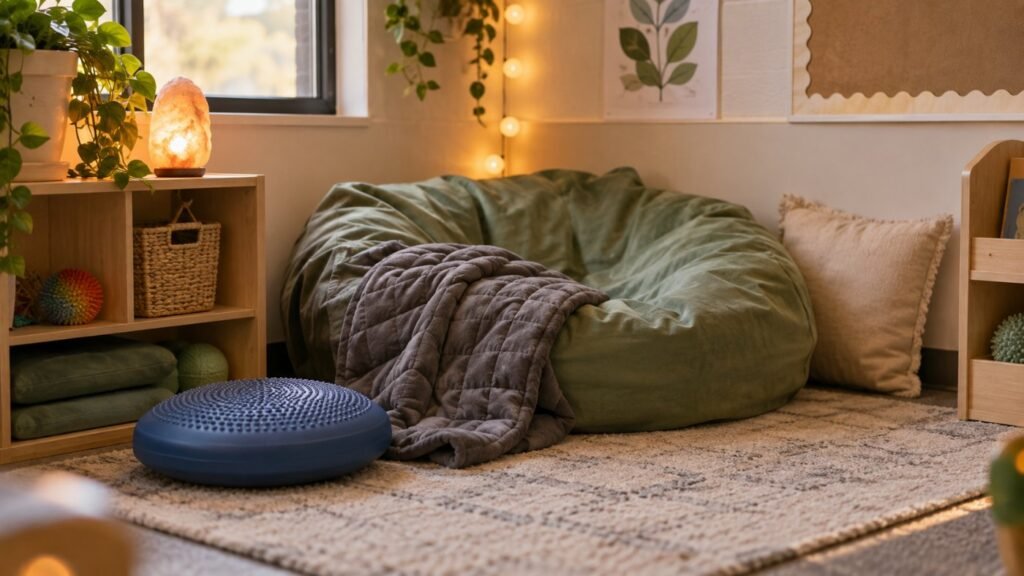
How to Write Sensory Processing IEP Goals
Formula: By [date], when [sensory trigger or need], given [sensory tool, visual or adult prompt], [Student] will [identify, request or use a sensory strategy] and [return to or remain in the activity] in [number] of [opportunities] as measured by [data tool].
Present level example: “Zoe covers her ears and leaves the room during assemblies and lunch about 4 times per week. In class, she seeks movement by standing and rocking. She uses noise-canceling headphones when an adult offers them in 6 of 10 opportunities but does not yet request them. After a 5-minute movement break, she completes work for 15 minutes.”
Key point: Do not write sensory goals that require a student to tolerate distress. Write goals for recognizing needs, using tools and requesting changes, and put environmental supports in the accommodations section.
Sensory Awareness
Sensory awareness connects to interoception, the ability to notice internal signals. See our guide to interoception and emotional regulation.
- By [date], [Student] will identify 3 sensory experiences they enjoy and 3 that feel uncomfortable using a sensory checklist in 4 of 5 opportunities.
- By [date], [Student] will name the sense involved (sound, light, touch, smell, movement) when feeling overwhelmed in 3 of 5 opportunities.
- By [date], [Student] will rate their sensory level (too much, just right, not enough) on a visual scale at 3 daily check-ins in 80% of opportunities.
- By [date], [Student] will identify early body signs of sensory overload (covering ears, tense shoulders) in 3 of 4 opportunities.
- By [date], [Student] will identify which settings (cafeteria, gym, hallway) are hardest using their own data in 3 of 4 reflections.
- By [date], [Student] will describe what their body needs (move, quiet, squeeze) in 4 of 5 opportunities.
- By [date], [Student] will complete a personal sensory profile with OT support and share it with one teacher.
Using Sensory Tools
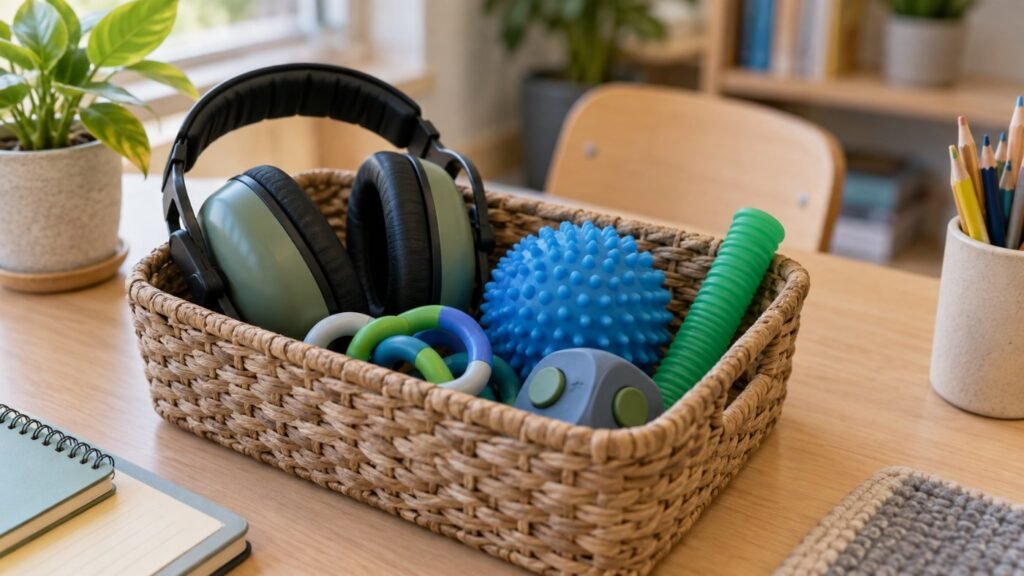
- By [date], [Student] will use noise-canceling headphones during loud activities and remain in the setting in 4 of 5 opportunities.
- By [date], [Student] will use a fidget tool appropriately during seated work and continue working in 80% of observations.
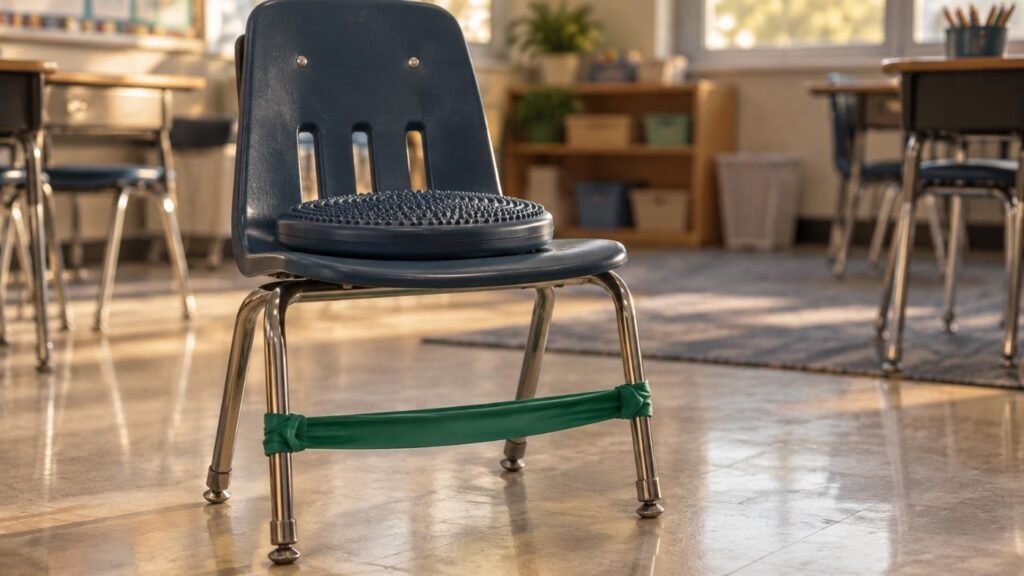
- By [date], [Student] will use a wobble cushion or standing desk option to stay engaged during lessons in 80% of observations.
- By [date], [Student] will choose a sensory tool from a visual menu when sensory level is “too much” or “not enough” in 4 of 5 opportunities.
- By [date], [Student] will use a weighted lap pad or blanket for calming and return to work within 5 minutes in 4 of 5 opportunities.
- By [date], [Student] will use a chewy tool instead of chewing clothing or objects in 80% of observations.
- By [date], [Student] will put away a sensory tool when finished and transition to the next task in 4 of 5 opportunities.
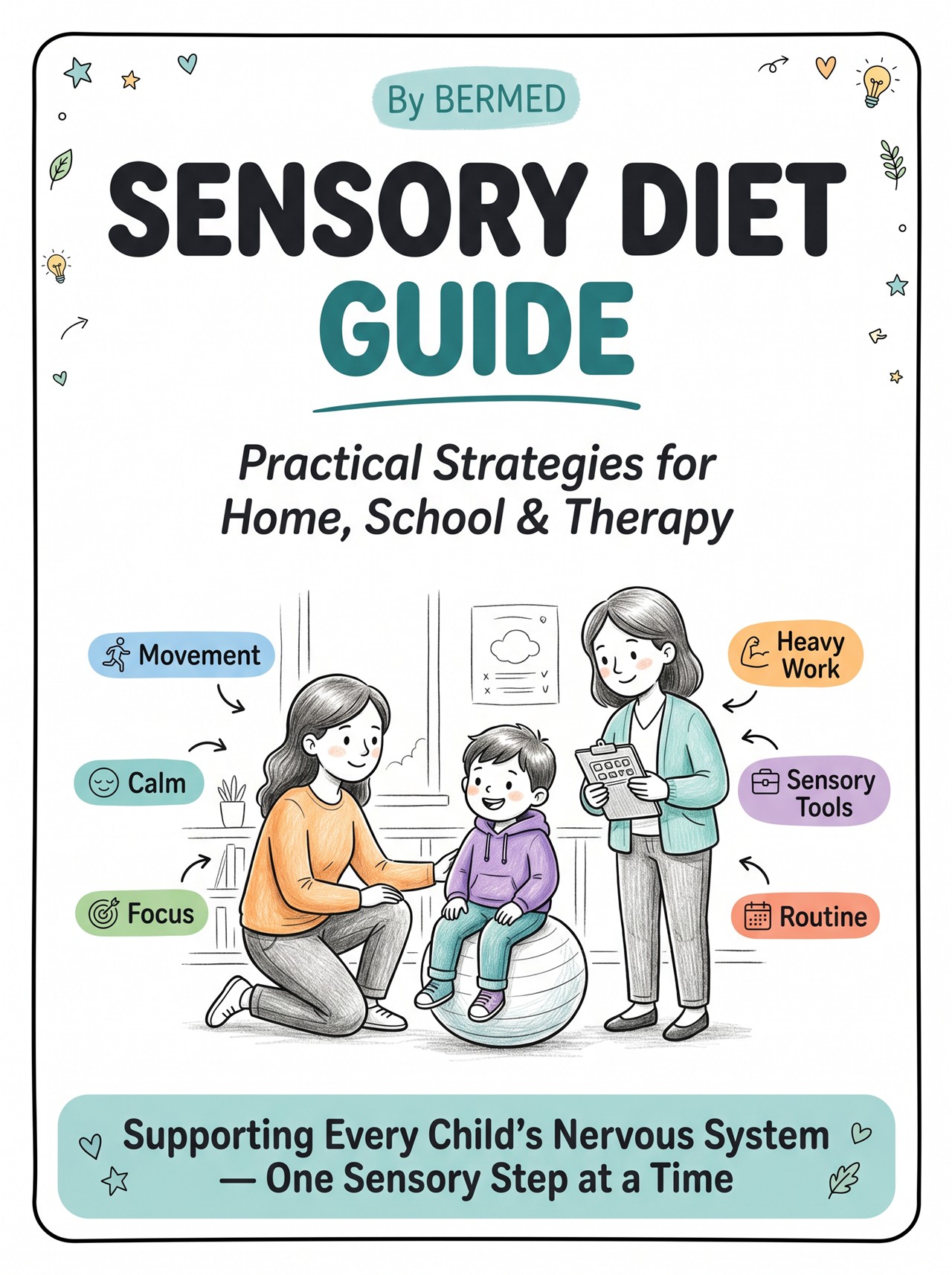
Free resource
Sensory Diet Guide
Practical sensory strategies for home, school and everyday life.
Requesting Sensory Supports
- By [date], [Student] will request a sensory break using a card, gesture, AAC or words in 8 of 10 opportunities.
- By [date], [Student] will request headphones or a quieter seat when the room is loud in 4 of 5 opportunities.
- By [date], [Student] will request dimmer lights or a seat away from windows when light is uncomfortable in 3 of 4 opportunities.
- By [date], [Student] will request a movement break when feeling restless in 80% of opportunities.
- By [date], [Student] will ask to leave a crowded space a few minutes early (lunch line, hallway) using a pass in 4 of 5 opportunities.
- By [date], [Student] will tell an adult when clothing or materials feel uncomfortable and request an alternative in 3 of 4 opportunities.
- By [date], [Student] will request a preferred sensory strategy independently without adult prompts in 60% of opportunities.
Sensory Diet and Movement
A sensory diet is a planned schedule of sensory activities. Pair these goals with sensory breaks in the classroom.
- By [date], [Student] will follow a visual sensory diet schedule with 3 planned movement breaks per day in 4 of 5 days.
- By [date], [Student] will complete a heavy work task (carrying books, wall push-ups) before seated work in 4 of 5 opportunities.
- By [date], [Student] will complete a 5-minute movement routine and return to class within 2 minutes in 80% of breaks.
- By [date], [Student] will use a timer to end a sensory break and transition back to work in 4 of 5 opportunities.
- By [date], [Student] will choose between 2 calming or alerting activities based on their sensory level in 4 of 5 opportunities.
- By [date], [Student] will participate in an obstacle course or movement path in the hallway or sensory room in 4 of 5 sessions.
- By [date], [Student] will help plan their sensory diet with the OT by identifying 3 helpful activities.
Participating in Sensory-Rich Settings
These goals should always include supports. For calming spaces, see our guide to the calm corner in the classroom.
- By [date], with headphones and a seat at the end of the table, [Student] will remain in the cafeteria for 15 minutes in 4 of 5 lunch periods.
- By [date], with a preview and an exit plan, [Student] will attend part of a school assembly for 10 minutes in 3 of 4 opportunities.
- By [date], [Student] will participate in a messy art activity using gloves or tools as needed in 3 of 4 opportunities.
- By [date], [Student] will transition through a busy hallway using a planned route or early release in 80% of transitions.
- By [date], [Student] will participate in PE using adapted equipment or a quieter station in 4 of 5 classes.
- By [date], [Student] will try a new food texture by touching or smelling it during a calm snack time in 3 of 5 opportunities, with the right to refuse.
- By [date], [Student] will attend a fire drill using a visual story and headphones in 2 of 2 practice drills.
Self-Monitoring and Planning
- By [date], [Student] will predict sensory challenges in an upcoming event and pack needed tools in 3 of 4 opportunities.
- By [date], [Student] will log sensory breaks and rate their effectiveness in 4 of 5 days.
- By [date], [Student] will identify patterns in their sensory data with adult support and suggest one change per month.
- By [date], [Student] will explain their sensory needs to a substitute or new teacher using a sensory profile card in 3 of 4 opportunities.
- By [date], [Student] will choose a seat in the classroom that meets their sensory needs in 4 of 5 opportunities.
- By [date], [Student] will use a self-check card (“Is my body too fast, too slow or just right?”) during work time in 80% of opportunities.
- By [date], [Student] will share one sensory support that helps them during their IEP meeting.
The BERMED Goal-Writing Check
- B – Baseline: Do you have an OT sensory profile and data on triggers and helpful tools?
- E – Exact skill: Does the goal name one skill, such as requesting a break or using a tool?
- R – Realistic: Does it avoid asking the student to tolerate pain or distress?
- M – Measurable: Can two adults count it the same way?
- E – Equitable access: Are sensory tools available to the student at all times?
- D – Data plan: Who logs sensory breaks and tool use, and when does the team review?
How to Measure Sensory Processing IEP Goals
| Skill | How to measure | Accommodations to pair |
|---|---|---|
| Sensory awareness | Check-in ratings, profile completion | Visual scale, sensory checklist |
| Using tools | Percent of observations with tool use | Headphones, fidgets, wobble seat |
| Requesting supports | Frequency of independent requests | Break card, hallway pass |
| Sensory diet | Breaks completed, return time | Visual schedule, sensory room access |
| Settings | Minutes in setting with supports | Exit plan, preview, quiet seat |
| Self-monitoring | Sensory log completion | Self-check card, profile card |
Pair these goals with self-regulation IEP goals for emotional regulation, fine motor IEP goals when OT also targets hand skills, and our guide to stimming in autistic children.
Neuroaffirming tip: Stimming, rocking and covering ears are ways the body regulates. Do not write goals to stop them unless they cause harm. Change the environment first, then teach tools and self-advocacy.
What are sensory processing IEP goals?
Sensory processing IEP goals help a student recognize sensory needs, use sensory tools, request supports like breaks or headphones, and participate in school settings with the right accommodations.
Can sensory processing be addressed in an IEP?
Yes. Sensory needs that affect learning can be addressed through goals, occupational therapy as a related service, and accommodations such as sensory breaks and quiet spaces.
What is a sensory diet?
A sensory diet is a planned schedule of sensory activities, such as heavy work, movement or calming input, designed with an OT to help a student stay regulated through the day.
How do you measure sensory goals?
Track sensory check-in ratings, independent requests for breaks or tools, minutes in a setting with supports, return time after breaks and sensory log entries.
Should a sensory goal require a student to tolerate noise?
No. Goals should teach tools and self-advocacy, not endurance of distress. Use accommodations like headphones and exit plans to make settings accessible.
5 Actions to Take This Week
- Ask the OT for a current sensory profile or observation.
- Note the times and places where the student seems overloaded or seeking input.
- Make 3 sensory tools available without the student having to earn them.
- Teach one way to request a sensory break and honor it every time.
- Choose 2 or 3 goals from this bank and start a simple sensory log.
Sources

