This free sensory needs guide for kids exists because a child who claps her hands over her ears during a fire drill is not being dramatic, and a student who slides out of his chair every ten minutes is not being defiant. Research shows that atypical sensory processing affects nearly 90 percent of autistic children, and countless other neurodivergent kids without a formal diagnosis feel that same intensity every single day.
The mistake most classrooms and homes make is treating these moments as behavior to correct rather than information to understand. A child who cannot yet name what her body is experiencing has no way to ask for what she actually needs, so the adults around her end up managing the reaction instead of the cause.
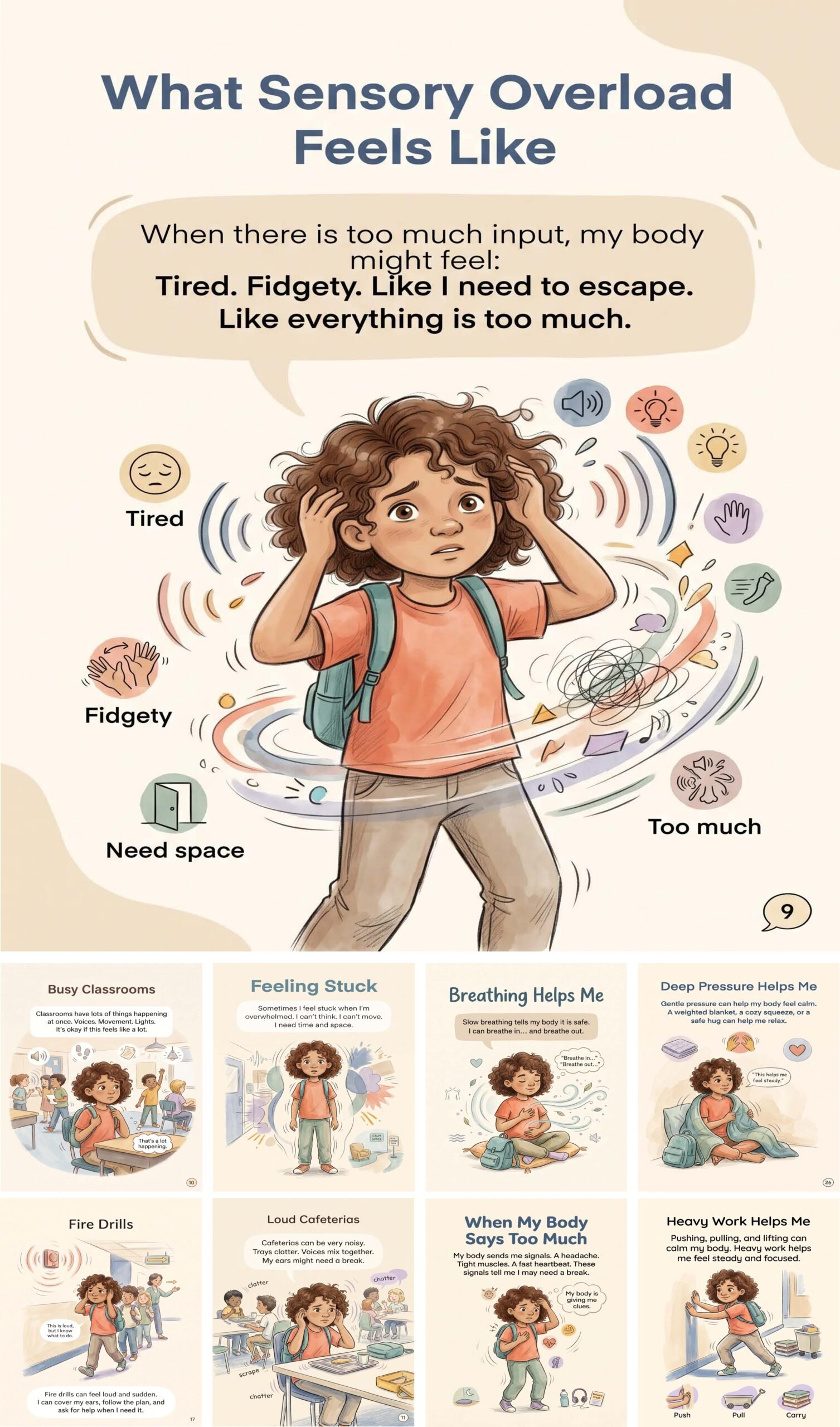
This free visual guide, Finding My Sensory Balance, gives children the words and tools to recognize sensory input, notice early warning signs, and describe what helps, before overload turns into a meltdown, a shutdown, or a shutdown of learning altogether.
In this guide
What Is a Sensory Needs Guide for Kids and Why Does It Matter?
A sensory needs guide for kids is a tool that helps children connect what their body feels to what is actually happening around them, instead of leaving that connection to guesswork. The sensory system includes eight modalities, not just five: sight, sound, touch, taste, smell, plus the vestibular sense (balance and movement), proprioception (body awareness), and interoception (internal signals like hunger or the need for a break). When children can name these experiences, they gain the first building block of self-regulation: awareness before reaction.
IN CLASS: Supporting Sensory Regulation at School
Special education teachers and classroom support staff are often the first to notice sensory overload building, sometimes minutes before a student does. Finding My Sensory Balance gives educators a shared visual language to use during check-ins, one-to-one support, or small group instruction, so sensory needs get addressed before they escalate into a behavior referral.
Used consistently, this resource helps children:
- Recognize different sensory needs and preferences
- Identify situations that may lead to sensory overload or discomfort
- Notice early signs that their body needs support
- Explore calming and regulating strategies
- Understand the importance of sensory recovery after overload
- Identify helpful sensory tools and environmental supports
- Communicate their needs to adults and peers
- Build self-awareness and self-advocacy skills
Pair this guide with a classroom sensory toolkit and clear, written accommodations so the strategies a student practices on paper are also available in the room. Our accommodation cheat sheet for IEP, 504, and RTI/MTSS lists concrete sensory accommodations teachers can add directly to a student’s plan.
Free resource
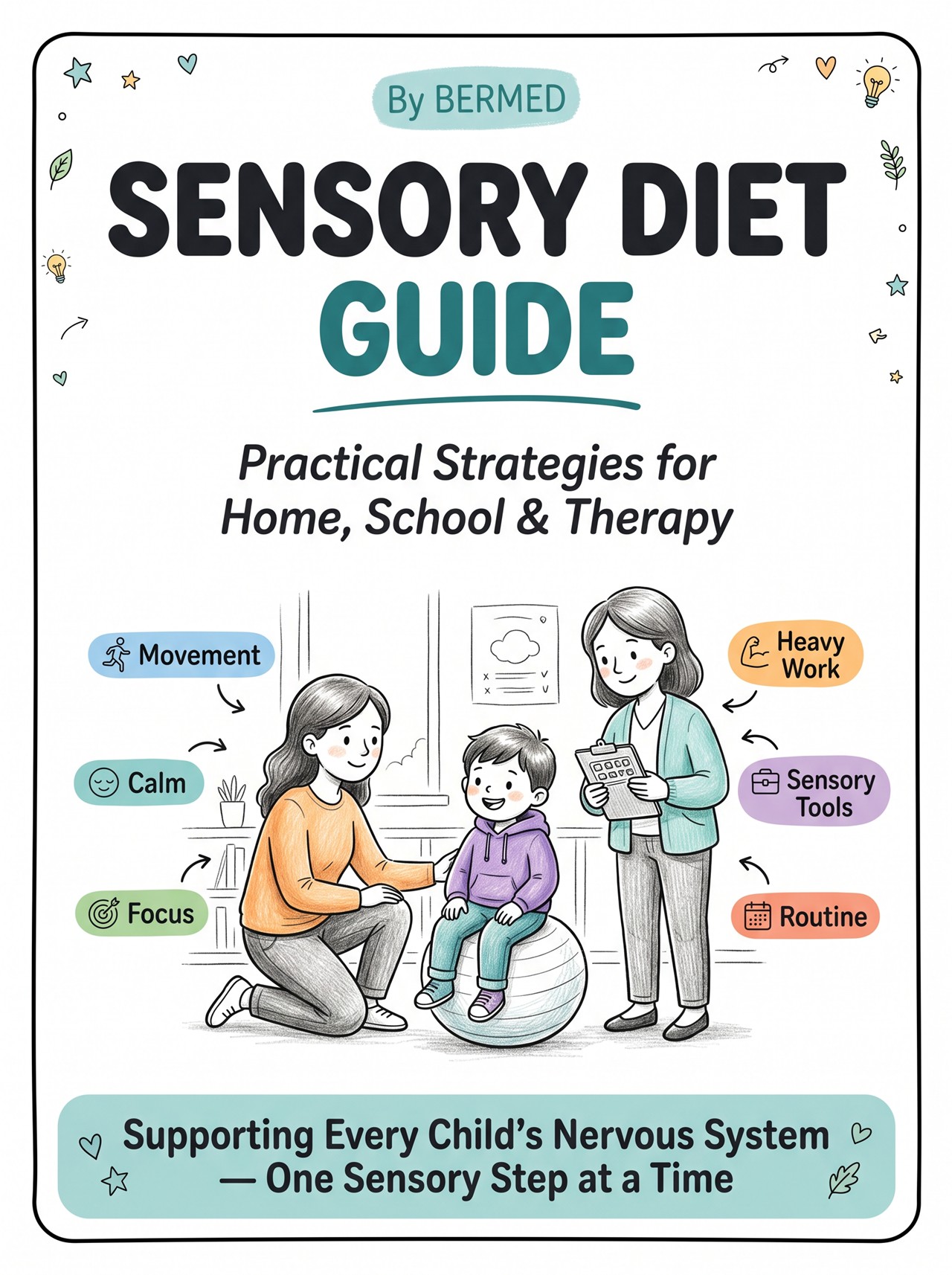
Sensory Diet Guide
Practical sensory strategies for home, school and everyday life.
Download free →AT HOME: Building Sensory Awareness as a Family
Sensory needs do not stay inside the school building. The same child who struggles with fluorescent lights in a classroom may also struggle with the sound of a vacuum cleaner, the seam of a sock, or a crowded family gathering. Parents and caregivers can use this guide during calm, low-pressure moments, not just during a meltdown, so children build the vocabulary to advocate for themselves before things get hard.
A few ways families put this into practice:
- Reviewing one or two pages together at a quiet time, not as damage control after a difficult moment
- Creating a simple home sensory toolkit based on what the child identifies as helpful
- Using the same language the child uses at school, so requests for a break or a tool are consistent across settings
- Letting the child lead the conversation about what feels good and what feels overwhelming
If your child is still discovering which tools genuinely help, our roundup of sensory gifts for kids with special needs breaks down options by sensory profile instead of by trend.
LIFE: Sensory Self-Advocacy Beyond School and Home
Sensory needs do not disappear at the end of the school day or the classroom walls. Sports practice, birthday parties, family road trips, and friend groups all come with their own sensory demands, and this is often where self-advocacy matters most, because a trusted adult is not always nearby to step in.
This guide plants an important message that carries into adolescence and adulthood: sensory needs are part of who a person is, not a flaw to fix. A child who learns early that it is acceptable to ask for headphones, request a quieter space, or explain why a texture feels unbearable carries that self-knowledge into every future setting, from a school hallway to a first job.
Read Finding My Sensory Balance (Free PDF)
You can read the full guide directly below, or download it to print and use right away.
Having trouble viewing the guide above? Open the PDF in a new tab.
Download Finding My Sensory Balance (Free PDF)Frequently Asked Questions
Who is Finding My Sensory Balance designed for?
This free sensory needs guide for kids is designed for elementary and middle school children with sensory processing differences, including autistic and ADHD students, and is used by special education teachers, school counselors, occupational therapy support staff, and parents.
Is this resource appropriate for children without a diagnosis?
Yes. Sensory processing differences appear in children with autism, ADHD, and sensory processing challenges, but they also occur in children with no diagnosis at all. Any child who benefits from building body awareness and self-regulation language can use this guide.
How should I use this guide with a child who is already overwhelmed?
Introduce this resource during calm, low-pressure moments rather than mid-meltdown. Reviewing the pages ahead of time helps a child build the vocabulary and awareness they will need when a real sensory challenge comes up.
Is Finding My Sensory Balance really free?
Yes. You can read it directly on this page or download the PDF to print at no cost.
What to Do Next
- Download the PDF and review two or three pages together during a calm moment this week.
- Ask your child which sensory tools or strategies from the guide feel most helpful, and start with just one.
- Share the shared vocabulary from the guide with teachers, therapists, or other caregivers so language stays consistent across settings.
- Build a simple sensory toolkit at home or at school based on what your child identifies, not on what worked for someone else’s child.
- Follow BERMED to get new free resources as they are released.
- Child Mind Institute, Quick Guide to Sensory Processing Issues
- Child Mind Institute, How Sensory Processing Issues Affect Kids in School
- PMC / National Library of Medicine, Interoceptive processing research in autism spectrum disorder
- PMC / National Library of Medicine, Atypical Sensory Processing in Neurodevelopmental Disorders