Table of Contents
- Why a Whole Generation Was Missed
- What Autism Looks Like After 60
- Signs Often Mistaken for Something Else
- Health and Aging: What Research Shows
- Is a Diagnosis Worth It at 65 or 75?
- The BERMED Later-Life Lens: 5 Steps
- IN CLASS: What Educators Can Notice
- AT HOME: Supporting an Autistic Parent or Grandparent
- LIFE: Growing Older as an Autistic Adult
- What Helps and What Hurts
- Frequently Asked Questions
- 5 Actions You Can Take This Week
Here is the part most people get backwards: autism in older adults is rarely about something changing. It is about something finally being seen. A grandmother who always hated the noise of family dinners, a retired engineer who ate the same lunch for forty years, a widower who seems “difficult” in assisted living: many of them have been autistic their entire lives. Nobody had the words when they were children.
Today, more families discover autism in older adults in a surprising way. A grandchild gets diagnosed, the family reads the checklist, and someone at the table quietly says, “That sounds like me.” This guide is for that person, for the families around them, and for the professionals who support them.
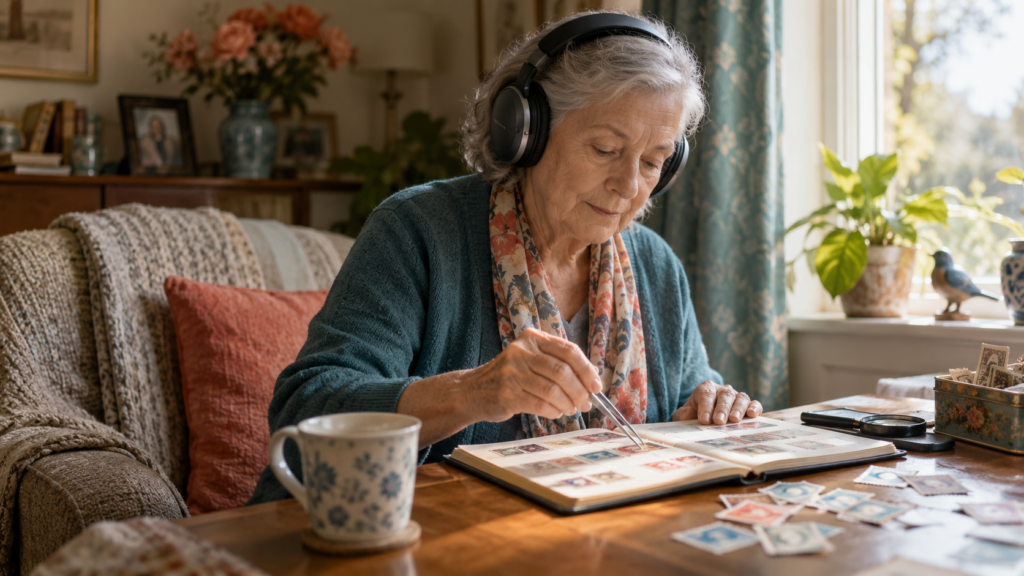
Why a Whole Generation of Autistic Older Adults Was Missed
When today’s 70-year-olds were in school, “autism” described a small group of children with high support needs. The idea of a spectrum, and of autistic adults who work, marry and raise families, only entered diagnostic manuals in the 1990s. Women and people who learned to mask their differences were missed even more often. If you want the bigger picture, our guide on why autism gets missed in girls explains the same pattern, decades earlier.
The scale of the gap is striking. The CDC estimated that about 5.4 million US adults (about 2.2%) are autistic, yet very few older adults hold a formal diagnosis. A 2025 review from King’s College London estimated that between 89% and 97% of autistic adults over 40 in the UK remain undiagnosed.
What Autism in Older Adults Looks Like After 60
Decades of experience change how autism in older adults looks on the surface. Many older autistic adults have built careful scripts for small talk, rules for social situations, and routines that keep daily life predictable. What you see is often the cost of keeping all that running.
Common patterns of autism in older adults
- Deep, lifelong interests: trains, genealogy, gardening, a specific era of history, collecting. Often a source of joy and expertise.
- Strong need for routine: the same walk, the same meals, the same seat. Disruption causes real distress, not stubbornness.
- Sensory sensitivities: noise in restaurants, fluorescent lights, scratchy clothing, strong smells in care settings.
- Social fatigue: enjoying people in small doses, then needing long recovery time alone.
- Literal communication: direct speech that others read as rude, difficulty with hints or vague instructions.
- A lifelong feeling of being “out of step,” often described as watching life through glass.
Some autistic adults also used echolalia or scripted phrases as children and still rely on familiar phrases under stress. Our article on autism and echolalia explains why this is communication, not repetition for its own sake.
Signs of Autism in Older Adults Often Mistaken for Something Else
Scroll to see full table
| What You Notice | Often Labeled As | Possible Autistic Explanation | Key Question to Ask |
|---|---|---|---|
| Withdrawal from group activities | Depression | Sensory overload or social exhaustion | Has this person always preferred small groups? |
| Distress when routines change | Rigidity, stubbornness | Predictability as a core regulation tool | Was routine important at 20 and 40, too? |
| Blunt or very direct speech | Rudeness, irritability | Literal, honest communication style | Does the person mean harm, or simply say what is true? |
| Repeating the same topic | Memory loss | A lifelong special interest | Is the knowledge detailed and accurate? |
| Avoiding the dining hall | Antisocial behavior | Noise, smells, unpredictable social demands | Does a quieter space change everything? |
| Flat facial expression | Apathy | Different, not absent, emotional expression | Does the person describe feelings in words? |
When you look at autism in older adults, the most important clue is time. Dementia and depression bring changes. Autism shows a consistent thread running back to childhood. Asking siblings, old friends or adult children about the person at age 10, 25 and 45 often reveals more than any checklist.
Autism in Older Adults: Health and Aging Research
Research on autism in older adults is young, but the early findings matter for every family and clinician:
- Cognitive health: A 2026 study in Age and Ageing of more than 9,000 autistic Medicare beneficiaries aged 65 and older found a 20% higher adjusted risk of neurocognitive disorders, including dementia, compared with non-autistic peers. Common risk factors such as high blood pressure, high cholesterol, depression and diabetes appeared to have a stronger effect in autistic adults.
- Movement: In a study of 379 autistic adults aged 40 to 83, about 31% screened positive for parkinsonism symptoms such as tremor or stiffness, which were linked to poorer sleep, memory and quality of life.
- Life expectancy: The King’s College London review reported an average life expectancy of about 75 years for autistic adults, compared with 81 years for non-autistic adults.
- Access to care: Crowded waiting rooms, phone-only booking, vague questions and bright clinics can make routine care so draining that autistic adults delay it.
None of this means autism causes these conditions. It means that, for autism in older adults, preventive care, blood pressure checks and mental health support deserve extra attention, delivered in a way that autistic people can actually use. Many autistic adults also have co-occurring ADHD; see our guide to AuDHD in adults.
Is a Late Autism Diagnosis Worth It at 65 or 75?
A University of Cambridge study interviewed adults diagnosed after age 50. Participants described the diagnosis as a positive turning point: a “reconfiguration” of how they understood their past, better awareness of their needs, and more control over their lives. Several had spent years being treated for depression or anxiety alone.
A late diagnosis can also bring grief. People mourn the support they never received, the friendships that failed without explanation, or the careers they pushed through at great cost. Both reactions are valid, and many people feel them at the same time. A systematic review of late autism diagnosis highlights how common this mix of relief and loss is.
Formal assessment for autism in older adults can be hard to find. Ask a primary care provider for a referral to a psychologist or psychiatrist who assesses adults, and mention any family history, especially a diagnosed child or grandchild. Self-identification, informed by careful reading and lived experience, is also widely respected within the autistic community.

The BERMED Later-Life Lens: 5 Steps to Recognize and Support Autism in Older Adults
The Later-Life Lens
Five steps to recognize autism in older adults, for families, caregivers and professionals who suspect an older adult may be autistic. Use them in order. The goal is understanding first, labels second.
Look Back, Not Just Now
Gather the life story. Ask about childhood, school, work and relationships. Autism in older adults is a lifelong thread, so look for patterns that were present long before age 60.
Map the Senses
Note which environments drain or calm the person: noise, light, crowds, textures, smells. Many “behavior problems” in care settings are sensory problems.
Respect the Routine
Treat routines as regulation tools, not habits to break. Introduce any change slowly, with clear explanations and advance notice.
Translate the Communication
Use clear, literal language. Put appointments and plans in writing. Replace “We’ll see” with specific times and steps.
Connect to the Right Care
Request an adult autism assessment if the person wants one, share sensory needs with doctors and care staff, and look for autistic-led peer communities.
IN CLASS: What Educators Can Notice
Teachers are often the first to see autism across generations, including autism in older adults. When a student is evaluated, parents and grandparents sometimes recognize themselves in the report. A few practical points for school teams:
- Expect that a grandparent raising a student may share some traits. Offer meetings in quiet rooms, written agendas and clear, literal follow-up notes.
- Avoid interpreting a grandparent’s directness or limited eye contact as hostility at IEP meetings.
- If a family member says “I think I’m like that too,” respond with curiosity, not surprise. Share neutral resources such as our introduction to what neurodiversity means.
- In adult education and community programs, apply the same accommodations you would give a student: predictable structure, sensory-friendly spaces and explicit instructions.
AT HOME: Supporting an Autistic Parent or Grandparent

Supporting autism in older adults often starts with family. Many adult children realize their parent’s “difficult personality” was autism only after their own child is diagnosed. That realization can reshape decades of family history. Here is how to help:
- Lead with relief, not blame. Frame autism as an explanation, not an accusation. “This might explain why big gatherings always felt so hard for you.”
- Plan visits with structure. Share the schedule in advance, keep groups small, and build in quiet breaks.
- Prepare for medical visits together. Write questions down, request the first or last appointment of the day, and ask for a quiet waiting area.
- Protect their interests. Special interests are not “obsessions” to discourage. They are a source of identity and calm, especially after retirement or loss of a spouse.
- Plan care transitions early. Moving to assisted living is one of the hardest changes for an autistic person. Visit several times first, bring familiar objects, and share a one-page sensory profile with staff.
LIFE: Growing Older as an Autistic Adult
If you are reading this and recognizing yourself, you are far from alone. Autism in older adults is far more common than most people think. Many autistic adults find their footing in their 60s and 70s, once they understand how their brain works. Some practical starting points:
- Audit your energy. Notice which activities restore you and which ones cost you days of recovery. Retirement is a chance to design life around that knowledge.
- Watch for burnout. Years of masking can lead to deep exhaustion, loss of skills and shutdowns. Rest and fewer demands help more than “pushing through.” Our article on autistic burnout describes the signs.
- Build your health toolkit. Keep a written list of medications, conditions and sensory needs to hand to any new provider. Book regular checks for blood pressure, cholesterol and mood.
- Find your people. Online and local autistic peer groups for older adults are growing. Talking with others who were diagnosed late is often the most healing step.
- Rewrite your story gently. You were not lazy, cold or broken. You were autistic in a world that had no name for it.
What Helps and What Hurts
Small changes make a real difference when you support autism in older adults at home, at work or in care settings.
Do This
- Ask about the whole life story
- Give information in writing
- Offer quiet spaces and breaks
- Announce changes early and clearly
- Honor special interests
- Use clear, literal language
- Respect self-identification
Avoid This
- Saying “You can’t be autistic at your age”
- Assuming every change is dementia
- Forcing group activities “for their own good”
- Changing routines without warning
- Interpreting directness as rudeness
- Talking about the person instead of with them
- Dismissing a diagnosis as “pointless now”
Frequently Asked Questions About Autism in Older Adults
Can you develop autism in old age?
No. Autism is a lifelong neurodevelopmental difference that is present from birth. What can change with age is how visible it becomes, for example after retirement, the loss of a partner, or a move into a care setting removes long-standing coping structures.
What are the signs of autism in older adults?
Common signs of autism in older adults include a lifelong preference for routine, deep and long-lasting interests, sensory sensitivities, social exhaustion, literal communication and a long history of feeling different from others. These traits are usually present since childhood.
How is autism in older adults different from dementia?
Dementia involves a decline from a previous level of memory or thinking. Autism shows consistent traits across the whole lifespan. A detailed life history from the person and people who knew them when younger helps clinicians tell the two apart. Both can also occur together.
Can a 70-year-old get an autism diagnosis?
Yes. There is no upper age limit for an autism assessment. Ask a primary care provider for a referral to a psychologist or psychiatrist experienced in assessing adults, and bring examples from childhood and early adulthood.
Is it worth getting diagnosed with autism later in life?
Many people diagnosed after 50 describe the diagnosis as positive. It can bring self-understanding, relief, better health care communication and access to autistic communities, even if few formal services follow.
How can families support an older autistic relative?
Keep routines predictable, share plans in writing, reduce sensory overload, honor special interests, prepare medical visits together and plan care transitions slowly with familiar objects and clear information.
5 Actions You Can Take This Week
Supporting autism in older adults starts with small, concrete steps.
- Write down the life story. List traits you remember from childhood, work and family life.
- Create a one-page sensory profile. Note what drains and what calms, and share it with doctors or care staff.
- Book a preventive health check. Ask for blood pressure, cholesterol and mood screening, with a quiet appointment slot.
- Ask about an adult autism assessment if the person wants one.
- Find one autistic-led community for older or late-diagnosed adults.
Autism in older adults is not a late arrival. It is a long story finally being read correctly, and it is never too late for understanding to make life easier.
Related reading:
Sources
- Centers for Disease Control and Prevention. Estimated Number of Adults Living with Autism Spectrum Disorder in the United States, 2017. cdc.gov
- Stewart, G., and Happé, F. (2025). Autism in midlife and older adulthood. Annual Review of Developmental Psychology. King’s College London.
- Risk of dementia and related neurocognitive disorders among autistic and non-autistic older adults: role of established risk factors. (2026). Age and Ageing, 55(2).
- Elevated parkinsonism symptoms in autism during middle and older adulthood are linked with psychosocial, physical health, and mental health outcomes. (2025). NIH PubMed Central
- Who, when, where, and why: A systematic review of “late diagnosis” in autism. PubMed
- Autism diagnosis in older adults has positive impact: study. ADDitude