Quick answer: Sensory overload in adults happens when sound, light, smell, touch, or crowds become more than the brain can process, triggering a stress response. It is especially common in autistic adults and people with ADHD, anxiety, or PTSD. Signs include irritability, trouble thinking, an urge to escape, and physical tension. Knowing your triggers, carrying a sensory toolkit, and planning recovery time make a real difference.
In this guide
The supermarket is bright, the music is loud, a stranger’s perfume hangs in the air, and someone bumps your cart. Suddenly you cannot think, you want to leave everything and walk out, and you feel close to tears or anger. Afterward, you are wiped out for hours. That is sensory overload in adults, and it is far more common than most people realize.

What Is Sensory Overload in Adults?
Cleveland Clinic health psychologist Grace Tworek, PsyD, describes sensory overload as input from one or more senses feeling overwhelming and triggering a physical stress response. Anyone can experience it, but people with ADHD, autism, anxiety disorders, or PTSD are more susceptible.
For many autistic adults, sensory differences are lifelong and were never named. If you were diagnosed late, or are wondering about ADHD and autism together, read AuDHD in adults.
Key point: Sensory overload is not overreacting. Your nervous system is receiving more input than it can sort, and it switches into protection mode.
Signs of Sensory Overload in Adults
- Irritability, snapping at people you love
- Difficulty thinking, speaking, or making decisions
- Strong urge to escape, cover ears, or close eyes
- Racing heart, sweating, trembling, chest tightness
- Anxiety that builds toward panic
- Exhaustion afterward, sometimes for the rest of the day
If overload is not relieved, it can lead to a meltdown or to autistic shutdown, where speech and movement become hard.
| Sense | Common triggers | Quick support |
|---|---|---|
| Sound | Open offices, restaurants, sirens | Noise cancelling headphones, earplugs |
| Sight | Fluorescent lights, screens, clutter | Tinted glasses, caps, dim settings |
| Smell | Perfume, cleaning products, food | Scented balm you like, step outside |
| Touch | Tags, tight clothes, crowds | Soft seamless clothing, personal space |
| Multiple | Parties, malls, events | Time limits, exit plan, breaks |
The BERMED Sensory Plan
Build a plan once, then use it everywhere.
- B: Body signals. Learn your early warning signs, like jaw clenching or irritability.
- E: Environment scan. Before you go, think about noise, light, crowds, and exits.
- R: Reduce input. Headphones, sunglasses, quieter times, smaller groups.
- M: Move or breathe. Walk, stretch, or try 3-3-3 breathing.
- E: Exit plan. Know where you can go and what you will say.
- D: Decompress. Schedule quiet recovery time after big sensory events.
In the Moment: What to Do
Name it. Silently say “this is overload.” Naming it lowers panic.
Cut one input. Put on headphones, close your eyes, or step into a quieter space.
Breathe slowly. Cleveland Clinic suggests 3-3-3 breathing: inhale for 3, hold for 3, exhale for 3.
Use a script. “I need a minute, I’ll be right back” is enough.
Do
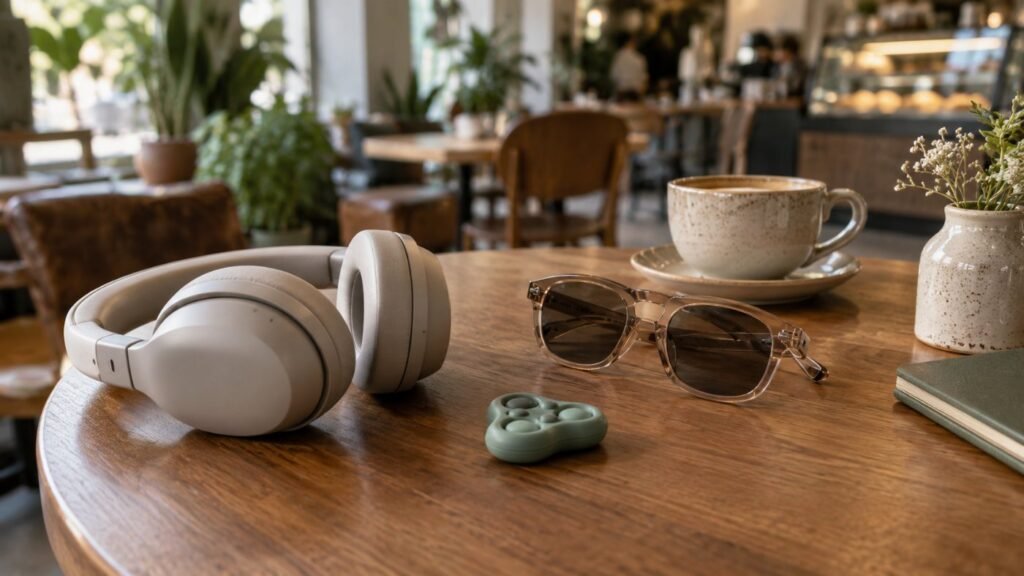
- Carry a sensory kit every day
- Shop or travel at quieter times
- Tell trusted people your signs
- Plan rest after busy days
Avoid
- Pushing through until you crash
- Stacking sensory heavy events back to back
- Apologizing for your needs
- Masking discomfort for hours
At Work
- Ask for a quieter desk, remote days, or permission to wear headphones.
- Dim or turn off overhead lights where possible.
- Block recovery time after long meetings.
- Reasonable accommodations for sensory needs can be requested from your employer.
Constant masking at work drains energy fast. Read autistic masking to understand the cost.
Recovery After Sensory Overload
Overload uses a lot of energy. Give yourself a dim, quiet space, low demands, water, and something soothing like a weighted blanket or a favorite show. Repeated overload without recovery is one path to autistic burnout.

Routines also protect your energy. Our adult ADHD daily routines guide has ideas you can adapt for sensory needs.
When to get help: If overload happens often, limits your life, or comes with panic attacks, talk to a doctor, psychologist, or occupational therapist who understands sensory processing.
What does sensory overload feel like in adults?
It often feels like irritability, difficulty thinking, a strong urge to escape, racing heart, tension, and anxiety, followed by exhaustion once it passes.
Who is most likely to experience sensory overload?
Anyone can, but autistic adults and people with ADHD, anxiety disorders, or PTSD are more susceptible, according to Cleveland Clinic.
How do I calm down from sensory overload quickly?
Reduce one input, such as noise or light, move to a quieter space, and try slow breathing like 3-3-3 breathing: in for 3, hold for 3, out for 3.
Can sensory overload cause a meltdown in adults?
Yes. If overload continues without relief, autistic adults may have a meltdown or a shutdown. Early support helps prevent this.
Can I get work accommodations for sensory overload?
Many employers offer reasonable accommodations, such as noise cancelling headphones, a quieter workspace, adjusted lighting, or remote work days.
5 Actions to Take This Week
- List your top three sensory triggers.
- Build a small sensory kit for your bag.
- Write down your early warning signs.
- Practice 3-3-3 breathing once a day.
- Schedule recovery time after your next busy event.
Sources