
Quick answer: Working memory is the brain’s “temporary sticky note” that holds information for a short time while we use it, as Understood.org describes it. Students with weak working memory forget multi-step directions, lose their place in math, and struggle to connect new learning to what they already know. The best working memory strategies in the classroom reduce the load: chunk directions, put steps in writing, use visuals and checklists, give notes, and teach students their own memory tools.
In this guide
“Take out your blue folder, turn to page 42, do problems 1 through 10, and when you’re done, put it in the tray.” Half the class gets started. One student is still looking for the blue folder and has no idea what came next. That student is not ignoring you. Their working memory is full. These working memory strategies in the classroom help every student keep up.
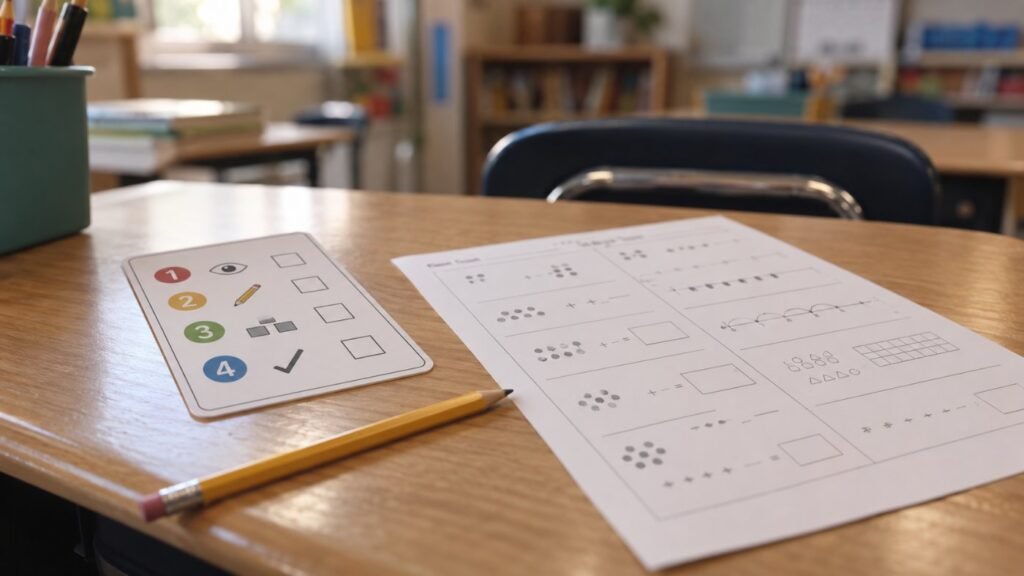
What Is Working Memory?
Working memory is an executive function skill that holds new information in place so the brain can work with it. It helps with mental math, following directions, reading comprehension, and organizing ideas for writing. Understood.org also notes that what looks like a working memory problem may sometimes be an attention issue, where the information never got in to begin with. Learn more in our guide to executive function.
Key point: You cannot simply train working memory capacity up in a few weeks. The most effective classroom approach is to reduce how much students need to hold in their heads at once.
Signs of Working Memory Challenges
- Forgets multi-step directions or does only the first step
- Loses place during math problems or reading
- Struggles with mental math
- Forgets what they wanted to say or write
- Starts tasks, then gets lost
- Seems “spacey” or unprepared
Working memory challenges are common with ADHD, dyslexia, and dyscalculia.
The BERMED Memory Load Framework
Use these to lighten the working memory load.
- B: Break it down. One or two steps at a time.
- E: External supports. Write it, post it, picture it.
- R: Repeat and rehearse. Have students say the steps back.
- M: Make it meaningful. Connect new learning to what students know and love.
- E: Eliminate extras. Remove clutter and unnecessary copying.
- D: Do check-ins. Quick checks before students get lost.
Working Memory Strategies in the Classroom
Chunk directions. Give one step, wait, then give the next. Number steps when written.
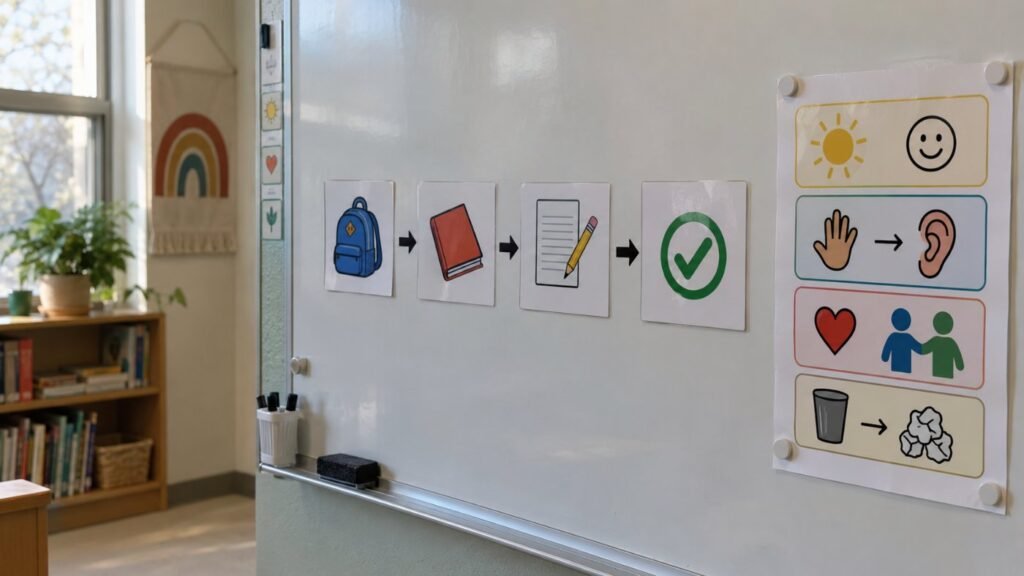
Put it in writing. Post instructions on the board and on a card at the desk.
Use visual supports. Anchor charts, icons, and visual schedules reduce what students must remember.
Provide notes. Guided notes or printed copies free students to listen and think.
Teach memory tools. Mnemonics, checklists, and “say it back” routines.
Strategies by Subject
| Subject | Working memory strategy |
|---|---|
| Math | Worked examples, step cards, multiplication charts, graph paper |
| Reading | Graphic organizers, sticky notes for key ideas, audio support |
| Writing | Outlines, sentence starters, speech to text |
| Science and social studies | Vocabulary banks, guided notes, visual timelines |
| Homework | Written assignment list, photo of the board |
Do
- Give directions in writing and aloud
- Check understanding after each step
- Allow reference tools like charts
- Use routines so steps become automatic
Avoid
- Long verbal instruction strings
- Copying large amounts from the board
- Penalizing students for forgetting
- Relying on “brain training” games alone
Working Memory Accommodations in the IEP
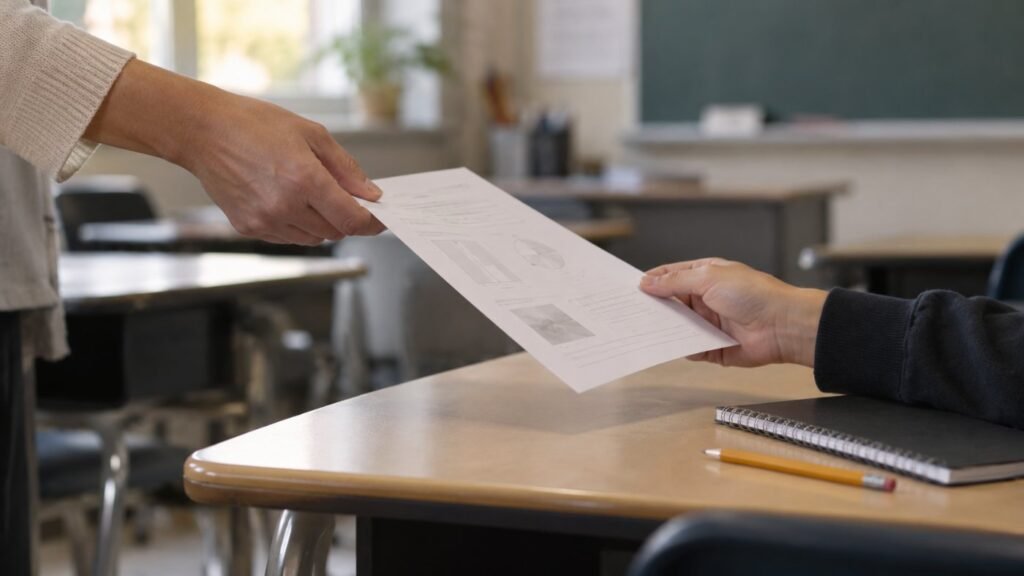
Common accommodations include written directions, chunked assignments, access to reference sheets, guided notes, and extra time. See our executive function accommodations and learn the difference in accommodations vs modifications. For ADHD, see 504 accommodations for ADHD.
Good for everyone: Most working memory strategies are part of inclusive classroom strategies that help the whole class learn more easily.
What is working memory?
Working memory is an executive function skill that holds information briefly so the brain can use it, like a temporary sticky note for following directions or doing mental math.
What are signs of working memory problems in students?
Students may forget multi-step directions, lose their place in tasks, struggle with mental math, and forget what they planned to say or write.
What are the best working memory strategies in the classroom?
Chunk directions, post steps in writing, use visual supports and checklists, provide notes, reduce copying, and teach memory tools like mnemonics.
Can working memory be improved?
Training games show limited transfer to schoolwork. Reducing memory load and teaching strategies are more effective in the classroom.
What accommodations help working memory?
Written directions, chunked assignments, reference sheets, guided notes, graphic organizers, and extra time are common accommodations.
5 Actions to Take This Week
- Post written, numbered directions for every task.
- Give multi-step directions one step at a time.
- Create one anchor chart for a common process.
- Offer guided notes in one lesson.
- Teach students to say the steps back.
Sources

