
Quick answer: In the accommodations vs modifications question, the difference is simple: accommodations change how a student learns or shows what they know, while modifications change what the student is expected to learn. Extra time, audiobooks, and preferential seating are accommodations. Fewer or easier questions, a lower reading level, or different content are modifications. Accommodations appear in both IEPs and 504 plans; modifications are generally only in IEPs and can affect diploma pathways.
In this guide
At IEP meetings, the words “accommodation” and “modification” are often used as if they mean the same thing. They do not. Understanding accommodations vs modifications helps teachers plan fairly, helps parents ask the right questions, and protects a student’s long-term options.
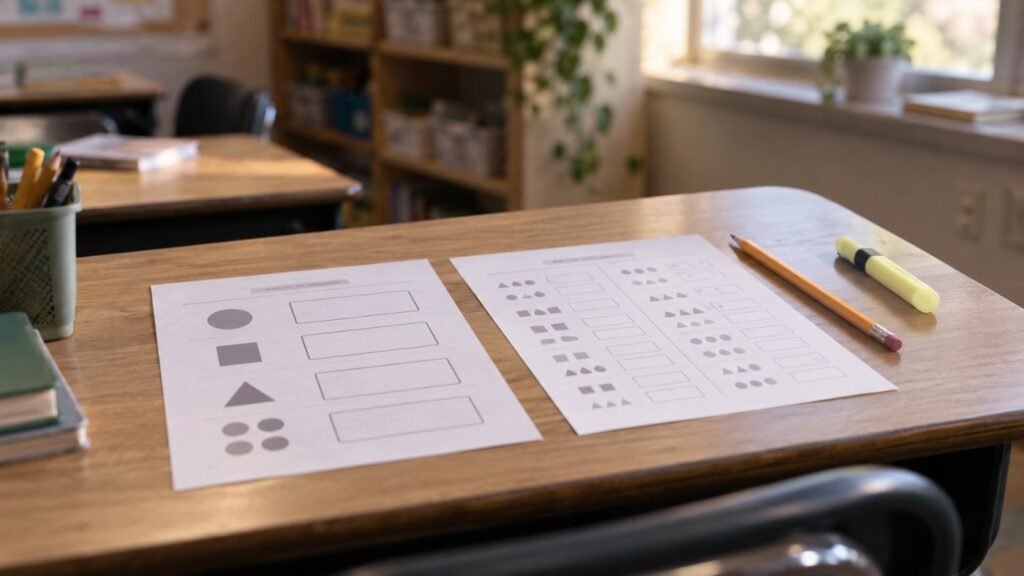
Accommodations vs Modifications: The Core Difference
Understood.org explains that accommodations change how a student learns, removing barriers so they can access grade-level content and meet the same standards as peers. Modifications change what a student is taught or expected to learn, usually for students working well below grade level.
Key point: If the expectation stays the same, it is an accommodation. If the expectation changes, it is a modification.
Examples Side by Side
| Area | Accommodation (same goal) | Modification (changed goal) |
|---|---|---|
| Reading | Audiobook of the grade-level text | Lower reading level text |
| Writing | Speech to text, typing | Shorter or simpler writing task |
| Math | Calculator for computation, extra time | Fewer or easier problems |
| Tests | Separate room, read aloud, breaks | Different test or alternate assessment |
| Homework | Extended deadlines | Reduced or different assignments |
| Grading | Grade content, not handwriting | Grade against individual goals |

Why the Difference Matters
- Diploma pathways: Understood.org notes that students on modified curricula or alternate assessments may not be on track for a traditional high school diploma.
- Plan type: 504 plans offer accommodations; modifications generally require an IEP. See IEP vs 504 plan.
- High expectations: modifying too early can limit what a student learns.
- Fairness: accommodations level the playing field without lowering the bar.
The BERMED Decision Framework
Use these questions before choosing accommodations vs modifications.
- B: Barrier first. What exactly is getting in the way: reading, writing, attention, processing?
- E: Expectation check. Can the student meet the grade-level goal with access support?
- R: Remove barriers. Try accommodations first and give them time to work.
- M: Modify only if needed. When accommodations are not enough, adjust the expectation.
- E: Explain the impact. Discuss diploma and assessment consequences with families.
- D: Data. Review progress and adjust at every IEP meeting.
Writing Them Into the IEP
Be specific. Not “extra time,” but “time and a half on tests and quizzes over 20 minutes.”
Link to need. Each accommodation should match a barrier described in the present levels.
Label modifications clearly. State which subjects are modified and how grading works.
Share with every teacher. Accommodations only work if they are used in every class.

Need ideas? Our accommodation cheat sheet and executive function accommodations list examples. For ADHD, see 504 accommodations for ADHD. Subject-specific supports are covered in dyscalculia in the classroom and dysgraphia in the classroom.
Common Mistakes
Do
- Try accommodations before modifying
- Use precise wording
- Explain diploma impact to families
- Review supports every year
Avoid
- Calling every support a “modification”
- Modifying because it is quicker
- Vague phrases like “as needed”
- Forgetting to tell specials and substitute teachers
For parents: If your child is struggling even with accommodations, request an IEP meeting to discuss whether modifications are appropriate, and ask how they affect assessments and diploma options.
What is the difference between accommodations and modifications?
Accommodations change how a student learns or shows learning while keeping the same expectations. Modifications change what the student is expected to learn.
Are extra time and audiobooks accommodations or modifications?
They are accommodations, because the student is still expected to meet the same grade-level goals.
Can a 504 plan include modifications?
Modifications are generally only included in IEPs. 504 plans typically focus on accommodations.
Do modifications affect a high school diploma?
They can. Students on modified curricula or alternate assessments may not be on track for a traditional diploma, so families should ask about this at IEP meetings.
Should accommodations be tried before modifications?
Usually yes. Accommodations keep expectations high. Modifications are considered when accommodations alone are not enough.
5 Actions to Take This Week
- List every support in one student’s plan.
- Label each as accommodation or modification.
- Rewrite one vague accommodation with specific wording.
- Check that all teachers have the list.
- Discuss diploma impact if any modifications exist.
Sources

