Quick answer: The invisible struggles of students are the stress, anxiety, sensory overload, shame and exhaustion that hide behind behaviors teachers see every day. A quiet student may be frozen by overwhelm. A “lazy” student may not know how to start. A defiant student may feel unsafe. When we look past the behavior to the need underneath, we can respond with support instead of consequences.
In this guide
- Why so many student struggles are invisible
- Quiet students
- Work avoidance
- Defiant behavior
- Students who look unmotivated
- Students who need constant reassurance
- Zoning out and daydreaming
- Perfectionism
- Social struggles
- Holding it together at school
- Stress in the body
- The BERMED “see the need” framework
- FAQ
Every teacher knows the student who never causes trouble, the one who says “I don’t care,” and the one who stares out the window during the lesson. It is easy to label what we see: shy, lazy, defiant, unmotivated. But behavior is communication. Behind most of what we notice in a classroom is something we cannot see: a nervous system on high alert, a brain that is overloaded, or a child who is working very hard just to look okay.
This guide walks through the invisible struggles of students in ten common situations. Each section includes an illustrated “what teachers see vs. what students are really experiencing” chart, a plain explanation, and simple strategies you can use tomorrow. These ideas help all learners, and they matter even more for autistic, ADHD, anxious and otherwise neurodivergent students.
Why So Many Student Struggles Are Invisible
Students often cannot name what they feel. Many have learned that showing distress gets them in trouble, so they hide it. Others are so used to stress that it feels normal. The result is a gap between what we see and what is really happening inside.
The CDC’s children’s mental health surveillance report found that 9.4% of children aged 3 to 17 had ever been diagnosed with anxiety, and many more struggle without a diagnosis. The Child Mind Institute explains that anxiety in school can look like inattention, restlessness or even defiance, which is why it is so often missed.
Remember: A student who looks fine is not always fine. Ask what the behavior is protecting the student from, not only what it is costing the class.
1. Quiet Students: Calm Outside, Overwhelmed Inside
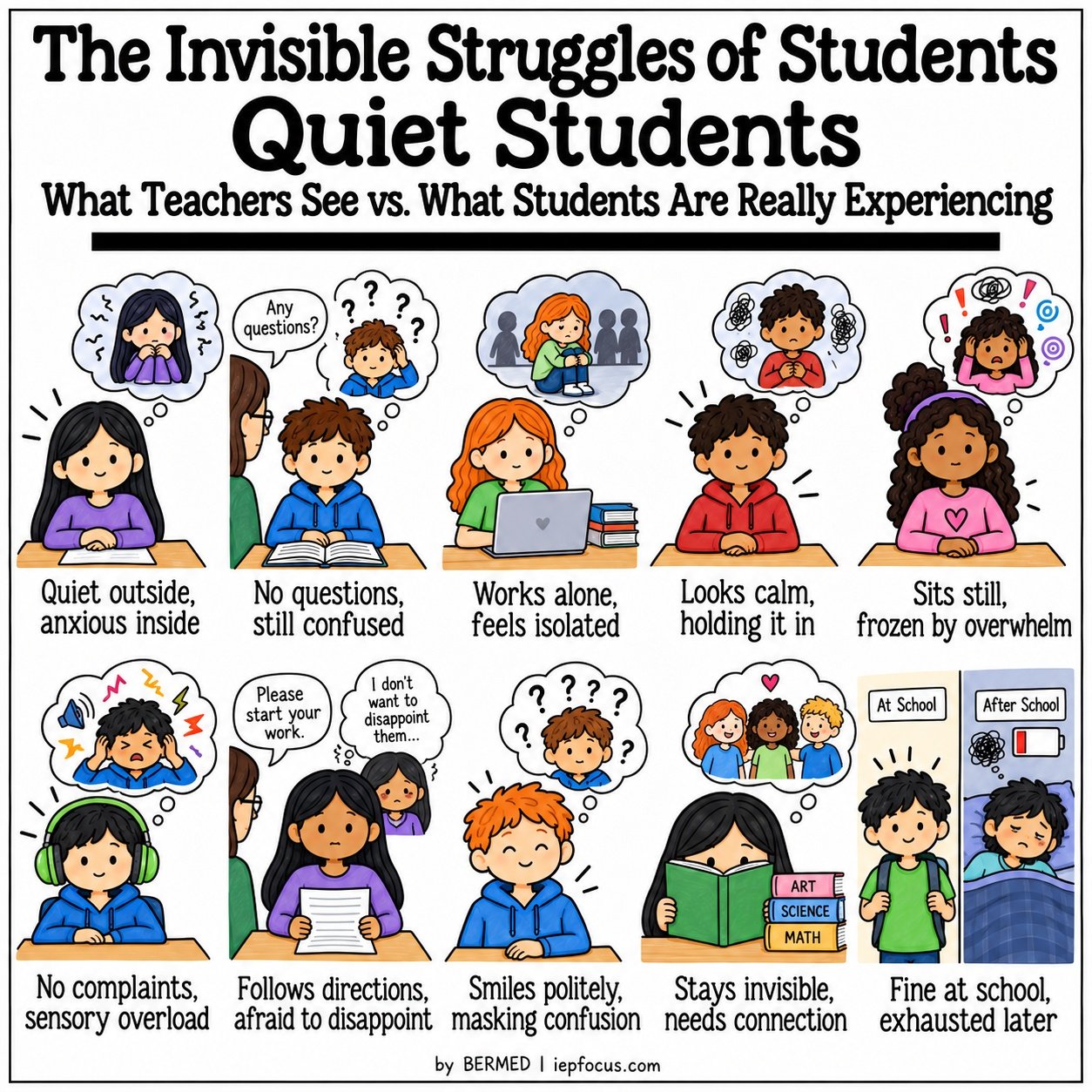
Quiet students rarely get flagged, because they do not disrupt. Yet “quiet outside, anxious inside” is one of the most common invisible struggles of students. The child who asks no questions may still be confused. The one who sits still may be frozen by overwhelm. The student with headphones who never complains may be coping with sensory overload, and the one who seems fine all day may be exhausted by the time they get home.
- Check in privately and often, with low-pressure questions like “Thumbs up, sideways or down?”
- Offer more than one way to ask for help: a help card, a sticky note or a quick chat after the lesson.
- Notice who never asks for anything, and make connection part of your routine with them.
2. Work Avoidance: “Lazy” Usually Means Overwhelmed
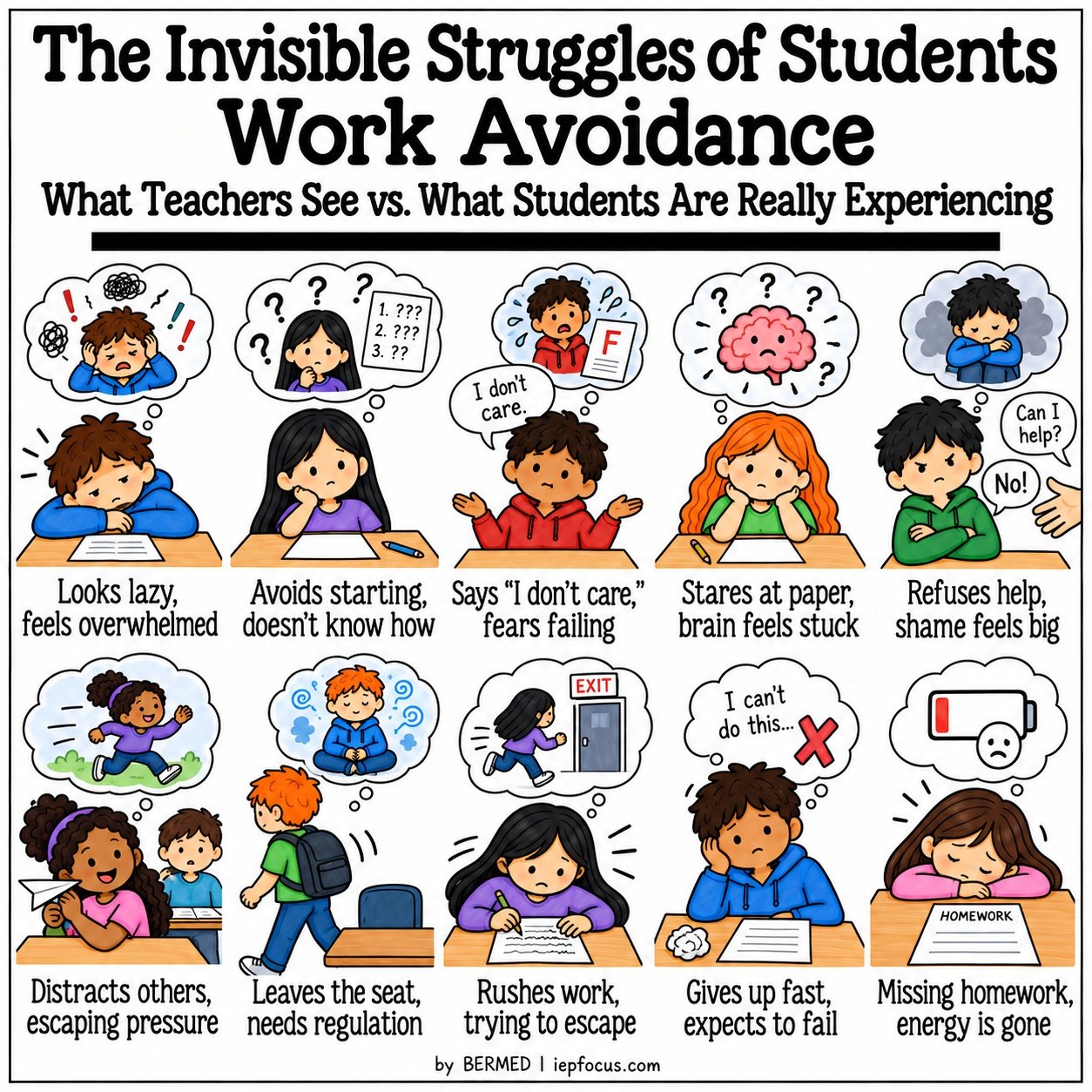
When a student puts their head down, says “I don’t care” or rushes through work, it can look like a lack of effort. Often the student does not know how to start, fears failing again, or feels a wave of shame when help is offered. Distracting others, leaving the seat and missing homework can all be ways to escape pressure or regulate an overloaded body. These are signs of a skill gap or an energy gap, not a character flaw. Many of them connect to executive function challenges.
- Shrink the first step: “Write your name and the first word,” then build from there.
- Model the start of the task together, then step back.
- Offer help as a choice, not a rescue: “Do you want me to show one example or leave you a hint?”
Help students start, plan and finish tasks. The Executive Functioning Skills Toolkit includes 10 printable tools for planning, focus, task initiation and organization.
3. Defiant Behavior: When “No” Means “I Feel Unsafe”
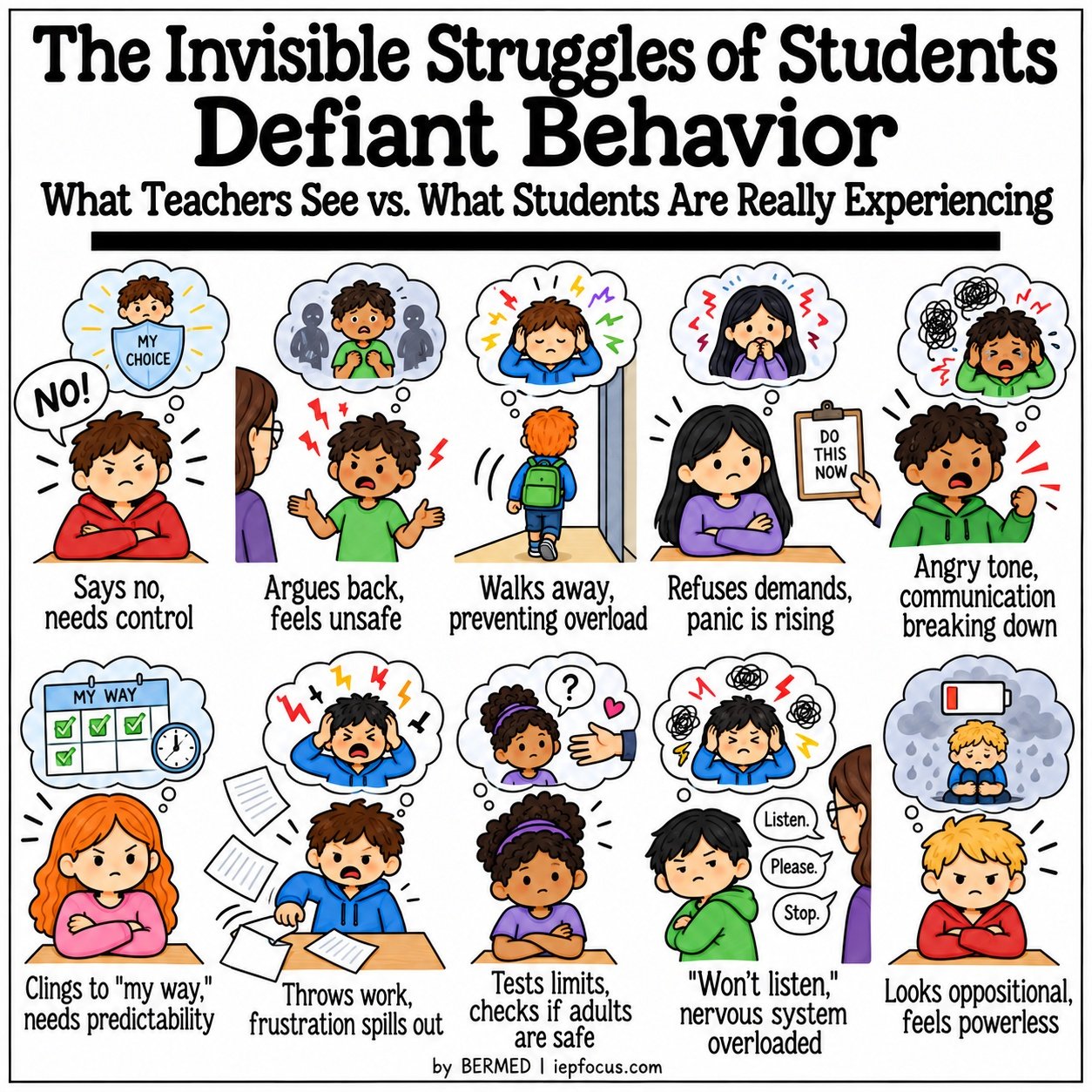
Defiant behavior is one of the hardest invisible struggles of students to read, because it feels personal. Saying no, arguing back or walking away can mean a student needs some control, feels unsafe or is trying to prevent overload. Refusing a direct demand may be panic rising. Clinging to “my way” often signals a need for predictability, and testing limits can be a way of checking whether adults are safe. For some students, especially those with a PDA profile, everyday demands can trigger a real threat response.
- Lower the demand load: offer two choices instead of one command.
- Use calm, short language and give processing time before repeating.
- Connect first, correct later. Our de-escalation scripts for teachers give you words for these moments.
4. Looks Unmotivated: Protecting Energy, Not Avoiding Learning
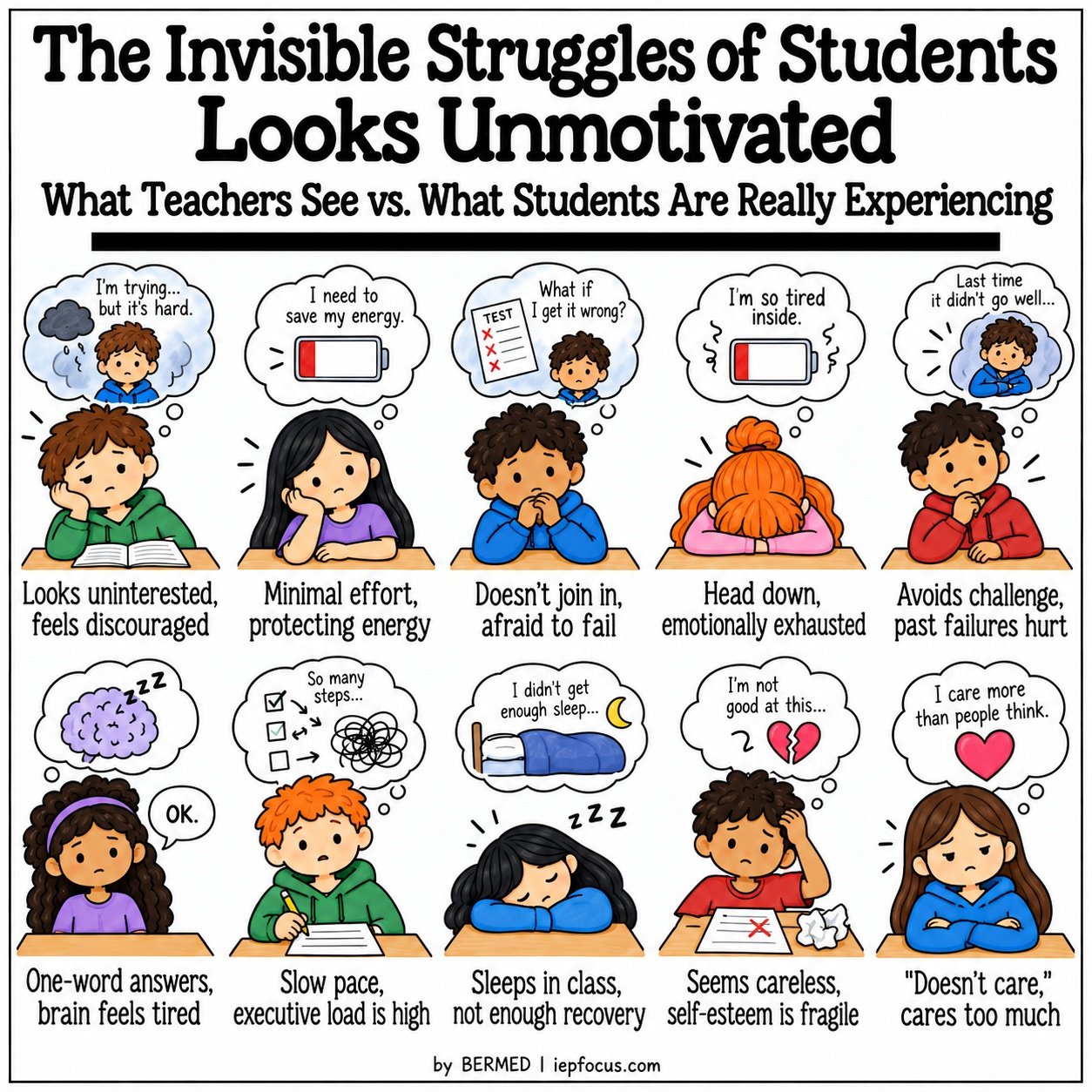
A student who looks uninterested may feel discouraged. Minimal effort can be a way of protecting limited energy. One-word answers can come from a tired brain, and a slow pace can mean executive load is high. Many students who seem careless have fragile self-esteem after repeated failures, and the student who says they “don’t care” often cares more than anyone thinks.
- Look for patterns: time of day, type of task, sleep and recent changes.
- Build quick wins into the lesson so students can feel success early.
- Name effort and strategy, not only results: “You kept going even when it was hard.”
5. Needs Constant Reassurance: Searching for Safety
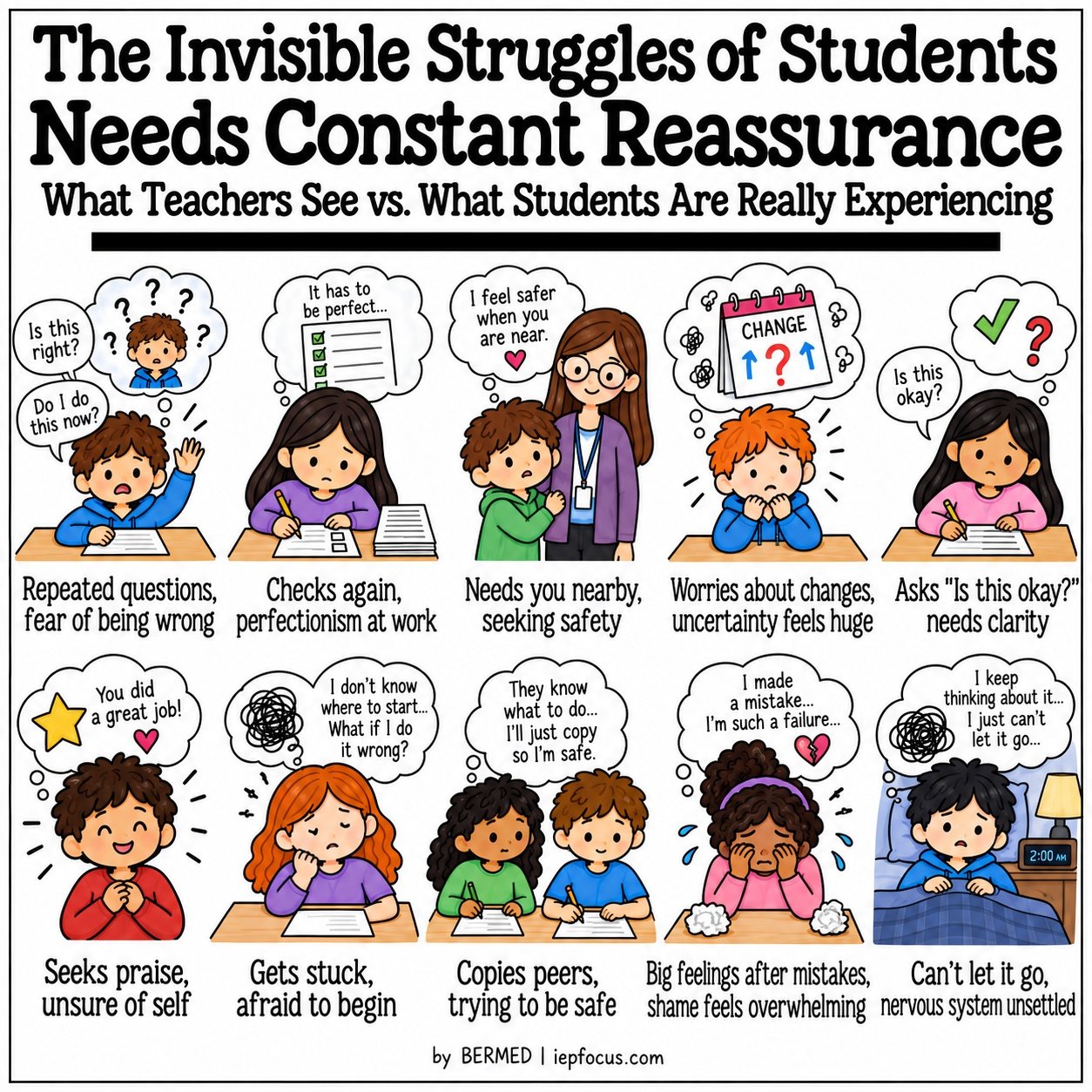
“Is this right? Do I do this now? Is this okay?” Repeated questions can wear down even the most patient teacher. Underneath, the student may fear being wrong, worry about changes or need clarity to feel calm. Copying peers can be a way to stay safe. Big feelings after small mistakes and an inability to let things go point to a nervous system that is still unsettled long after the moment has passed.
- Make expectations visible: checklists, examples and a clear “what done looks like.”
- Preview changes in the schedule before they happen.
- Gradually shift from reassuring to coaching: “What do you think the next step is?”
6. Zoning Out and Daydreaming: An Overloaded Brain
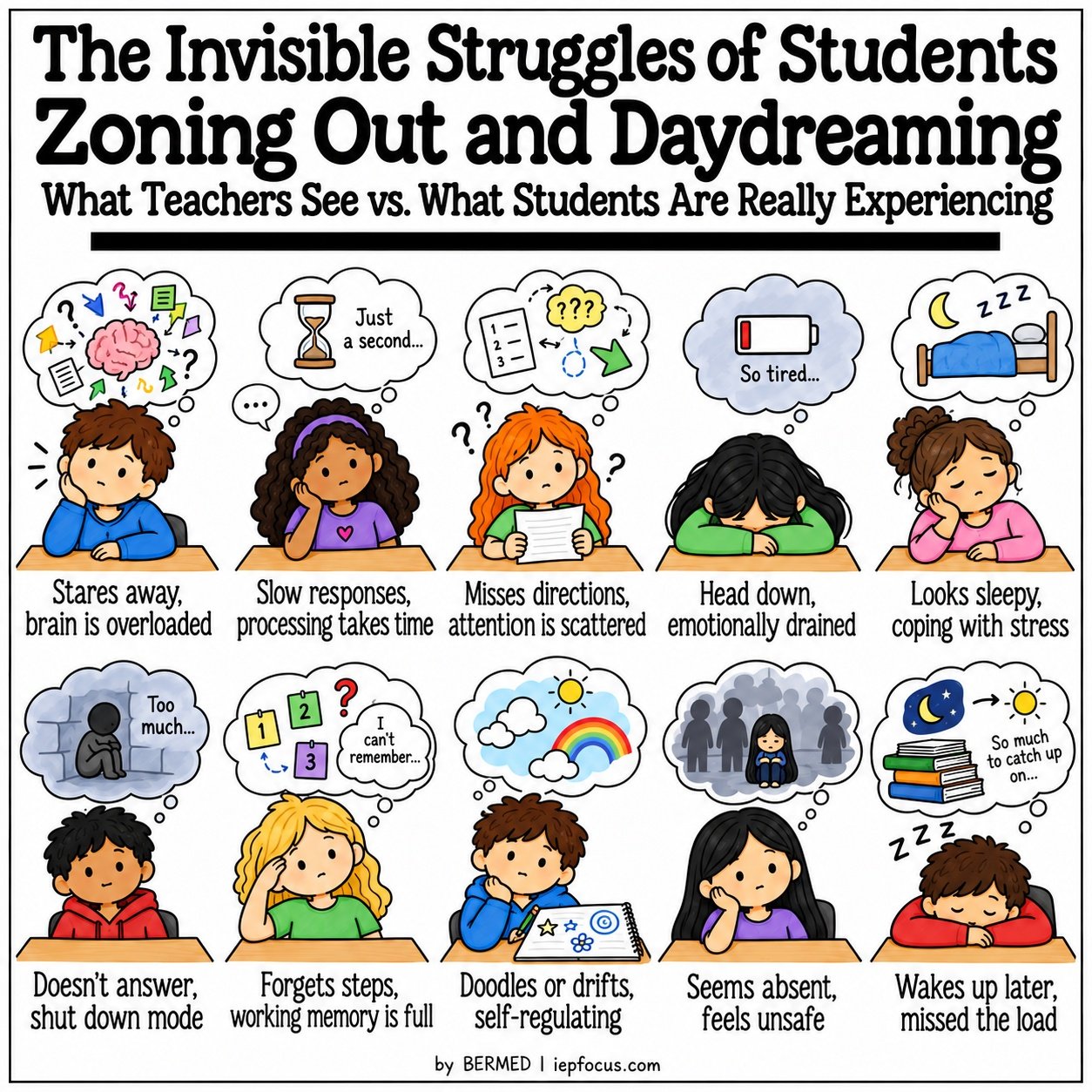
Staring away, missing directions and forgetting steps can look like not paying attention. Often the brain is overloaded, processing takes longer, or working memory is already full. Doodling can be a way to self-regulate. A student who seems absent may feel unsafe, and one who “shuts down” and does not answer may be in a protective freeze response.
- Give directions in small chunks, both spoken and written.
- Allow wait time after questions, and offer a “come back to me” option.
- Let students doodle or fidget if it helps them stay present.
7. Perfectionism: Anxiety in Disguise
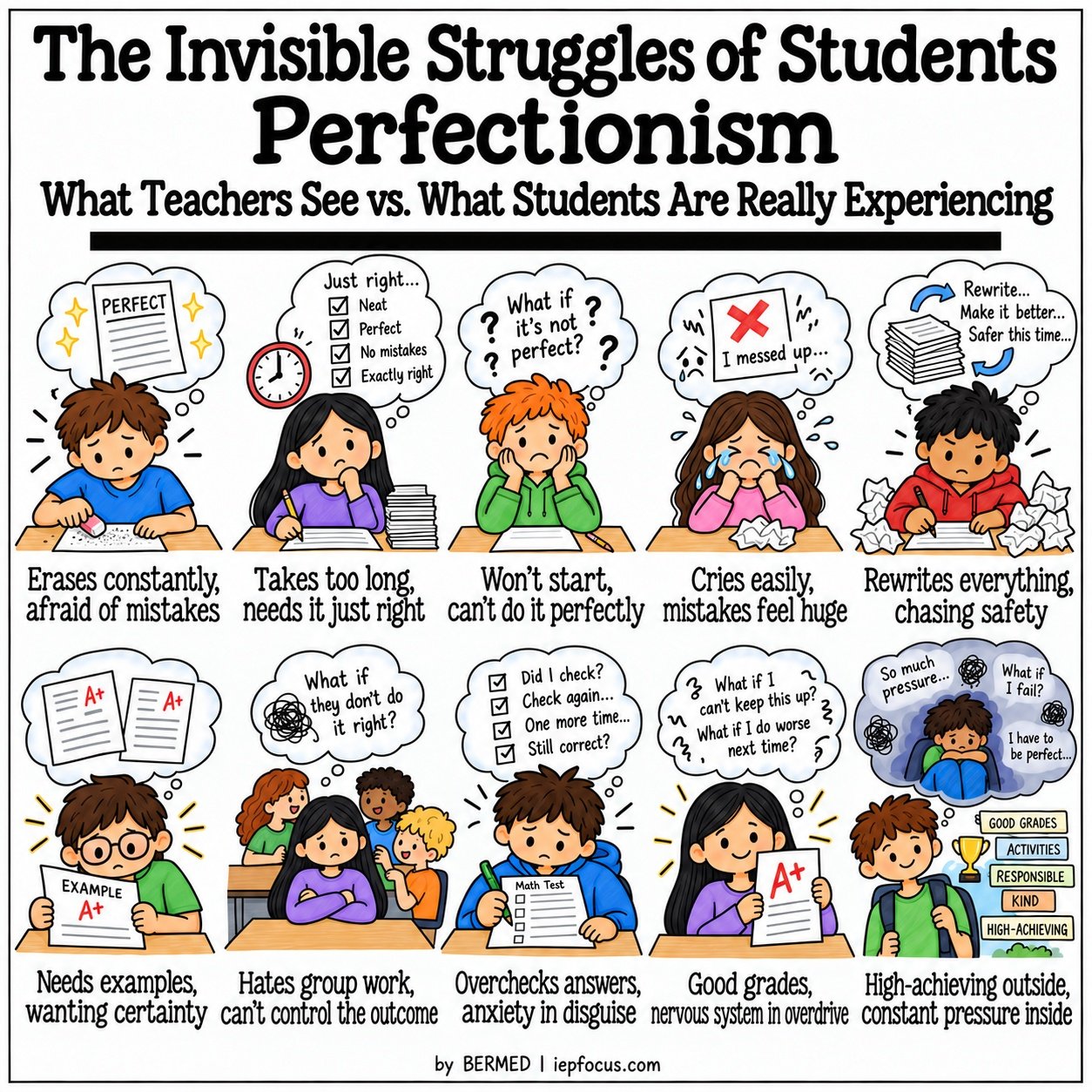
Perfectionism is easy to miss because it often comes with good grades. A student who erases constantly, takes too long, rewrites everything or will not start until it can be perfect is usually afraid of mistakes. Over-checking answers can be anxiety in disguise. Hating group work may come from not being able to control the outcome. These students may look successful while their nervous system runs in overdrive.
- Celebrate drafts, mistakes and “good enough” work out loud.
- Set time limits and show a model that is clear but not perfect.
- Talk about learning as practice, not performance.
8. Social Struggles: Working Hard to Connect
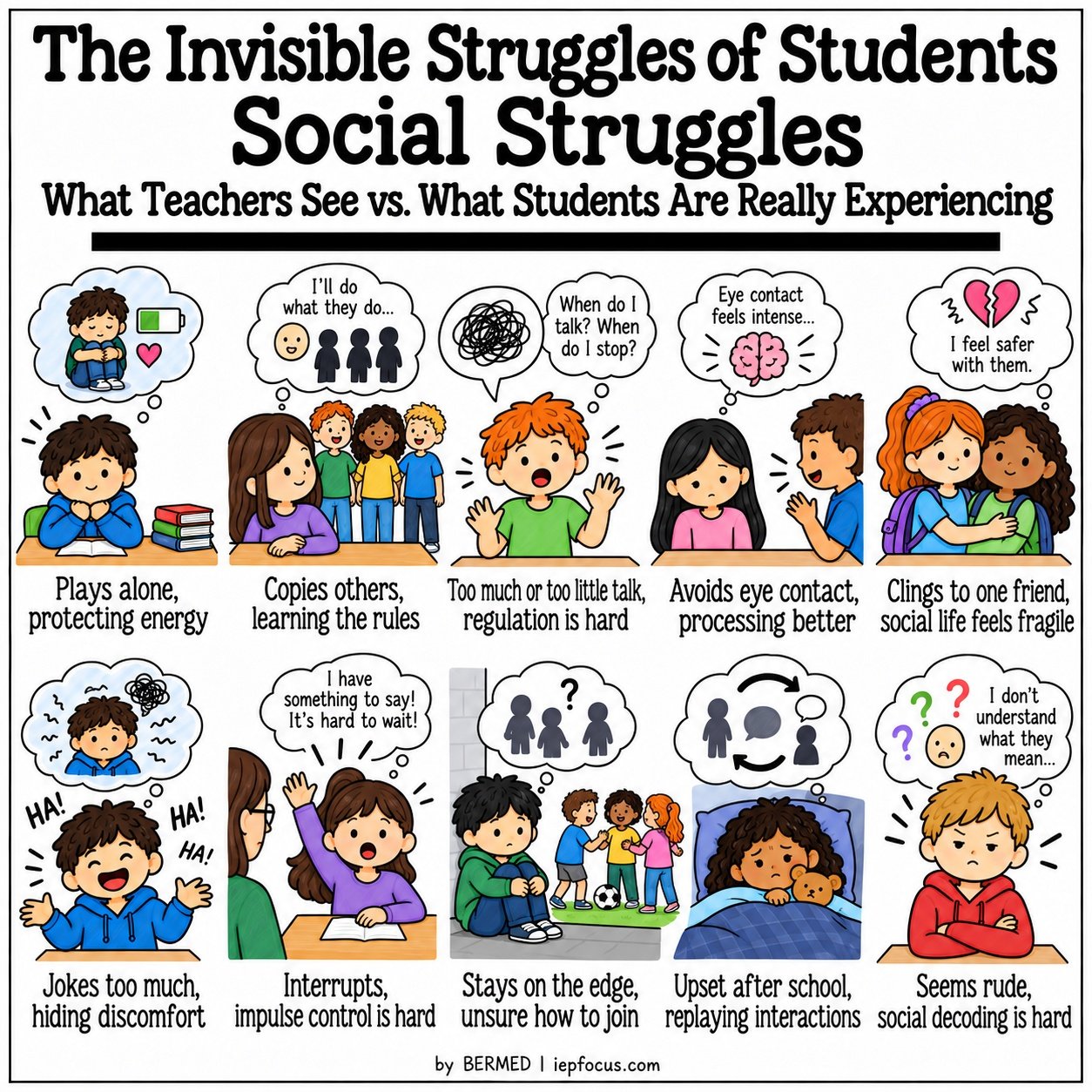
Playing alone, copying others, avoiding eye contact or clinging to one friend are often ways students protect their energy and learn the social rules. Talking too much or too little can mean regulation is hard. Joking too much may hide discomfort. A student who seems rude may simply find social decoding difficult. Many students replay interactions for hours after school.
- Do not force eye contact. Many students listen better without it.
- Give clear roles in group work so social rules are explicit.
- Create structured, low-pressure ways to join in, like clubs or shared jobs.
9. Holding It Together at School: The Cost of Masking
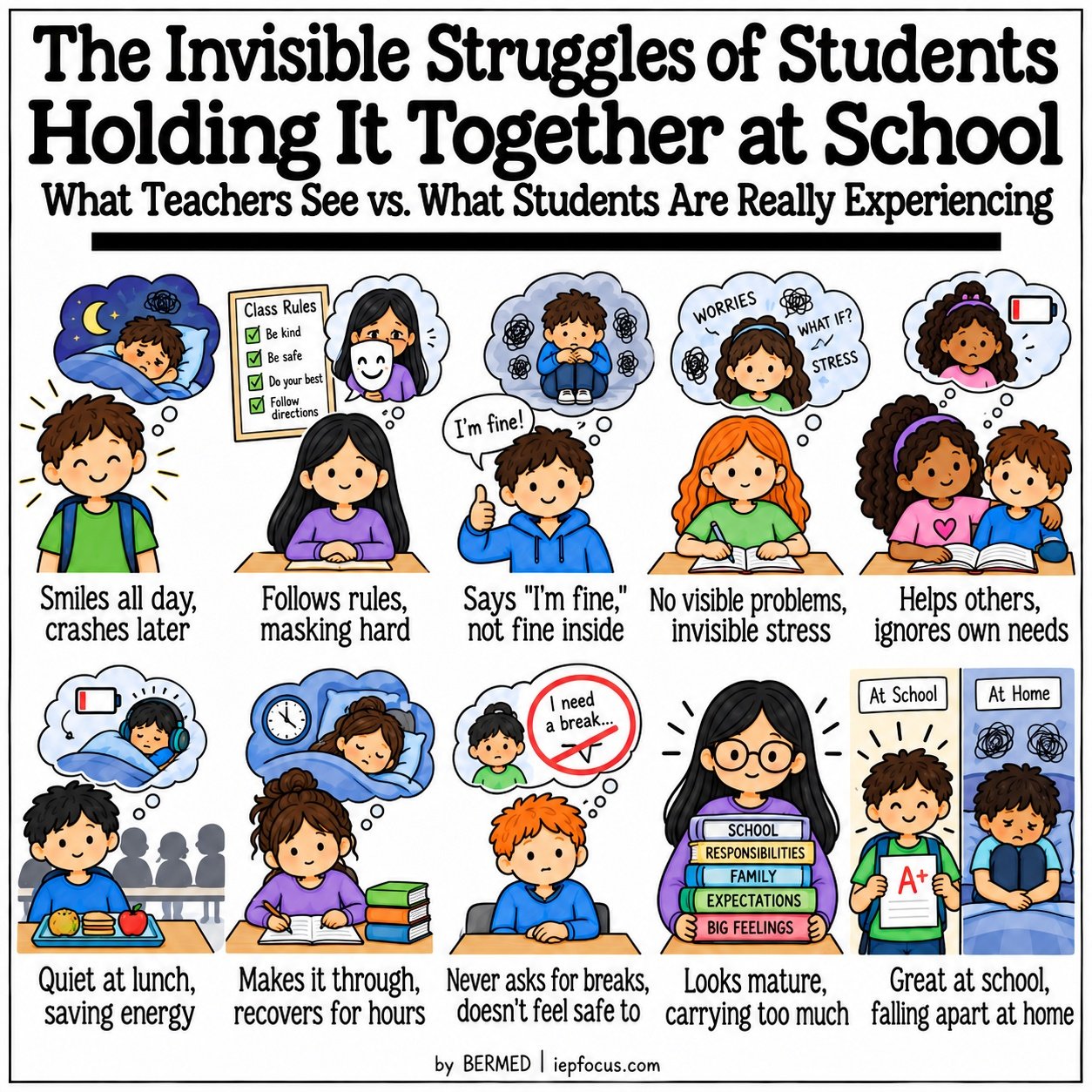
Some students smile all day, follow every rule and say “I’m fine.” Then they fall apart at home. This pattern is often linked to masking: hiding struggles to fit in. It takes a huge amount of energy. Students who never ask for breaks, help others while ignoring their own needs or look mature beyond their years may be carrying too much. When families report meltdowns at home but school sees a calm child, both reports can be true. Over time, constant masking can lead to burnout in children.
- Believe families when they describe after-school crashes.
- Build regular, no-questions-asked breaks into the day.
- Offer a quiet space, like a calm corner, before the student needs it.
10. Stress in the Body: When the Body Speaks First
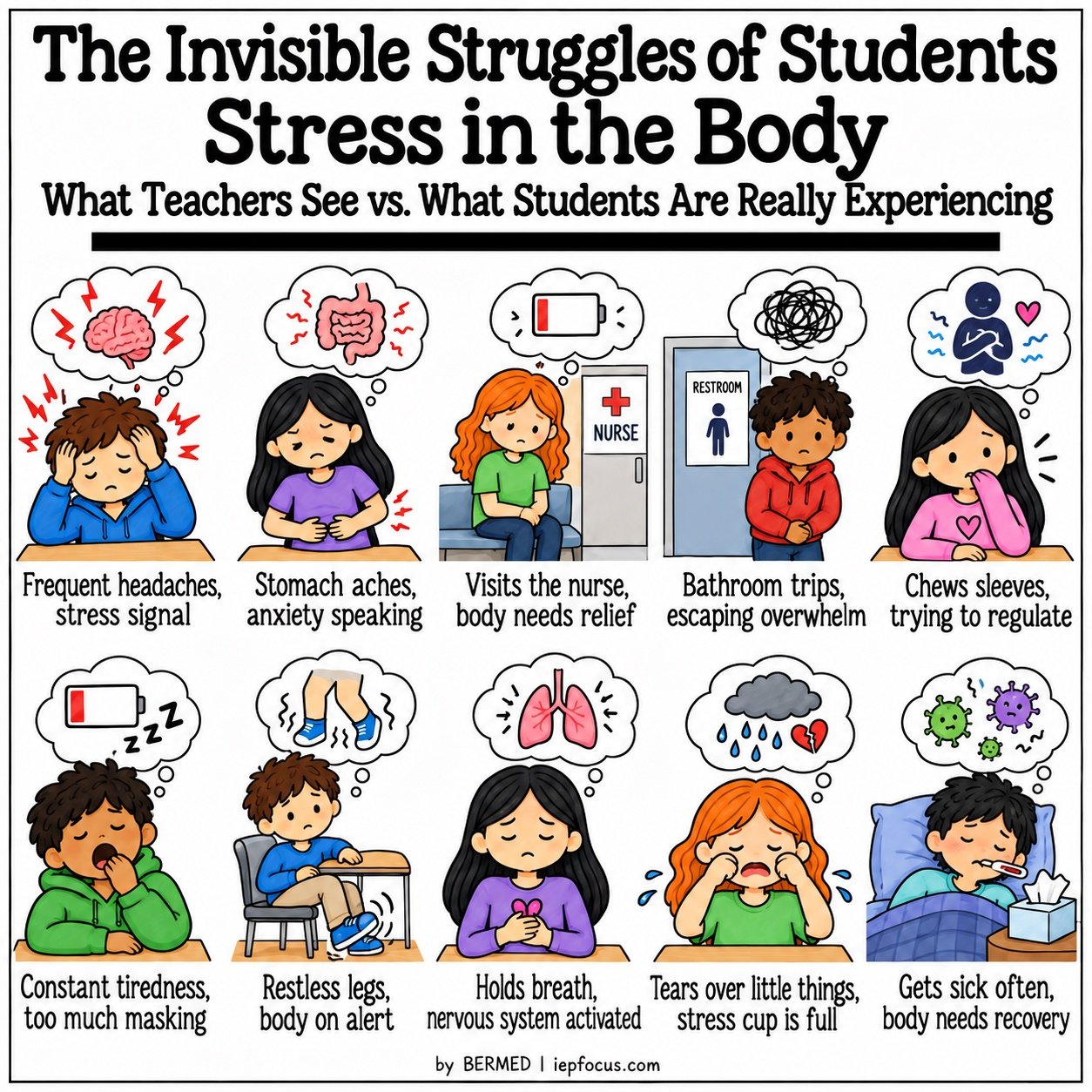
Stress often shows up in the body before a student can put it into words. Frequent headaches, stomach aches, trips to the nurse or bathroom, chewing sleeves, restless legs, holding their breath and constant tiredness can all be signs of a nervous system on alert. Tears over small things may mean the stress cup is already full. Students who get sick often may need more recovery time. Understanding interoception and emotional regulation helps us see these signals as communication.
- Treat physical complaints as real, and look for patterns with the school nurse and family.
- Teach simple body check-ins and calming tools, like slow breathing or movement breaks.
- Reduce sensory load where you can: lighting, noise and crowded transitions.
Neuroaffirming tip: We do not need to know the exact cause to respond with care. Safety, connection and predictability help almost every invisible struggle.
The BERMED “See the Need” Framework
When a behavior puzzles you, use these six questions to look under the surface:
- B: Body. Is the student tired, hungry, sick or in sensory overload?
- E: Emotion. What feeling might be driving this: fear, shame, frustration?
- R: Regulation. Is the nervous system calm, on alert or shut down?
- M: Masking. Is the student hiding a struggle to fit in?
- E: Environment. What in the room, task or schedule could be adding stress?
- D: Demand. Is the demand too big, too vague or too sudden right now?
Writing down what you observe also helps you spot patterns over time and share clear information with families and the IEP team. If you want a ready-made format, the Special Education Behavior Log Toolkit includes 10 tracking and documentation forms. For students who are often dysregulated, see our guide to supporting students with emotional dysregulation and these co-regulation strategies.
Frequently Asked Questions
What are the invisible struggles of students?
They are the internal challenges teachers cannot easily see, such as anxiety, sensory overload, executive function difficulties, shame, social stress and exhaustion from masking. They often show up as behaviors that are misread as laziness, defiance or lack of motivation.
How can teachers tell if a quiet student is struggling?
Look for patterns such as never asking questions, unfinished work despite good effort, frequent nurse visits or reports of exhaustion at home. Private, low-pressure check-ins are often the best way to find out.
Is work avoidance a behavior problem?
Usually not. Work avoidance often means the student does not know how to start, fears failing or feels overwhelmed. Breaking tasks into small steps and modeling the start often helps more than consequences.
Why do some students hold it together at school and fall apart at home?
Many students mask their struggles all day to fit in and follow rules. When they get home, where they feel safe, the stored-up stress comes out. School and family reports can both be accurate.
What is the first step when a student’s behavior is confusing?
Ask what the student needs right now instead of what they are doing wrong. Check body, emotion, regulation, masking, environment and demand, then adjust one thing and observe.
5 Actions to Take This Week
- Pick one student whose behavior puzzles you and observe them for three days.
- Add one private check-in routine for quiet students.
- Break one big assignment into small, visible steps.
- Build one predictable break into your daily schedule.
- Share one positive observation with a family this week.