
Quick answer: Halloween with autistic children goes best when it is predictable, sensory-friendly, and on your child’s terms. Try costumes on early, practice trick-or-treating with a social story, go out while it is still light, keep it short, and plan an easy exit. Quieter options like trunk-or-treats, daytime events, or a cozy night at home are just as valid. There is no “right” way to celebrate.
In this guide
Masks, doorbells, scary decorations, crowds in the dark, itchy costumes, and a bag full of unfamiliar food. Halloween is a sensory marathon. For many families, Halloween with autistic children brings both excitement and worry. A little preparation can turn it into a night your child actually enjoys.
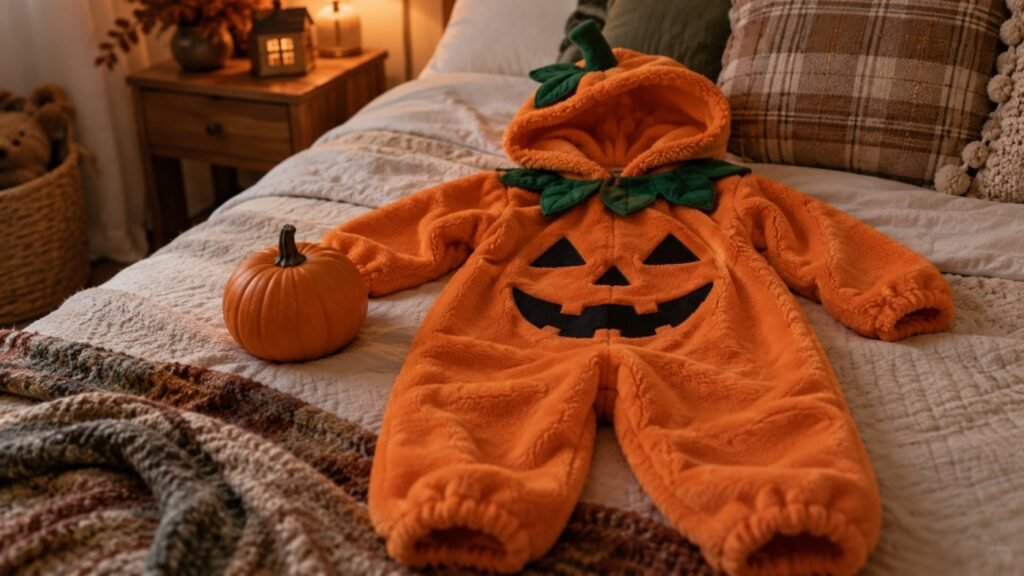
Why Halloween Can Be Hard for Autistic Children
- Sensory overload: scratchy costumes, face paint, flashing lights, loud sound effects. Our sensory needs guide explains why.
- Unpredictability: strangers, scary surprises, and a broken bedtime routine.
- Social demands: knocking, saying “trick or treat,” and “thank you” over and over.
- Food: unfamiliar candy, allergies, or a limited diet. See picky eating in autistic children.
Key point: The goal is not a “typical” Halloween. The goal is a Halloween your child can enjoy, even if that means ten minutes of trick-or-treating or none at all.
The BERMED Halloween Plan
A simple way to prepare for Halloween with autistic children.
- B: Begin early. Talk about Halloween a week or two ahead.
- E: Explain with visuals. A social story with photos of your street and costume.
- R: Rehearse. Practice wearing the costume and knocking on a door at home.
- M: Make it short. Plan a few houses, not the whole neighborhood.
- E: Exit plan. Agree on a signal to go home, no questions asked.
- D: Decompress. Plan quiet time afterward.
Sensory-Friendly Costumes
| Concern | Try this |
|---|---|
| Scratchy fabrics | Costume made from soft pajamas or fleece |
| Masks or face paint | Skip them, or use a hat or headband instead |
| Tight fits | Size up, or wear comfy clothes underneath |
| Cold weather | Choose a costume that goes over a warm coat |
| Changing plans | Let your child wear the costume at home only |
CHOC psychologist Dr. Jina Jang recommends a dress rehearsal so texture or fit problems come up before Halloween night. She also encourages families to celebrate their child’s real interests, whatever their age.
Trick-or-Treating Tips
Read a social story. Show what happens at each door, step by step. Our guide to social stories shows how to write one.
Go early. Daylight is calmer and less scary. Bring glow sticks and take a photo of your child in costume before leaving.
Choose familiar houses. Neighbors you know, or homes without scary decorations.
Support communication. Nonspeaking children can use a card or AAC button. See AAC in the classroom.
Bring ID. Especially for children who may wander or cannot share their name.
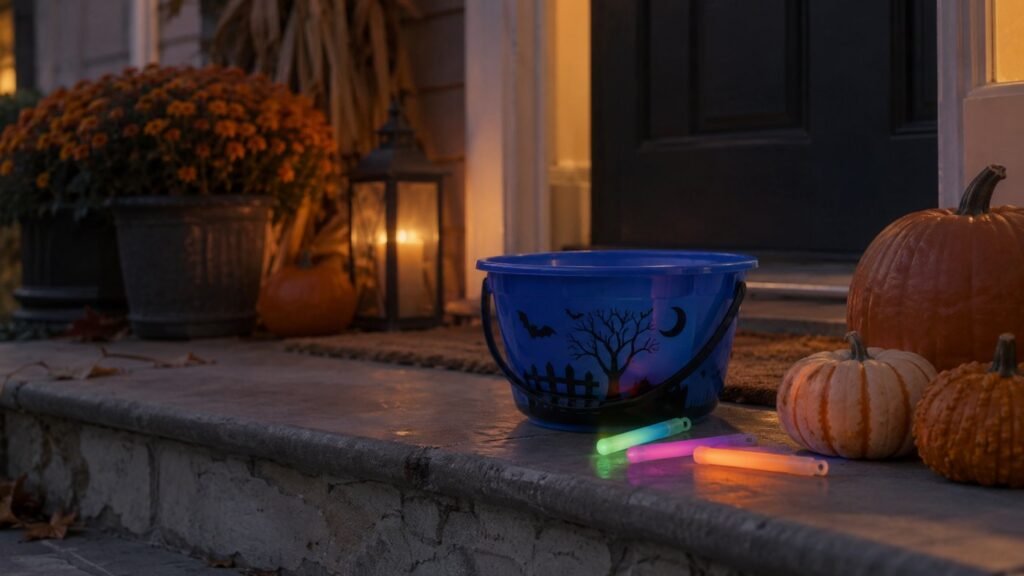
Some families carry a blue bucket to signal autism awareness. Others prefer not to share their child’s diagnosis. Both choices are fine.
Alternatives to Trick-or-Treating
- Trunk-or-treat events in a parking lot
- Daytime or sensory-friendly community events
- Handing out candy at home instead
- A family movie and pumpkin night
- Swapping candy for small toys or stickers

Do
- Let your child choose how much to take part
- Keep bedtime as close to normal as possible
- Bring headphones and a snack
- Include siblings in the plan
Avoid
- Forcing masks, makeup, or scary houses
- Staying out past your child’s limit
- Comparing to other families
- Pushing “trick or treat” or “thank you” scripts
After Halloween
Expect a tired, possibly dysregulated child the next day. Plan a calm morning. If a meltdown happens, it is a sign of overload, not bad behavior. Read meltdown vs tantrum. Brothers and sisters may need their own Halloween time too, see siblings of autistic children.
Remember: Halloween with autistic children does not need to look like anyone else’s. Joy, comfort, and connection matter more than how many houses you visit.
How can I make Halloween easier for my autistic child?
Prepare early with a social story, try the costume on ahead of time, go out in daylight, keep it short, choose familiar houses, and plan an easy exit.
What are good sensory-friendly Halloween costumes?
Costumes made from soft pajamas or fleece, without masks or face paint, that fit loosely and can go over warm clothes work well for many autistic children.
What does a blue Halloween bucket mean?
Some families use a blue bucket to signal autism awareness so neighbors understand if a child does not say trick or treat. Using it is a personal choice.
What if my autistic child doesn’t want to trick-or-treat?
That is completely fine. Try a trunk-or-treat, a daytime event, handing out candy at home, or a cozy family Halloween night.
How can nonspeaking children trick-or-treat?
They can use a printed card, a sign, or an AAC button to say trick or treat or thank you, or simply hold out their bucket.
5 Actions to Take This Week
- Choose a comfortable costume with your child.
- Do a dress rehearsal at home.
- Write a short Halloween social story.
- Pick a few familiar houses or a quieter event.
- Agree on an exit signal.
Sources

