
Quick answer: Autism and the holidays can be a hard mix because the season changes routines, adds noise, lights, crowds, new foods and social demands all at once. Plan ahead with a visual calendar and social stories, keep sleep and meals as regular as possible, decorate gradually, create a quiet space wherever you go, prepare relatives, and keep only the traditions that truly matter to your family. Your child will enjoy the holidays in their own way, and that is enough.
In this guide
Holiday movies show calm families around a perfect table. Real life with an autistic child can look different: a meltdown in a crowded store, a refusal to wear the special outfit, tears when the living room suddenly changes. None of this means the holidays are ruined. With some planning, autism and the holidays can work together, and your family can build traditions that fit your child rather than the other way around.
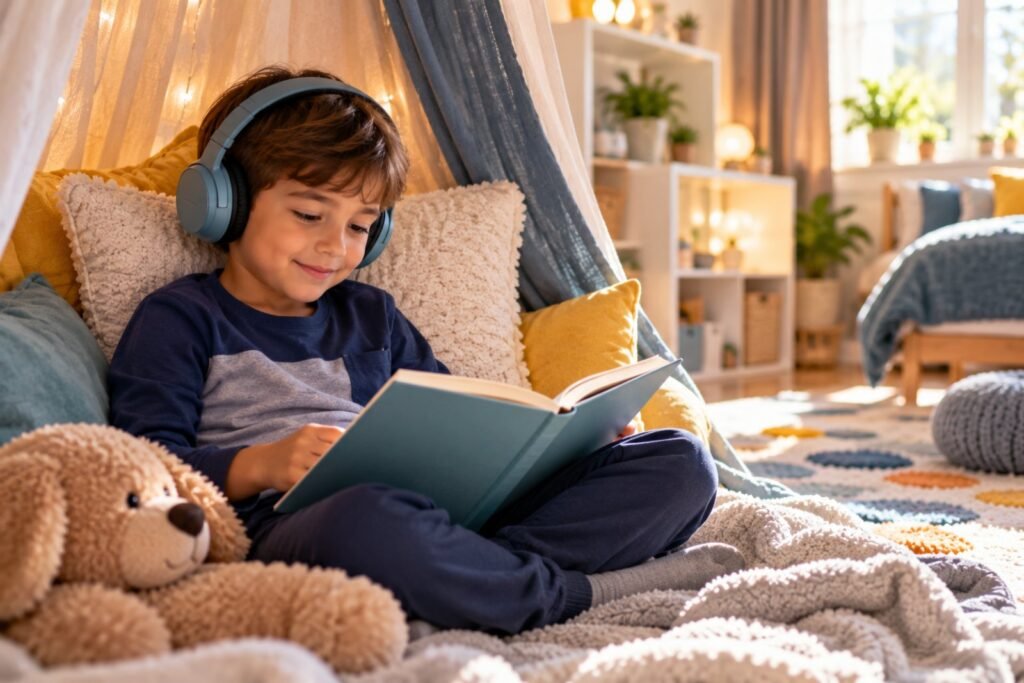
Why Autism and the Holidays Can Be a Hard Mix
| Holiday change | Why it is hard | Simple support |
|---|---|---|
| No school routine | Loss of predictability | Daily visual schedule at home |
| Lights, music, crowds | Sensory overload | Headphones, sunglasses, short outings |
| Rearranged furniture | Familiar space suddenly changes | Decorate gradually with your child |
| Visitors and travel | Social demands, new places | Photos of people and places in advance |
| New foods | Sensory and texture sensitivities | Bring safe foods to every meal |
| Late nights | Less sleep, more dysregulation | Protect bedtime as much as possible |
Key point: Pediatric psychologists recommend keeping bedtime and mealtime routines steady, using visual schedules and social stories, decorating gradually and creating a quiet room during the holidays (CHOC Children’s).
Plan Ahead: Your Holiday Countdown
A four-week holiday plan
A visual calendar lets your child see which days are school days, which are home days and when visits happen. Our guide to a visual schedule for home explains how to make one.
12 Practical Tips for Autism and the Holidays
- Keep anchors. Same wake-up time, same breakfast, same bedtime routine whenever possible.
- Use social stories. Short stories with photos explain what will happen at a party or a visit. See how to write a social story.
- Decorate gradually. Add one decoration a day and let your child help place it.
- Choose calm lights. Avoid blinking lights and strong scented candles if your child is sensitive.
- Create a quiet space. A bedroom, a car or a corner with a blanket and headphones, available at home and at every visit.
- Pack a calm kit. Headphones, fidgets, a comfort object, a tablet with downloaded videos, safe snacks.
- Bring safe foods. Never force new holiday foods. Put a familiar plate next to the festive one.
- Allow comfortable clothes. The soft favorite sweater is better than a meltdown over a stiff collar.
- Shorten outings. Visit the store or the market at quiet times, and plan an exit.
- Use a signal. Agree on a word or card your child can use when they need a break.
- Protect sleep. Late events can trigger days of dysregulation. Read sleep problems in autistic children.
- Lower expectations, raise connection. Twenty happy minutes beats three stressful hours.

Family Visits and Gatherings
Relatives often want to help but may not understand. A short message before the visit prevents misunderstandings and hurt feelings.
Message to family before a holiday visit
“We are so happy to see you! To help Sam enjoy the day, please greet him with a wave instead of a hug, and don’t worry if he goes to the quiet room for a while. He may eat his own food, and that’s okay. If he gets upset, the best help is to give us some space. Thank you for making the day easier for him.”
| Moment | What helps |
|---|---|
| Arrival | Arrive early before the house is crowded, show the quiet room first |
| Meal | Seat your child at the end of the table, with safe foods and a time limit |
| Noise peak | Headphones on, short walk outside |
| Signs of overload | Leave the room calmly before a meltdown, using your break signal |
| Leaving | Use a timer and a “goodbye” card, then a calm car ride |
Gifts and Opening Presents
Opening presents can be exciting and overwhelming. Some children prefer to open one gift at a time, spread over the day. Others like to know what is inside. Both are fine.
- Share a gift list with relatives based on real interests.
- Use easy-to-open bags instead of heavy wrapping if needed.
- Practice opening a wrapped box before the holiday.
- Allow time to explore one gift before opening the next.
- Remove batteries from loud toys until your child is ready.
- Teach a simple “thank you” script or card in advance.

Real-Life Example
Case story
Last year, Noah, 9, had a meltdown at a crowded family dinner and the family left early. This year, his mother sent photos of the relatives in advance, prepared a social story, packed his favorite pasta and arranged a quiet room upstairs. Noah arrived one hour early, spent two short breaks upstairs with his headphones and joined the family for dessert. It was not a perfect day, but it was a happy one.
Related: Read our guides on meltdown vs tantrum and siblings of autistic children.
Autism and the Holidays: FAQ
How can I prepare my autistic child for the holidays?
Use a visual calendar, social stories and photos of people and places, starting two to four weeks ahead.
Should we skip family gatherings?
Not necessarily. Shorter visits, early arrival and a quiet room often make gatherings possible.
What if my child hates holiday clothes?
Choose comfort over appearance. A favorite soft outfit is perfectly fine.
How do I handle a meltdown at a relative’s house?
Move calmly to a quiet space, reduce talking and sensory input, and wait. Explain to relatives later.
Are sensory-friendly holiday events a good idea?
Yes. Many communities offer sensory-friendly visits with Santa, shows or markets with lower noise and lights.
In short: Autism and the holidays can go well together with planning, predictable anchors, sensory supports and flexible traditions. Focus on connection, not perfection. Find more family ideas in our At Home section.
Was this article helpful?
Tap a star to rate
Sources
- CHOC Children’s. Tips to Foster a Happy Holiday Season for Kids With Autism
- AFIRM, UNC Frank Porter Graham Child Development Institute. Visual Supports
- STAR Institute. Sensory Over-Responsivity
This article is educational and does not replace advice from your child’s care team.

