
Quick answer: A functional behavior assessment (FBA) is a process schools use to understand why a student’s behavior is happening, so the team can respond with support instead of punishment. It gathers interviews, observations, and data, often in an ABC format (antecedent, behavior, consequence), to identify the need the behavior serves. The findings lead to a behavior intervention plan (BIP) with proactive supports, replacement skills, and environmental changes. The Center for Parent Information and Resources describes it as figuring out what the child is trying to say through their behavior.
In this guide
A student keeps running out of math class. Detentions do not help. Calls home do not help. The behavior keeps happening because no one has answered the most important question: why? A functional behavior assessment shifts the focus from stopping behavior to understanding it.

What Is a Functional Behavior Assessment?
An FBA is a structured way to identify the function, or purpose, of a behavior. All behavior communicates something. Common functions include escaping something hard or overwhelming, getting attention or connection, accessing something wanted, or meeting a sensory need.
Key point: An FBA asks “What is this behavior telling us?” not “How do we make it stop?” The answer shapes support that actually works.
When Is an FBA Needed?
- When behavior gets in the way of the student’s learning or others’ learning
- When usual classroom strategies have not worked
- Under IDEA discipline provisions, for example when a student with a disability faces certain removals and the behavior is linked to their disability
- Whenever the IEP team needs to understand behavior better
Parents can request an FBA in writing at any time.
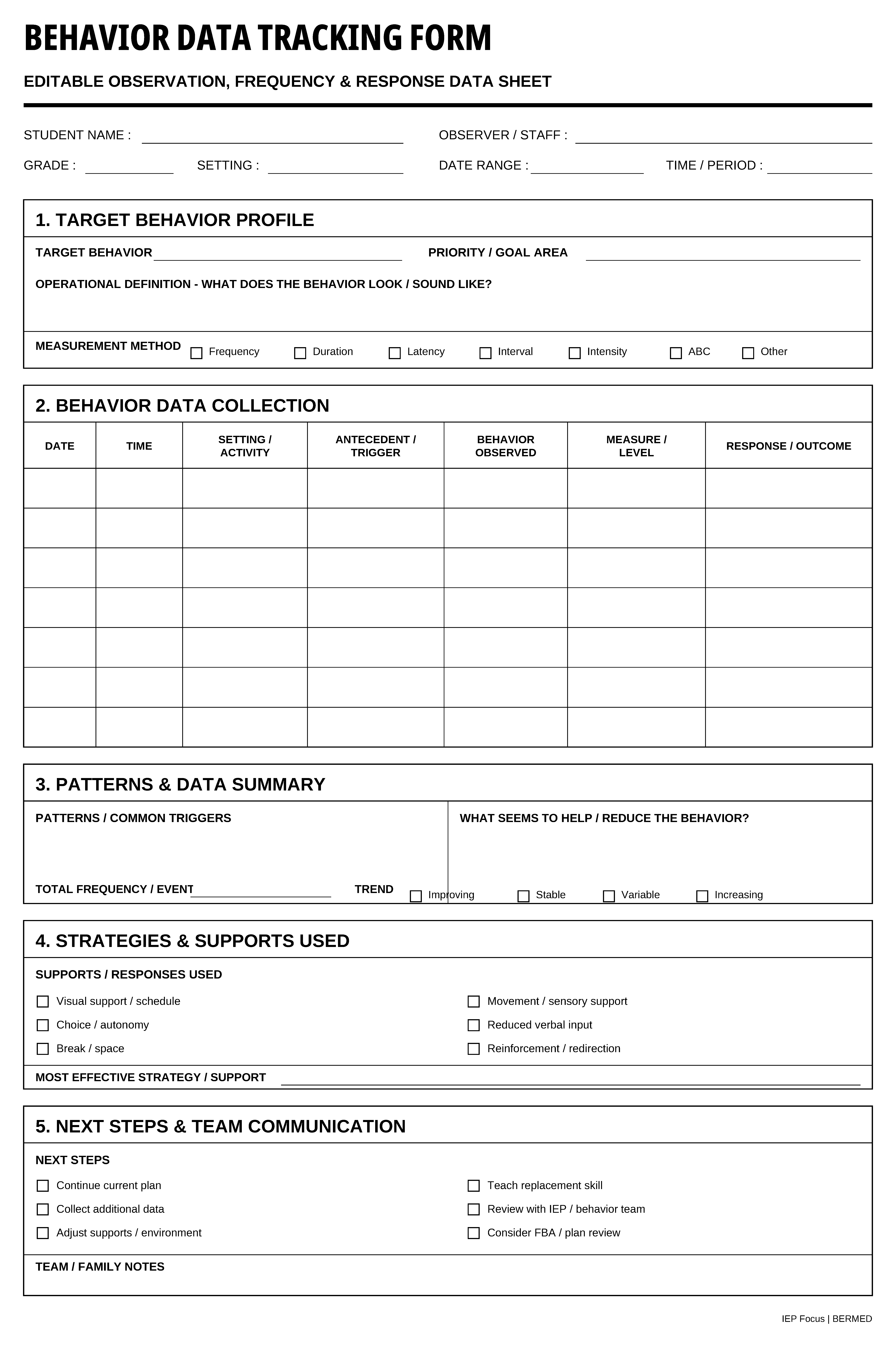
Free resource
Behavior Data Tracking Form
Editable observation, frequency and response data sheet for FBAs and BIPs.
FBA Steps
1. Define the behavior. Describe it clearly and observably: “leaves the classroom without permission,” not “is defiant.”
2. Gather information. Interview the student, family, and staff. Review records.
3. Observe and collect data. Use ABC recording across different times and settings.
4. Form a hypothesis. “When given long written tasks, the student leaves the room to escape writing demands.”
5. Plan and test supports. Build a BIP and monitor whether it helps.
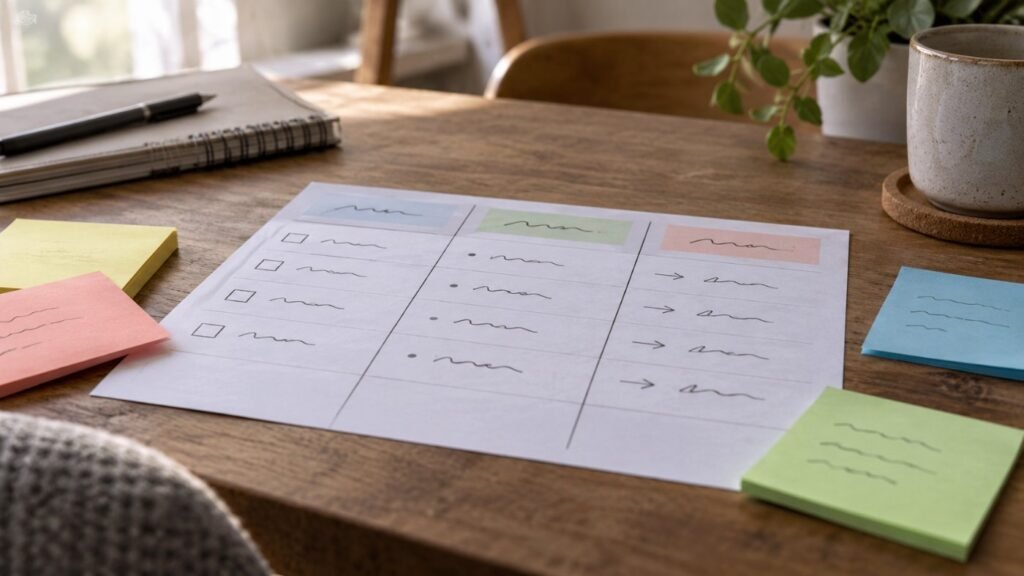
| Antecedent | Behavior | Consequence | Possible function |
|---|---|---|---|
| Long writing task | Leaves the room | Avoids writing | Escape a hard task |
| Noisy cafeteria | Hits a peer | Sent to quiet office | Escape sensory overload |
| Teacher helping others | Calls out loudly | Teacher responds | Connection or help |
The BERMED Neuroaffirmative FBA Lens
Questions to add to every functional behavior assessment.
- B: Body and sensory. Could pain, hunger, sleep, or sensory overload be involved?
- E: Environment. What about the room, schedule, or task makes this harder?
- R: Regulation. Is this a meltdown or shutdown rather than a choice?
- M: Meaningful communication. Does the student have a reliable way to say “stop” or “help”?
- E: Expectations. Are the demands realistic for this student’s skills right now?
- D: Dignity. Does the plan respect the student and avoid shame or punishment?
From FBA to BIP
A behavior intervention plan uses FBA findings to build support. Strong BIPs include prevention strategies, replacement skills, and calm responses:
- Prevention: adjust tasks, add sensory breaks, use visual supports.
- Replacement skills: teach a break card or a way to ask for help.
- Response: calm, consistent adult responses, like those in behavior de-escalation in the classroom.
- Regulation support: co-regulation strategies for staff.

Do
- Include the student’s perspective
- Collect data across settings
- Teach replacement skills
- Review and update the plan regularly
Avoid
- Vague labels like “defiant” or “manipulative”
- Plans built only on consequences
- Ignoring sensory and medical factors
- One observation as the whole picture
Use a simple tracking tool like our behavior de-escalation log. For meltdowns specifically, see autistic meltdowns in the classroom.
What Parents Should Know
You can request an FBA, take part in interviews, and share what you see at home. Ask how the school will measure progress and how often the plan will be reviewed. If aggression is happening at home too, read aggression in autistic children.
Behavior is communication: When a functional behavior assessment is done well, it builds understanding between the student, family, and school, and that understanding changes everything.
What is a functional behavior assessment?
A functional behavior assessment is a process that uses interviews, observations, and data to identify why a student’s behavior happens, so the team can plan effective support.
When does a student need an FBA?
When behavior interferes with learning, when usual strategies have not worked, or under certain IDEA discipline situations. Parents can request one in writing.
What is ABC data?
ABC data records the antecedent (what happened before), the behavior, and the consequence (what happened after), to reveal patterns and possible functions.
What is the difference between an FBA and a BIP?
The FBA explains why a behavior happens. The behavior intervention plan uses those findings to lay out prevention strategies, replacement skills, and responses.
Can parents request an FBA?
Yes. Parents can request a functional behavior assessment in writing and should be involved throughout the process.
5 Actions to Take This Week
- Describe one challenging behavior in observable terms.
- Collect ABC data for five days.
- Ask the student what makes that moment hard.
- Check for sensory, medical, and communication factors.
- Request or schedule an FBA meeting if needed.
Sources

