
Quick answer: Executive functioning IEP goals target the skills that help students plan, start, organize, focus, shift and finish their work: task initiation, planning, organization, time management, working memory, flexibility and self-monitoring. Good goals name one skill, the tool or support used (checklist, planner, timer), and a measurable criterion like “4 of 5 opportunities with no more than 1 prompt.” This bank gives you 45 SMART executive functioning IEP goals by skill.
In this goal bank
A student who knows the material but never turns in homework, loses every worksheet, or cannot start a task without an adult beside them usually needs executive functioning support, not more content instruction. Executive functioning IEP goals turn those daily struggles into measurable skills. This bank is part of our IEP Goal Bank series.
How to Write Executive Functioning IEP Goals
The Harvard Center on the Developing Child describes executive function as an air traffic control system in the brain and stresses that no one is born with these skills: they develop with the right supports. Learn more in our guide to executive function.
Formula: By [date], given [tool or support], [Student] will [observable executive function skill] in [number] of [number] opportunities with [prompt level] as measured by [data tool].
Present level example: “Noah begins independent work within 2 minutes in 1 of 5 observed opportunities. He needs 3 to 4 verbal prompts to start and often asks what to do first. He completes 40% of assigned homework.”
Key point: Measure independence, not just completion. A goal that moves a student from 4 prompts to 1 prompt shows real executive function growth.
Task Initiation Goals
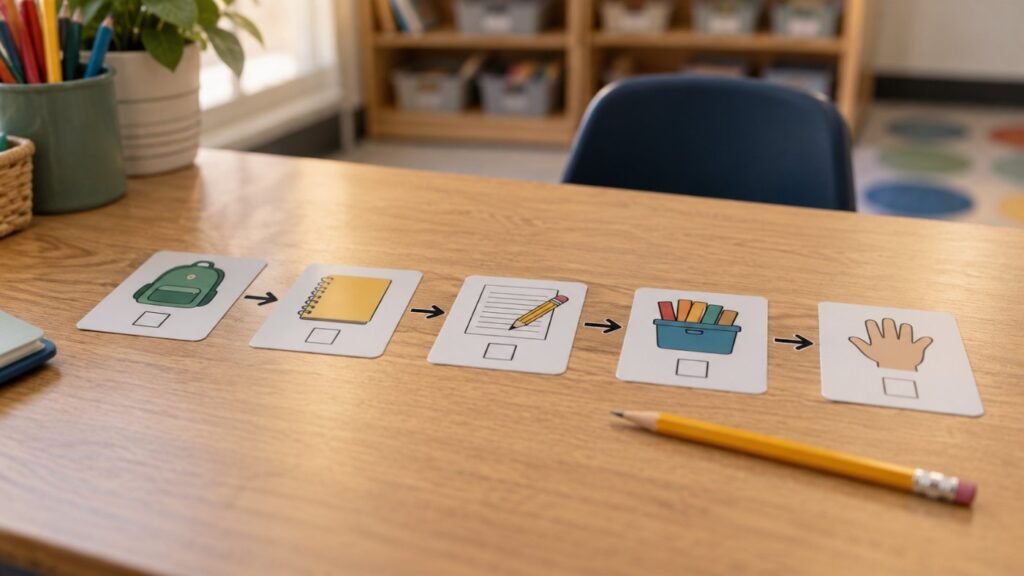
- Given a visual first-step card, [Student] will begin an independent task within 2 minutes in 4 of 5 opportunities.
- Given a task, [Student] will state or point to the first step before starting in 4 of 5 opportunities.
- Given a visual timer, [Student] will start a non-preferred task within 3 minutes with no more than 1 prompt in 4 of 5 trials.
- [Student] will use a “2-minute start” strategy to begin homework in 4 of 5 days, as reported on a home-school log.
- [Student] will request help using a help card or signal when stuck, rather than waiting, in 4 of 5 opportunities.
- Given choice of task order, [Student] will select and begin the first task within 2 minutes in 4 of 5 trials.
Planning and Prioritizing Goals
- Given a multi-step assignment, [Student] will break it into steps using a template in 4 of 5 assignments.
- Given a long-term project, [Student] will create a timeline with at least 3 checkpoints in 4 of 5 projects.
- Given a list of tasks, [Student] will prioritize them by due date or importance with 80% accuracy.
- [Student] will write daily assignments in a planner or digital calendar with 90% accuracy across 4 weeks.
- Before a task, [Student] will make a simple plan (what, how, how long) in 4 of 5 opportunities.
- [Student] will estimate how long a task will take and compare it to actual time in 4 of 5 tasks.
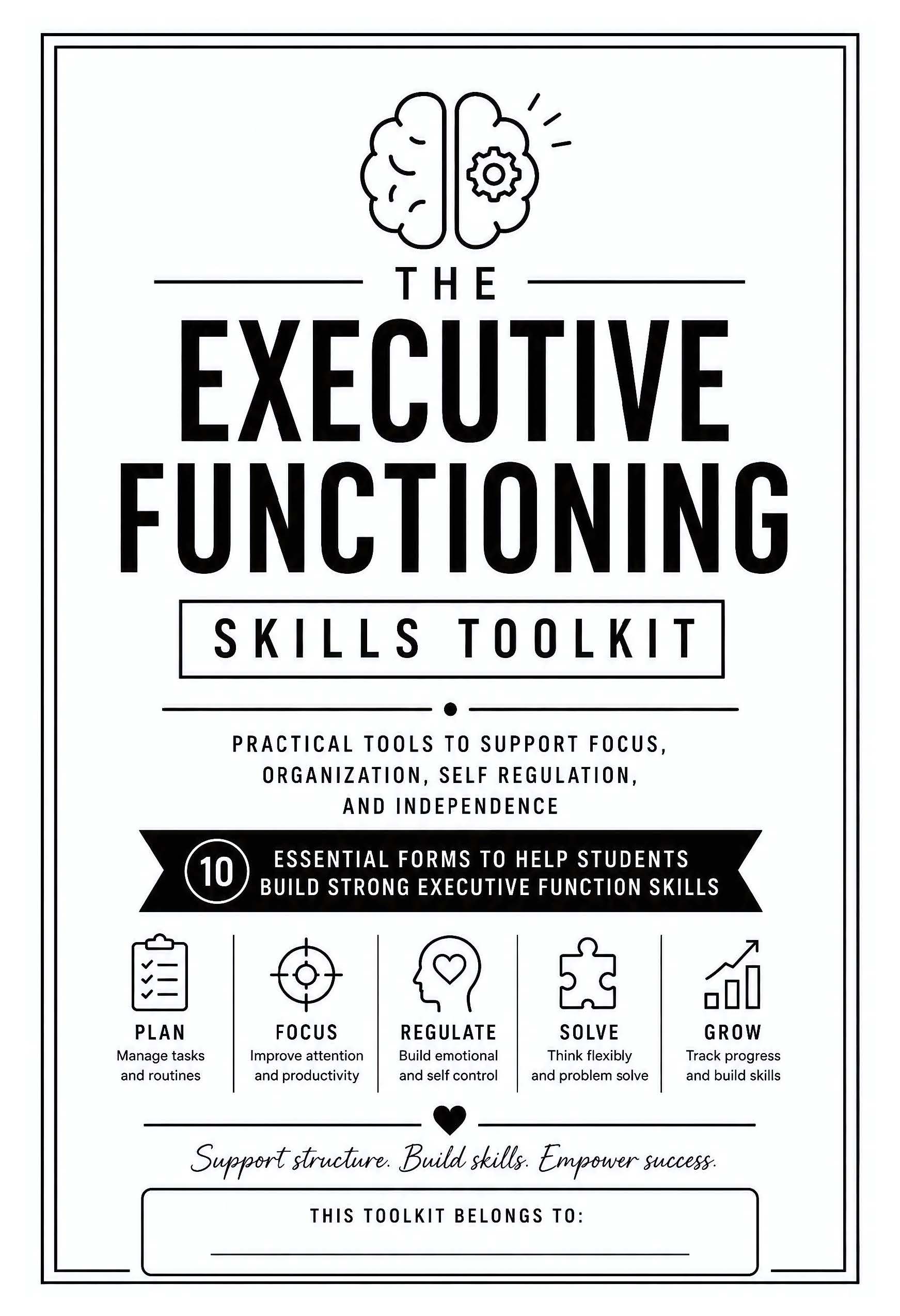
Free resource
Executive Functioning Skills Toolkit
10 printable tools to help students plan, focus, start tasks and stay organized.
Organization Goals
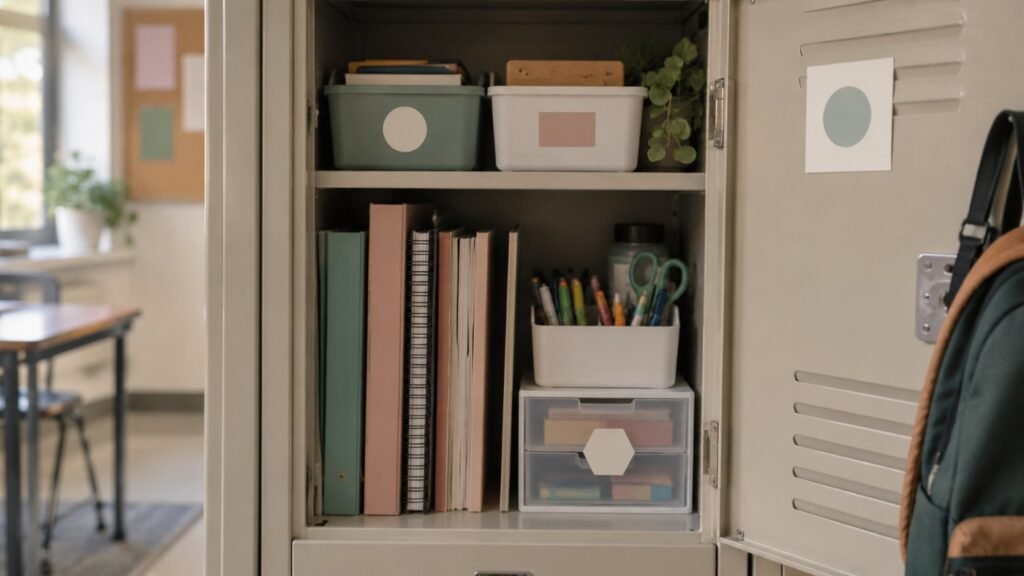
- Using a color-coded system, [Student] will file papers in the correct folder in 4 of 5 days.
- Using a checklist, [Student] will pack materials needed for home and school with 90% accuracy across 4 weeks.
- [Student] will clean out and organize their backpack or binder weekly with no more than 1 prompt in 4 of 5 weeks.
- [Student] will keep their desk or work area organized according to a visual model in 4 of 5 checks.
- [Student] will locate needed materials within 1 minute in 4 of 5 opportunities.
- [Student] will organize digital files into labeled folders with 90% accuracy.
Time Management Goals
- Given a visual schedule, [Student] will transition to the next activity within 2 minutes in 4 of 5 transitions.
- Given a visual timer, [Student] will complete a work period on time in 4 of 5 opportunities.
- [Student] will submit assignments by the due date in 80% of assignments across a grading period.
- [Student] will use alarms or reminders to arrive at class on time in 4 of 5 days.
- Given a list of tasks and a time limit, [Student] will allocate time for each task in 4 of 5 opportunities.
Working Memory Goals
- Given 2-step oral directions, [Student] will follow them without repetition in 4 of 5 opportunities.
- Given 3-step directions with a visual, [Student] will complete them in order in 4 of 5 trials.
- [Student] will use a checklist or notes to remember multi-step tasks in 4 of 5 opportunities.
- [Student] will repeat or paraphrase directions before starting in 4 of 5 opportunities.
- [Student] will use a strategy (write it down, picture it, chunk it) to remember information in 4 of 5 tasks.
See more in working memory strategies in the classroom.
Flexibility Goals
- When a schedule changes, [Student] will use a coping strategy and join the new activity within 3 minutes in 4 of 5 situations.
- When a strategy is not working, [Student] will try a different strategy in 4 of 5 opportunities.
- Given a problem, [Student] will generate 2 possible solutions in 4 of 5 trials.
- [Student] will accept a change card or “plan B” with no more than 1 prompt in 4 of 5 situations.
- [Student] will shift between tasks or subjects within 2 minutes in 4 of 5 transitions.
Self-Monitoring Goals
- [Student] will use a self-monitoring checklist to check work before submitting in 4 of 5 assignments.
- [Student] will rate their focus or effort on a 1 to 5 scale and compare with teacher rating with 80% agreement.
- [Student] will review their work for errors and correct at least 50% of them in 4 of 5 tasks.
- [Student] will reflect on what worked and what to change after a task in 4 of 5 opportunities.
- [Student] will track their own goal progress on a graph weekly in 4 of 5 weeks.
- [Student] will notice when they are off task and use a refocus strategy in 4 of 5 observed intervals.
- [Student] will set a personal goal for a task and evaluate if it was met in 4 of 5 tasks.
- [Student] will identify which supports help them most and request them in 4 of 5 opportunities.
The BERMED Goal-Writing Check
- B: Baseline. How often and with how many prompts?
- E: Exact skill. Initiation, planning, organization, time, memory, flexibility or monitoring?
- R: Realistic. Fade prompts gradually.
- M: Measurable. Opportunities, prompts and completion.
- E: Equitable access. Visual tools and reminders are supports, not crutches.
- D: Data plan. Simple tally or checklist, collected weekly.
Data Collection
| Skill | How to measure | Accommodations to pair |
|---|---|---|
| Initiation | Latency to start, prompts needed | First-step cards, timers |
| Planning | Template completion | Assignment breakdowns |
| Organization | Weekly binder or desk checks | Color coding, checklists |
| Time management | On-time submissions, transitions | Visual schedules, alarms |
| Self-monitoring | Self vs teacher rating agreement | Self-check lists |
Pair these goals with executive function accommodations and visual schedules. Executive functioning also affects writing and math problem solving.
Neuroaffirming tip: Adults with strong careers use calendars, alarms and lists every day. Teaching students to use external tools is a lifelong skill, not a weakness.
What are executive functioning IEP goals?
They are measurable goals for skills like task initiation, planning, organization, time management, working memory, flexibility and self-monitoring.
How do you measure executive functioning goals?
Track how often the skill happens, how quickly the student starts, and how many prompts are needed, using simple tallies or checklists.
What is a good task initiation IEP goal?
Given a visual first-step card, the student will begin an independent task within 2 minutes in 4 of 5 opportunities.
Are executive functioning goals appropriate for ADHD?
Yes. Many students with ADHD, autism and learning disabilities benefit from executive functioning goals paired with accommodations.
Should students always need tools like planners?
Tools are valuable lifelong supports. Goals can build independence in using them rather than removing them.
5 Actions to Take This Week
- Observe how long the student takes to start tasks and how many prompts they need.
- Pick the one executive function skill causing the most trouble.
- Choose 2 goals from this bank and adapt them.
- Introduce one tool: checklist, planner or timer.
- Set up a simple weekly tally.
Sources

