
Quick answer: Anxiety in the classroom often does not look like worry. The Child Mind Institute explains that anxious students may seem inattentive, disruptive, sick, perfectionistic, or avoidant, so anxiety is easily mistaken for ADHD, defiance, or a learning problem. Teachers can help by making the day predictable, giving advance notice of changes, offering quiet check-ins, breaking work into steps, allowing breaks, and gently encouraging small brave steps instead of letting avoidance grow.
In this guide
One student erases the same answer ten times. Another asks to see the nurse every morning before math. A third freezes when called on and then jokes to cover it. Different behaviors, same root: anxiety in the classroom. Spotting it is the first step to helping students feel safe enough to learn.
What Anxiety in the Classroom Looks Like
The Child Mind Institute’s teacher guide lists signs that are often misread:
- Inattention: anxiety “locks up” the brain, which can look like ADHD.
- Disruptive behavior: fight-or-flight can show up as arguing, clowning, or aggression.
- Physical complaints: frequent headaches, stomachaches, and nurse visits.
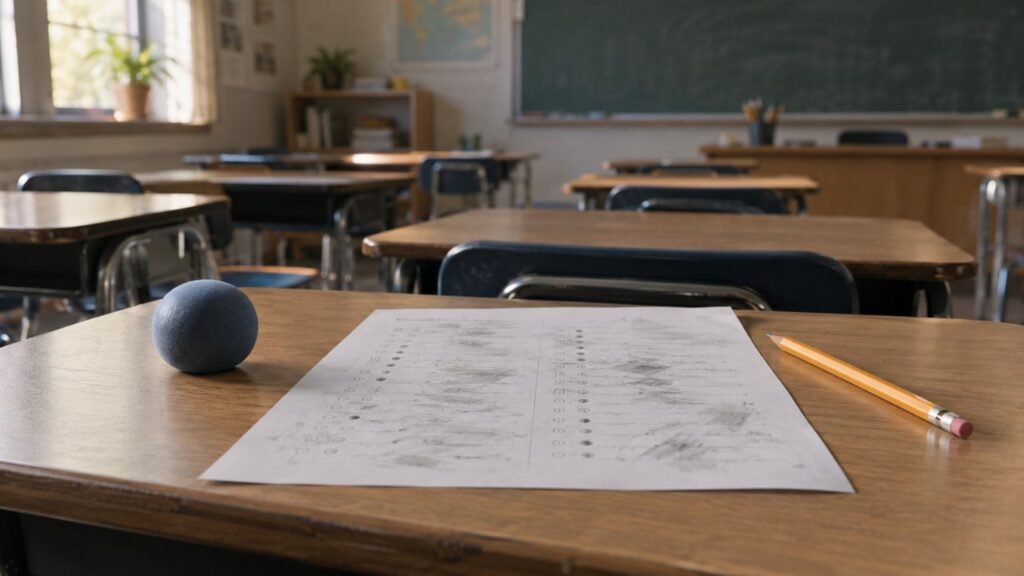
- Perfectionism: constant erasing, not handing in work, redoing tasks.
- Avoidance: refusing group work, presentations, or certain classes.
- Transitions: distress with schedule changes or new situations.
Key point: When behavior seems puzzling, ask “Could this be fear?” before “Is this defiance?” The answer changes everything about how you respond.
Why Anxiety Is Easy to Miss
Many anxious students are quiet and compliant, so they fly under the radar. Others mask during the day and fall apart at home. Read more in autistic masking. Anxiety also overlaps with other conditions, such as OCD and the demand avoidance described in PDA and anxiety. In some students, it grows into school refusal.
Free resource
Anxiety Management Workbook
Worksheets and coping skills to understand and manage anxiety.
The BERMED Calm Classroom Framework
Simple habits that lower anxiety in the classroom.
- B: Be predictable. Post the schedule and preview the day.
- E: Early warnings. Announce changes, tests, and fire drills ahead of time.
- R: Relationship. A warm, steady adult is the strongest anxiety buffer.
- M: Manageable steps. Break big tasks into small, clear pieces.
- E: Easy breaks. A pass or signal to step out and calm down.
- D: Do brave things gradually. Encourage small steps instead of full avoidance.
Strategies That Help
| Situation | What may be happening | Try this |
|---|---|---|
| Freezes when called on | Fear of being wrong in public | Warn before calling on them, allow “pass” or think time |
| Won’t hand in work | Perfectionism | Grade drafts, set “good enough” goals, limit erasing |
| Daily nurse visits | Physical anxiety | Planned calm breaks, check-in at arrival |
| Avoids presentations | Social anxiety | Present to teacher first, small groups, record at home |
| Upset by changes | Need for predictability | Visual schedule, change cards, advance notice |

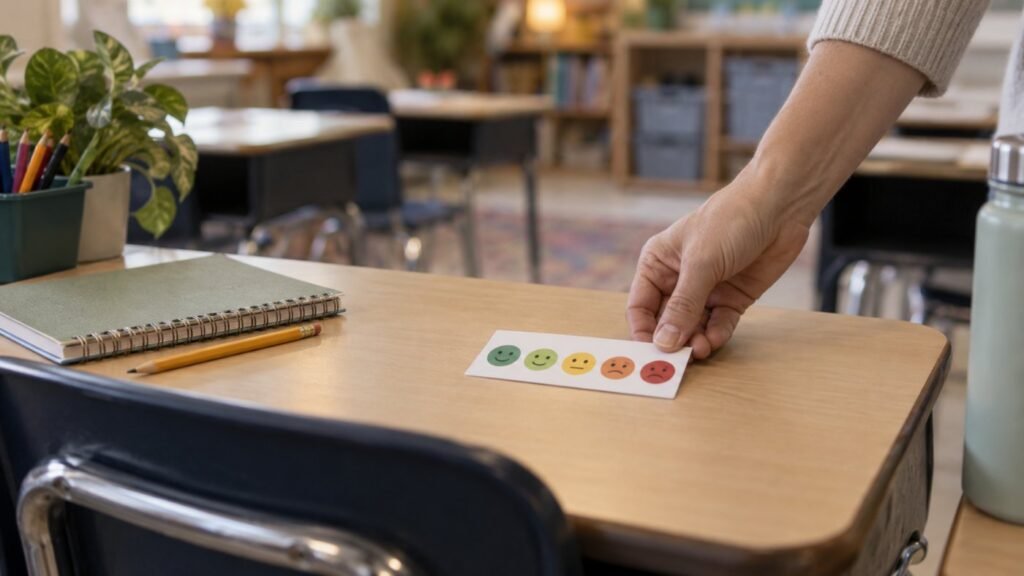
Daily check-in. A quick feelings scale at arrival helps you notice hard days early.
Predictable routines. Visual schedules reduce the fear of the unknown.
Calm space and breaks. A calm corner and planned sensory breaks help the body settle.
Teach coping skills. Slow breathing, naming the feeling, and positive self-talk, practiced when calm.
Do
- Validate feelings: “This feels scary, and you can do it”
- Praise effort and brave steps
- Give advance notice of changes
- Offer choices to restore control
Avoid
- Saying “there’s nothing to worry about”
- Public calling out or surprise tests
- Removing every challenge forever
- Punishing anxiety-driven avoidance
Accommodations and Plans
Students whose anxiety affects learning may qualify for a 504 plan or an IEP. Helpful accommodations include extended time, a separate testing room, preferential seating near the door, a break pass, advance notice of changes, and alternatives to presenting in front of the class. Learn the difference between supports in accommodations vs modifications.
Working With Families
Share what you see, ask what helps at home, and agree on the same calming words and tools. If anxiety is severe or growing, suggest an evaluation with a mental health professional. Cognitive behavioral therapy is a well-supported treatment for childhood anxiety.
Remember: Anxious students are not trying to be difficult. They are trying to feel safe. Safety first, then learning.
What does anxiety in the classroom look like?
It can look like inattention, disruptive behavior, frequent stomachaches or headaches, perfectionism, avoidance of tasks or presentations, and distress during changes.
Can anxiety be mistaken for ADHD?
Yes. Anxiety can lock up attention and make students seem distracted, so it is often mistaken for ADHD.
How can teachers help anxious students?
Keep routines predictable, give advance notice of changes, offer check-ins and breaks, break work into steps, teach coping skills, and encourage small brave steps.
What accommodations help students with anxiety?
Extended time, a separate testing room, a break pass, preferential seating, advance notice of changes, and alternatives to public presentations.
Should teachers let anxious students avoid hard tasks?
Not completely. Avoidance can make anxiety grow. Support small, manageable steps toward hard tasks with encouragement.
5 Actions to Take This Week
- List students whose behavior might be anxiety.
- Start a quick daily check-in.
- Give advance notice of the next schedule change.
- Offer one student a break pass.
- Share a calming strategy with a family.
Sources

