
Quick answer: Big emotions in children are normal. The brain areas that manage feelings keep developing through childhood, so kids need adults to help them calm down before they can do it alone. The most helpful approach is to stay calm yourself, name the feeling, keep everyone safe, and wait to teach until your child is calm. The Child Mind Institute recommends scaffolding: coaching children through hard moments, practicing in low-stakes situations, and slowly stepping back as their skills grow.
In this guide
The wrong color cup. A game that ends too soon. A sibling who looked at them. Suddenly your child is screaming, crying, or throwing things. Big emotions in children can feel overwhelming for the whole family. The good news: emotional regulation is a skill, and skills can be taught.

Why Children Have Big Emotions
- Developing brain: the parts of the brain that manage impulses mature slowly, into early adulthood.
- Limited words: younger children may not have language for what they feel.
- Body needs: hunger, tiredness, and illness shrink tolerance. See sleep problems in children.
- Transitions and changes: stopping a fun activity is hard. Read transitions for autistic children.
- Body signals: some kids don’t notice feelings building. See interoception and emotional regulation.
Key point: A child having big emotions is not giving you a hard time. They are having a hard time. Your calm is their anchor.
What to Do in the Moment
1. Regulate yourself first. Slow breath, soft voice, relaxed body.
2. Keep everyone safe. Move breakables or siblings if needed.
3. Name the feeling. “You’re really angry the game ended.”
4. Use fewer words. An upset brain can’t process long explanations.
5. Stay close. “I’m here. I’ll wait with you.”

Free resource
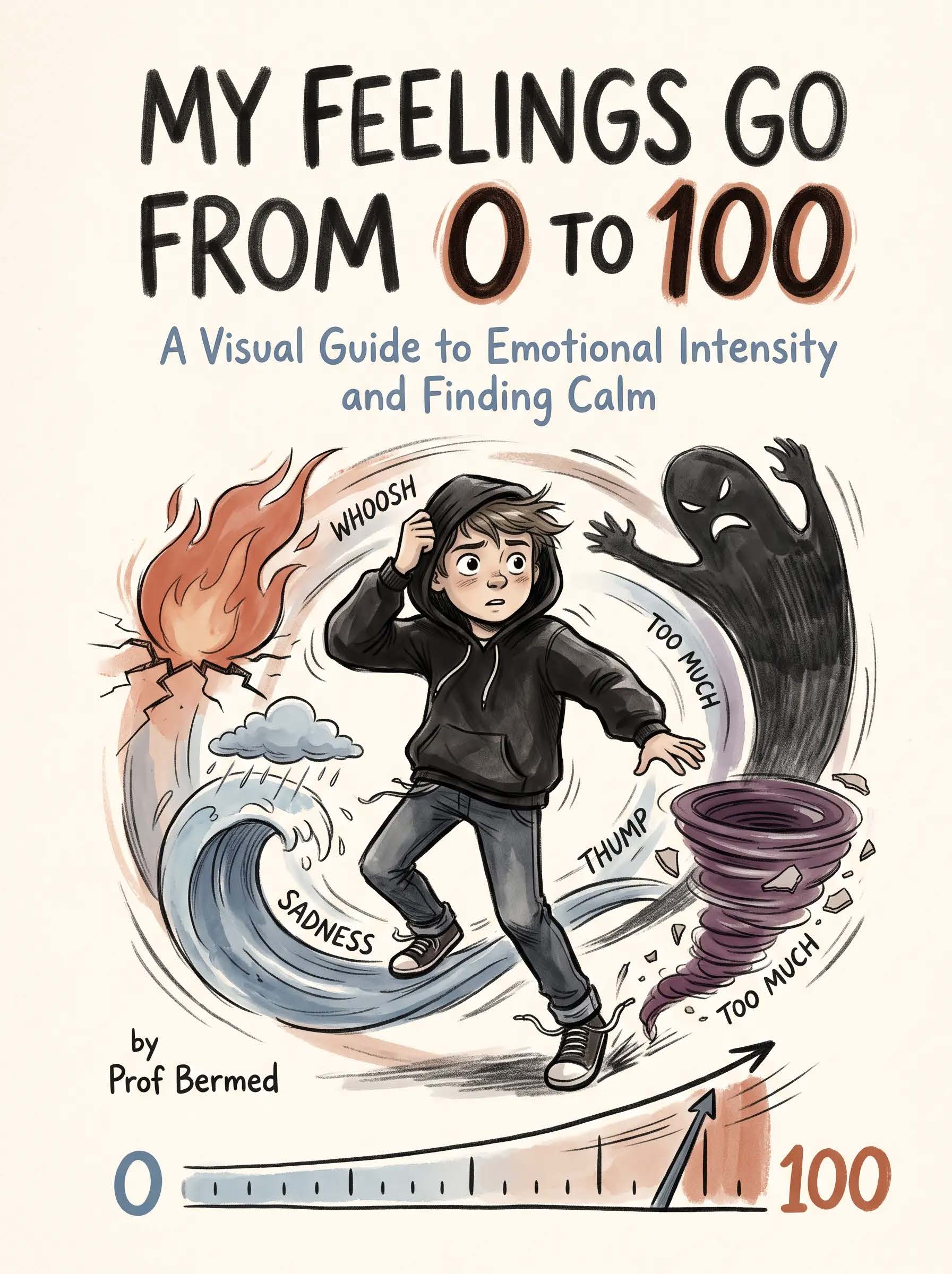
My Feelings Go From 0 to 100
A visual comic guide to big feelings and calming down.
The BERMED Calm-Down Plan
A simple family plan for big emotions in children.
- B: Body basics. Food, sleep, and movement prevent many meltdowns.
- E: Empathize. Name and accept the feeling, even when you set a limit.
- R: Regulate together. Breathe, hug, rock, or sit quietly side by side.
- M: Make a calm space. A cozy corner with soft items and sensory tools.
- E: Explain later. Talk about what happened only when everyone is calm.
- D: Develop skills. Practice coping tools on good days, not just bad ones.
Teaching Regulation Skills
| Skill | How to practice |
|---|---|
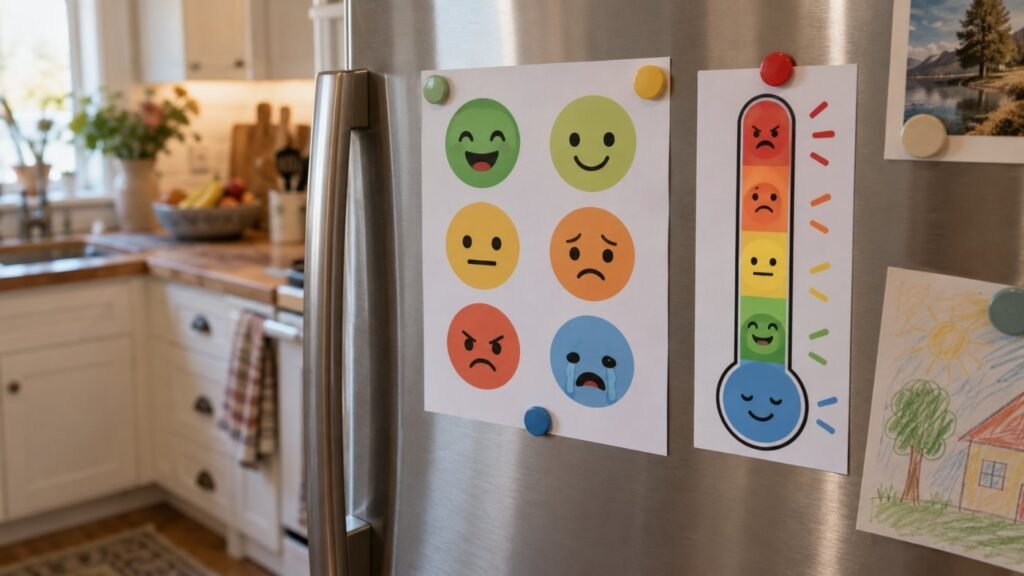
| Naming feelings | Feelings charts, books, talking about characters’ emotions |
| Noticing body signals | “Where do you feel angry in your body?” |
| Calming tools | Belly breathing, squeezing a pillow, counting, music |
| Problem solving | After calm: “What could we try next time?” |
| Asking for help | Practice phrases or a “break” card |
The Child Mind Institute suggests breaking hard tasks into small steps, practicing in low-stakes situations first, and giving calm, non-judgmental feedback afterward. Avoid hovering so much that you become your child’s only way to regulate.
Do
- Stay calm and close
- Name feelings out loud
- Hold limits with kindness
- Repair and reconnect afterward
Avoid
- Shouting or matching their intensity
- “Stop crying” or “calm down” commands
- Long lectures mid-meltdown
- Shaming your child afterward
Neurodivergent Kids and Big Emotions
Autistic and ADHD children often feel emotions more intensely and may have meltdowns from sensory or emotional overload. Learn to tell the difference in meltdown vs tantrum. For children who resist demands, declarative language lowers pressure. If emotions turn physical, read aggression in autistic children. Brothers and sisters need support too, see siblings of autistic children.
When to Get Help
Talk to your pediatrician or a mental health professional if outbursts are very frequent, intense, dangerous, or getting worse, or if your child seems persistently sad, anxious, or irritable. The CDC notes that many childhood mental health conditions are treatable, and early support helps.
Be kind to yourself too: No parent stays calm every time. What matters most is coming back, repairing, and trying again.
Why does my child have such big emotions?
Big emotions are normal because the brain areas that manage feelings are still developing. Hunger, tiredness, transitions, and limited language can make them stronger.
How do I calm my child during a meltdown?
Stay calm yourself, keep everyone safe, name the feeling, use few words, and stay close until your child settles. Teach and discuss later.
How can I teach my child emotional regulation?
Practice naming feelings, noticing body signals, and using calming tools during calm times, then coach your child through hard moments and gradually step back.
Should I ignore my child’s big emotions?
No. Ignoring feelings can increase distress. You can accept the feeling while still holding a limit on unsafe behavior.
When should I worry about my child’s emotions?
Seek help if outbursts are very frequent, intense, dangerous, or worsening, or if your child seems persistently sad, anxious, or irritable.
5 Actions to Take This Week
- Notice the times of day big emotions happen most.
- Create a cozy calm space at home.
- Practice one breathing tool when your child is calm.
- Use “You feel… because…” once a day.
- Repair after a hard moment with a hug or kind words.
Sources

