
Quick answer: ADHD in women is often missed for decades. CHADD reports that women are frequently diagnosed later in life, and that misdiagnosis with anxiety or depression is the most likely reason. ADHD in women tends to look more inattentive and internal: overwhelm, disorganization, emotional intensity, and exhaustion from masking, rather than obvious hyperactivity. A diagnosis at any age can bring relief, self-understanding, and effective treatment.
In this guide
She was the “dreamy” student, the one who lost her keys daily, worked twice as hard to keep up, and felt like everyone else had a manual for life that she never received. Then, in her 30s or 40s, often after her own child is diagnosed, everything finally makes sense. This story is common. ADHD in women has been overlooked for a long time.

Why ADHD in Women Is Missed
CHADD describes research by Jessica Agnew-Blais and colleagues pointing to three possible reasons for late diagnosis:
- Masked symptoms in childhood: strong support or good grades hid struggles.
- Misdiagnosis: anxiety or depression diagnosed instead, which researchers call the most likely explanation.
- Symptoms appearing when supports end: for example when leaving home or starting a career.
Old beliefs that ADHD mainly affected hyperactive boys also played a role. See ADHD in boys vs ADHD in girls and why AuDHD girls are diagnosed late.
Key point: If anxiety or depression treatment has never fully helped, it may be worth asking whether ADHD is part of the picture.
Signs of ADHD in Women
| Area | What women often describe |
|---|---|
| Attention | Drifting off in conversations, losing track while reading |
| Organization | Piles of paper, missed bills, forgotten appointments |
| Time | Always running late, underestimating tasks |
| Emotions | Intense reactions, deep hurt from criticism. See RSD. |
| Energy | Exhaustion from holding everything together |
| Hyperactivity | Restless mind, talking fast, fidgeting, overcommitting |
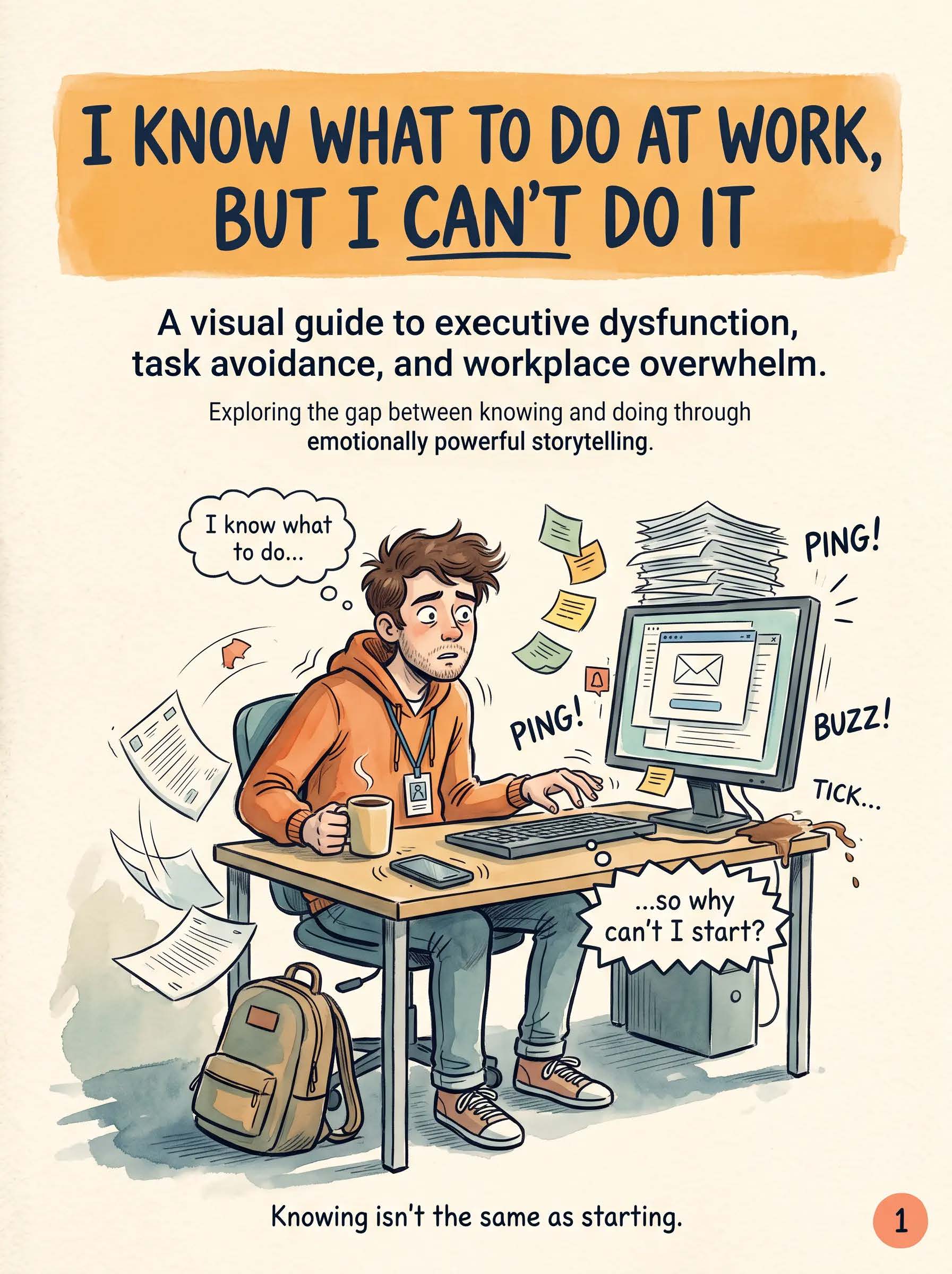
Free resource
I Know What to Do at Work, But I Can’t Do It
A visual guide to executive function struggles at work, with practical supports.
ADHD Across a Woman’s Life
Hormones can make ADHD symptoms stronger at certain times, such as before a period, after childbirth, and around perimenopause. Read our full guide to women with ADHD and hormones. Many women also juggle work, home, and caregiving, which multiplies executive function demands. See executive dysfunction in adults.

The BERMED Support Plan
Steps for women who suspect or have ADHD.
- B: Build understanding. Learn how ADHD shows up in women, not just boys.
- E: External systems. Planners, reminders, and routines that live outside your head.
- R: Reduce the load. Delegate, simplify, and drop perfectionism.
- M: Mind your hormones. Track your cycle and symptoms.
- E: Embrace strengths. Creativity, empathy, and energy are real assets.
- D: Diagnosis and treatment. Seek an evaluation and discuss options.
Getting Diagnosed
Write it down. List current struggles and childhood memories, including report card comments.
Find the right clinician. Look for someone experienced with adult and female ADHD.
Mention everything. Anxiety, mood, sleep, and hormonal patterns all help the picture.
CHADD notes that DSM-5 changes, like no longer requiring symptoms before adolescence and needing fewer symptoms for adults, have made adult diagnosis more accessible. Start with our ADHD test guide. Some women also discover they are autistic, see late autism diagnosis in adults.

Do
- Seek clinicians who know adult ADHD
- Build systems, not willpower
- Connect with other women with ADHD
- Watch for burnout signs
Avoid
- Assuming you are “just disorganized”
- Comparing yourself to neurotypical women
- Ignoring hormonal patterns
- Pushing through until you crash
Watch for burnout: Years of masking and overcompensating can lead to deep exhaustion. Read ADHD burnout for recovery steps.
Why is ADHD in women often missed?
Women’s ADHD is often masked in childhood, misdiagnosed as anxiety or depression, or becomes noticeable only when supports end. Stereotypes about hyperactive boys also played a role.
What are common signs of ADHD in women?
Inattention, disorganization, time blindness, overwhelm, emotional intensity, sensitivity to criticism, restless thoughts, and exhaustion from masking.
Can women be diagnosed with ADHD as adults?
Yes. Adult diagnosis is common, and DSM-5 changes have made it more accessible. Look for a clinician experienced with adult ADHD.
Do hormones affect ADHD in women?
Yes. Many women notice stronger symptoms before periods, after childbirth, and around perimenopause.
Is ADHD in women the same as anxiety?
No, but they often occur together and can look similar. Some women are treated for anxiety for years before ADHD is recognized.
5 Actions to Take This Week
- Write down your daily struggles and childhood memories.
- Track symptoms alongside your cycle for a month.
- Set up one external system, like a visible planner.
- Look for a clinician who assesses adult ADHD.
- Find one community of women with ADHD.
Sources

