Table of Contents

The same response that ends a tantrum can make a meltdown worse. That is why so many loving parents feel like they are doing everything right and still watching things explode. The problem is not effort. It is that a meltdown and a tantrum can look identical from the outside while being completely different on the inside.
This guide breaks down meltdown vs tantrum in plain language: the signs that tell them apart, what to do in each case, and how to prevent the meltdowns that keep happening at the same time every day. It is written for parents of autistic, ADHD, anxious and sensory-sensitive children, and for any parent who has wondered, “Is this behavior, or is my child overwhelmed?”
Why the Meltdown vs Tantrum Difference Matters
Tantrums respond to limits. When a child learns that screaming does not change the answer, tantrums shrink over time. Meltdowns respond to regulation. When a child’s body feels safe again, the meltdown ends. Use the tantrum approach on a meltdown and you add pressure to a system that is already overloaded. Use the meltdown approach on every tantrum and you may accidentally teach that big outbursts change the rules.
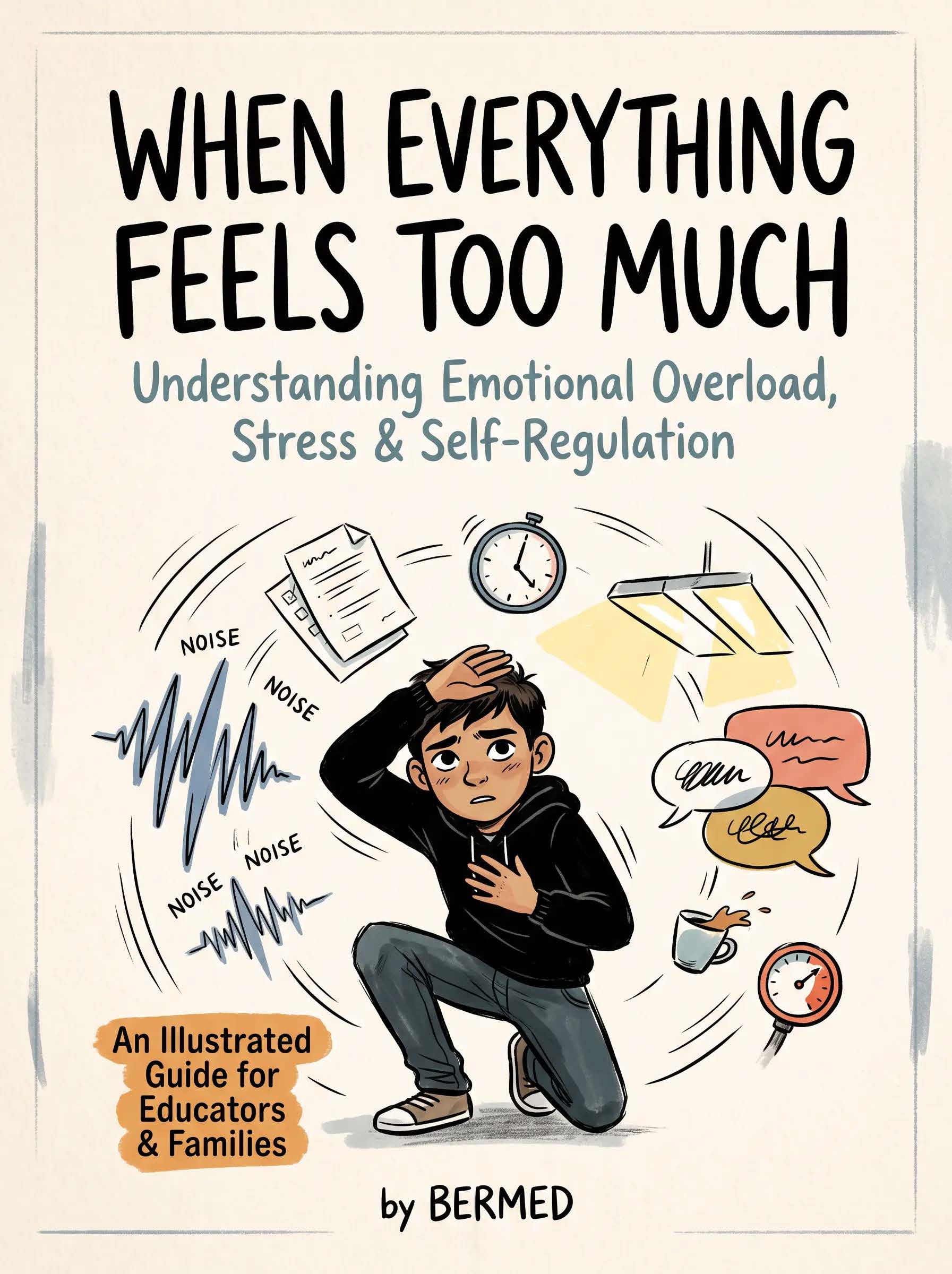
Free resource
When Everything Feels Too Much
A visual guide that helps children understand emotional overload.
7 Signs: Meltdown vs Tantrum
No single sign is proof, but together they paint a clear picture.
Scroll to see full table
| Sign | Tantrum | Meltdown |
|---|---|---|
| 1. Trigger | A “no,” a want, a limit | Too much noise, change, demands, fatigue, hunger |
| 2. Goal | Get something or avoid something | No goal; the body is overwhelmed |
| 3. Audience | Checks whether you are watching | Happens with or without anyone around |
| 4. Control | Can pause, negotiate or stop | Cannot stop on request |
| 5. When the goal is met | Usually ends quickly | Continues; the overload is still there |
| 6. Safety | Usually aware of surroundings | May bolt, hit or not notice danger |
| 7. Afterward | Bounces back fast | Exhausted, tearful, embarrassed or needs sleep |
Many children also show early warning signs before a meltdown, such as covering their ears, pacing, repeating questions or suddenly going quiet. The National Autistic Society calls this the “rumble stage,” and it is your best window to step in.
How to Respond to a Tantrum
Tantrums are a normal part of development, especially between ages 1 and 3, according to the American Academy of Pediatrics. Calm and consistent is the goal.
- Stay calm and brief: “I hear you. The answer is still no.”
- Offer a real choice: “You can have an apple or a banana.”
- Do not give in to the outburst: keep the limit, kindly.
- Keep everyone safe: hitting and throwing get a firm, calm stop.
- Reconnect quickly: once it is over, move on without a lecture.
How to Respond to a Meltdown
A meltdown needs the opposite approach: fewer words, fewer demands and more calm. The Child Mind Institute notes that stepping in early, for example by removing a trigger, can stop a meltdown from escalating.
Do This
- Lower your voice and slow down
- Reduce noise, light and people
- Offer headphones or a calm spot
- Stay close, quiet and available
- Keep your child and others safe
- Wait until the storm passes
Avoid This
- Threats, countdowns or consequences
- Asking “why” questions
- Long explanations or lectures
- Touching without checking first
- Comparing to siblings
- Rushing back to the task

The BERMED Pause Check: 4 Steps in the Moment
The Pause Check
Four steps to decide, in seconds, whether you are facing a meltdown vs tantrum, and what to do next.
Pause Yourself
Take one slow breath before you speak. Your calm is contagious, and so is your stress.
Ask the Control Question
Could my child stop right now if they wanted to? If yes, it is likely a tantrum. If no, treat it as a meltdown.
Choose Limits or Calm
For a tantrum: calm limits and a choice. For a meltdown: less input, safety and quiet presence.
Repair Later
When everyone is calm, reconnect in a few words. Learning happens after, not during.
Preventing Meltdowns at Home
Meltdowns rarely come out of nowhere. Look for patterns over two or three weeks: time of day, place, hunger, sleep, transitions and noise.
- Protect the after-school window: a snack, quiet and no questions for the first 20 minutes.
- Warn before transitions: “Five more minutes, then bath.”
- Use visual routines: pictures of the evening steps reduce surprise.
- Know your child’s sensory profile: our free sensory needs guide for kids helps you spot the biggest triggers.
- Pack a calm kit for outings: headphones, sunglasses, a fidget, water and a snack.

If your child resists everyday demands with high anxiety, even for things they enjoy, read our guides to PDA strategies for parents and low-demand parenting.
When to Talk to a Professional
Tantrums usually ease after age 3 or 4. Talk to your pediatrician if outbursts are frequent after the preschool years, last a long time, involve self-injury or aggression, or happen alongside delays in speech, social skills or learning. Frequent outbursts can be linked to ADHD, anxiety, autism, learning disabilities or sensory processing differences.
If you are wondering about autism, our guide to the signs of autism in children is a good place to start. For attention concerns, try our ADHD screening quiz and bring the results to your appointment.
In Class, At Home and in Life
IN CLASS
Share your child’s warning signs and calming tools with their teacher. Many children hold it together at school and fall apart at home. Our teacher guide to autistic meltdowns in the classroom explains how schools can respond the same way you do.
AT HOME
Keep a simple log for a few weeks. Patterns show up quickly, and they make conversations with teachers and doctors much more useful.
LIFE
Meltdowns do not disappear with age for every person. Teaching your child to notice overload and ask for a break is a skill they will use for life.
Frequently Asked Questions About Meltdown vs Tantrum
What is the main difference in a meltdown vs tantrum?
A tantrum is goal-driven: the child wants something and still has some control. A meltdown is an involuntary reaction to overload: the child has lost control and cannot stop on request, even if they get what they wanted.
Should I ignore a meltdown like a tantrum?
No. Planned ignoring can help with some tantrums, but a child in a meltdown needs a calm adult nearby, less sensory input and safety. Ignoring a meltdown can increase fear and make recovery longer.
At what age do tantrums usually stop?
Tantrums are most common between ages 1 and 3 and usually ease after age 3 or 4. Frequent, intense outbursts after the preschool years are worth discussing with your pediatrician.
Do only autistic children have meltdowns?
No. Meltdowns are common in autism, but children with ADHD, anxiety, sensory processing differences or PDA can also have them, and so can any child who is exhausted or overwhelmed.
Can a tantrum turn into a meltdown?
Yes. A tantrum can tip into a meltdown when frustration builds and the child becomes overwhelmed. Once control is gone, switch from limit-setting to calming and safety.
5 Actions You Can Take This Week
- Practice the control question. Ask it silently before every response.
- Write down the last three outbursts. Note time, place and what happened just before.
- Protect the after-school window. Snack, quiet and no questions for 20 minutes.
- Build a calm kit. Keep it in the car or by the door.
- Plan your repair words. One kind sentence to reconnect after a hard moment.
Sources
- Child Mind Institute. Why Do Kids Have Tantrums and Meltdowns? childmind.org
- Child Mind Institute. How to De-Escalate an Autistic Meltdown. childmind.org
- National Autistic Society. Meltdowns: a guide for all audiences. autism.org.uk
- American Academy of Pediatrics, HealthyChildren.org. Top Tips for Surviving Tantrums. healthychildren.org