
Quick answer: Vocational IEP goals build the skills a student needs to explore careers, get a job and keep it: following work routines, completing tasks accurately, time management, workplace communication, job search skills and requesting accommodations. These goals usually start by age 16, or earlier in many states, as part of transition planning. Below are 42 SMART vocational and job skills IEP goals organized by skill, with present level examples and data ideas.
In this goal bank
Work brings income, independence, routine and a sense of purpose. For students with disabilities, the skills that lead to a good job are best taught before graduation, not after. IDEA requires that, beginning no later than the first IEP in effect when a student turns 16, the IEP includes measurable postsecondary goals for employment and the transition services needed to reach them. Vocational IEP goals are the annual steps toward that employment goal. The Job Accommodation Network also reminds families that many workplace accommodations are simple and low cost. For the bigger picture, read our guide to transition planning in the IEP, and see our complete IEP goal bank for other areas.

How to Write Vocational IEP Goals
Formula: By [date], at [school job or community work site], given [visual task list, job coach support or prompt level], [Student] will [work skill] with [accuracy or time criterion] in [number] of [work sessions] as measured by [job coach data or employer checklist].
Present level example: “Malik, age 17, works 2 periods per week in the school library. He shelves books with 70% accuracy using a call number guide and needs reminders to return from breaks on time. He enjoys organizing and wants to work in a warehouse or store. He has not yet completed a job application.”
Key point: Link every vocational goal to the student’s postsecondary employment goal. If the student wants to work in retail, practice retail skills in a real or simulated store.
Career Exploration
- By [date], [Student] will complete 2 career interest inventories and identify 3 jobs that match their interests and strengths.
- By [date], [Student] will research 3 careers of interest, including duties, training and pay, using a graphic organizer.
- By [date], [Student] will participate in 2 job shadowing or work-based learning experiences and complete a reflection for each.
- By [date], [Student] will identify 3 preferred work conditions (indoor/outdoor, quiet/busy, alone/team) in 4 of 5 opportunities.
- By [date], [Student] will interview a worker in a field of interest using 5 prepared questions.
- By [date], [Student] will compare 2 job options and explain which fits them better and why in 3 of 4 opportunities.
- By [date], [Student] will identify the training or education needed for their chosen career goal.
Work Task Skills
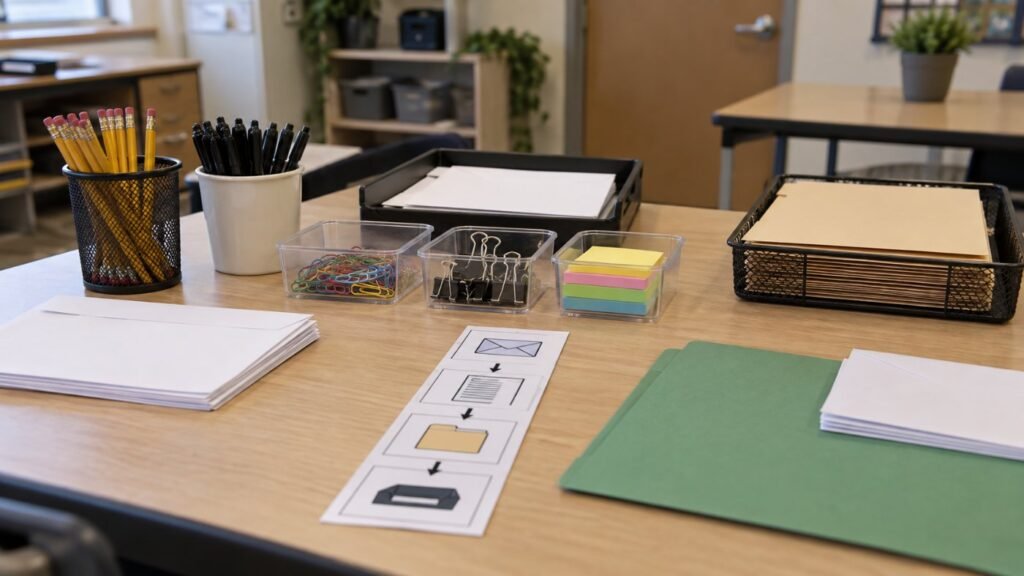
- By [date], [Student] will complete a multi-step work task (sorting mail, folding towels, stocking) using a visual task list with 90% accuracy in 4 of 5 work sessions.
- By [date], [Student] will check their own work for quality using a checklist before turning it in in 80% of tasks.
- By [date], [Student] will work on a task for 30 minutes with one break, increasing to 60 minutes, in 4 of 5 sessions.
- By [date], [Student] will follow a 3-step verbal direction from a supervisor in 4 of 5 opportunities.
- By [date], [Student] will use workplace tools or equipment safely following a demonstration in 100% of observed sessions.
- By [date], [Student] will increase task speed to meet an employer standard (for example 20 items in 10 minutes) in 4 of 5 trials.
- By [date], [Student] will move to the next task independently when finished in 80% of opportunities.
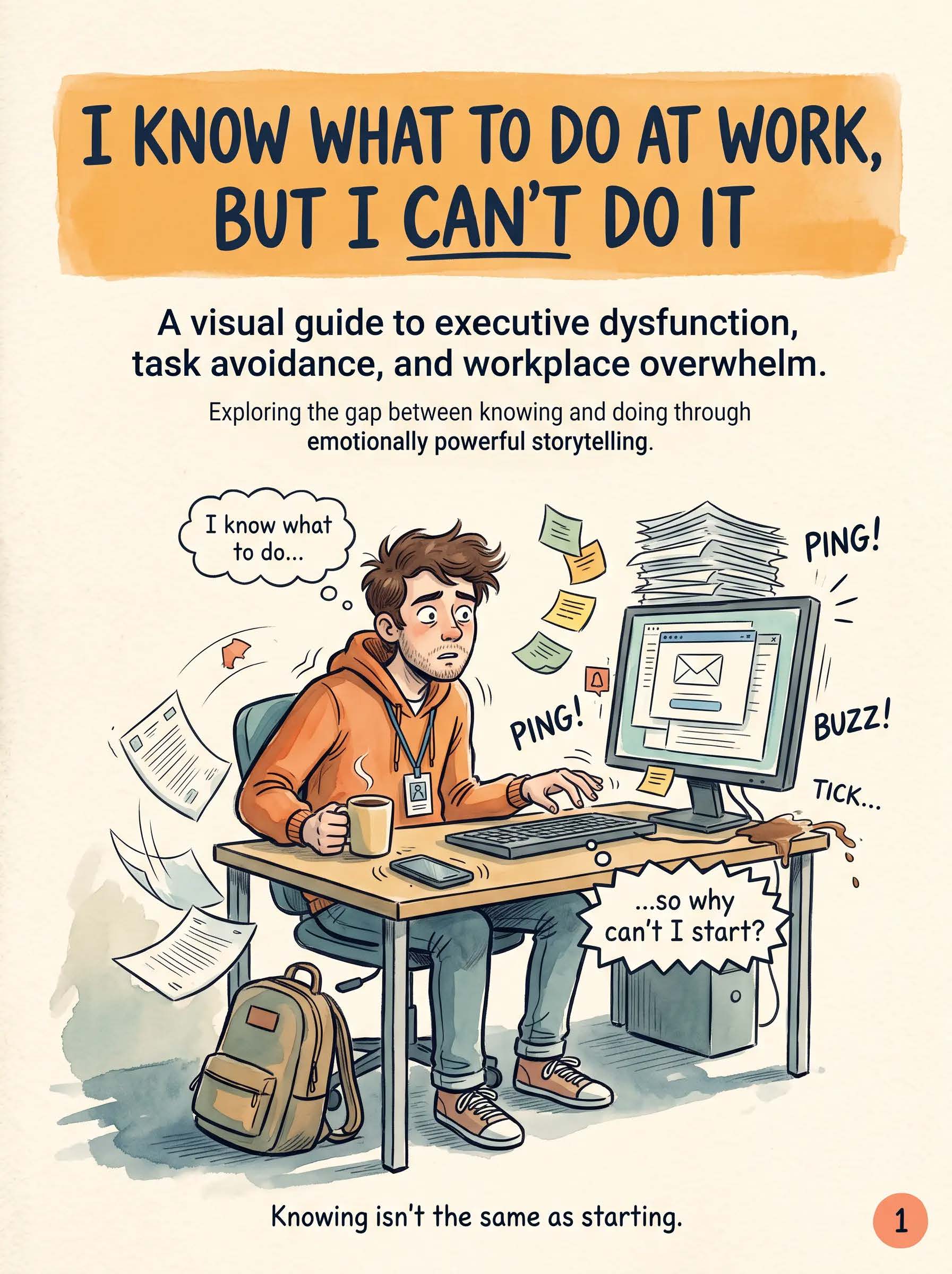
Free resource
I Know What to Do at Work, But I Can’t Do It
A visual guide to executive function struggles at work, with practical supports.
Time Management and Work Habits
Many job challenges are executive functioning challenges. Pair these goals with executive functioning IEP goals.
- By [date], [Student] will arrive at the work site on time using an alarm or schedule in 90% of work days.
- By [date], [Student] will return from breaks on time using a timer in 4 of 5 work sessions.
- By [date], [Student] will follow a daily work schedule independently in 80% of work days.
- By [date], [Student] will dress appropriately for the job using a visual checklist in 4 of 5 work days.
- By [date], [Student] will clock in and out correctly using the workplace system in 4 of 5 work days.
- By [date], [Student] will notify a supervisor in advance when they will be late or absent in 100% of opportunities.
- By [date], [Student] will use a planner or phone calendar to track work shifts in 4 of 5 weeks.
Workplace Communication
For autistic employees, see our guide to autism in the workplace.
- By [date], [Student] will greet coworkers and supervisors at the start of a shift in 4 of 5 work days.
- By [date], [Student] will ask a supervisor a clarifying question when directions are unclear in 4 of 5 opportunities.
- By [date], [Student] will accept feedback from a supervisor and make the change in 4 of 5 opportunities.
- By [date], [Student] will report that a task is finished and ask for the next task in 80% of opportunities.
- By [date], [Student] will respond to a customer greeting or simple question using a script in 3 of 4 opportunities.
- By [date], [Student] will report a problem (broken equipment, missing supplies) to a supervisor in 4 of 5 opportunities.
- By [date], [Student] will use appropriate topics during break-time conversations with coworkers in 3 of 4 opportunities.
Job Search Skills
- By [date], [Student] will create a resume that lists skills, experiences and references with adult support.
- By [date], [Student] will complete a paper or online job application with 90% accuracy using a personal information card.
- By [date], [Student] will answer 5 common interview questions in a mock interview in 3 of 4 practice sessions.
- By [date], [Student] will search for 3 job openings that match their interests using an online job board.
- By [date], [Student] will write a short thank-you email after an interview using a template.
- By [date], [Student] will identify 2 references and ask them for permission to list them.
- By [date], [Student] will connect with a vocational rehabilitation counselor before graduation with family and school support.
Workplace Self-Advocacy
Workplace self-advocacy builds on self-advocacy IEP goals.
- By [date], [Student] will identify 3 accommodations that help them work well (written instructions, quiet space, headphones) in 4 of 5 opportunities.
- By [date], [Student] will practice requesting a workplace accommodation in a role-play in 3 of 4 trials.
- By [date], [Student] will decide whether and how to disclose their disability to an employer after reviewing pros and cons with an adult.
- By [date], [Student] will ask a supervisor for a short break when overwhelmed using an agreed signal in 80% of opportunities.
- By [date], [Student] will explain their strengths as a worker in a mock interview in 3 of 4 opportunities.
- By [date], [Student] will identify who to contact at work if they have a problem or feel treated unfairly.
- By [date], [Student] will describe their basic rights as a worker with a disability in 3 of 4 opportunities.
The BERMED Goal-Writing Check
- B – Baseline: Do you have work site data, interest inventories and the student’s career goal?
- E – Exact skill: Does the goal name one work skill, such as returning from breaks on time?
- R – Realistic: Is it linked to the student’s postsecondary employment goal and interests?
- M – Measurable: Can a job coach and teacher score it the same way?
- E – Equitable access: Are visual task lists, scripts and workplace accommodations in place?
- D – Data plan: Who collects data at the work site, and how often is it reviewed?
How to Measure Vocational IEP Goals
| Skill | How to measure | Accommodations to pair |
|---|---|---|
| Career exploration | Completed inventories, reflections | Graphic organizers, job shadowing |
| Work tasks | Accuracy, speed, independence | Visual task list, job coach |
| Work habits | On-time arrivals, break returns | Alarms, timers, visual schedule |
| Communication | Questions asked, feedback accepted | Scripts, role-play |
| Job search | Completed resume and applications | Templates, personal info card |
| Self-advocacy | Role-play ratings, requests made | Accommodation card, disclosure plan |

Pair vocational goals with daily living skills IEP goals for independence outside work and social skills IEP goals for coworker relationships.
Neuroaffirming tip: The right job matches the person. Many neurodivergent workers thrive in roles that use their focus, precision or deep interests. Look for workplaces that offer clear instructions, predictable routines and sensory-friendly spaces instead of asking students to mask.
What are vocational IEP goals?
Vocational IEP goals target job-related skills, such as career exploration, completing work tasks, time management, workplace communication, job search and requesting accommodations.
When should vocational goals start?
IDEA requires transition goals, including employment, by the first IEP in effect when a student turns 16. Many states and teams start earlier, often around age 14.
How do you measure job skills in an IEP?
Use job coach data, employer checklists, task accuracy and speed, on-time arrival logs, completed applications and role-play ratings.
What is the difference between a postsecondary goal and an annual vocational goal?
A postsecondary goal describes what the student will do after high school, such as working in retail. Annual vocational goals are the measurable skills the student will build this year to get there.
Who can help with vocational goals?
Special education teachers, job coaches, transition coordinators, vocational rehabilitation counselors, families and community employers all play a role.
5 Actions to Take This Week
- Ask the student what kind of work interests them and what they enjoy doing.
- Complete one career interest inventory together.
- Identify a school job or community site where skills can be practiced.
- Create a visual task list for one work routine.
- Choose 2 or 3 goals linked to the student’s employment goal and start a work site data sheet.
Sources

