
Quick answer: Sensory breaks in the classroom are short, planned pauses where students move, push, stretch, or rest to reset their nervous system and get ready to learn. Faster, less rhythmic movement wakes students up, while slow, rhythmic movement and heavy work calm them down. Breaks work best when they are individualized, structured, scheduled before problems start, and checked to see if they actually help focus.
In this guide
By 10:30, one student is sliding off their chair, another is chewing their sleeve, and a third has put their head down. They are not being lazy or disruptive. Their bodies are telling you they need input to stay regulated. Sensory breaks in the classroom give them that input on purpose, before things fall apart.
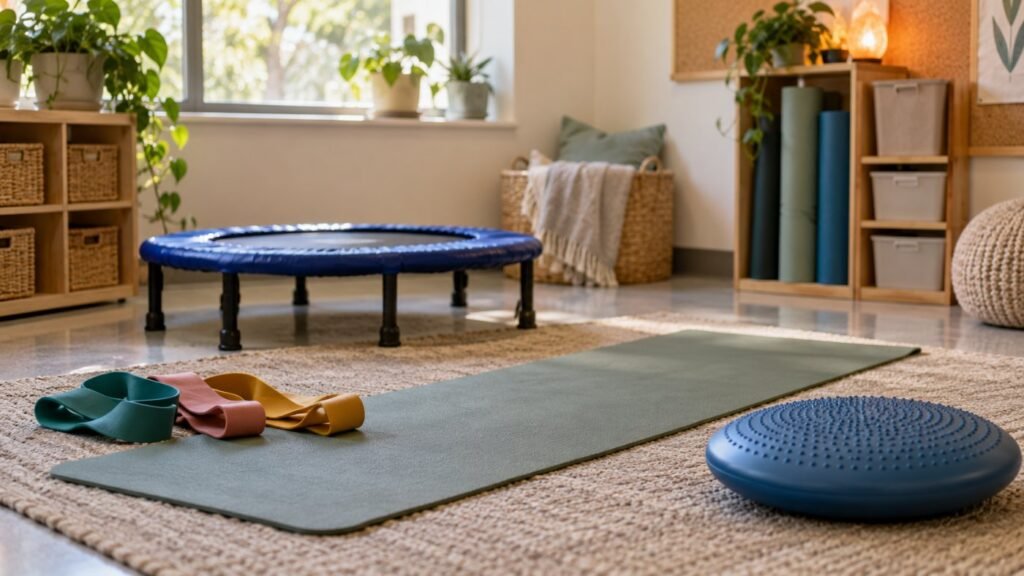
What Are Sensory Breaks in the Classroom?
A sensory break is a short pause that gives the body the movement, pressure, or calm it needs. Occupational therapists often build them into a student’s day as part of a sensory plan. Our sensory needs guide explains sensory seeking and avoiding in more depth.
Key point: A sensory break is not a reward to be earned. It is a regulation tool, like glasses for vision. Taking it away as punishment usually makes behavior worse.
Who Benefits From Sensory Breaks?
- Students who move constantly or struggle to sit
- Students with ADHD
- Autistic students and students with sensory processing differences
- Students who become overwhelmed or shut down
- Honestly, most of the class
Occupational therapy practice GriffinOT notes that breaks are not a universal fix and that each student is different, so it is worth monitoring whether they actually improve attention.
Free resource
Sensory Diet Guide
Practical sensory strategies for home, school and everyday life.
Alerting, Calming and Organizing Breaks
| Type | When to use | Examples |
|---|---|---|
| Alerting | Sluggish, low energy, head down | Jumping jacks, marching, fast dance, cold water |
| Calming | Overexcited, anxious, overwhelmed | Slow rocking, deep breathing, dim quiet space, yoga |
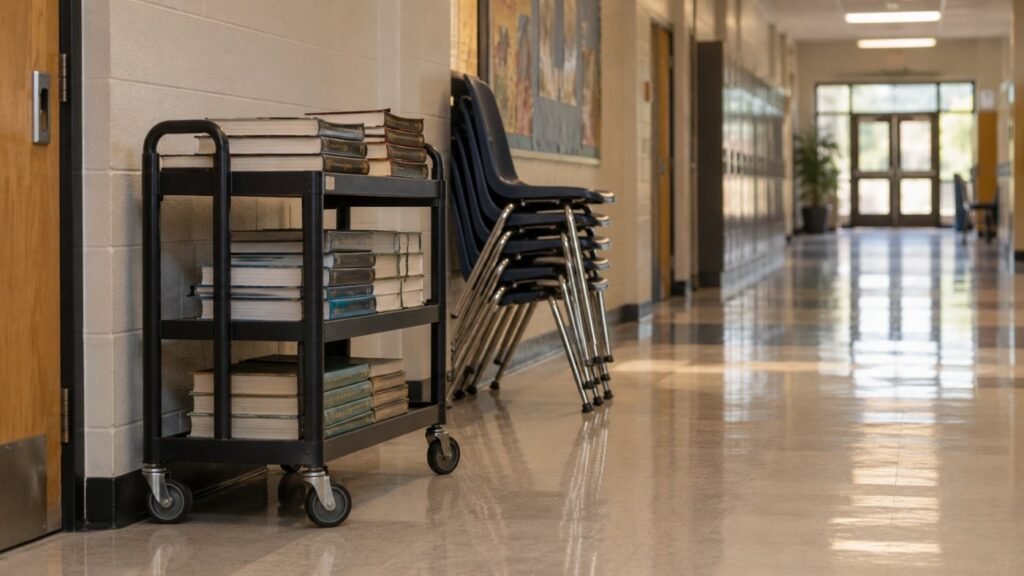
| Organizing (heavy work) | Both, or unsure | Carrying books, wall push-ups, pushing a cart, stacking chairs |
Heavy work, which uses muscles to push, pull, or carry, can both soothe and organize the nervous system. That makes it a great default.
The BERMED Sensory Break Plan
How to set up sensory breaks in the classroom that work.
- B: Baseline. Notice when and how each student loses regulation.
- E: Early, not late. Schedule breaks before hard tasks, not only after meltdowns.
- R: Right type. Alerting, calming, or heavy work based on the student’s state.
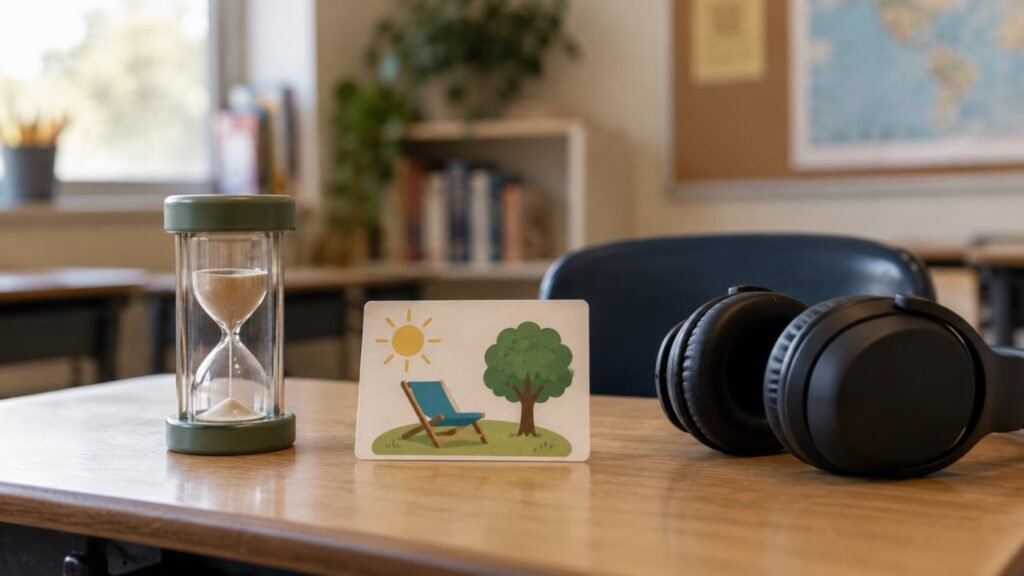
- M: Make it structured. Clear steps, a timer, and a set return routine.
- E: Easy to request. A break card or signal the student can use without talking.
- D: Data. Track whether focus and behavior improve after breaks.
Sensory Break Ideas
In the seat: chair push-ups, hand squeezes, stretching, wiggle cushions, fidgets.
In the room: wall push-ups, animal walks, a mini trampoline, yoga poses, a class dance video.
Out of the room: delivering a heavy box to the office, a walk loop, stacking chairs.
Calming: a few minutes in a calm corner with headphones, a weighted lap pad, or breathing cards.
Do
- Build breaks into the visual schedule
- Teach the return routine
- Offer whole-class breaks too
- Ask students what helps them
Avoid
- Using breaks as rewards or removing them as punishment
- Unstructured free time with no end
- Only offering breaks after a crisis
- One break type for every student
Show breaks on the day’s plan with visual schedules. Students who struggle to notice body signals benefit from learning about interoception. For students with a PDA profile, offer breaks as choices, not instructions, as explained in PDA in the classroom.
Sensory Breaks in the IEP
Write breaks into the IEP or 504 plan so every adult offers them consistently: how often, what types, how the student requests them, and where they happen. See our list of IEP accommodations for wording ideas.
Whole class win: Short movement breaks every 20 to 30 minutes often help the entire class, not just students with sensory needs.
What are sensory breaks in the classroom?
Sensory breaks are short, planned pauses where students move, use heavy work, or rest in a calm space to regulate their nervous system and get ready to learn.
How long should a sensory break be?
Many sensory breaks last 2 to 5 minutes. The right length depends on the student and the activity, and breaks should include a clear return routine.
What is heavy work?
Heavy work means activities that push, pull, or carry, like wall push-ups or carrying books. It can calm and organize the nervous system.
Should sensory breaks be earned as rewards?
No. Sensory breaks are a regulation tool. Making students earn them, or removing them as punishment, often increases dysregulation.
Can sensory breaks be written into an IEP?
Yes. IEP or 504 plans can specify how often breaks happen, what types, how students request them, and where they take place.
5 Actions to Take This Week
- Observe when students lose focus during the day.
- Add two scheduled sensory breaks to the class routine.
- Create a break card for one student.
- Set up a small movement or heavy work option.
- Track focus before and after breaks for a week.
Sources

