
Quick answer: Functional communication IEP goals help a student communicate wants, needs, feelings and refusals in everyday situations using any method that works: speech, signs, pictures, a choice board or an AAC device. The best goals focus on powerful, useful messages like “help,” “break,” “stop” and “more,” and they honor every way a student communicates. Below are 42 SMART functional communication and AAC IEP goals organized by skill, with present level examples and data ideas.
In this goal bank
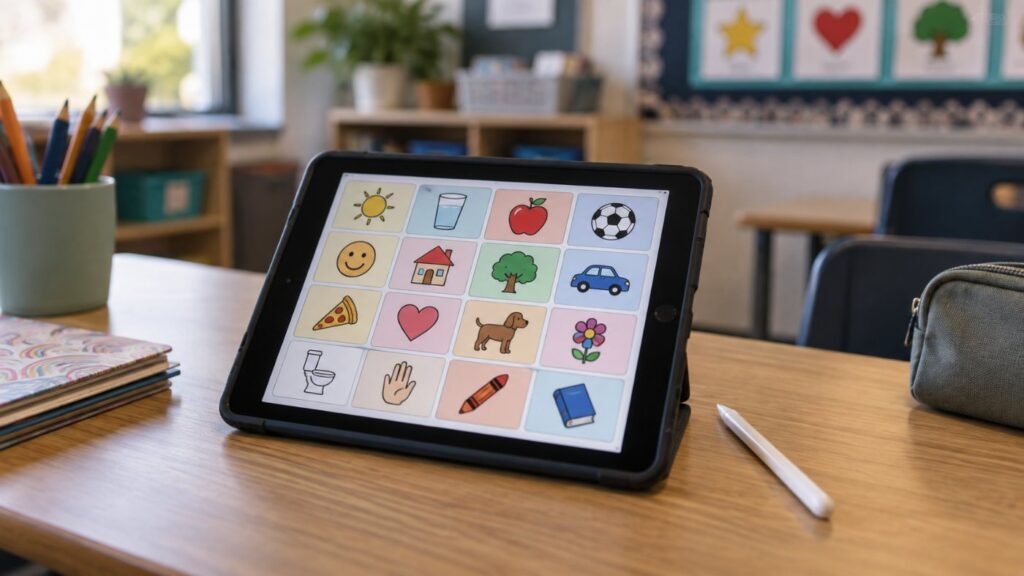
When a student cannot easily say “I need a break” or “That hurts,” behavior often does the talking. Functional communication gives students a reliable way to be heard. ASHA explains that augmentative and alternative communication includes all forms of communication other than oral speech, from gestures and picture symbols to speech-generating devices, and that AAC does not stop the development of speech. Functional communication IEP goals should target messages the student can use every day, in every setting. For classroom setup, read our guide to AAC in the classroom, and see our complete IEP goal bank for other areas.
How to Write Functional Communication IEP Goals
Formula: By [date], during [routine or setting], given [AAC system, model or prompt level], [Student] will [communicate a specific function: request, refuse, ask for help, comment] using [any modality] in [number] of [opportunities] as measured by [communication data sheet].
Present level example: “Mia communicates mostly through gestures, leading adults by the hand and crying when upset. She uses a 4-symbol choice board to request snacks in 5 of 10 opportunities with a gestural prompt. She does not yet have a way to ask for a break or to refuse an item, and she pushes materials away when finished.”
Key point: Do not make AAC access depend on performance. Students should have their system all day, and adults should model on it often before expecting independent use.
Requesting Wants and Needs
- By [date], given a choice board or AAC device, [Student] will request a preferred item or activity in 8 of 10 opportunities across 3 daily routines.
- By [date], [Student] will use the word “more” to continue a preferred activity using any modality in 4 of 5 opportunities.
- By [date], [Student] will request a specific snack or drink by name using AAC during snack time in 80% of opportunities.
- By [date], [Student] will combine 2 symbols (for example “want + juice”) to request in 4 of 5 opportunities.
- By [date], [Student] will request a missing item needed to complete a task (“pencil,” “glue”) in 3 of 5 opportunities.
- By [date], [Student] will request a bathroom break using a picture, sign or AAC in 80% of opportunities.
- By [date], [Student] will request attention from an adult using a name, sign or “excuse me” button in 4 of 5 opportunities.
Refusing and Protesting Safely
A clear “no” is a safety skill. Pair these goals with behavior IEP goals when refusal currently looks like hitting or throwing.
- By [date], [Student] will refuse a non-preferred item using “no,” “stop” or “all done” in any modality in 8 of 10 opportunities.
- By [date], [Student] will indicate “finished” or “all done” at the end of an activity in 4 of 5 opportunities.
- By [date], [Student] will use “stop” to end an unwanted interaction or touch in 100% of observed opportunities.
- By [date], [Student] will say “I don’t like it” or select a dislike symbol in 3 of 5 opportunities.
- By [date], [Student] will request “something else” when offered a non-preferred choice in 4 of 5 opportunities.
- By [date], [Student] will protest using AAC instead of pushing materials away in 80% of opportunities.
- By [date], [Student] will request “wait” or “not now” to delay a task in 3 of 4 opportunities.
Free resource
IEP Goal Data Tracker Template
An editable PDF to track progress on every IEP goal with ease.
Asking for Help and Breaks
- By [date], [Student] will request help using a “help” symbol, sign or word when a task is difficult in 8 of 10 opportunities.
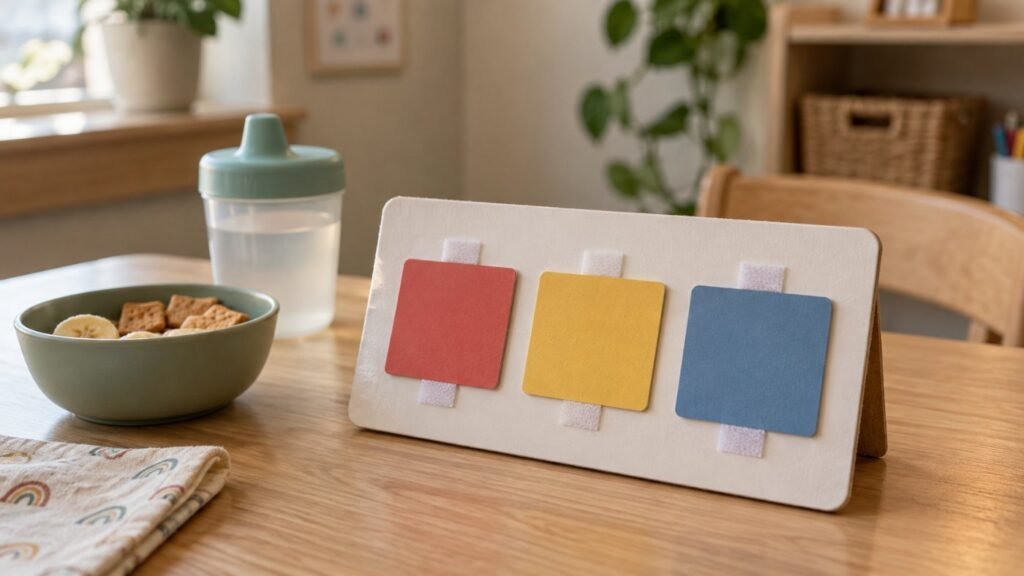
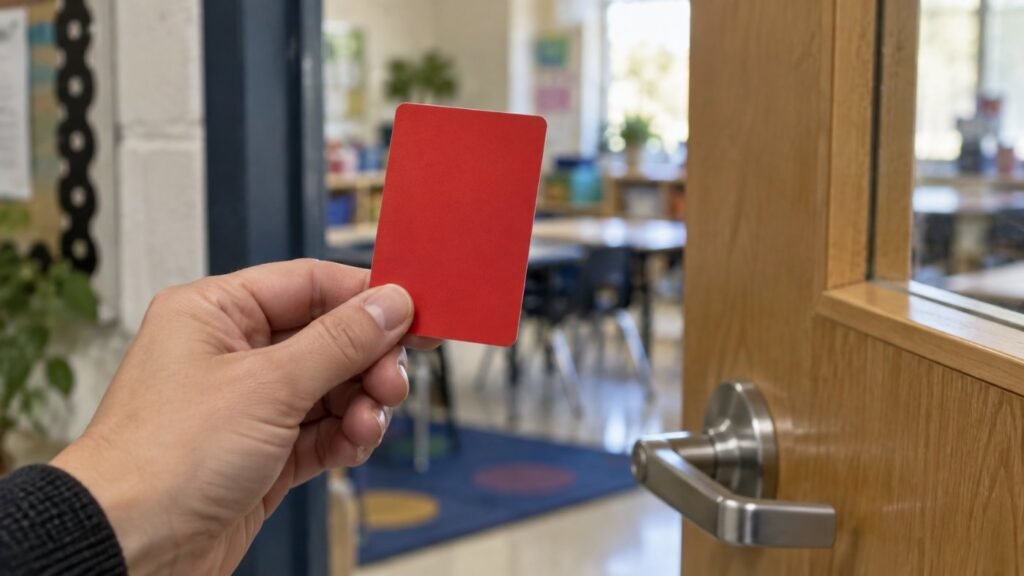
- By [date], [Student] will request a break using a break card or AAC in 80% of opportunities when showing early signs of stress.
- By [date], [Student] will request a sensory tool (headphones, fidget) using AAC in 4 of 5 opportunities.
- By [date], [Student] will communicate “too loud” or “too much” in 3 of 5 overwhelming situations.
- By [date], [Student] will use a “help” request instead of crying or leaving in 80% of challenging tasks.
- By [date], [Student] will communicate pain or illness (“hurt,” “sick”) and point to the body part in 4 of 5 opportunities.
- By [date], [Student] will ask for a quiet space using AAC in 3 of 4 opportunities.
AAC Navigation and Core Words
Core words are small, flexible words like “go,” “stop,” “more,” “not,” “like” and “help” that work in many situations.
- By [date], [Student] will navigate to the correct category page on their AAC device to find a target word in 4 of 5 opportunities.
- By [date], [Student] will use 15 different core words spontaneously across the school day over a 2-week period.
- By [date], after adult modeling, [Student] will imitate a 2-word core word combination (“go fast,” “not that”) in 4 of 5 opportunities.
- By [date], [Student] will carry or locate their AAC system when moving between settings in 80% of transitions.
- By [date], [Student] will use the home or back button to return to the main page in 4 of 5 opportunities.
- By [date], [Student] will produce 3-word utterances on their AAC device in 3 of 5 opportunities.
- By [date], [Student] will use AAC to answer a yes or no question in 8 of 10 opportunities.
Social and Commenting Messages
- By [date], [Student] will greet peers or adults using AAC, signs or speech in 4 of 5 opportunities.
- By [date], [Student] will comment on a shared activity (“cool,” “uh oh,” “funny”) in 3 of 5 opportunities.
- By [date], [Student] will take a turn in a game using a “my turn” message in 4 of 5 opportunities.
- By [date], [Student] will answer a peer’s question using AAC in 3 of 5 opportunities.
- By [date], [Student] will share news from home using a communication book or device in 3 of 5 mornings.
- By [date], [Student] will use a social phrase (“thank you,” “see you later”) in 4 of 5 opportunities.
- By [date], [Student] will ask a peer a simple question (“what you want?”) using AAC in 3 of 5 opportunities.
Feelings and Personal Information
- By [date], [Student] will identify their feeling using a feelings page on AAC during check-in in 4 of 5 days.
- By [date], [Student] will communicate “happy,” “sad,” “mad” or “scared” in a real situation in 3 of 5 opportunities.
- By [date], [Student] will give their name and age using any modality in 4 of 5 opportunities.
- By [date], [Student] will share one personal preference (“I like…”) in 4 of 5 opportunities.
- By [date], [Student] will communicate who helped them or who they want to work with in 3 of 4 opportunities.
- By [date], [Student] will use AAC to tell an adult what happened after an upsetting event in 3 of 4 opportunities.
- By [date], [Student] will share their address or a caregiver phone number using an ID card or device in 4 of 5 practice trials.
The BERMED Goal-Writing Check
- B – Baseline: Do you know every way the student communicates now, including gestures and behavior?
- E – Exact skill: Does the goal name one communication function, such as request, refuse or comment?
- R – Realistic: Are adults modeling on the AAC system daily before expecting independent use?
- M – Measurable: Can two adults count it the same way?
- E – Equitable access: Does the student have their AAC system all day, in every setting?
- D – Data plan: Who logs communication attempts, in which routines, and how often?
How to Measure Functional Communication IEP Goals
| Skill | How to measure | Accommodations to pair |
|---|---|---|
| Requesting | Percent of opportunities with a request | Choice board, engineered opportunities |
| Refusing | Percent of refusals using communication | “Stop” and “all done” always available |
| Help and breaks | Frequency of help and break requests | Break card, help symbol on every page |
| AAC navigation | Accuracy finding target words | Consistent layout, aided language modeling |
| Social messages | Number of greetings and comments | Peer modeling, shared activities |
| Feelings | Check-in responses, real-time use | Feelings page, visual scale |
Pair these goals with pragmatic language IEP goals as communication grows, self-regulation IEP goals for break and coping messages, and social skills IEP goals for peer interaction.
Neuroaffirming tip: Every form of communication is valid. Never take away an AAC device as a consequence, and never require speech before honoring a request. Respect a student’s “no,” because it teaches that their voice matters.
What are functional communication IEP goals?
Functional communication IEP goals help a student communicate everyday wants, needs, feelings and refusals using any method, such as speech, signs, pictures or an AAC device.
Can AAC goals be written for students who also speak?
Yes. AAC supports speech and does not replace it. Many students use AAC when tired, stressed or when speech is not reliable.
How do you measure AAC IEP goals?
Track communication attempts in real routines, the communication function used, prompt levels, accuracy finding words and the number of different words used spontaneously.
What are core words?
Core words are high-frequency words like “go,” “stop,” “more,” “help” and “not” that work across many situations and make up most of everyday language.
Should a student earn access to their AAC device?
No. AAC is the student’s voice and should be available at all times. Removing it as a consequence or reward is never appropriate.
5 Actions to Take This Week
- List every way the student communicates now, including behavior.
- Make sure the AAC system or choice board is available all day.
- Model 3 core words throughout daily routines without expecting a response.
- Add “help,” “break,” “stop” and “all done” to every page or board.
- Choose 2 or 3 goals and track communication attempts in real routines.
Sources

