
Quick answer: Assistive technology for autism includes tools that support communication (AAC apps and picture systems), predictability (visual schedules and timers), sensory regulation (noise-reducing headphones, fidget tools), social understanding (video modeling, visual stories) and independence (task checklists and reminder apps). The best assistive technology for autism respects the person’s strengths and preferences, reduces stress and gives more control over daily life, rather than trying to make the person look less autistic.
In this guide
For many autistic students, school is loud, unpredictable and full of unwritten rules. Assistive technology for autism can make that world clearer and calmer: a schedule that shows what comes next, headphones that soften the noise, a device that gives a voice.
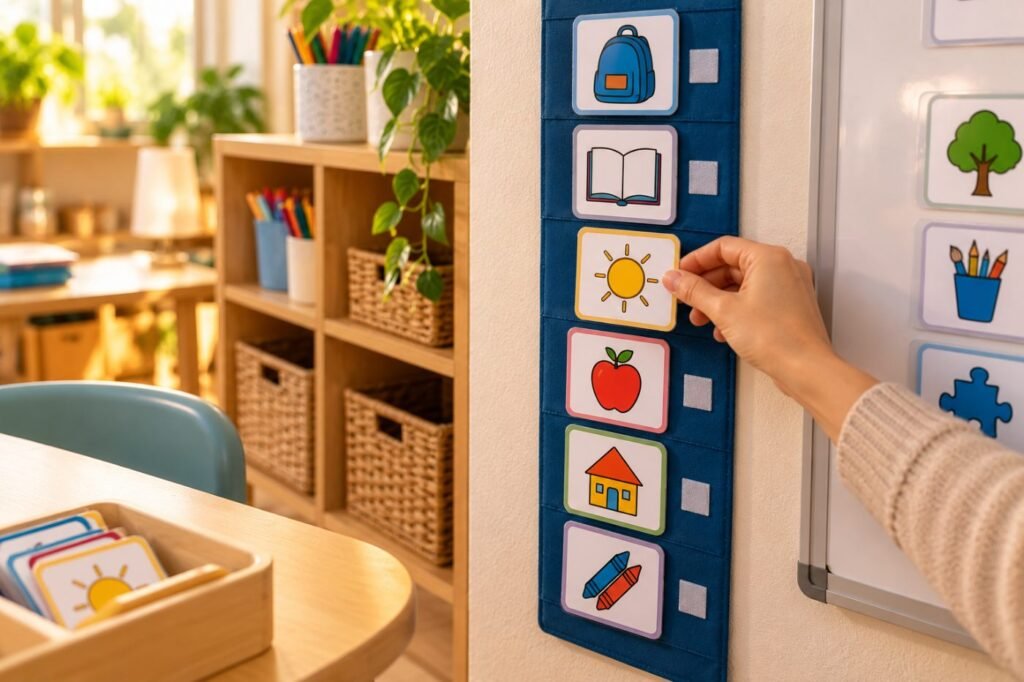
Five Areas of Support
| Area | Low-tech | High-tech |
|---|---|---|
| Communication | Picture cards, choice boards | AAC apps, speech-generating devices |
| Predictability | Picture schedules, first-then boards, sand timers | Visual schedule apps, timer apps |
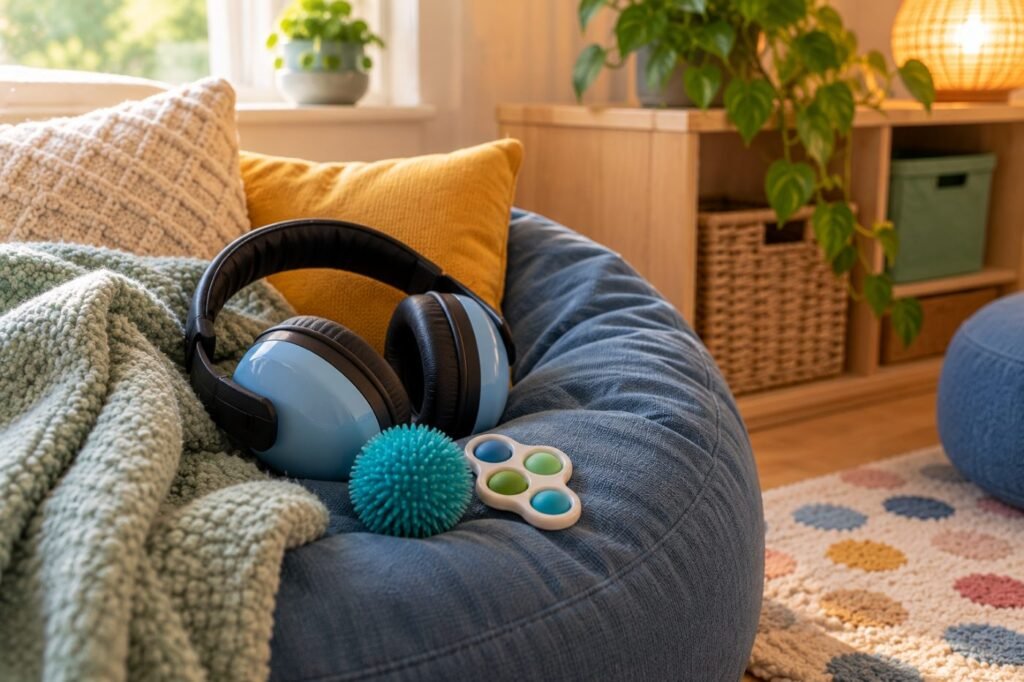
| Sensory regulation | Fidgets, weighted lap pads, earmuffs | Noise-cancelling headphones, calming apps |
| Social understanding | Social narratives, comic strip conversations | Video modeling, interactive stories |
| Independence | Task checklists, labeled bins | Reminder apps, step-by-step video prompts |
Key point: Assistive technology for autism should give more control and less stress to the autistic person, not just make adults’ jobs easier.
Assistive Technology for Autism by Age
| Age | Common tools |
|---|---|
| 3 to 6 | Picture schedules, choice boards, AAC, noise-reducing headphones |
| 7 to 12 | Visual timers, task checklists, video models, break cards |
| 13 to 18 | Phone calendars, reminder apps, AAC or text-based communication, sensory kits |
| Adults | Workplace task apps, scheduling tools, noise-cancelling headphones |
Video Modeling
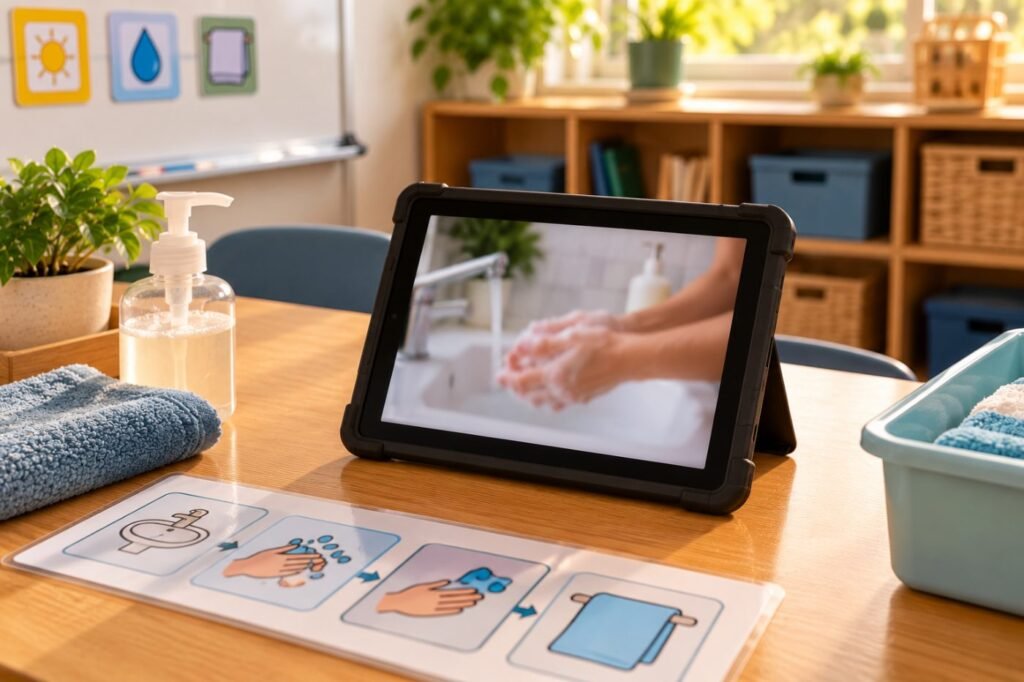
How video modeling works
Technology-aided instruction and video modeling are both identified among evidence-based practices for autistic learners (NCAEP, 2020).
Neuroaffirming Principles
- Offer AAC as a right, not a reward; never take it away as punishment.
- Let the person choose headphones and sensory tools when they need them.
- Use schedules to share information, not to enforce rigid compliance.
- Respect preferred communication modes, including typing.
- Ask the student what helps and what does not.
Student self-advocacy card
“I am autistic. Loud noise is painful for me. I may wear headphones or take a short break. This helps me stay calm and learn.”
Real-Life Example
Case story
Yara, 10, is autistic and had frequent meltdowns during transitions. Her team added a visual schedule app on her tablet, a timer showing minutes left, noise-cancelling headphones she could use anytime and a short video model for the lunch routine. Meltdowns dropped from daily to about once a month, and Yara began checking her schedule on her own.
Related: See visual schedules in the classroom, AAC in the classroom and choosing an AAC device.
Assistive Technology for Autism FAQ
What is assistive technology for autism?
Tools that support communication, predictability, sensory needs, social understanding and independence.
Is video modeling evidence-based?
Yes, it is identified as an evidence-based practice for autistic learners.
Should headphones be used all day?
The person should be able to use them when needed; balance with sensory breaks and environment changes.
Is a tablet a good AAC device for autistic children?
Often yes, with a robust AAC app, a protective case and a low-tech backup.
Can assistive technology for autism be in the IEP?
Yes, as devices, accommodations, goals and training.
In short: Assistive technology for autism makes the world clearer and calmer. Choose tools with the autistic person and use them to build autonomy. This article is part of our Assistive Technology series.
Was this article helpful?
Tap a star to rate
Sources
- Steinbrenner et al. (2020). Evidence-Based Practices for Autism. NCAEP
- AssistiveWare. Busting AAC Myths for Good
- OSEP and OET (2024). Assistive Technology Under the IDEA
This article is educational and does not replace professional advice.

