Quick answer: Supporting students with emotional dysregulation starts with seeing the behavior as a stress response, not defiance. In the moment, lower your voice, reduce the audience, offer space and a calm choice, and keep everyone safe. Over time, use co-regulation, predictable classroom supports, direct teaching of regulation skills and IEP accommodations such as scheduled breaks. After a hard moment, focus on repair, not punishment. This guide walks through 10 practical steps, each with a free visual you can use with your team.
In this guide
A student flips a desk over a small mistake. Another shuts down and hides under a hood. A third argues with every direction after lunch. These moments are exhausting for teachers and frightening for students. Emotional dysregulation means a student’s emotions rise faster, feel bigger and take longer to settle than the situation seems to call for. It is common in students with ADHD, autism, anxiety, trauma histories and learning differences. The Child Mind Institute explains that children learn to calm their bodies through co-regulation, when a calm adult helps them settle again and again. Supporting students with emotional dysregulation is not about controlling behavior. It is about lowering stress, building skills and keeping relationships strong. Use the 10 visuals below as a roadmap.
1. What Emotional Dysregulation Can Look Like
Dysregulation does not always look loud. Some students explode. Others freeze, cry or leave. Recognizing all forms helps adults respond with support instead of punishment.
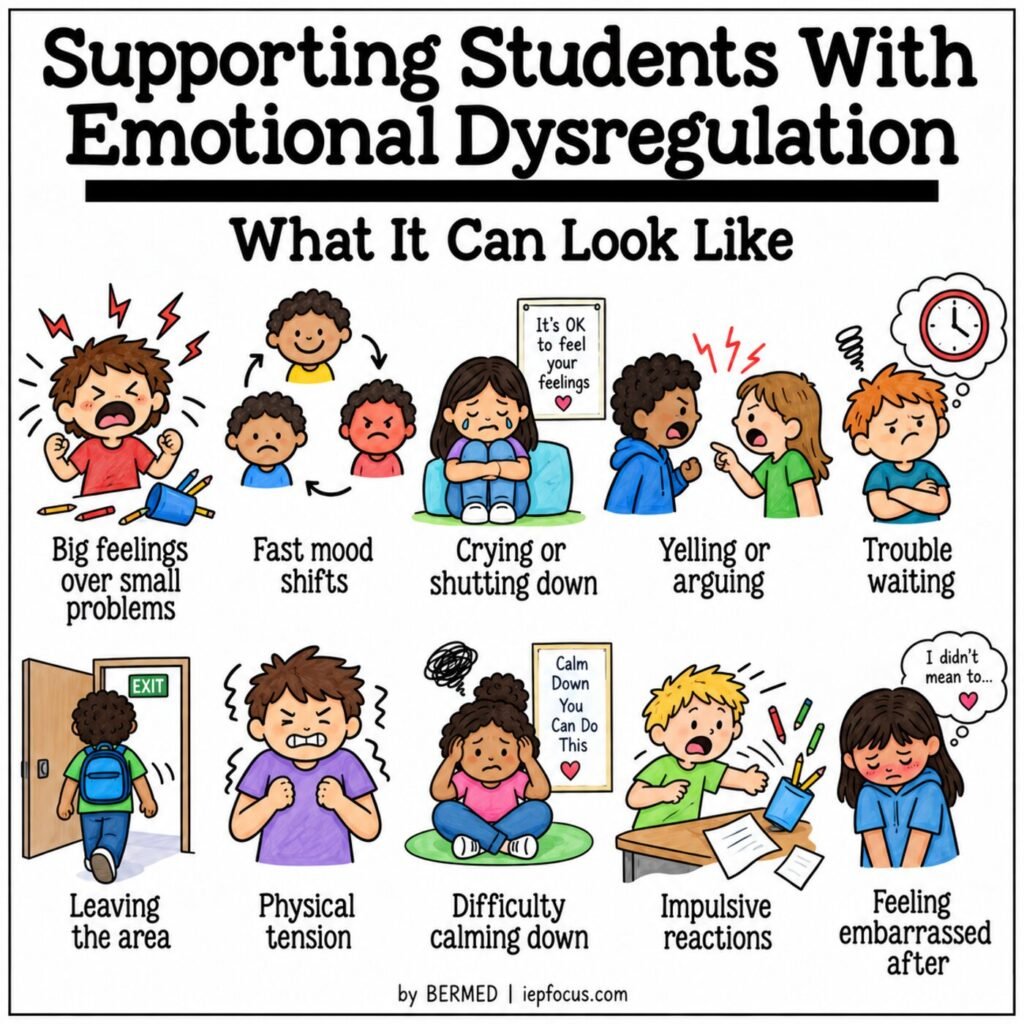
- Big feelings over small problems and fast mood shifts
- Crying, shutting down or hiding
- Yelling, arguing or impulsive reactions
- Leaving the area or trouble waiting
- Physical tension and difficulty calming down
- Feeling embarrassed or ashamed after an outburst
2. Common Triggers and Early Signs
Most outbursts have a build-up. When adults learn a student’s triggers and early signs, they can step in before the moment becomes a crisis. Many triggers are sensory or physical, so check our guide to interoception and emotional regulation.
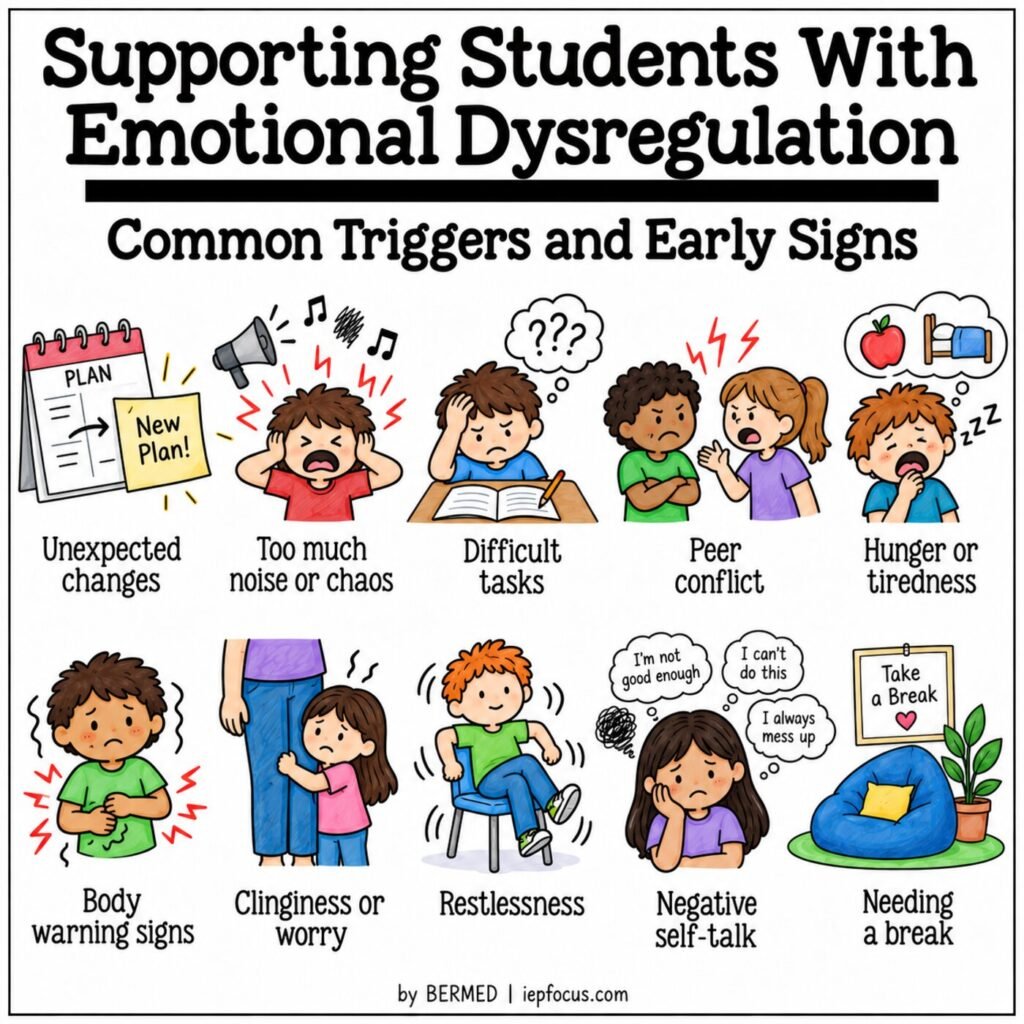
| Common triggers | Early warning signs |
|---|---|
| Unexpected changes | Body tension, clenched fists |
| Too much noise or chaos | Clinginess or worry |
| Difficult tasks | Restlessness and pacing |
| Peer conflict | Negative self-talk (“I can’t do this”) |
| Hunger or tiredness | Asking for or needing a break |
3. Language That Helps
When a student is dysregulated, the thinking brain goes offline. Short, warm phrases reach the nervous system better than long explanations. Our de-escalation scripts for teachers offer more examples.
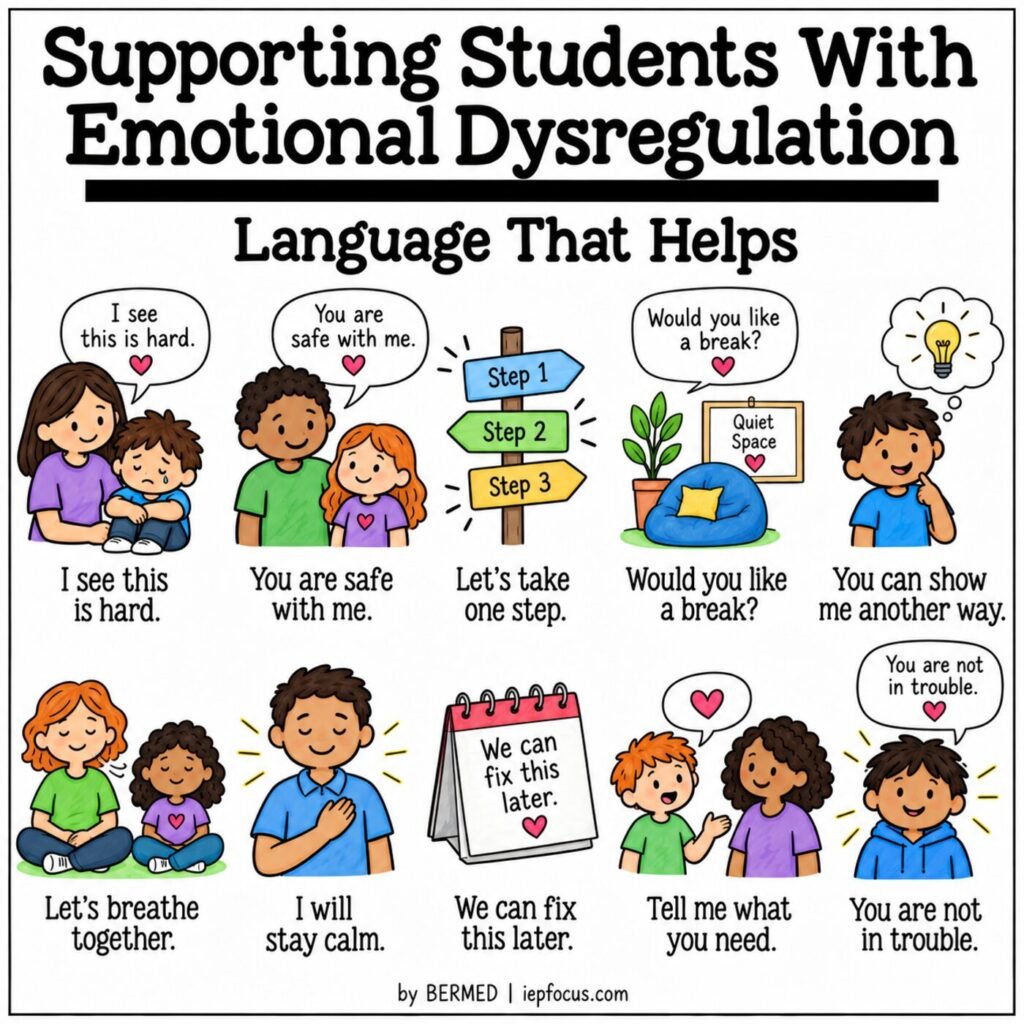
- “I see this is hard.”
- “You are safe with me.”
- “Let’s take one step.”
- “Would you like a break?”
- “Let’s breathe together.”
- “We can fix this later.”
- “You are not in trouble.”
4. What to Do in the Moment With Students With Emotional Dysregulation
In a hard moment, the only goal is safety and calm. Teaching and consequences can wait. For a step-by-step plan, see behavior de-escalation in the classroom.
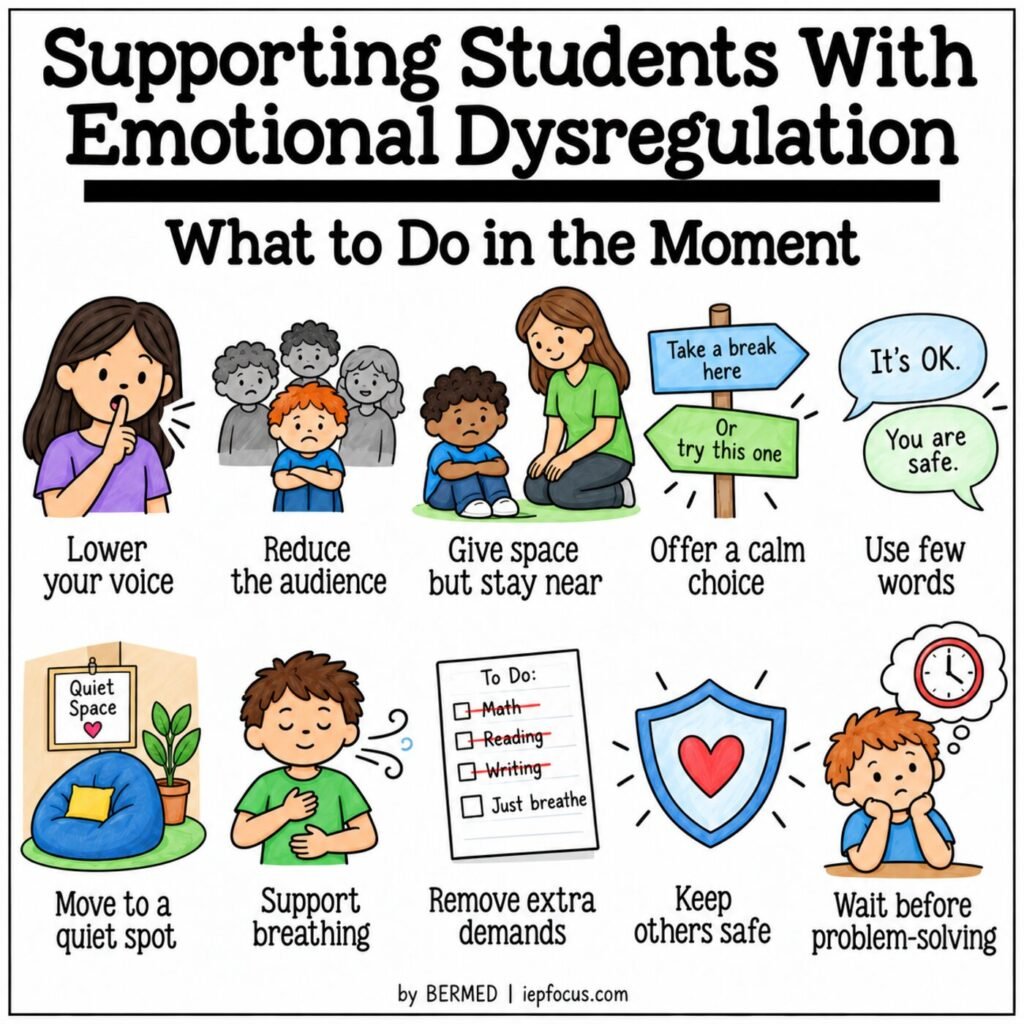
- Lower your voice and use few words
- Reduce the audience by moving peers or the student
- Give space but stay near
- Offer a calm choice, such as a break spot
- Move to a quiet spot and support breathing
- Remove extra demands and keep others safe
- Wait before problem-solving
5. What to Avoid
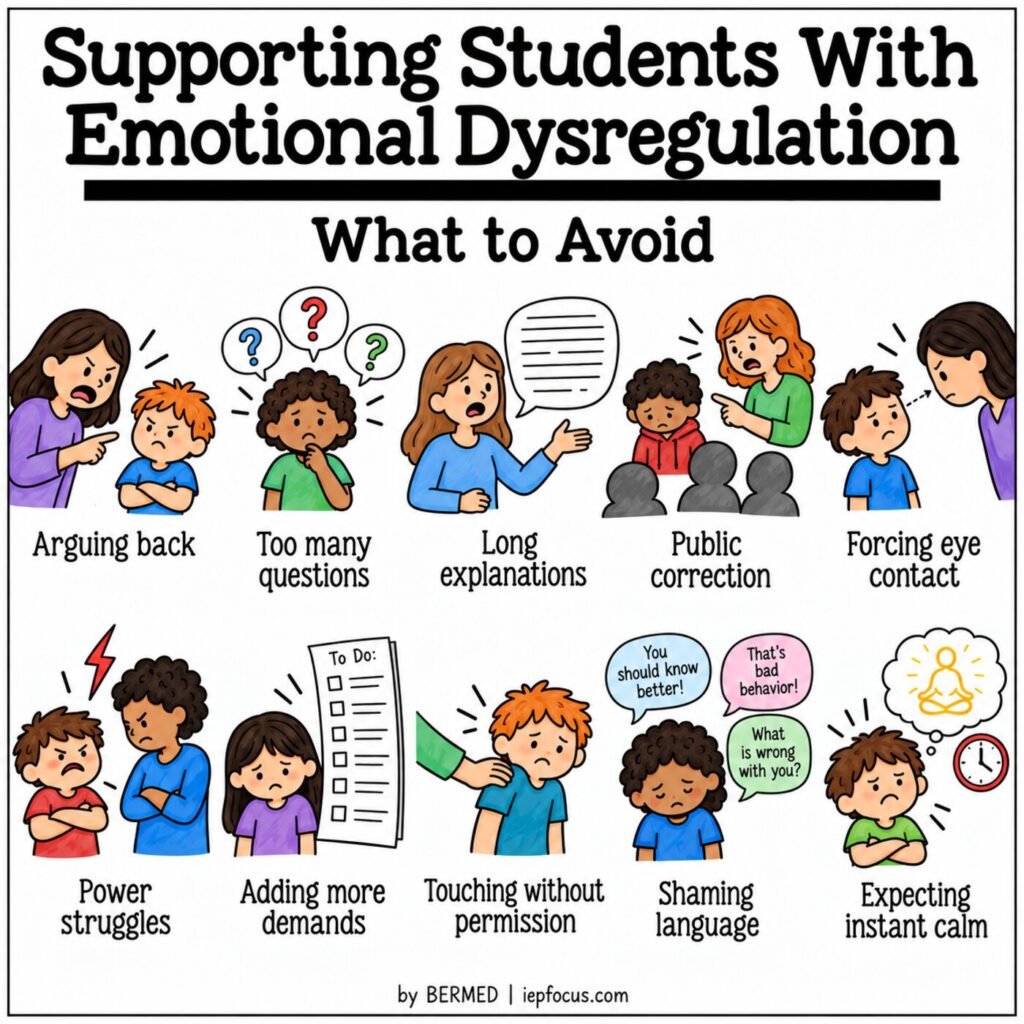
| Do | Avoid |
|---|---|
| Stay calm and brief | Arguing back or power struggles |
| Ask one simple question later | Too many questions in the moment |
| Use short, kind phrases | Long explanations or lectures |
| Talk privately | Public correction |
| Let the student look where they need | Forcing eye contact |
| Pause demands | Adding more demands |
| Ask before touching | Touching without permission |
| Use neutral, respectful words | Shaming language |
| Allow time to settle | Expecting instant calm |
6. Co-Regulation Strategies
Co-regulation is how students borrow an adult’s calm until they can find their own. Read more in our co-regulation strategies for SPED teachers.
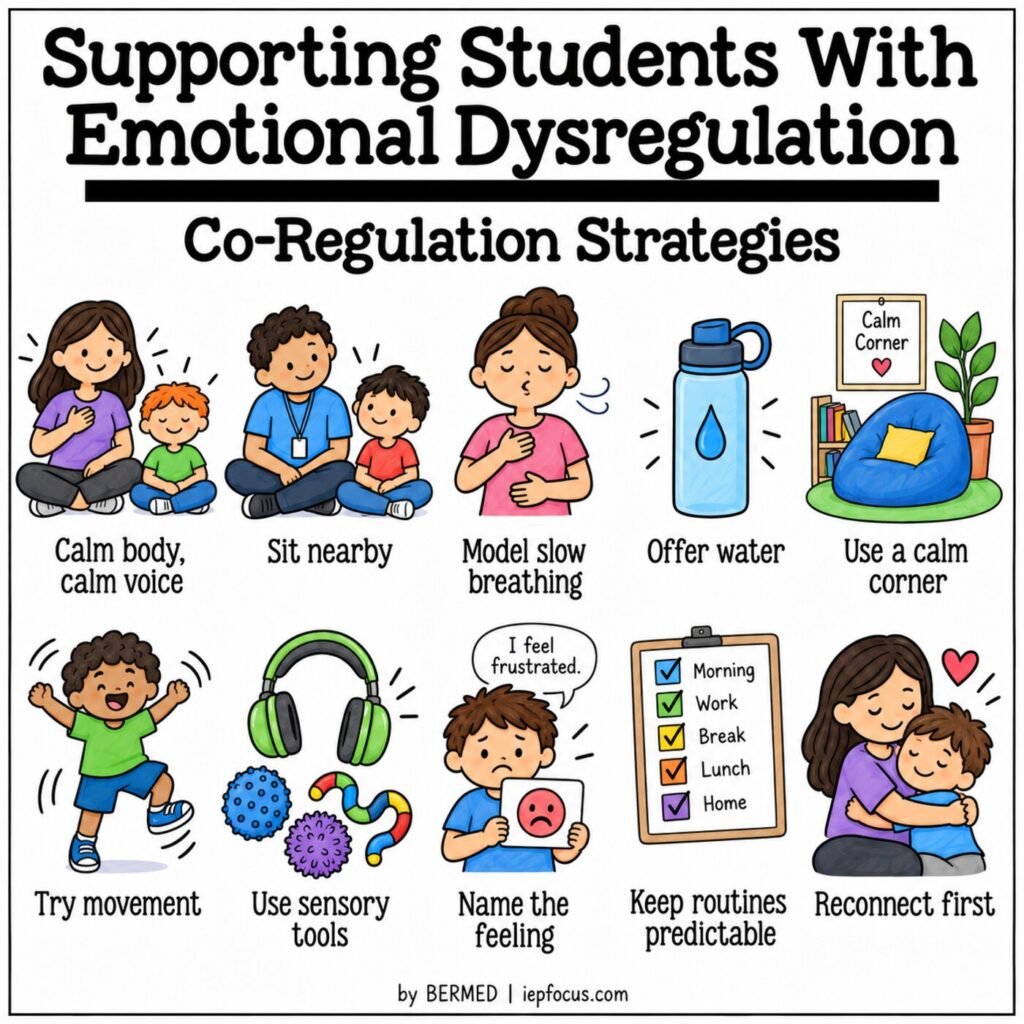
- Calm body and calm voice
- Sit nearby and model slow breathing
- Offer water
- Use a calm corner
- Try movement or sensory tools
- Help the student name the feeling
- Keep routines predictable and reconnect first
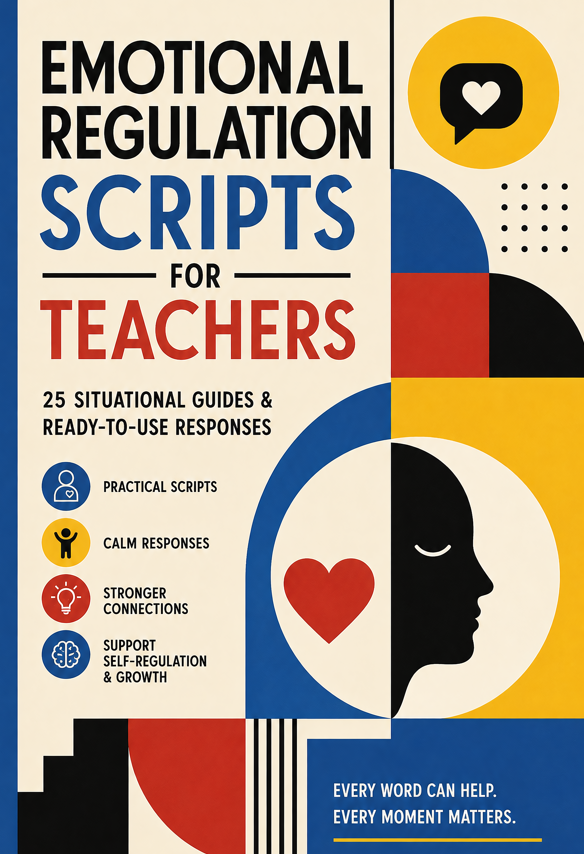
Free resource
Emotional Regulation Scripts for Teachers
25 situational scripts for calm, consistent responses in tough moments.
7. Classroom Supports That Help
Proactive supports prevent many hard moments. A calm corner in the classroom, a visual timer and noise canceling headphones are simple places to start.
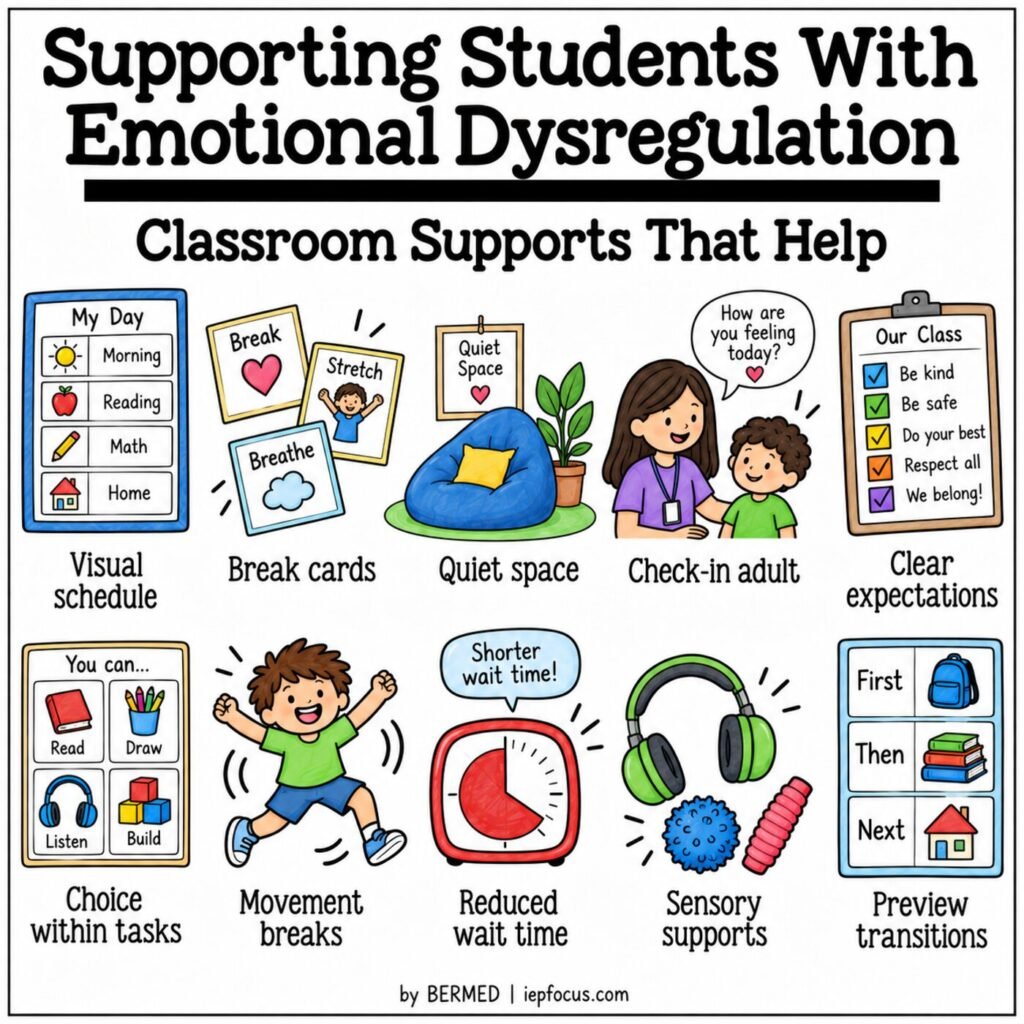
- Visual schedule and clear expectations
- Break cards and a quiet space
- A check-in adult
- Choice within tasks
- Movement breaks and sensory supports
- Reduced wait time
- Preview transitions with First/Then boards
8. Teaching Regulation Skills
Regulation is a skill, so it can be taught, practiced and measured. Teach strategies when students are calm, then practice before hard moments. Our IEP goal bank includes regulation goals you can adapt.
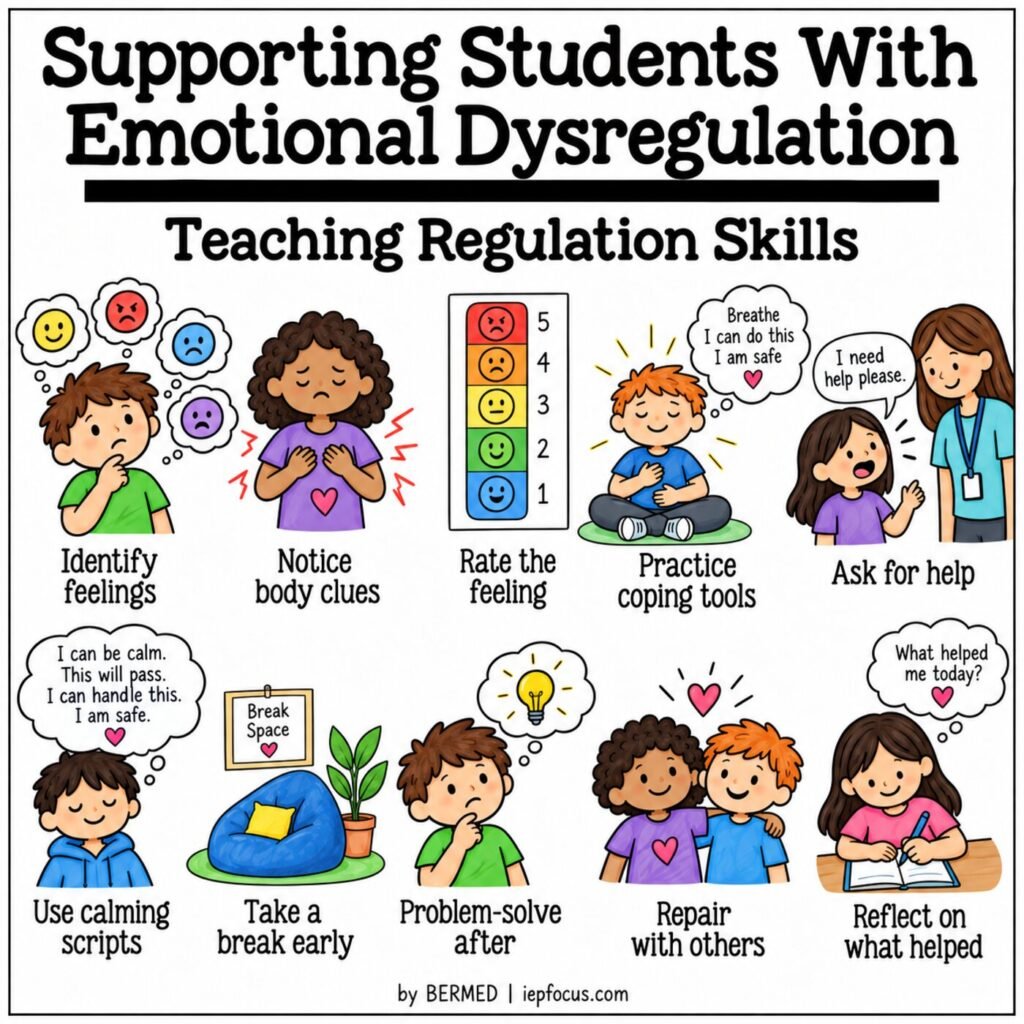
- Identify feelings and notice body clues
- Rate the feeling on a 1 to 5 scale
- Practice coping tools while calm
- Ask for help and use calming scripts
- Take a break early
- Problem-solve after, repair with others and reflect on what helped
9. Helpful IEP Accommodations for Students With Emotional Dysregulation
When dysregulation affects learning, the IEP or 504 plan should include supports. IDEA requires teams to consider positive behavioral interventions and supports when behavior impedes learning.
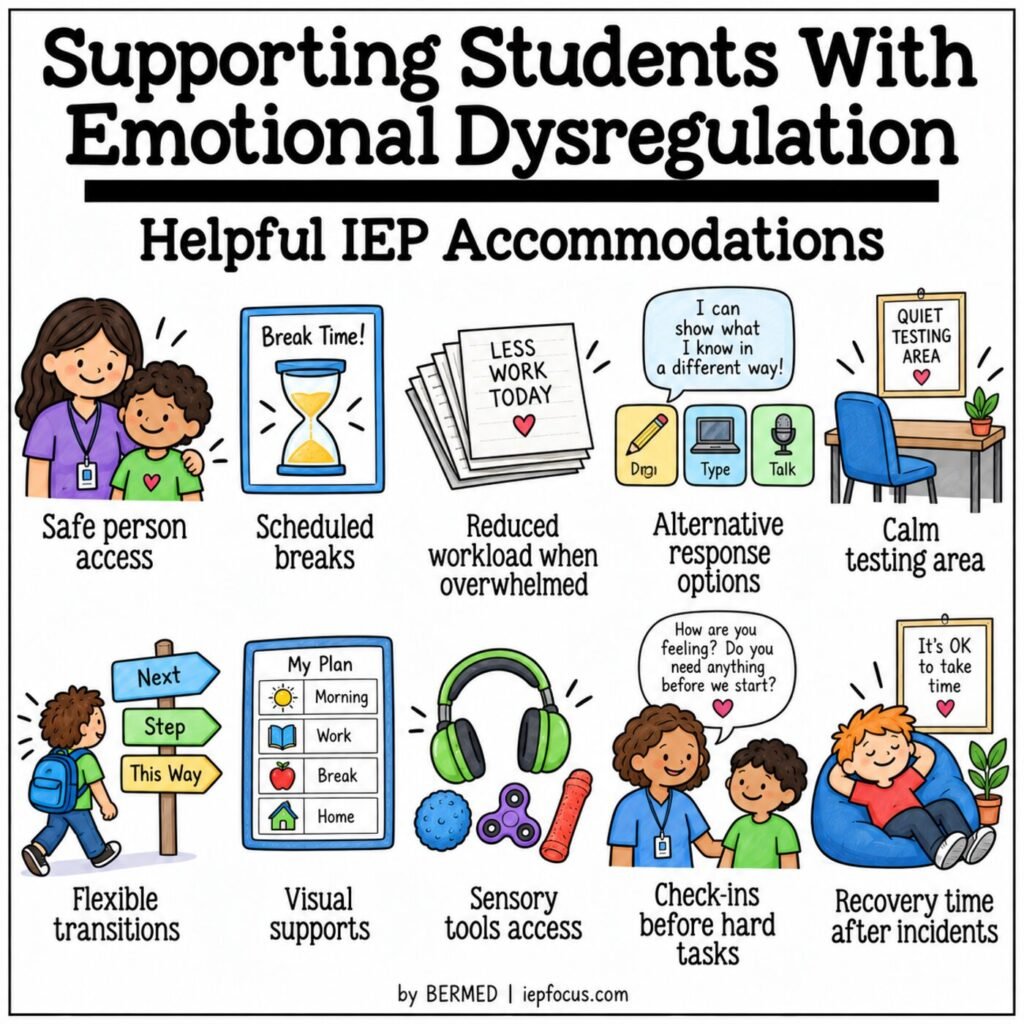
| Accommodation | How it helps |
|---|---|
| Safe person access | A trusted adult to go to when stress rises |
| Scheduled breaks | Prevents overload before it builds |
| Reduced workload when overwhelmed | Lowers demands during high-stress periods |
| Alternative response options | Lets students show learning without extra pressure |
| Calm testing area | Reduces test anxiety and noise |
| Flexible transitions and visual supports | Makes changes predictable |
| Sensory tools access | Supports body regulation |
| Check-ins before hard tasks | Catches early signs |
| Recovery time after incidents | Allows a full return to calm before demands |
10. After a Hard Moment: Repair and Recovery
Recovery takes longer than most adults expect. Wait until the student is fully calm before talking. For the difference between a meltdown and a tantrum, read meltdown vs tantrum, and for classroom planning, see autistic meltdowns in the classroom.
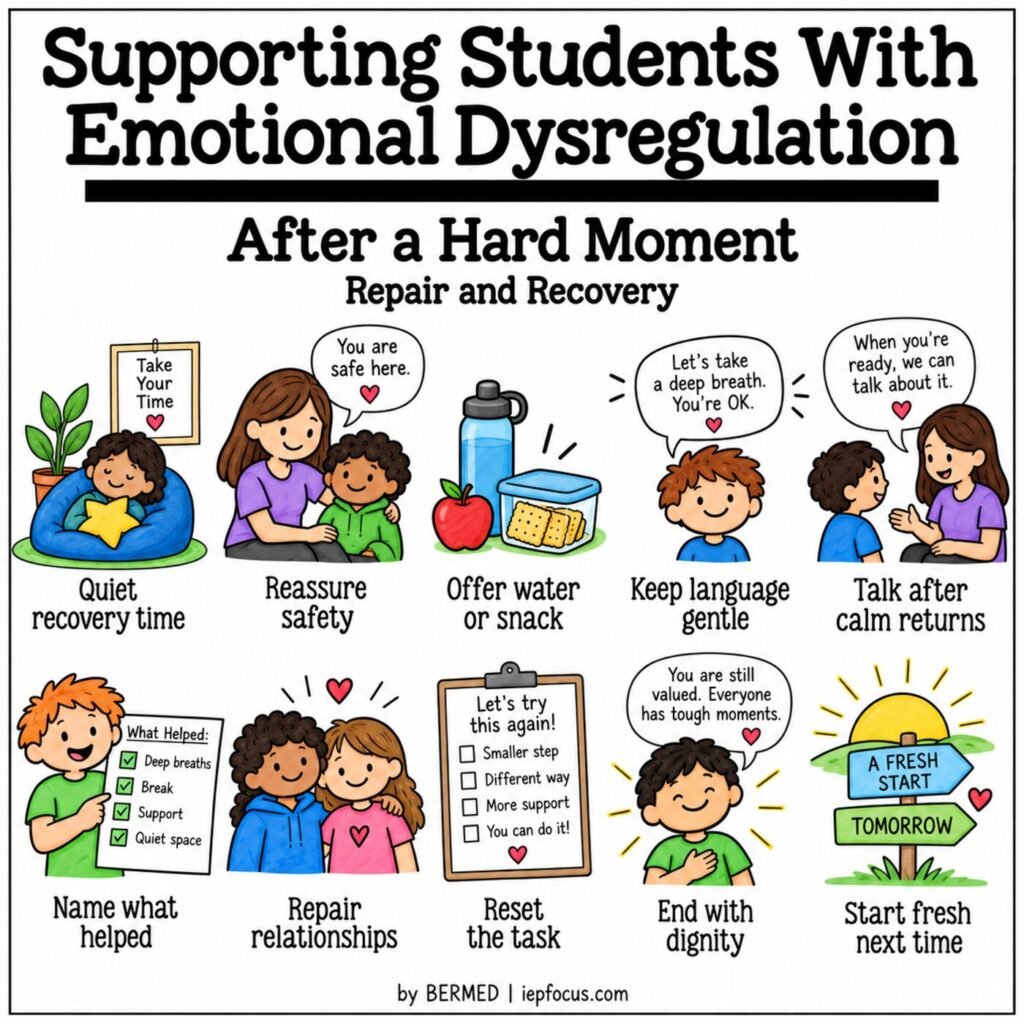
- Quiet recovery time
- Reassure safety and offer water or a snack
- Keep language gentle
- Talk after calm returns
- Name what helped
- Repair relationships and reset the task
- End with dignity and start fresh next time
The BERMED Regulation Plan
- B – Behavior as communication: Ask what the student needs, not only what they did.
- E – Early signs: List triggers and warning signs with the student and family.
- R – Regulate first: Calm the body before talking or teaching.
- M – Model: Use a calm voice, slow breathing and few words.
- E – Environment: Adjust noise, demands and routines to prevent overload.
- D – Debrief and repair: Reflect together and reconnect after every hard moment.
In class: Build a predictable routine, a calm corner and a break system. At home: Families can use the same words and visuals so the student hears one consistent message. In life: Regulation skills learned at school become lifelong tools for work, friendships and independence.
Neuroaffirming tip: Dysregulation is not a character flaw. A student having a hard time is not giving you a hard time. When adults stay calm and connected, students learn that big feelings are survivable.
What is emotional dysregulation in students?
Emotional dysregulation means a student has difficulty managing the intensity and duration of emotions. Feelings rise quickly, feel very big and take a long time to settle, which can lead to outbursts, shutdowns or leaving the room.
What causes emotional dysregulation at school?
Common causes include ADHD, autism, anxiety, trauma, sensory overload, hunger, fatigue, unexpected changes, difficult tasks and peer conflict. Often several stressors add up.
How do you calm a dysregulated student?
Lower your voice, use few words, reduce the audience, give space while staying near, offer a calm choice and remove demands. Wait until the student is calm before problem-solving.
What IEP accommodations help with emotional dysregulation?
Helpful accommodations include scheduled breaks, access to a safe person, a calm space, sensory tools, reduced workload when overwhelmed, check-ins before hard tasks and recovery time after incidents.
Should students be punished for emotional outbursts?
Punishment rarely builds regulation skills. Focus on safety, co-regulation, teaching coping skills and repair after the moment. Logical follow-up, like repairing a relationship, is more effective than shame.
5 Actions to Take This Week
- Write down one student’s top 3 triggers and early warning signs.
- Choose 3 calming phrases and practice them with your team.
- Set up or refresh a calm corner with a few sensory tools.
- Teach one regulation skill when the class is calm.
- Plan a repair routine for after hard moments.
Sources