
Quick answer: Autism and screen time is not a simple “good or bad” question. Pediatrician Dr. Jenny Radesky, writing for the American Academy of Pediatrics, notes that digital media can help autistic children express themselves, build skills, and stay organized, but that autistic kids can be more prone to heavy use, which may crowd out sleep, movement, and play. A family media plan, visual timers, shared viewing, careful content choices, and screen-free routines help most families find balance.
In this guide
For many autistic children, a tablet is a calm place in a noisy world. It may be where they learn letters, listen to their favorite songs, or communicate. It may also be the thing that causes the biggest battles when it is time to stop. Autism and screen time deserves a thoughtful, non-judgmental approach.
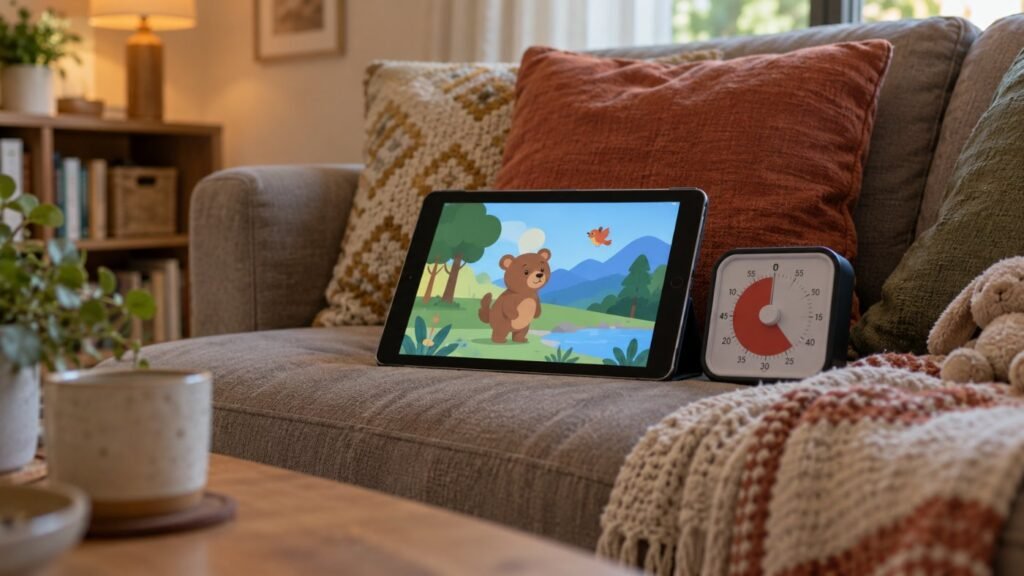
Benefits of Screens for Autistic Children
- Communication: AAC apps give a voice to nonspeaking children. See AAC in the classroom.
- Regulation: familiar shows can calm an overwhelmed nervous system.
- Learning: special interests can teach numbers, colors, and emotions, as the AAP suggests.
- Connection: shared interests online can lead to real friendships for older kids.
- Organization: visual schedules and reminders on devices.
Key point: Screens are a tool. The goal is not zero screens, it is screens that serve your child without crowding out sleep, movement, connection, and play.
Possible Risks
The AAP notes that autistic children may be more prone to excessive screen use because of intense focus and love of repetition. Heavy use can reduce:
- Sleep, especially with screens close to bedtime. See sleep problems in autistic children.
- Movement and outdoor play
- Back-and-forth interaction with family
- Creative and pretend play
There is no good evidence that screens cause autism. What matters most is how screens fit into the whole day.
The BERMED Family Media Plan
A balanced plan for autism and screen time.
- B: Balance the day. Make sure sleep, meals, movement, and play come first.
- E: Expectations made visual. Show when screens happen on the visual schedule.
- R: Routines with screen-free zones. Bedrooms at night, meals, the car on short trips.
- M: Media together. Watch and play alongside your child when you can.
- E: End with a plan. Timers, warnings, and a “what’s next” activity.
- D: Decide on content. Choose calm, age-appropriate content and avoid triggers.
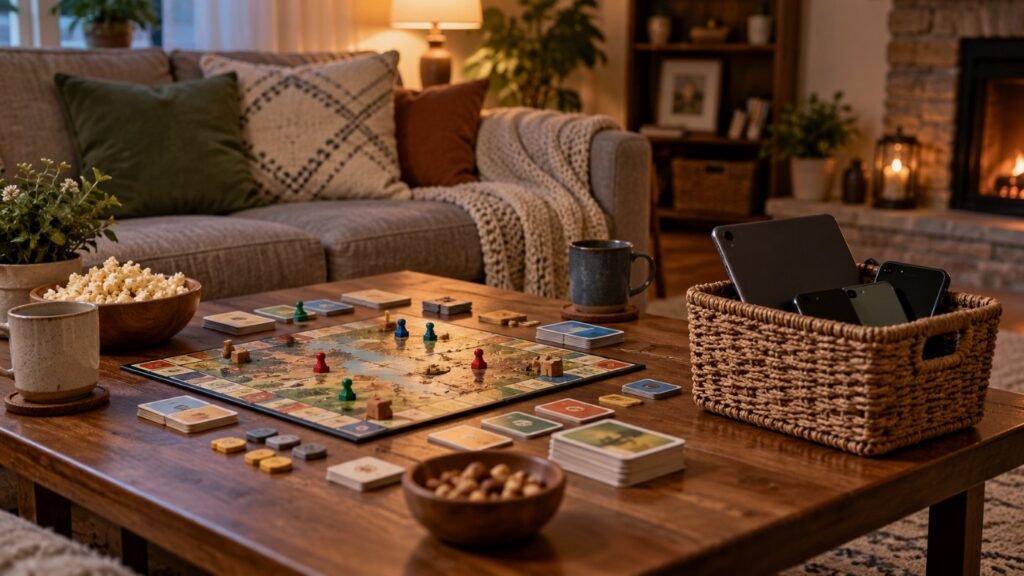
Ending Screen Time Without Meltdowns
Stopping a screen is a hard transition, especially when it interrupts deep focus. Many episodes of aggression in autistic children happen right here.
Use a visual timer. The AAP recommends visual timers and schedules over verbal reminders.
Give warnings. “Ten minutes,” then “five minutes,” then “last episode.”
Stop at natural endings. The end of an episode or level, not the middle.
Have a “next” ready. A snack, a favorite toy, or going outside makes stopping easier.
| Situation | Try this |
|---|---|
| Meltdown when screen ends | Visual timer, warnings, end at a natural break |
| Screens at bedtime | Screens off an hour before bed, charge devices outside the bedroom |
| Same video on repeat | Often regulating and harmless; offer variety gently |
| Online games with strangers | Avoid multiplayer chats for younger kids, use parental controls |

Choosing Content and Games
- Choose slower-paced shows with less sensory chaos.
- Remove content that leads to upset or copied unsafe behavior.
- The AAP advises caution with multiplayer online games because of safety and privacy concerns.
- Be skeptical of apps that promise to “train the brain.”
Do
- Make a family media plan together
- Use screens for communication and learning
- Watch together and talk about it
- Protect screen-free bedtime
Avoid
- Shaming repetitive viewing
- Taking away AAC devices as punishment
- Sudden grabs of the device
- Screens as the only way to calm down
Repeating the same video is often a form of self-regulation, similar to stimming. Brothers and sisters may need their own screen rules too, see siblings of autistic children.
No guilt: Screens can give exhausted parents a needed break. A balanced plan is about what helps your family thrive, not about being perfect.
Is screen time bad for autistic children?
Not necessarily. Screens can support communication, learning, and regulation, but heavy use may crowd out sleep, movement, and play. Balance matters most.
Does screen time cause autism?
There is no good evidence that screens cause autism. Autism is a neurodevelopmental difference present from early development.
How do I stop screen time without a meltdown?
Use a visual timer, give advance warnings, stop at natural breaks, and have a clear next activity ready.
Is it okay if my autistic child watches the same video over and over?
Often yes. Repetitive viewing can be calming and regulating. Gently offer variety and keep an eye on overall balance.
What is a family media plan?
A family media plan sets when, where, and how screens are used, including screen-free times and places, so everyone knows what to expect.
5 Actions to Take This Week
- Write down when and how your child uses screens.
- Add screen time to the visual schedule.
- Start using a visual timer with warnings.
- Create one screen-free routine, like dinner.
- Watch one show together and talk about it.
Sources

