
Quick answer: Inclusive classroom strategies help every student, including students with disabilities and neurodivergent learners, learn together in the general education classroom. The most effective approach is to design for variability from the start, using Universal Design for Learning (UDL): multiple ways to engage, multiple ways to present information, and multiple ways for students to show what they know. Add predictable routines, visual supports, flexible seating, sensory breaks, co-teaching, and individualized accommodations.
In this guide
Inclusion is not just placing a student with an IEP in a general education room. It is designing a classroom where that student, and everyone else, can actually learn, belong, and succeed. These inclusive classroom strategies help teachers move from “fitting in” to truly belonging.

What Inclusion Really Means
True inclusion means students with disabilities learn alongside peers with the supports they need, are valued members of the class, and take part in the same lessons, activities, and social life. It is built on the idea that variability is normal. Read more in what is neurodiversity.
Key point: Inclusive classroom strategies work best when they are built into the lesson for everyone, not added later for one student.
Start With Universal Design for Learning
CAST, the organization behind UDL, organizes its guidelines around three principles. Version 3.0, released in July 2024, also addresses barriers rooted in bias and exclusion.
| UDL principle | What it means | Classroom example |
|---|---|---|
| Multiple means of engagement | Different ways to spark interest and motivation | Choice of topic, links to student interests |
| Multiple means of representation | Different ways to present information | Text, audio, video, visuals, hands-on materials |
| Multiple means of action and expression | Different ways to show learning | Write, draw, record, build, present |
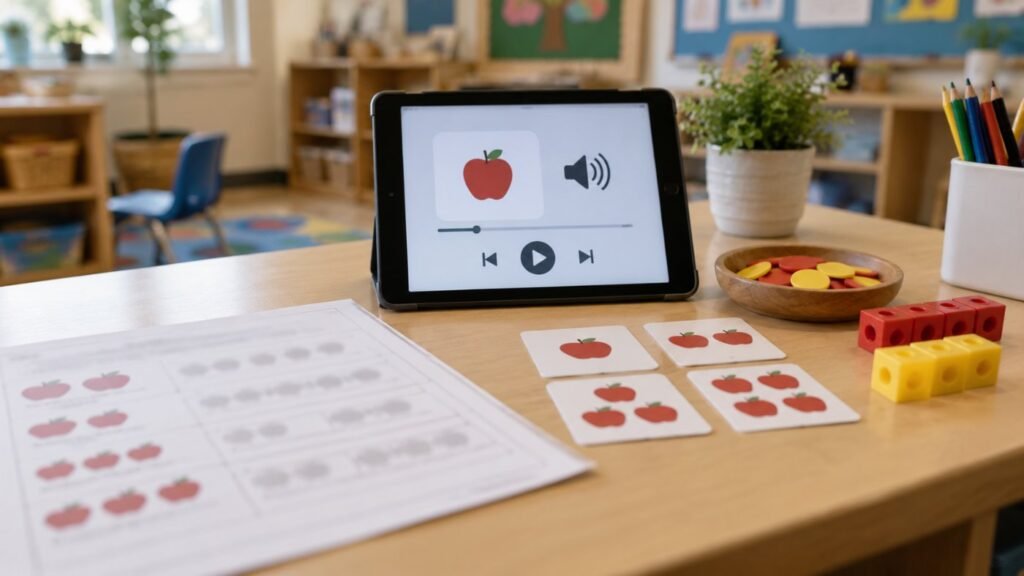
The BERMED Inclusion Framework
A quick check for every lesson.
- B: Belonging. Does every student have a real role in this lesson?
- E: Environment. Is the room calm, organized, and sensory-aware?
- R: Routines. Are expectations and transitions predictable and visual?
- M: Multiple ways. Can students access and show learning in different ways?
- E: Equity of support. Are accommodations from IEPs and 504s actually in place?
- D: Data. Are all students making progress, and how do you know?

Free resource
Inclusion Documentation Forms
12 essential forms for planning and documenting inclusion.
10 Inclusive Classroom Strategies
- Visual schedules and supports. See visual schedules in the classroom.
- Clear, chunked instructions given both orally and in writing.
- Flexible seating and quiet work options.
- Planned sensory breaks. See sensory breaks in the classroom.
- Choice in how students show learning.
- Peer supports like structured partner work and buddy roles.
- Communication access for every student. See AAC in the classroom.
- Preview new situations with social stories.
- Accommodations used consistently. Know the difference in accommodations vs modifications.
- Strengths-based language that celebrates differences.
Working as a Team
Inclusion works best when general and special education teachers plan together. Co-teaching models include one teach one assist, station teaching, parallel teaching, and team teaching. Paraprofessionals, therapists, and families are part of the team too.

Do
- Plan lessons with variability in mind
- Share IEP accommodations with every adult
- Seat students with disabilities among peers
- Celebrate every learner’s strengths
Avoid
- Pulling students out for most of the day by default
- Leaving a paraprofessional to “handle” one student
- One way to show learning for everyone
- Talking about students in front of peers
Common Mistakes
The biggest mistake is confusing presence with inclusion. A student sitting at the back with a separate worksheet and an aide is in the room, but not included. Students who are both autistic and ADHD often need extra flexibility, see AuDHD in the classroom. For students with physical disabilities, read our guide to cerebral palsy in inclusive classrooms.
Inclusion helps everyone: Visual supports, clear routines, and choices help students with and without disabilities. Good inclusive teaching is simply good teaching.
What are inclusive classroom strategies?
Inclusive classroom strategies are teaching practices that help all students, including those with disabilities, learn together, such as UDL, visual supports, flexible seating, choice, sensory breaks, and co-teaching.
What is UDL?
Universal Design for Learning is a framework from CAST that plans lessons with multiple means of engagement, representation, and action and expression so all learners can access them.
Does inclusion help students without disabilities?
Yes. Strategies like visual supports, clear routines, choices, and movement breaks often help the whole class.
What is the difference between inclusion and mainstreaming?
Mainstreaming often means placing students in general education with little change. Inclusion means designing the class so students with disabilities fully participate and belong.
What co-teaching models support inclusion?
Common models include one teach one assist, station teaching, parallel teaching, alternative teaching, and team teaching.
5 Actions to Take This Week
- Add one visual support to a daily routine.
- Offer two ways to complete one assignment.
- Plan one lesson with your co-teacher or specialist.
- Check that every IEP accommodation is in use.
- Schedule a whole-class movement break.
Sources

