
Quick answer: Potty training an autistic child often takes longer and may start later than for other children, because of differences in body awareness, sensory sensitivities, communication, and love of routine. That is normal. Success usually comes from a calm, predictable routine, visual steps, short sits, a sensory-friendly bathroom, a clear way to ask for the toilet, and lots of patience. CHOP reminds parents that the child is ultimately in control, so pressure backfires.
In this guide
Your child’s friends are out of diapers, the preschool keeps asking, and every attempt ends in tears, yours or theirs. Potty training an autistic child can feel like a mountain. It is not a race, and later is not failure. With the right setup, most autistic children make real progress.
Why Potty Training an Autistic Child Can Take Longer
The Children’s Hospital of Philadelphia (CHOP) Center for Autism Research notes that many children complete toilet training by about 3 and a half, but autistic children often follow a different path. Common reasons include:
- Body signals: difficulty noticing the feeling of a full bladder. Our guide to interoception explains this.
- Sensory issues: loud flushes, cold seats, echoey rooms, or the feeling of wiping. See our sensory needs guide.
- Routine: diapers are familiar, and change is hard.
- Communication: not having a clear way to say “I need to go.”
- Motivation: being a “big kid” may not matter to them.
Key point: Your autistic child is not being stubborn. They are learning a complex sensory, motor, and communication skill in a body that may send unclear signals.
When to Start
CHOP suggests starting when you, the parent or caregiver, feel ready, since autistic children may not show the usual readiness signs. Helpful signs include staying dry for an hour or two, noticing a wet or soiled diaper, hiding to go, or interest in the bathroom. Choose a calm period, not during a move, new baby, or school change.
The BERMED Potty Plan
A neuroaffirmative structure for potty training an autistic child.
- B: Body first. Check for constipation or pain with your doctor before you start.
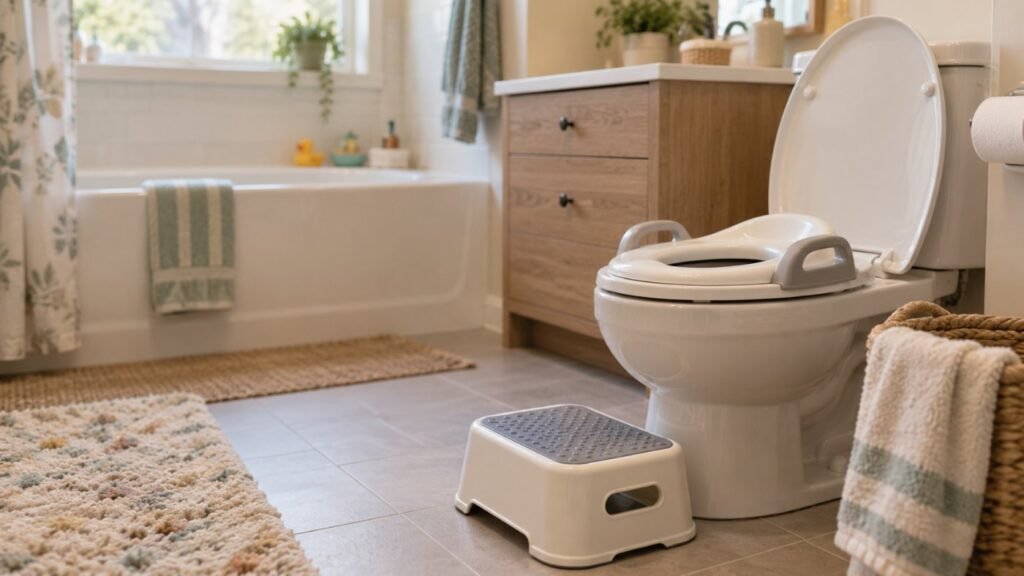
- E: Environment. Step stool, soft seat, dim light, a quieter flush or flush after they leave.
- R: Routine. Same times, same steps, same words, with every caregiver.
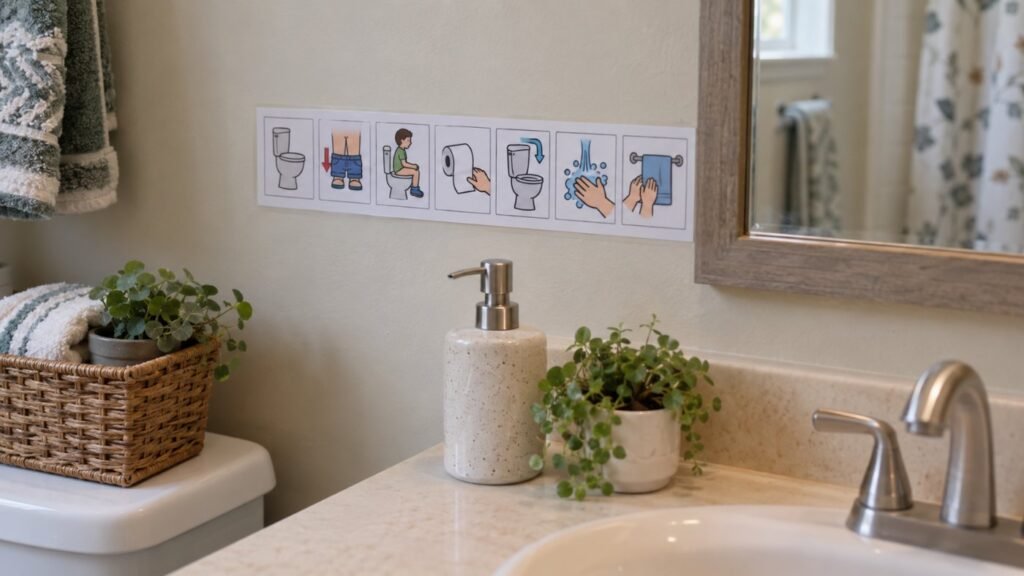
- M: Make it visual. Picture steps on the wall and a short social story.
- E: Easy communication. A toilet picture card, sign, or AAC button to ask.
- D: Data. Track sits, successes, and accidents to find patterns.
Step by Step
1. Prepare. Read a social story about using the toilet with real photos of your bathroom. Our guide to social stories shows how to write one.
2. Build the visual sequence. Pants down, sit, pee, wipe, pants up, flush, wash hands. Keep it at eye level.
3. Schedule sits. Start with regular sits, for example after waking, after meals, and before bath. Keep sits to 3 to 5 minutes, as CHOP suggests.
4. Make sitting pleasant. A favorite book, song, or fidget only for the bathroom.
5. Celebrate calmly. Use whatever your child enjoys: a high five, a sticker, a song. Respond to accidents neutrally.
| Challenge | Possible cause | Try this |
|---|---|---|
| Fear of flushing | Loud noise | Flush after they leave, ear defenders |
| Won’t sit | Cold or unstable seat | Padded seat, step stool for foot support |
| Pees but won’t poop | Constipation, sensory, fear | See doctor, keep diaper for poop at first, then move it to the bathroom |
| No signal before accidents | Low body awareness | Timed sits, body check visuals |
| Only uses home toilet | Need for sameness | Practice in new bathrooms with the same routine |
Common Challenges
Constipation is a frequent hidden barrier, especially for children with a limited diet. See picky eating in autistic children for food ideas to discuss with your doctor. Withholding poop is common and should be handled gently, never with force.
Do
- Use the same words and steps every time
- Share the plan with school and caregivers
- Dress your child in easy clothes
- Pause if it turns into a battle
Avoid
- Punishing or shaming accidents
- Long sits that feel like a trap
- Comparing to siblings or peers
- Starting during big life changes

Children who use AAC should have a toilet symbol on their device. Teachers can learn more in AAC in the classroom, and the same picture steps work well alongside visual schedules.
When to Get Help
Talk to your pediatrician if your child has pain, constipation, blood in stool, or no progress after months of trying. An occupational therapist can help with sensory issues. CHOP stresses that if training becomes a power struggle, it is fine to pause and restart when everyone is ready.
Progress, not perfection: Many autistic children learn in steps: sitting, then peeing, then pooping, then asking. Every step counts.
At what age are autistic children potty trained?
There is no fixed age. Many autistic children train later than peers, and that is normal. CHOP suggests starting when the caregiver feels ready rather than waiting for typical signs.
Why is potty training harder for autistic children?
Differences in body awareness, sensory sensitivities, communication, and love of routine can all make toilet training take longer.
How long should my autistic child sit on the toilet?
Keep sits short, about 3 to 5 minutes, as recommended by CHOP. Long sits can make the toilet feel like a trap.
What if my autistic child is afraid of flushing?
Flush after your child leaves the bathroom, offer ear defenders, and gradually let them watch or press the flush when they feel ready.
What if my child pees on the toilet but won’t poop?
This is common. Check for constipation with your doctor, stay calm, and move gradually, for example by having them poop in a diaper in the bathroom first.
5 Actions to Take This Week
- Check with your doctor for constipation.
- Make the bathroom sensory friendly.
- Create a picture sequence of toilet steps.
- Add a toilet card or AAC symbol to ask.
- Start three short, scheduled sits a day.
Sources

