Quick answer: School refusal in autistic children is usually not defiance. It is a sign that school has become overwhelming, often because of anxiety, sensory overload, social exhaustion, masking, bullying, or unmet learning needs. Many families now call it “school can’t.” The best response is to find the cause, reduce pressure, work with the school on changes, and plan a gradual, supported return.
In this guide
Every morning starts the same way. Your child says their stomach hurts, hides under the covers, or melts down at the door. Maybe they hold it together all day at school and fall apart at home, until one day they simply cannot go. School refusal in autistic children is one of the most exhausting situations a family can face, and you are far from alone.

What School Refusal in Autistic Children Looks Like
The Child Mind Institute describes school refusal as extreme anxiety about attending school, where children try hard to avoid going and often feel physically ill. Common signs include:
- Stomachaches, headaches, or nausea on school mornings that ease on weekends
- Meltdowns, shutdowns, or panic before school
- Begging to stay home, hiding, or refusing to get in the car
- Frequent calls from school to be picked up
- Exhaustion and big after-school meltdowns, a sign of masking all day
Key point: Many autistic children are not refusing school. They are telling you school is costing more than they have. That is why many families prefer the phrase “school can’t.”
Why Autistic Children Refuse School
| Possible cause | What it can look like | Where to start |
|---|---|---|
| Sensory overload | Hates the cafeteria, hallways, bells | Sensory accommodations, quiet spaces |
| Anxiety | Worry, physical symptoms, panic | Predictability, therapy, gradual exposure |
| Masking and exhaustion | Fine at school, explodes at home | Reduce demands, plan breaks |
| Social difficulty or bullying | Avoids recess, few friends | Ask directly, involve school |
| Learning needs | Avoids certain classes or tasks | Evaluation, IEP or 504 supports |
| Demand avoidance | Any demand triggers refusal | Low-demand approach, flexibility |
Sensory differences often play a big role. Our sensory needs guide can help you spot them. If demands of any kind trigger strong avoidance, read PDA and anxiety. Long periods of masking can lead to autistic burnout in children, which often shows up as school refusal.
The BERMED Return Plan
A gentle structure for families and schools.
- B: Break down the why. Ask your child, observe, and talk to staff. What part of school is hardest?
- E: Ease pressure. Lower demands at home while you plan. A dysregulated child cannot learn.
- R: Reasonable adjustments. Quiet lunch space, sensory breaks, a safe adult, modified timetable.
- M: Map small steps. Visit the empty school, attend one class, then build up.
- E: Engage the team. Parents, teachers, counselor, therapist, and your child.
- D: Document. Track attendance, triggers, and what helps. Put supports in writing.
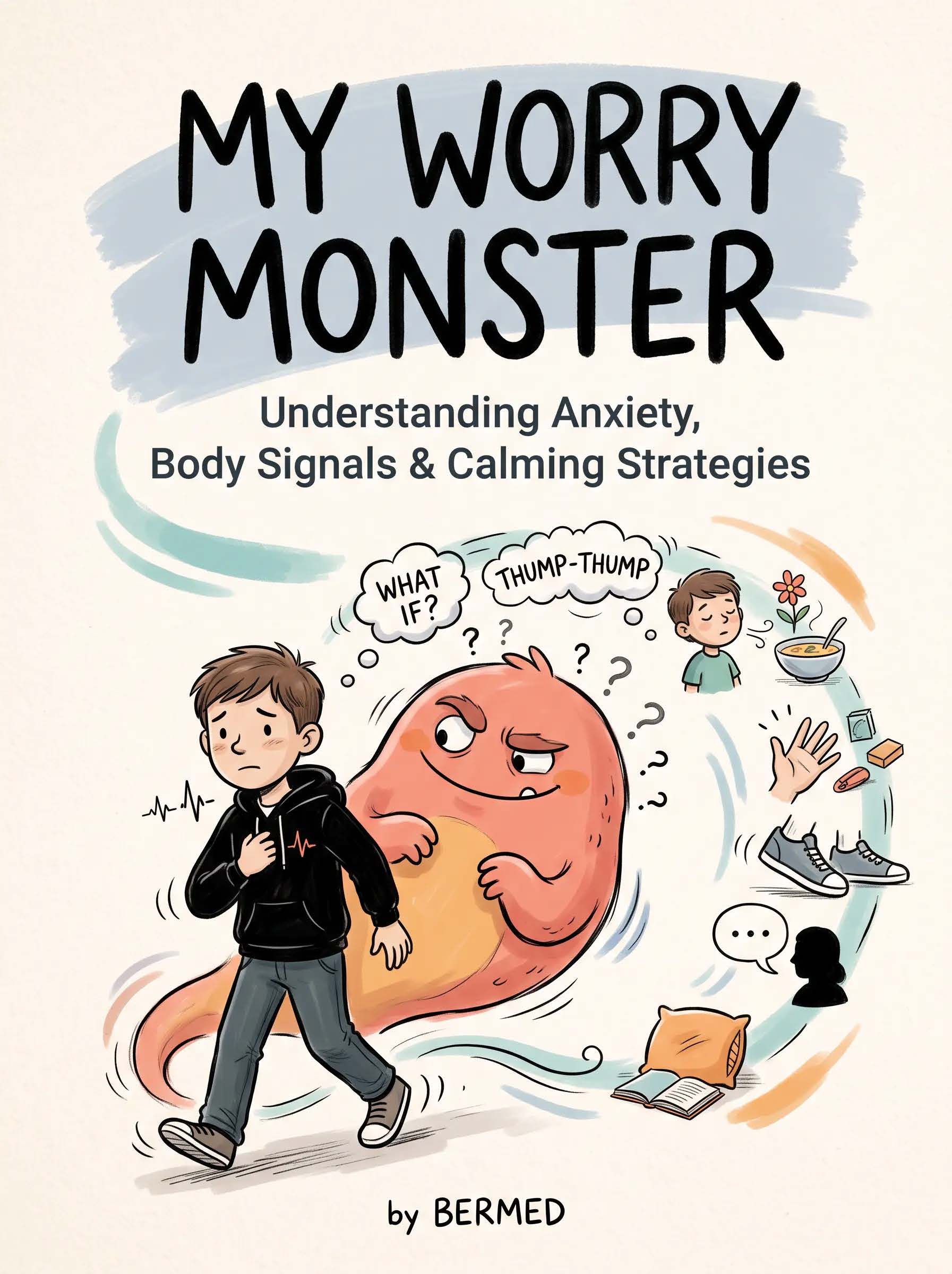
Free resource
My Worry Monster
A child-friendly guide to anxiety, body signals and coping tools.
At Home: What to Do Now
Stay calm and believe them. Their distress is real, even if the cause is not clear yet.
Rule out medical causes. The Child Mind Institute recommends a pediatric check for physical symptoms.
Keep a gentle routine. Regular wake times, meals, and some learning at home keep the rhythm going without pressure.
Make home restful, not a reward. Rest and recovery, but avoid making days at home far more exciting than school.

Do
- Listen to what your child says about school
- Ask the school for a meeting early
- Plan small, achievable steps
- Celebrate every partial success
Avoid
- Physically forcing your child into school
- Punishments or threats
- Waiting months before acting
- Blaming yourself or your child
Working With the School
School refusal is a sign that supports need to change. Ask for a meeting and come with notes on what you have seen. Useful supports include a modified timetable, a safe person to meet on arrival, a quiet space, sensory tools, and reduced homework. These can be written into an IEP or 504 plan. Not sure which? See IEP vs 504 plan.
Preparing your child for the return also helps. A short social story about the first day back can make it feel predictable.

When to Get Help
The Child Mind Institute notes that cognitive behavioral therapy with gradual exposure is effective for anxiety-based school refusal, and that early action matters because missed days make returning harder. For autistic children, look for a therapist who understands autism and adapts approaches to sensory and communication needs.
Hidden masking: If teachers say “they are fine here,” believe your child anyway. Many autistic children mask at school. Learn more in autistic masking.
Why does my autistic child refuse to go to school?
Common reasons include anxiety, sensory overload, exhaustion from masking, social difficulties or bullying, unmet learning needs, and demand avoidance.
What is school can’t?
School can’t is a term many families use instead of school refusal. It reflects that the child is not choosing to refuse but is unable to cope with school as it is.
Should I force my autistic child to go to school?
Forcing usually increases anxiety and damages trust. A better approach is to find the cause, adjust supports with the school, and plan a gradual return.
How can the school help with school refusal?
Schools can offer a modified timetable, a safe adult on arrival, quiet spaces, sensory tools, reduced demands, and written supports in an IEP or 504 plan.
When should I get professional help for school refusal?
Get help early, especially if absences are increasing. Therapy such as CBT with gradual exposure helps many children, ideally with a therapist who understands autism.
5 Actions to Take This Week
- Write down when and how refusal happens.
- Ask your child what part of school is hardest.
- Book a pediatric check for physical symptoms.
- Request a meeting with the school team.
- Agree on one small first step back.
Sources