Quick answer: Social stories in the classroom are short, personalized stories that describe a situation, what usually happens, and helpful ways to respond. They are part of social narratives, an evidence-based practice for autistic learners from preschool to high school (AFIRM, UNC). They work best when they are written for one student, mostly descriptive, positive, and read before the situation, not after a problem.
In this guide
Fire drills, substitute teachers, picture day, a new seat in the cafeteria. For many autistic students, a new or unclear situation can be the hardest part of the school day. Social stories in the classroom give students a clear, calm preview of what to expect, so the situation feels familiar before it even happens.
What Are Social Stories in the Classroom?
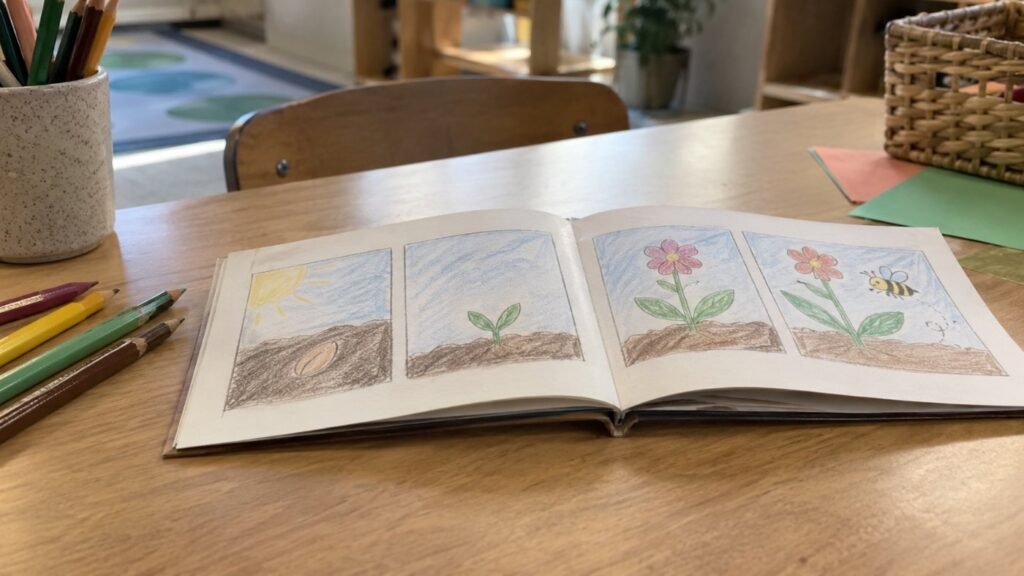
A social story is a short narrative, usually with pictures, that describes a specific situation from the student’s point of view. Social Stories were developed by educator Carol Gray in the early 1990s. The AFIRM team at the University of North Carolina groups them under social narratives, along with comic strip conversations, cartooning, and power cards.
AFIRM defines social narratives as interventions that describe social situations, highlight what matters, and offer examples of how to respond. A good story explains the “why,” not just the “what.”
Key point: A social story is information, not a rulebook. Its goal is understanding. A student who understands a situation can handle it with less anxiety.
Why Social Stories Work
AFIRM reports 20 single case studies and 1 group study supporting social narratives, across preschool, elementary, middle, and high school. Outcomes include social skills, communication, behavior, school readiness, and self-help.
- Predictability: Students know what will happen and what others expect.
- Perspective: Stories explain how others might think or feel.
- Rehearsal: Reading the story is practice without pressure.
- Visual support: Pictures stay put while spoken words disappear. Pair stories with visual schedules in the classroom.
The BERMED Writing Framework
A checklist for writing social stories in the classroom.
- B: Background. Observe the situation. What is hard, and why?
- E: Explain. Use mostly descriptive sentences: where, when, who, what happens.
- R: Respectful tone. Positive, first person or third person, never shaming.
- M: Make it visual. Photos of the real place work best for many students.
- E: Easy options. Offer flexible responses: “I can…” or “I might try…”
- D: Data. Track how the student handles the situation and adjust the story.
Free resource
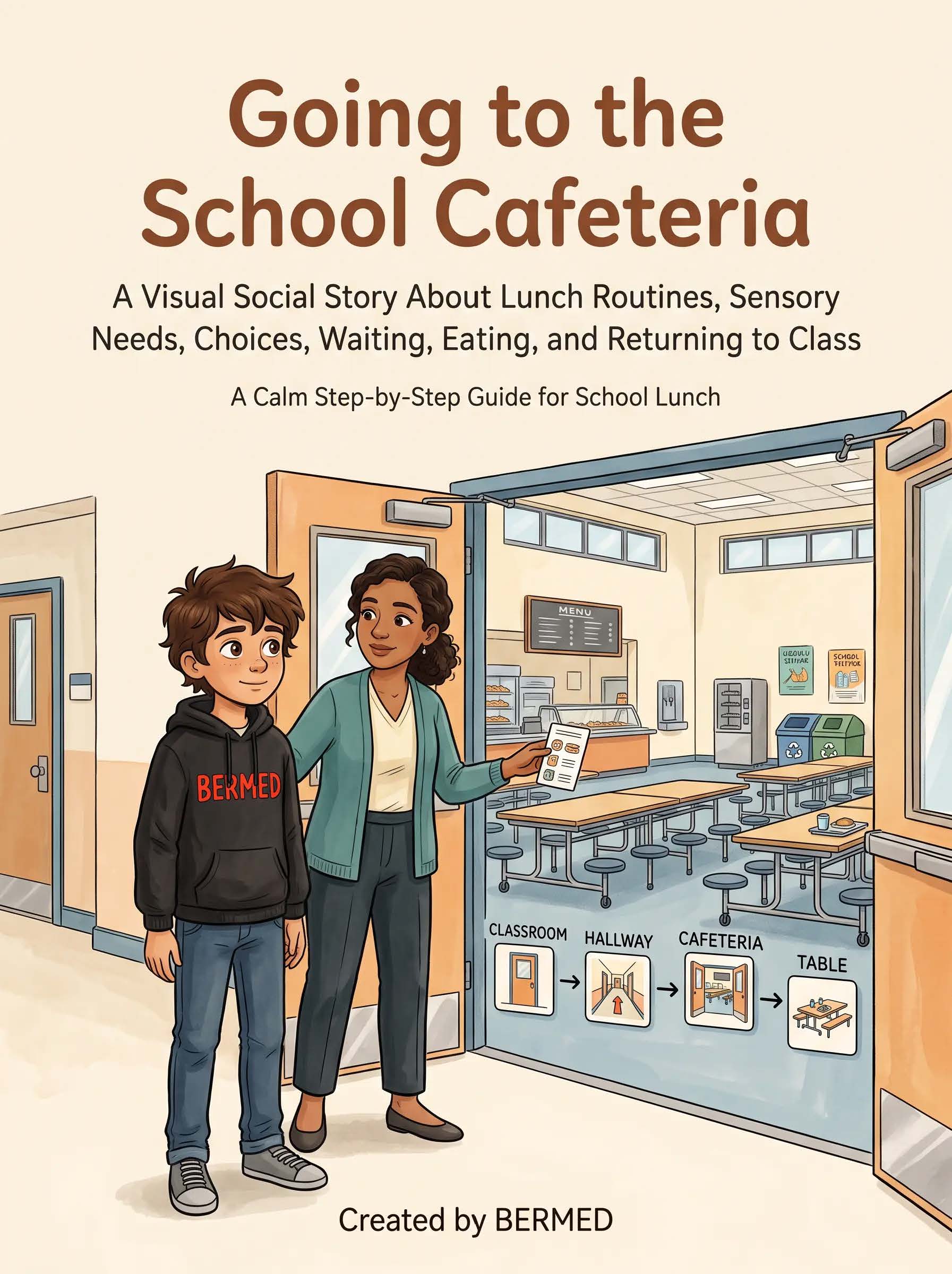
Going to the School Cafeteria: A Visual Social Story
A calm, ready-to-use social story for one of the hardest parts of the day.
How to Write a Social Story
1. Choose one situation. Keep it specific: “When we have a fire drill,” not “Being good at school.”
2. Write a title and opening. “Sometimes our school has a fire drill.”
3. Describe the situation. “The alarm is loud. Everyone walks outside. My teacher counts us.”
4. Add perspective. “The alarm helps keep everyone safe.”
5. Offer options. “I can cover my ears or wear my headphones. I can hold my teacher’s hand.”
6. End positively. “When the drill is over, we go back inside.”
| Good social story | Weak social story |
|---|---|
| Specific situation | Vague topic |
| Mostly describes and explains | Mostly gives orders |
| Offers choices | “I will not scream” |
| Positive, calm tone | Threats or consequences |
| Read before the event | Read only after a problem |
How to Use Social Stories in the Classroom
- Read the story together a few days before the event, then again just before.
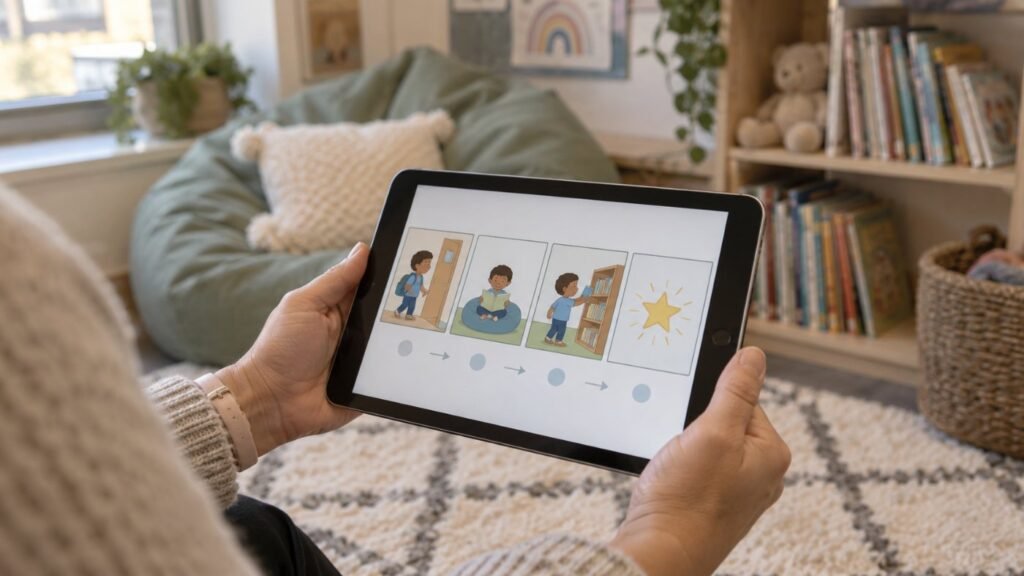
- Keep it easy to reach, like in a folder or on a tablet.
- Let the student read it alone once they know it.
- Share it with every adult involved, including substitutes.
- Fade the story as the situation becomes routine.
Do
- Write for one student and one situation
- Use real photos when possible
- Include the student in writing it
- Use stories for positive events too
Avoid
- Using stories as punishment
- Long stories with too many ideas
- Words like “always” or “never”
- Reading it only after a meltdown
Students with a PDA profile may feel stories are another demand. Keep the tone neutral and curious, and give real choice. See PDA IEP planning. If a situation regularly ends in distress, plan support for autistic meltdowns in the classroom too, and offer a calm corner.

At Home and in the IEP
Social stories work at home for haircuts, dentist visits, holidays, and new siblings. Use the same format as school for consistency. In the IEP, social narratives can support social and behavior goals. Our IEP goal bank has examples you can adapt.
Neuroaffirmative reminder: Social stories should help students understand the world, not teach them to hide who they are. Avoid stories that ask a child to stop stimming or to force eye contact.
What is a social story in the classroom?
A social story is a short, personalized story, often with pictures, that describes a situation, what usually happens, and helpful ways a student can respond.
Are social stories evidence based?
Yes. Social narratives, which include social stories, are listed as an evidence-based practice for autistic learners by AFIRM at the University of North Carolina.
When should I read a social story?
Read it before the situation happens, ideally a few times in the days before and once just before, when the student is calm.
How long should a social story be?
Most are short, often 6 to 10 sentences for younger students. Keep it focused on one situation and use pictures to support understanding.
Can social stories be used for older students?
Yes. Older students may prefer text-based versions, social articles, or comic strip conversations instead of picture books.
5 Actions to Take This Week
- Pick one upcoming situation that worries a student.
- Write a 6 to 10 sentence story with photos.
- Read it together before the event.
- Share it with every adult involved.
- Note how the event went and adjust.
Sources