Quick answer: Picky eating in autistic children is very common and usually comes from sensory sensitivity, a strong need for sameness, anxiety, or body signals that are hard to read. It is not stubbornness. Pressure tends to make it worse. Calm, low-pressure exposure, safe foods at every meal, and small steps like food chaining help most families. If eating affects weight, growth, or daily life, ask your doctor about ARFID.
In this guide
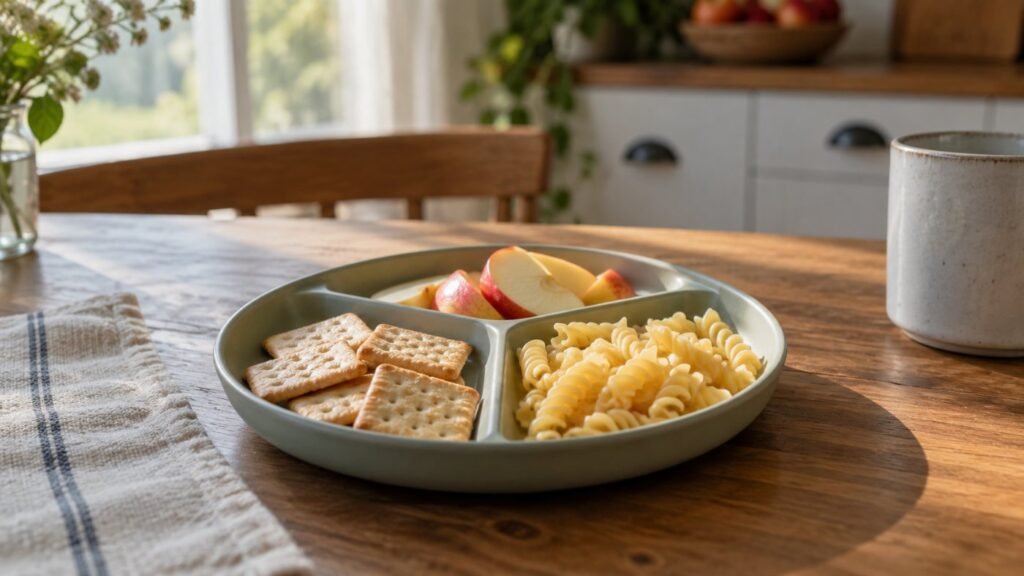
Plain pasta. The same brand of crackers. Apple slices, but only if they are cut a certain way. If your child’s menu fits on a sticky note, you have probably heard every piece of advice, from “they will eat when they are hungry” to “just hide vegetables in sauce.” For many families, none of it works. Picky eating in autistic children has different roots, and it needs a different approach.
Why Picky Eating in Autistic Children Is So Common
- Sensory sensitivity: Mixed textures, strong smells, bright colors, or foods touching on the plate can feel overwhelming. Our sensory needs guide explains why.
- Need for sameness: A familiar brand or shape is predictable. A new one is a risk.
- Anxiety: Past gagging, choking, or forced bites can make new foods feel unsafe.
- Interoception: Some children do not notice hunger or fullness clearly. See interoception and emotional regulation.
- Medical issues: Reflux, constipation, or oral motor difficulties can make eating uncomfortable.
Key point: For many autistic children, a “safe food” is about safety, not preference. Taking it away rarely leads to new foods. It usually leads to more anxiety.
Picky Eating or ARFID?
ARFID stands for avoidant restrictive food intake disorder. The Child Mind Institute explains that it was added to the DSM-5 in 2013, often appears in younger children, and affects boys about as often as girls. It goes beyond picky eating: the child eats so little or so narrowly that growth, nutrition, or daily life suffers.
| Typical picky eating | Possible ARFID |
|---|---|
| Eats 20 or more foods | Very few accepted foods, list keeps shrinking |
| Growth on track | Weight loss or not growing as expected |
| Tolerates new food on the table | Gags or panics near new foods |
| Eats at parties and school | Avoids events or school because of food |
The BERMED Mealtime Framework
A calm, step-by-step way to widen your child’s menu.
- B: Body check. Rule out reflux, constipation, dental pain, or oral motor issues.
- E: Environment. Quiet table, comfortable seat, dimmer light, no strong smells.
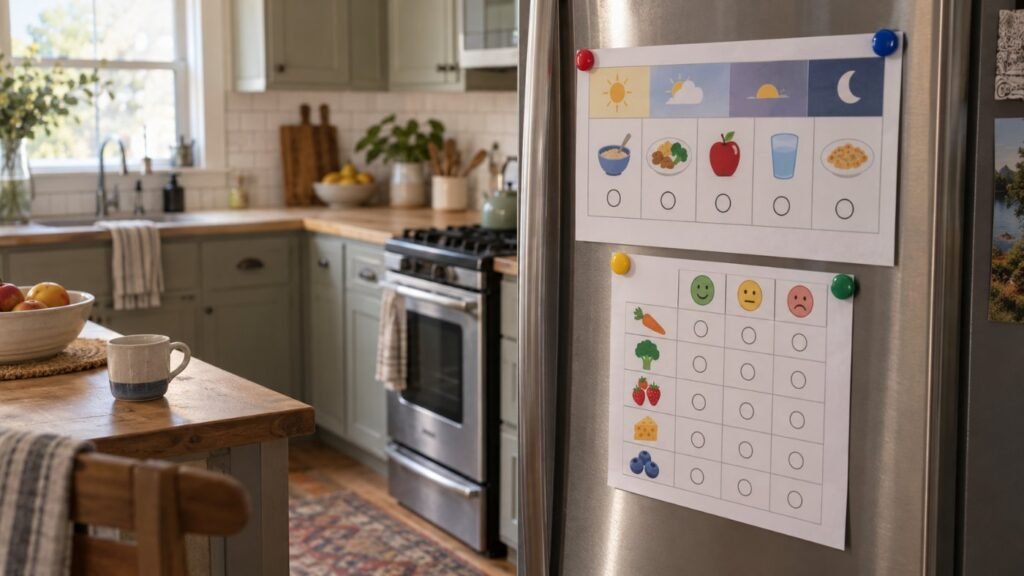
- R: Routine. Regular meal and snack times with a visual schedule.
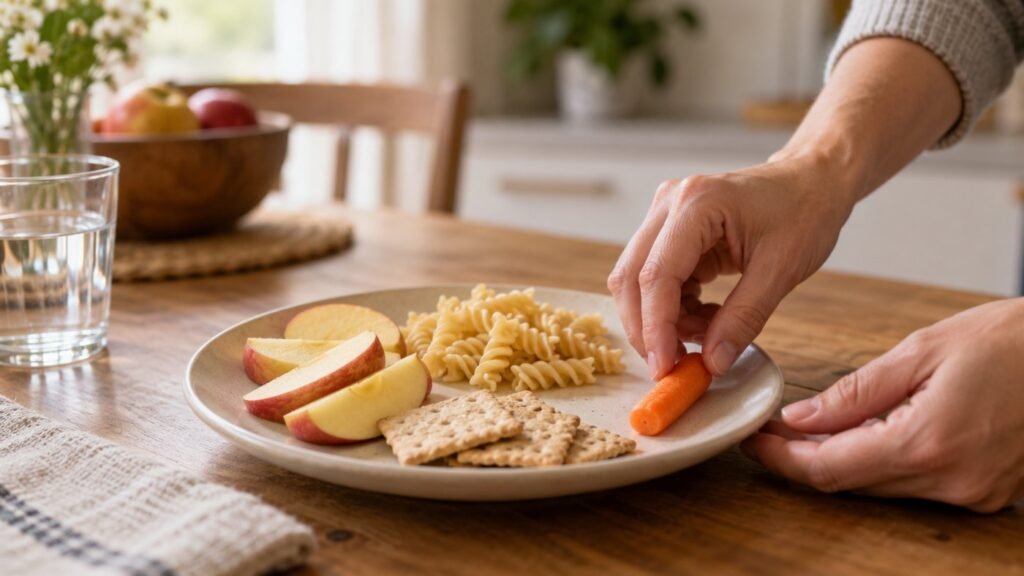
- M: Menu safety. Always include at least one safe food on the plate.
- E: Exposure, no pressure. New foods can sit nearby, be touched, smelled, or ignored.
- D: Data. Track accepted foods and small wins to share with your team.
At Home: Strategies That Help
Use food chaining. Move from a safe food to one that is very similar. Plain crackers to a different brand, then to a lightly flavored version.
Offer tiny, optional portions. A pea-sized piece of a new food on a separate small plate feels much less threatening.
Explore food away from meals. Cooking, washing vegetables, or food play lets your child learn about food with no demand to eat it.
Model without commentary. Eat a variety yourself and skip the “just try one bite.”
Keep meals short and calm. Twenty to thirty minutes, then done. Hungry and calm beats full and upset.
Do
- Keep a safe food at every meal
- Celebrate touching or smelling a new food
- Use visuals for meal routines
- Work with an OT or feeding therapist
Avoid
- Forcing, bribing, or “one more bite” deals
- Hiding foods, which can break trust
- Removing safe foods to “make them hungry”
- Turning meals into a battle
Mealtime stress can trigger big reactions. If dinner often ends in tears, read meltdown vs tantrum to understand what is happening.
At School: Lunch and Snack Time
- Allow packed safe foods and a quieter place to eat if the cafeteria is overwhelming.
- Avoid comments or rewards tied to what a student eats.
- Include feeding needs in the IEP or health plan when they affect the school day.
- Share with home what the child ate, without judgment.
When to Get Help
Talk to your pediatrician if your child is losing weight, not growing, eats fewer than about 15 to 20 foods, gags or panics around food, or if the list of accepted foods is shrinking. A feeding team may include a doctor, dietitian, occupational therapist, and speech therapist. Poor nutrition and poor sleep often go together, so see also sleep problems in autistic children.
You are not failing: Feeding a child with a narrow menu is hard work. Progress is slow and that is normal. Small steps over months add up.
If you are still wondering whether your child is autistic, our signs of autism in children guide is a good place to start.
Why is picky eating so common in autistic children?
Sensory sensitivity to texture, smell and appearance, a strong need for sameness, anxiety around food, difficulty reading hunger signals, and medical issues like reflux all play a role.
How do I get my autistic child to try new foods?
Keep a safe food on every plate, offer tiny optional portions, use food chaining, explore food outside meals, and avoid pressure, bribes, or hiding foods.
What is the difference between picky eating and ARFID?
ARFID is a clinical eating disorder where restricted eating affects growth, nutrition, or daily life. Picky eating is more limited and does not usually harm health or growth.
Should I hide vegetables in my autistic child’s food?
It is usually better not to. If your child discovers a hidden food, it can break trust and make them refuse safe foods too.
When should I worry about my autistic child’s eating?
Talk to your doctor if your child loses weight, is not growing, eats very few foods, gags or panics around food, or the list of accepted foods keeps shrinking.
5 Actions to Take This Week
- Write down every food your child accepts.
- Put one safe food on every plate.
- Try one food chaining step.
- Do one no-pressure food activity, like baking.
- Book a doctor visit if weight or growth worries you.
Sources