Quick answer: Sleep problems in autistic children are very common. The Autism Research Institute reports that roughly half to two thirds of autistic children have trouble falling asleep, staying asleep, or waking too early. The causes are a mix of biology, sensory needs, anxiety, and medical issues. Most families see the biggest gains from a predictable, sensory-friendly bedtime routine, with medical support when needed.
In this guide
If bedtime in your house feels like a two hour negotiation that ends with everyone exhausted, you are not doing it wrong. Sleep problems in autistic children are one of the most frequent concerns parents bring to pediatricians, and they ripple into everything: mood, learning, meltdowns, and your own ability to cope the next day.
The good news is that sleep is one of the most changeable areas of family life. Small, consistent adjustments add up.
Why Sleep Problems in Autistic Children Are So Common
Sleep problems in autistic children rarely have a single cause. Researchers describe three layers that stack on top of each other.
- Biological: Many autistic children seem to have differences in melatonin production and in the internal clock that tells the body it is night.
- Sensory: A scratchy tag, a humming fridge, a sliver of hallway light. What other children tune out can keep an autistic child wide awake. Our sensory needs guide covers this in depth.
- Medical: Reflux, constipation, sleep apnea, seizures, and anxiety all disrupt sleep and are more common in autistic kids.
- Behavioral and emotional: Transitions are hard. Going from play to bed is a big transition, and a busy brain after a long day of masking can take hours to settle.
Key point: A child who cannot sleep is not being defiant. Their body and nervous system are often not ready, and the routine has to build that readiness.
Signs Sleep Is Driving Daytime Struggles
Poor sleep can look like many other things. Watch for:
- More meltdowns or shutdowns in the late afternoon. See meltdown vs tantrum for how to tell them apart.
- Lower tolerance for noise, clothes, or food textures than usual.
- Hyperactivity that looks like ADHD, which can actually be overtiredness.
- Falling asleep in the car or at school.
- Long-term exhaustion that slides into autistic burnout.
The BERMED Bedtime Framework
Use these six steps as a checklist when bedtime keeps falling apart.
- B: Body check. Hungry, full, constipated, itchy, in pain? Rule out physical discomfort first.
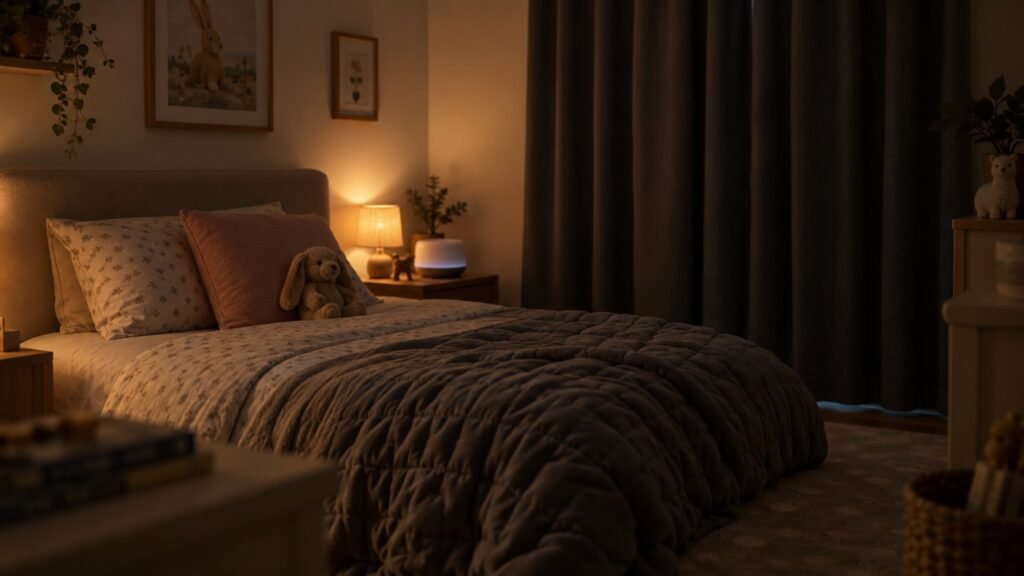
- E: Environment. Dark, cool, quiet, and sensory-safe. Blackout curtains, white noise, soft fabrics.
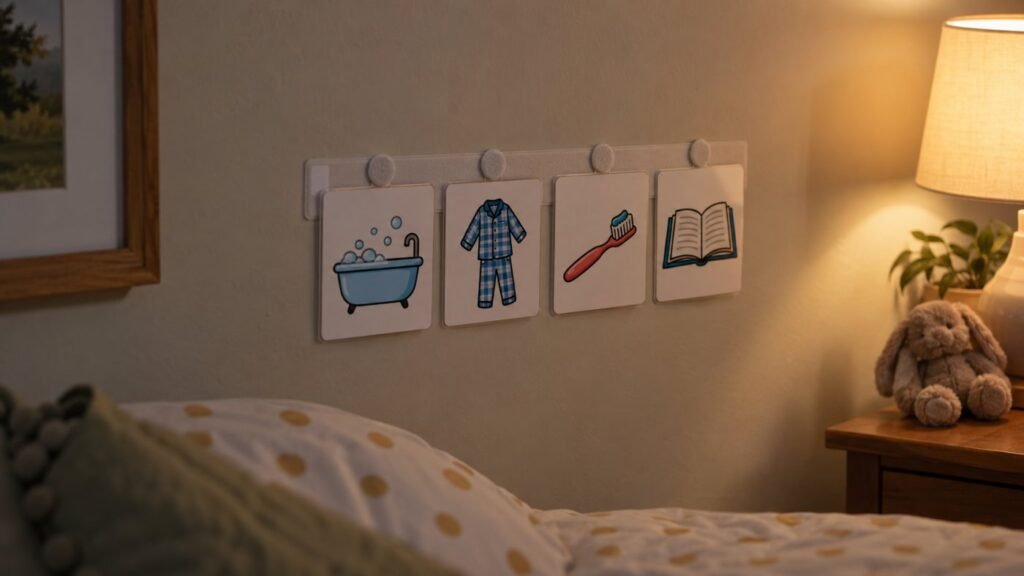
- R: Routine. Same steps, same order, every night, shown on a visual schedule.
- M: Movement and calm. Heavy work earlier in the evening, then slow, quiet activities.
- E: Exit screens. Screens off about an hour before bed when possible.
- D: Data. Keep a two-week sleep diary to spot patterns and share with your doctor.
At Home: Building a Bedtime Routine That Works
The Autism Research Institute and sleep researcher Dr. Beth Malow both stress that behavioral strategies come first. That starts with a routine your child can see and predict.
Step 1: Pick a fixed wake time. A consistent morning wake time anchors the body clock better than a strict bedtime does.
Step 2: Make a visual bedtime schedule. Four to six picture steps: bath, pajamas, teeth, book, lights out. Let your child move a token or check each one.
Step 3: Add a wind-down window. Thirty to sixty minutes of low light and quiet, predictable activity. Deep pressure, a warm bath, or a familiar book work well for many kids.
Step 4: Tune the sensory environment. Test pajama fabrics, room temperature, white noise, and a weighted blanket if your child likes deep pressure.
Step 5: Plan for night waking. Keep it boring: dim light, few words, back to bed. A visual “it is still night” clock helps many children.
Many autistic children also struggle to notice body signals like tiredness. Building that awareness during the day helps at night. Our guide to interoception and emotional regulation has simple activities to try.
| Sleep problem | What may be behind it | First thing to try |
|---|---|---|
| Takes hours to fall asleep | Late body clock, anxiety, screens | Fixed wake time, earlier dim light, wind-down window |
| Wakes often at night | Noise, discomfort, reflux, apnea | White noise, body check, talk to doctor |
| Wakes very early | Light in room, early bedtime drift | Blackout curtains, “OK to wake” clock |
| Resists going to bed | Transition difficulty | Visual schedule, timer warnings, same order nightly |
Do
- Keep the same routine on weekends
- Use visuals and timers for transitions
- Track sleep for two weeks before big changes
- Change one thing at a time
Avoid
- Screens right before bed
- Rough play or big excitement in the last hour
- Starting melatonin without your doctor
- Treating sleeplessness as bad behavior
In Class: What Teachers Notice and How to Help
Teachers often see the effects of sleep problems before anyone names them. A student who is irritable, foggy, or asleep at their desk may have had a rough night, not a bad attitude.
- Share a simple daily note between home and school about how the night went.
- Offer a quiet break space on hard mornings.
- Front-load demanding work on good days and lighten it after poor nights.
- If sleep is affecting learning, it can be discussed at the IEP meeting as part of the whole picture.

When to Talk to a Doctor
Call your pediatrician if your child snores loudly, stops breathing in sleep, has signs of reflux or constipation, or if sleep problems last more than a few weeks despite a solid routine. Bring your sleep diary.
About melatonin: Melatonin can help some autistic children, but experts recommend it alongside behavioral changes and under medical guidance, not as a first or only step. Doses and products vary, so always ask your child’s doctor.
If you are still exploring a diagnosis, our signs of autism in children guide explains what to look for.
How common are sleep problems in autistic children?
Very common. The Autism Research Institute estimates that about 53 to 66 percent of autistic children have sleep problems, compared with a much smaller share of non-autistic children.
Why can my autistic child not fall asleep?
Common reasons include differences in melatonin and body clock, sensory discomfort, anxiety, difficulty with transitions, and medical issues like reflux or sleep apnea.
Should I give my autistic child melatonin?
Melatonin can help some children, but experts recommend using it alongside a consistent bedtime routine and only under a doctor’s guidance.
What is the best bedtime routine for an autistic child?
A short, predictable routine shown on a visual schedule, a fixed wake time, a calm wind-down window, and a sensory-friendly bedroom work for most families.
Can poor sleep make autism traits seem stronger?
Yes. Lack of sleep lowers tolerance for sensory input and change, which can lead to more meltdowns, irritability, and difficulty focusing.
5 Actions to Take This Week
- Set one fixed wake time for every day.
- Make a simple picture bedtime schedule.
- Do a sensory sweep of the bedroom.
- Start a two-week sleep diary.
- Book a doctor visit if you see snoring, pain, or no progress.
Sources
- Autism Research Institute: Sleep Issues in Autism, Beth Malow, M.D.
- CDC: Autism Spectrum Disorder
- Child Mind Institute
- “Sleep in Children with Autism Spectrum Disorder,” Current Psychiatry Reports (review)