
Quick answer: Autism and anxiety in adults go together very often. Autistica reports that over half of autistic adults will be diagnosed with an anxiety disorder in their lifetime. Common drivers include unpredictability, sensory overload, social and communication differences, masking, and difficulty identifying emotions. What helps: more predictability, sensory adjustments, stimming and self-soothing, energy management, tracking triggers, and autism-informed therapy such as adapted CBT.
In this guide
A change of plan, a phone call you did not expect, a crowded train, a vague email from your boss. For many autistic adults, these moments trigger a wave of dread that can last for hours or days. Autism and anxiety in adults is not a personal weakness. It is often the result of living in a world that is unpredictable, loud, and built for a different kind of brain.

Why Autism and Anxiety in Adults Often Go Together
Autistica, a UK autism research charity, highlights several drivers:
- Unpredictability: sudden changes to routine create strong stress.
- Sensory differences: bright lights, smells, and noise build anxiety. See sensory overload in adults.
- Communication differences: especially when masking. Read autistic masking.
- Alexithymia: difficulty identifying and naming emotions can make anxiety harder to spot and manage.
Key point: For many autistic adults, anxiety is a reasonable reaction to constant uncertainty and overload. Changing the environment can be just as important as changing thoughts.
How Anxiety Shows Up in Autistic Adults
| Sign | What it can look like |
|---|---|
| Need for control | Rigid planning, distress when plans change |
| Avoidance | Skipping calls, events, or new places |
| Physical symptoms | Stomach issues, tension, poor sleep |
| Rumination | Replaying conversations for hours |
| Increased stimming | More rocking, tapping, or pacing |
| Shutdown or meltdown | When anxiety becomes overwhelming. See autistic shutdown in adults. |
The BERMED Anxiety Toolkit
Practical steps for autism and anxiety in adults.
- B: Build predictability. Routines, written plans, and advance notice wherever possible.
- E: Ease sensory load. Headphones, sunglasses, quiet spaces, comfortable clothes.
- R: Recognize triggers. Keep a simple diary to spot patterns, as Autistica suggests.
- M: Move and self-soothe. Stimming, rocking, walks, or a sensory box.
- E: Energy budget. Rest after demanding situations before you are depleted.
- D: Do it with support. Autism-informed therapy, peer groups, or trusted people.
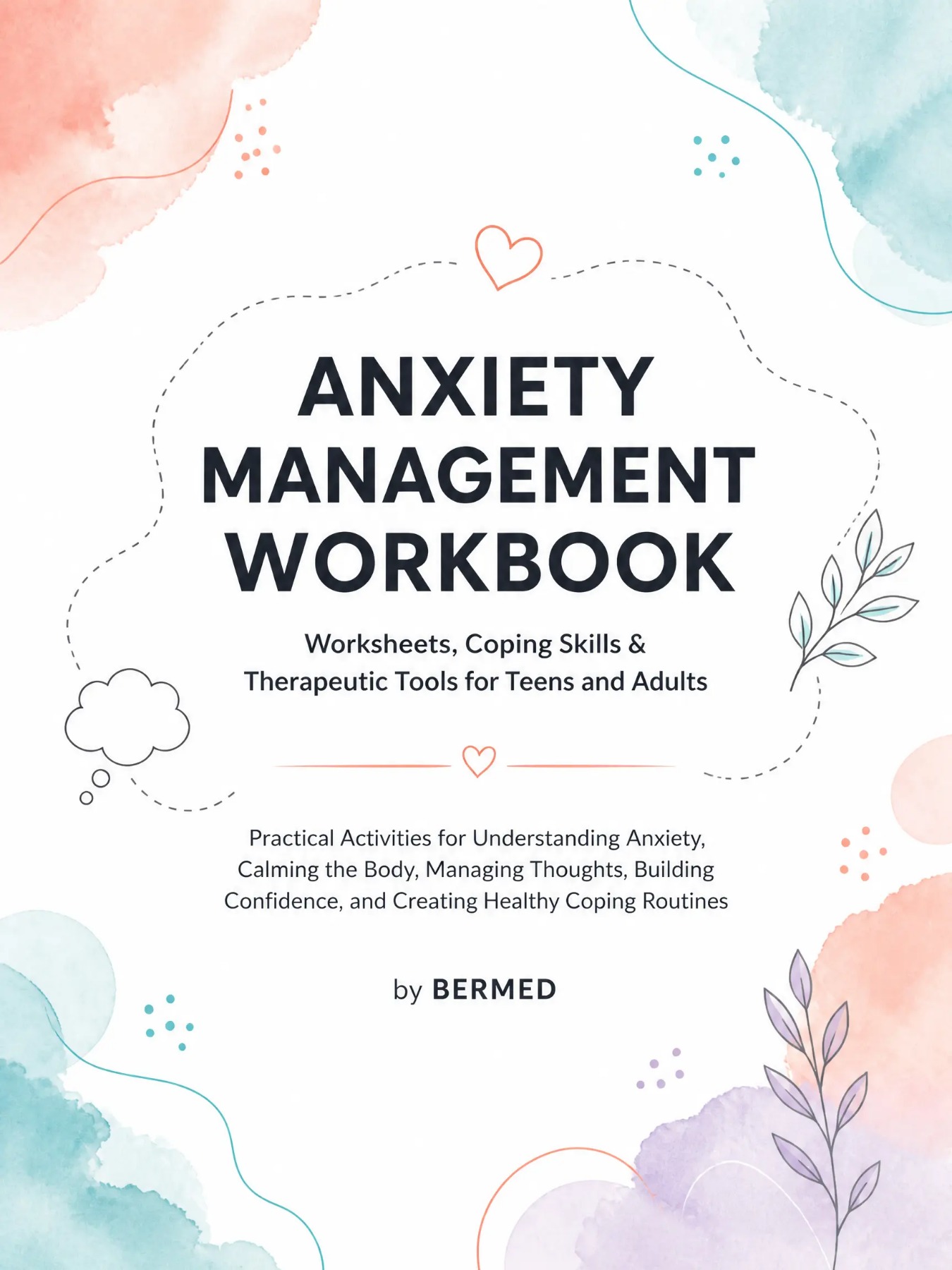
Free resource
Anxiety Management Workbook
Worksheets and coping skills to understand and manage anxiety.
Daily Strategies
Plan the unknowns. Look up photos of a new place, check the route, and write down what you will say.
Use a calm kit. Headphones, a fidget, a favorite scent, and a snack in your bag.
Name feelings with tools. Body maps or emotion scales help when emotions are hard to identify.
Protect recovery time. Schedule quiet time after social or sensory-heavy events.

Do
- Stim freely when you feel anxious
- Ask for written information and agendas
- Try apps designed by autistic people
- Connect with other autistic adults
Avoid
- Forcing yourself through overload without breaks
- Therapy that pushes you to mask more
- Ignoring physical signs like poor sleep
- Comparing your coping to neurotypical people
Autistica mentions Molehill Mountain, a free app designed with autistic people to help understand and manage anxiety. Workplace changes can also reduce daily anxiety, see autism in the workplace.

Professional Support
Autistica notes that CBT, ideally tailored to autistic needs, talking therapy with autism-informed therapists, medication discussed with a doctor, and peer support can all help. Look for clinicians who understand autism and do not treat autistic traits as the problem. If you were recently diagnosed, read late autism diagnosis in adults. Many adults also have ADHD, covered in AuDHD in adults.
Get help now if needed: If anxiety comes with hopelessness or thoughts of not wanting to be here, contact a doctor, crisis line, or emergency services right away. In the US, you can call or text 988.
How common is anxiety in autistic adults?
Very common. Autistica reports that over half of autistic adults will be diagnosed with an anxiety disorder in their lifetime.
Why do autistic adults experience so much anxiety?
Common drivers include unpredictability, sensory overload, communication differences, masking, and difficulty identifying emotions.
What helps autism and anxiety in adults?
More predictability, sensory adjustments, stimming and self-soothing, tracking triggers, managing energy, peer support, and autism-informed therapy.
Does CBT work for autistic adults?
CBT can help, especially when it is adapted to autistic needs, for example with more visual supports, concrete language, and attention to sensory factors.
Is stimming helpful for anxiety?
Yes. Stimming and self-soothing are natural ways many autistic people regulate anxiety and should not be suppressed.
5 Actions to Take This Week
- Write down three situations that trigger anxiety.
- Pack a small calm kit for your bag.
- Add one predictable routine to your day.
- Schedule recovery time after a demanding event.
- Look for an autism-informed therapist or peer group.
Sources

