Recognizing the signs of autism in children early is the single most important thing parents can do, and most families who do it well weren’t looking for certainty. They were looking for answers. Clinics see this every week: the families who get the best outcomes aren’t the ones who found the best therapist first, they’re the ones who stopped waiting and started asking the right questions early.
In practice, that means knowing which behaviors to watch for, understanding the difference between a screening and a diagnosis, and knowing that services can, and often should, begin before you have a final label. The research on this is consistent across the World Health Organization (WHO), the American Academy of Pediatrics (AAP), the Centers for Disease Control and Prevention (CDC), and the UK’s National Institute for Health and Care Excellence (NICE): concern is enough reason to act.
This complete guide covers every question parents ask about autism in children, from “is this autism?” to “what does adulthood look like?”, organized by priority, grounded in current evidence, and followed by at least one concrete step after every answer.
📋 What’s in this article
- Early signs and when to act
- Screening vs. diagnosis, and what happens next
- Causes, genetics, and sibling risk
- Co-occurring conditions parents often miss
- Which therapies help, and how to choose
- Behavior at home: meltdowns, stimming, and communication
- School supports and what makes a good IEP
- Medication: what it can and cannot do
- Adolescence, adulthood, and transition planning
- Family support and caregiver wellbeing
- Myths, prognosis, and trusted resources
1. Signs of autism in children: what to watch for and when to act
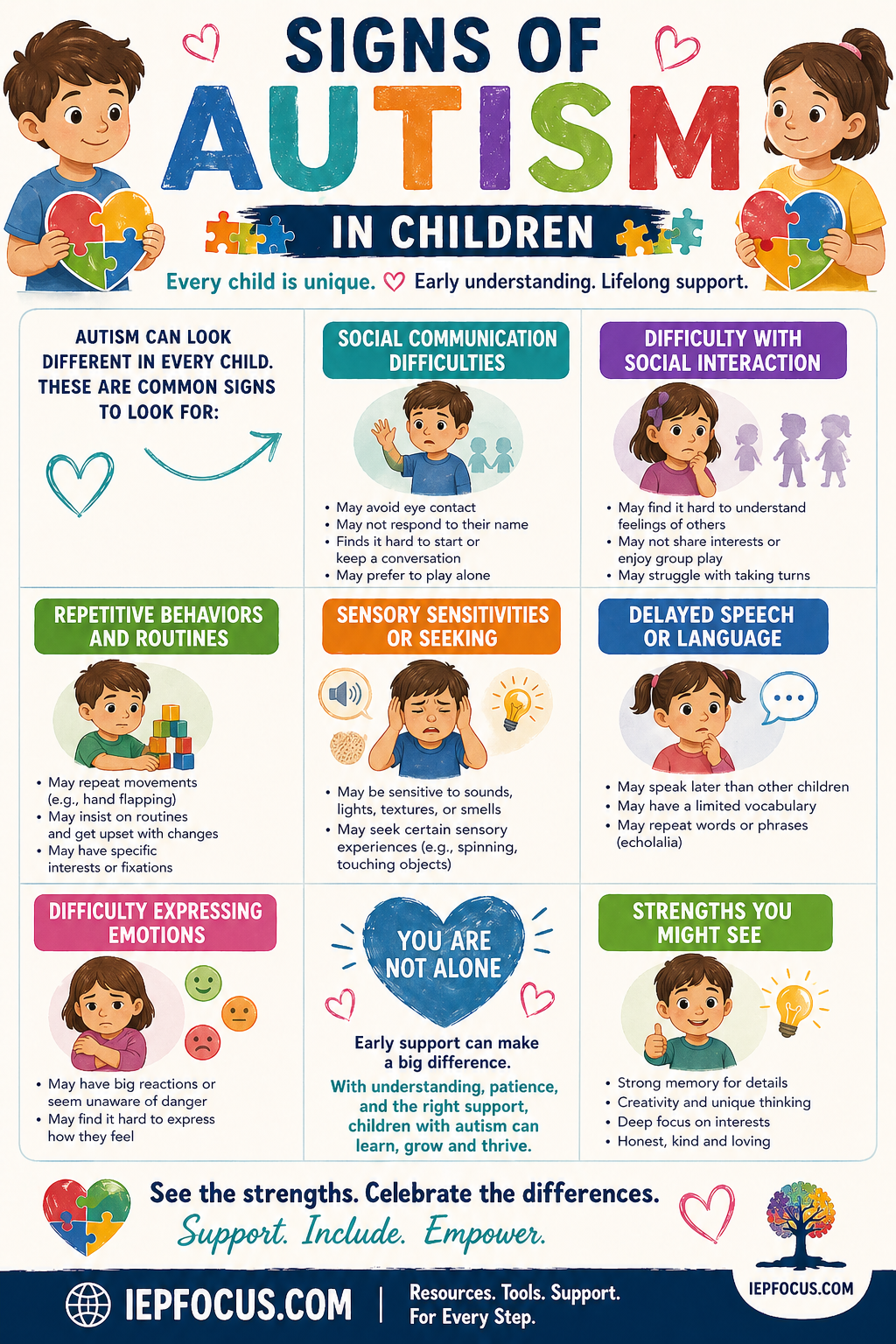
One of the most common regrets parents share after an autism diagnosis is: “I noticed something at 12 months, but I was told to wait and see.” The evidence now says clearly: knowing the signs of autism in children is enough reason to discuss it with a clinician, you do not need certainty first, and you do not need to wait for the “obvious” signs everyone describes.
What the timeline actually looks like
Signs do not appear all at once, and they vary considerably from child to child. For some children, subtle differences are visible in the first six months. For others, development appears typical until 18–24 months, when a plateau or regression becomes more visible. Both patterns are documented and neither is “more autistic” than the other.
Yes. CDC explicitly notes that some children appear to meet milestones until about 18–24 months and then plateau or lose previously acquired skills, including words, gestures, or social responsiveness. This is not a different condition; it is a documented pattern within autism.
🚨 Signs that always warrant prompt referral, at any age
- No babbling, pointing, or meaningful gestures by 12 months
- No single words by 16 months
- No two-word spontaneous phrases by 24 months
- Any loss of previously acquired language or social skills at any age
- Persistent failure to respond to name by 12 months
- No consistent eye contact or social smiling by 6 months
2. Screening vs. diagnosis, and what happens next
One of the most practical things this article can clarify: screening and diagnosis are not the same thing, and the services your child needs do not have to wait for the diagnosis to be finalized.
What is developmental screening?
Screening is a brief, standardized process, often a questionnaire completed by parents, designed to identify children who need a closer look. The AAP recommends autism-specific screening at 18 and 24 months as part of routine well-child care, regardless of whether anyone is worried. A positive screen does not mean your child has autism; it means your child should be evaluated more thoroughly.
Not necessarily. Screening tools, including the widely used M-CHAT-R/F, are designed to identify children who need further evaluation, not to make a final diagnosis. Meta-analysis of toddler screening studies confirms useful overall accuracy, but false positives and false negatives still occur. Clinical judgment and comprehensive follow-up are always required.
What does a comprehensive autism evaluation include?
A good evaluation is much broader than a single checklist or office visit. Current guidance from AAP and NICE specifies that assessment should include: developmental and family history, direct observation of the child in multiple contexts, speech and language evaluation, cognitive and adaptive-functioning assessment, sensory and hearing review, and information from home, daycare, or school. NICE explicitly advises not to rely on any single autism-specific tool alone.
The parallel-tracks principle, start services before diagnosis is final
This is the most actionable piece of guidance most parents never hear clearly: you do not have to wait for a final diagnostic label to begin services. Both AAP and CDC state directly that families should contact early-intervention or school systems in parallel with the medical evaluation, not after it.
Often yes. Major guidelines recommend starting support when concern is significant, rather than waiting through every administrative step. Early support for communication, play, regulation, and adaptive skills can help even if the final diagnostic label changes or gets refined.

Free resource
Understanding Autism: 15 Things Everyone Should Know
A clear, kind introduction to autism for families and educators.
Download free →3. Causes, genetics, and sibling risk
What causes autism?
Autism does not have a single cause. WHO and CDC both describe it as a condition with multiple interacting genetic and environmental influences. Documented prenatal associations include advanced parental age, maternal diabetes, certain medication exposures during pregnancy (most notably valproate), prematurity, low birth weight, and severe birth complications. These are risk associations, not simple explanations for any one child’s autism, and crucially, ordinary parenting, attachment, or any typical everyday event does not cause autism.
How much of autism is genetic?
Substantially. Autism is genetically heterogeneous, meaning many different genetic variants, some inherited, some arising spontaneously, can contribute to autism risk. There is no single “autism gene.” The AAP recommends that children diagnosed with autism be offered an etiologic evaluation that typically includes chromosomal microarray and Fragile X testing, with whole-exome sequencing increasingly used when initial testing is unrevealing or when additional features suggest an underlying genetic syndrome.
Genetic testing isn’t about proving autism, it’s about understanding it more fully. Identifying a specific genetic finding can clarify medical co-occurring conditions that need monitoring, inform recurrence risk for future pregnancies, and sometimes open doors to targeted supports or research studies.
What does autism in one child mean for siblings?
The risk is meaningfully higher than in the general population. A large 2024 prospective infant-sibling study estimated recurrence at approximately 20%, with risk shaped by family history and the sex of the child. This is not a prediction, recurrence is not destiny, but it is a strong reason to monitor younger siblings with particular attention and to use formal developmental screening at every well-child visit.
4. Co-occurring conditions parents often miss
Here is a pattern clinicians see repeatedly: a child receives an autism diagnosis, and then a year later parents are surprised to learn that the child’s sleep problems, stomach pain, or anxiety weren’t “part of autism”, they were separate, treatable conditions that had gone unaddressed. Autism frequently co-occurs with other conditions, and treating autism without treating those conditions means treating only part of the picture.
The most common co-occurring conditions include: ADHD, anxiety disorders, sleep disorders, epilepsy, gastrointestinal problems (constipation, reflux, pain), depression, feeding and eating challenges, and intellectual disability. WHO and recent systematic reviews both emphasize that care should routinely screen for these, not assume all distress is “just autism.”
Two co-occurring profiles deserve special mention because they are frequently missed or misinterpreted. First, Pathological Demand Avoidance (PDA): a profile within autism characterized by extreme anxiety-driven resistance to ordinary demands, is often mistaken for oppositional behavior or parenting failure. Understanding this profile changes everything about the intervention approach. See our full guide on the PDA profile of autism for what it actually looks like and why standard autism strategies often backfire. Second, OCD frequently co-occurs with autism and is routinely underdistinguished from repetitive behaviors that are simply part of autistic experience. Our article on OCD in schools helps educators and families tell the difference and access appropriate support.
Specific situations that deserve direct assessment
Seizures: Epilepsy is a well-recognized co-occurring condition in autism, especially in children with developmental delay, intellectual disability, or certain genetic conditions. Staring spells, loss of awareness, or unusual repetitive movements may warrant a neurological evaluation, even if the child doesn’t have classic convulsive seizures.
Sleep: Night waking, difficulty falling asleep, and very early waking are extremely common in autistic children and have real knock-on effects on daytime behavior, learning, and family functioning. These problems often respond well to behavioral sleep intervention before any medication is considered.
GI problems: Gastrointestinal discomfort, constipation, reflux, pain, is significantly more common in autistic children than in the general population, and children who cannot fully communicate their pain may express it through increased irritability, self-injury, or behavior changes. If behavior worsens without a clear explanation, medical causes including GI problems should be ruled out. On a related note, non-food mouthing (chewing on clothing, pencils, or non-food objects) is a sensory behavior that schools frequently mismanage. Our classroom-focused guide on non-food mouthing in autism explains the sensory function behind it and what actually helps.
Anxiety and mental health: Anxiety is common across all ages in autism and often goes undertreated. Depression becomes increasingly important to monitor in adolescence and adulthood. Adapted evidence-based mental-health treatments, including adapted cognitive behavioral therapy, are available and effective for many autistic individuals. One anxiety-related experience that is particularly common but rarely named is rejection sensitive dysphoria (RSD): an intense emotional reaction to perceived failure or rejection that can look like explosive anger, withdrawal, or low self-esteem. If this pattern resonates for your child, our article on rejection sensitive dysphoria explains what it is and how to support it.
5. Which therapies help, and how to choose
Parents often hear confident claims about autism therapies that the research does not fully support. Once you understand the signs of autism in children and have a diagnosis in hand, the next most important question is how to choose supports, and the most useful framing is this: there is no single best therapy, but there are well-supported principles for matching interventions to each child’s specific profile.
The current literature supports a goal-directed, individualized, often multidisciplinary plan. A credible therapy plan should identify target skills, define how progress will be measured, and explain why that intervention matches the child’s specific needs. Recent meta-analyses also caution that more hours are not automatically better, and newer research highlights the importance of outcomes that matter to autistic people and families, not just symptom scores.
Intervention comparison at a glance
| Intervention | Evidence | Best-supported outcomes | Key caution |
|---|---|---|---|
| Comprehensive ABA / EIBI | Moderate–High | Communication, adaptive skills, reduction in challenging behavior, when goals are individualized and functional | High time burden; effects often smaller than older studies suggested; goals must prioritize function over compliance |
| Early Start Denver Model (ESDM) | Moderate–High | Language, cognition, autism symptom reduction in toddlers and preschoolers | Requires trained staff; availability varies widely by location |
| Speech-Language Therapy & AAC | Moderate–High | Functional communication, language participation; AAC supports minimally speaking children without hindering speech development | Underuse of AAC is a common missed opportunity; fit to child’s communication profile matters |
| Parent-mediated / Caregiver Programs | Moderate–High | Child social communication, parent skill and confidence, family wellbeing | Not a “lesser” intervention, often as effective as clinic-based approaches for daily-life goals |
| Occupational Therapy (Ayres Sensory Integration) | Moderate | Participation, daily functioning, goal attainment for children with sensory-based challenges | Fidelity to the specific ASI model matters; generic “sensory” activities have weaker evidence |
| Social Skills Group Programs | Moderate | Social knowledge and structured interaction in verbal school-age children and adolescents | Generalization to real-life settings is a persistent challenge; must be supported across environments |
| Adapted CBT (for anxiety) | Moderate–High | Reduced anxiety symptoms in verbally able school-age children and adolescents | Requires autism-specific adaptation and usually parent involvement to be effective |
| Medication (for co-occurring symptoms) | High (for specific targets) | Irritability/aggression: risperidone, aripiprazole; Sleep: melatonin after behavioral plan; ADHD/anxiety/depression: standard evidence-based approaches adapted as needed | No medication treats core autism features; target must be clearly defined before starting |
ABA-based approaches can improve communication, adaptive skills, and behavior for many children, especially when goals are individualized and functionally meaningful. But recent meta-analytic work cautions against the assumption that more hours automatically produce better outcomes. Higher-quality analyses consistently show smaller effects than older, lower-quality studies suggested.
No, this is one of the most persistent and harmful myths in autism intervention. Current evidence shows that AAC does not prevent speech development and may actually improve communication outcomes, especially when integrated with naturalistic interventions. For minimally speaking children, access to AAC is a right, not a last resort.
6. Behavior at home: meltdowns, stimming, and communication
Understanding meltdowns, aggression, and self-injury
The most useful reframe for parents is this: behavior is communication. When a child has meltdowns, becomes aggressive, or engages in self-injurious behavior, the evidence-based first question is not “how do I stop this?” but “what is this behavior trying to tell me?” This applies equally to verbal behaviors that adults sometimes mislabel as problematic, including echolalia. Repeating phrases from TV, scripts, or earlier conversations is almost always communicative, not random. Our full guide on autism and echolalia breaks down the function behind each type before suggesting any response.
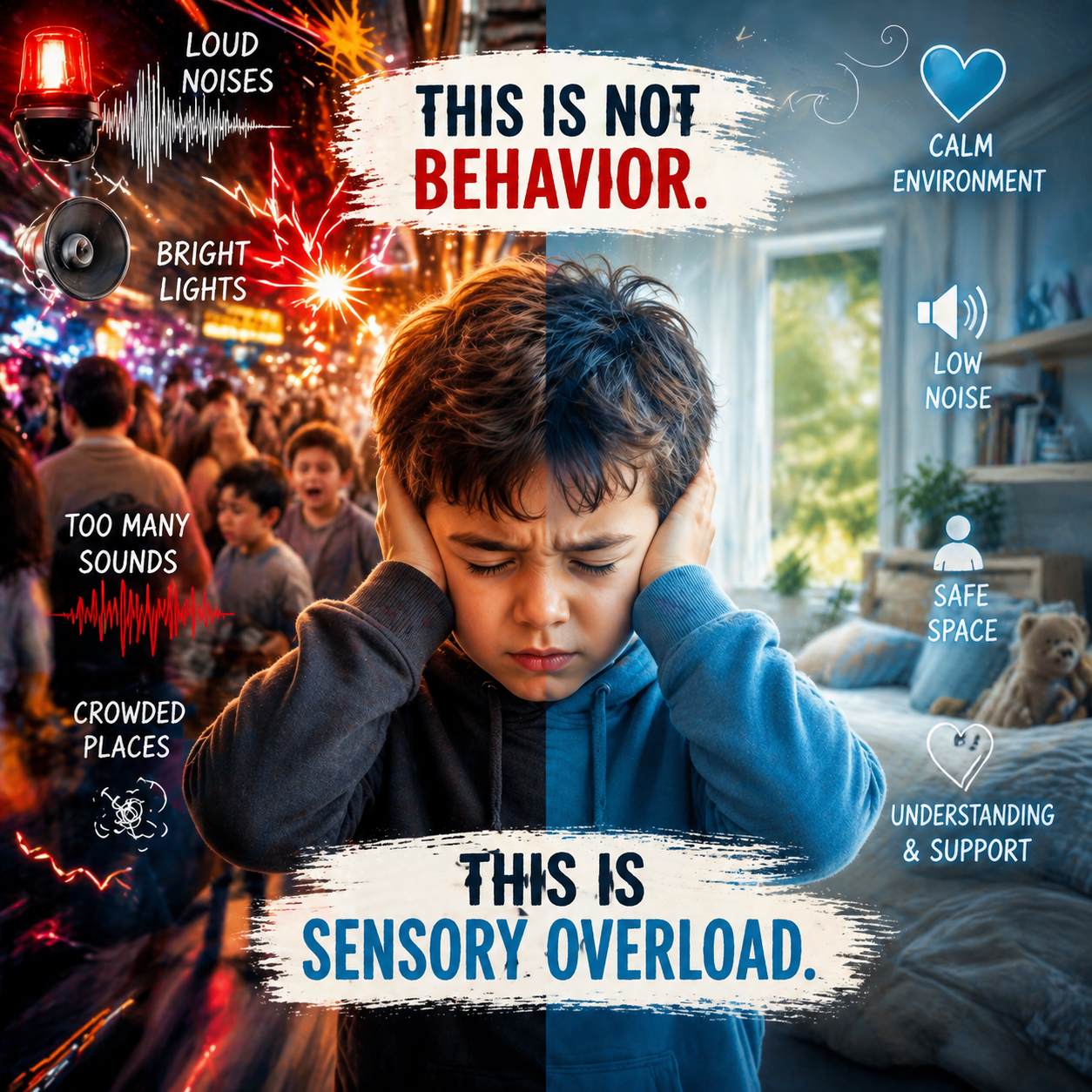
Current guidance, including from NICE, recommends beginning with a functional approach: looking for triggers and maintaining factors such as unmet pain or GI discomfort, sleep deprivation, anxiety, demands that exceed current skill level, communication frustration, sensory overload, or environmental mismatch. A psychosocial intervention with clearly defined target behaviors and consistent implementation across home and school is recommended before medication is considered, when no medical cause is identified.
The field is moving clearly toward a more neurodiversity-affirming position. Interventions should prioritize quality of life, functional communication, participation, and reduced distress, not masking for the sake of appearance. Research consistently shows that masking (suppressing autistic behaviors to appear neurotypical) carries significant psychological costs for autistic individuals, including worsened mental health, exhaustion, and reduced wellbeing. This burden falls disproportionately on autistic girls, who are often socialized to mask more effectively, and consequently go undiagnosed for longer. If you suspect your daughter may have been missed or misread, see our deep-dive on autism in girls: why it looks different and why it gets missed.
7. School supports and what makes a good IEP
An autism diagnosis changes what a family is entitled to ask for at school, but the critical insight is that supports must match the child’s functional profile, not just the diagnostic label. A diagnosis of autism does not automatically prescribe a specific educational approach; a thorough understanding of how the specific child learns, communicates, regulates, and participates does.
In the United States, the formal special-education plan is an Individualized Education Program (IEP), governed by the Individuals with Disabilities Education Act (IDEA). Other countries have analogous individualized support plans under different legal frameworks. Regardless of the country, the core components of meaningful school support are consistent: communication accommodations, predictable routines and structures, sensory and environmental accommodations, behavior plans tied to function rather than compliance, and explicit goals for participation, learning, and increasing independence. For a detailed breakdown of the most impactful classroom adjustments, our executive function accommodations guide covers the specific supports that make the biggest difference for autistic and neurodivergent students across grade levels.
What makes an IEP genuinely useful rather than generic?
Strong IEP goals are specific, measurable, and tied to real-life participation. Vague goals: “improve social skills,” “increase attention”, are harder to measure, harder to implement consistently, and harder to hold a school accountable for. More useful goals name the context, the behavior, and the level of support expected: for example, “will initiate a verbal or AAC request to a peer during unstructured lunch at least 3 times per week across 4 consecutive weeks.”
AAP emphasizes school-home collaboration and consistency, while NICE recommends clear review points built into any plan and consistent implementation across environments. Both position the parent as an active, informed participant in the planning process, not just a signatory.
Ask what specific barriers to access and learning the school identified for your child, and how each support directly addresses one of those barriers. Ask for measurable goals. Ask how progress will be tracked and reported to you. Ask what the school will do when a goal isn’t being met. Ask about sensory accommodations, communication supports, and how behavior plans are tied to function rather than punishment. If your child has a PDA profile, standard IEP language often doesn’t translate well, our specialized guide on PDA and IEP planning walks through exactly how to adapt the process.
8. Medication: what it can and cannot do
No medication is currently approved or recommended to treat the core features of autism itself. This is the most important thing parents need to understand about medication, and NICE makes it explicit: antipsychotics, antidepressants, anticonvulsants, and exclusion diets are not recommended for core autism features in either children or adults.
What medication can target are specific, clearly identified co-occurring problems. The strongest evidence is:
Irritability, aggression, and self-injury: Risperidone and aripiprazole are the only FDA-labeled medications for irritability associated with autism, and they have the strongest evidence base for this indication. They are not without significant side effects, including weight gain and metabolic effects, and should be used as part of a broader plan, not as a substitute for behavioral and psychosocial intervention.
Sleep: Behavioral sleep planning comes first. If sleep problems persist and significantly affect the child or family, NICE recommends considering melatonin with specialist input. The sequence matters, behavioral strategies should be tried before medication.
ADHD, anxiety, and depression: These co-occurring conditions should be treated according to the same evidence-based standards used outside autism, with adaptations as needed for the autistic individual’s communication style, sensory sensitivities, and processing differences.
9. Adolescence, adulthood, and transition planning
Most families are surprised to learn that transition planning should begin years before the final school year. Current NICE guidance for both child and adult services emphasizes life-skills supports, community access, employment-readiness, and supported employment planning as ongoing processes, not last-minute preparations.
When should transition conversations start?
Early adolescence is a reasonable starting point for most families, and earlier is warranted when support needs are substantial. The goal is not to decide between “college or work”, it is to build a coordinated plan across multiple domains: healthcare transfer, mental health, sleep, sexuality and personal safety education, daily living and transportation skills, postsecondary options, employment, social belonging, and supported decision-making. Our comprehensive functional life skills curriculum guide for autism (2026) maps out exactly which skills to target at each stage, and how to embed them into daily routines long before the final school year.
What supported employment looks like
NICE’s adult guidance highlights the key elements of supported employment that produce the best outcomes: thorough job matching to the person’s interests and strengths, specific interview preparation, training within the actual role, reasonable workplace adjustments, and ongoing employer support, not just placement and withdrawal. Disclosure decisions are personal, and autistic adults should be supported in making informed choices about when and how to disclose in employment contexts.
Healthcare transfer (establishing care with adult providers before school ends), daily living skills (cooking, money, transportation, personal safety), legal and supported decision-making arrangements where relevant, postsecondary options research, and mental health continuity. Employment skills, including job matching, interview skills, and self-advocacy in the workplace, are also best developed gradually, not crammed into the final year of school.

10. Family support and caregiver wellbeing
Parent stress in families of autistic children is not a sign of failure. It is a predictable response to high coordination demands, system navigation, sleep disruption, financial strain, and uncertainty about the future. A parent who is depleted cannot sustainably support their child. This is not a soft observation, it is an evidence-based reality that guidelines consistently acknowledge.
Do caregiver training programs actually help?
Yes, when they are designed to teach parents how to support communication, play, regulation, and problem-solving in everyday routines, rather than adding clinical homework on top of an already-strained schedule. WHO’s Caregiver Skills Training and multiple parent-mediated intervention reviews show that caregiver programs can improve both parent skill and parent wellbeing. Parent coaching is a form of treatment support, not a peripheral add-on.
One area where parent understanding makes an especially significant difference is the relationship between autism and attachment. The outdated idea that autistic children don’t form deep bonds with caregivers has been thoroughly disproved, but the way attachment expresses itself can look different, and parents deserve accurate information. Our article on attachment and autism addresses what the research actually shows. For families navigating a PDA profile specifically, the strategies that work look quite different from standard autism parenting guidance, our dedicated guide on PDA strategies for parents offers a practical, low-demand framework that many families find transformative.
Supporting siblings
Siblings of autistic children often experience a combination of close connection, confusion, frustration, and, importantly, the sense of being overlooked during intensive periods of diagnosis, therapy, and crisis. Siblings deserve their own support, their own explanations, and their own time with parents, and this is more than a nice aspiration: family wellbeing is a documented factor in child outcomes over time.
11. Myths, prognosis, and trusted resources
Vaccines and autism: the settled evidence
Special diets, chelation, and “autism reversal” claims
What does the future usually look like?
There is no single autism trajectory. WHO notes that needs and abilities vary widely and can change substantially over time. Long-term research shows that outcomes are shaped by many factors: communication and cognitive abilities early on, the quality and fit of supports received, co-occurring conditions and whether they are treated, family resources, and access to services. Recognizing the signs of autism in children early, and acting on them, remains the single most consistent predictor of better long-term outcomes. A snapshot at age 3 is not a fixed forecast for age 13 or 33.
A minority of autistic individuals may no longer meet full diagnostic criteria later in life. This should not be framed as a generalizable “reversal”, it more often reflects developmental change, high-quality support, and the inherent complexity of diagnostic thresholds across development. The goal families should orient toward is gains in function, communication, autonomy, and quality of life: not the disappearance of autism as an identity or a neurotype.
Trusted resources
For the most reliable information, start with primary sources: the WHO autism fact sheet for globally neutral guidance on definition, causes, and rights; the CDC autism page for milestone tracking, early signs, and screening tools; AAP guidance for pediatric clinical standards; and NICE guidelines for behavioral management, medication boundaries, and adult transition. For school-specific guidance in the US, the U.S. Department of Education IDEA resources are the most authoritative source on IEP rights.
✅ 5 things you can do this week, regardless of where you are in the process
- If you’ve noticed any of the signs of autism in children listed in this guide: raise them specifically at your next medical appointment and ask for autism-specific developmental screening, even if no one else is worried yet. Concern does not require certainty.
- If your child screened positive or was recently referred: contact your public early-intervention system (in the US: call your state’s Part C program; in the UK: your local authority SEND team) in the same week as the medical referral, not after.
- If your child is already diagnosed: ask your pediatrician whether co-occurring conditions (sleep, GI, anxiety, ADHD) have been explicitly screened for, not just assumed to be “part of autism.”
- If your child is in school: review current IEP goals: are they measurable, tied to real-life participation, and monitored with data? If not, request a meeting to revise them.
- For yourself: ask what caregiver support or respite is available in your area. Parent wellbeing is not a luxury; it is part of the care plan.