
Quick answer: Deaf and hard of hearing students need full access to language and communication at school, in sign language, spoken language or both. Under IDEA, the IEP team must consider a deaf or hard of hearing student’s language and communication needs, chances for direct communication with peers and staff, and direct instruction in the student’s communication mode. Common supports include interpreters, captioning, hearing assistive technology, preferential seating and teachers of the deaf. Over 90% of deaf children are born to hearing parents, so early language access is critical.
In this guide
Deaf and hard of hearing students are a varied group: some use American Sign Language, some use hearing aids or cochlear implants and spoken language, many use both. What they share is the need for full, easy access to everything said in class and at recess. Without it, they miss more than words; they miss learning and friendship.
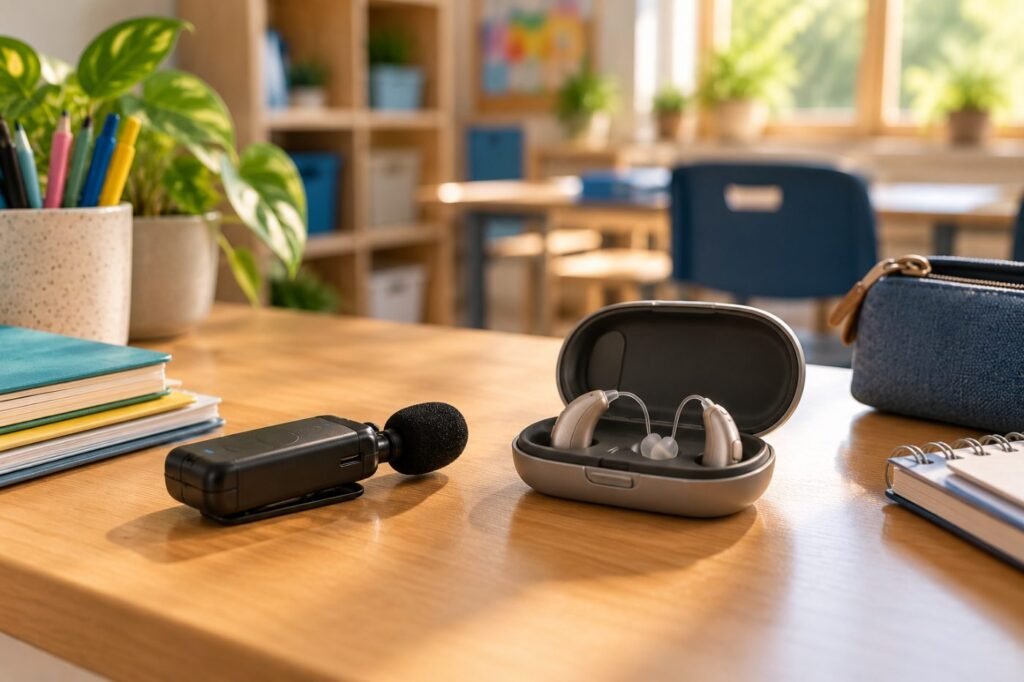
A Wide Range of Hearing and Communication
| Level | What the student may miss | Possible supports |
|---|---|---|
| Mild | Soft speech, speech in noise, distant talkers | Seating, remote microphone, captions |
| Moderate | Most conversational speech without amplification | Hearing aids, remote microphone, visual supports |
| Severe to profound | Most or all speech by ear | Sign language interpreter, cochlear implant, captioning |
| Unilateral (one ear) | Speech on one side, speech in noise | Seating, remote microphone, check-ins |
About 1.7 per 1,000 newborns screened in the U.S. have hearing loss (CDC). New Jersey’s education department notes that a 2016 study found 59% of children with hearing loss in one ear had an academic or behavioral problem at school (NJDOE).
Key point: Even mild or one-sided hearing loss can affect learning. Access matters at every level.
What IDEA Requires for Deaf and Hard of Hearing Students
Special factors the IEP team must consider
These factors come from IDEA at 34 CFR 300.324(a)(2)(iv), summarized by the Center for Parent Information and Resources (CPIR). Many states also use a written communication plan.

Supports and Technology
- Teacher of the deaf and hard of hearing: specialized instruction and consultation.
- Interpreters or transliterators: qualified, for class and school events.
- Remote microphone (FM/DM) systems: the teacher’s voice goes straight to hearing devices.
- Captioning: captions on all videos; real-time captioning (CART) for older students.
- Audiologist: checks devices and listening environment.
- Peers and culture: chances to meet deaf peers and adult role models.
Classroom Checklist
- Face the class when talking; do not talk while writing on the board.
- Repeat classmates’ questions and answers.
- Reduce background noise: close doors, add soft surfaces.
- Use visuals, written directions and captions.
- Check the remote microphone at the start of each day.
- Give the interpreter materials in advance.
Parent email
“Our son uses hearing aids and has trouble following group discussions. Could the team consider a remote microphone system and captioning for all videos? We would also like the teacher of the deaf to observe him during small-group work.”
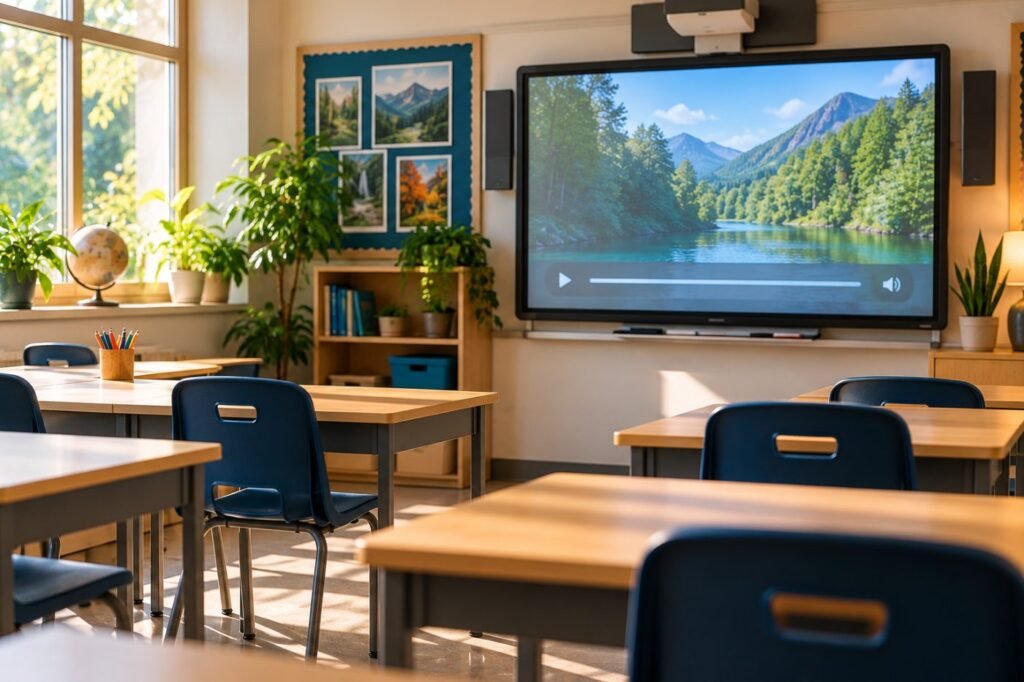
Real-Life Example
Case story
Sara, 13, is hard of hearing and was falling behind in science labs, where everyone talked at once. Her IEP added a pass-around microphone for group work, captions on all videos and a weekly check-in with the teacher of the deaf. Her grades improved, and she joined a regional deaf youth club where she learned some ASL and met friends who shared her experience.
Remember: Ask the student. Deaf and hard of hearing students are the experts on what helps them hear and understand, and building self-advocacy skills is key.
Deaf and Hard of Hearing Students FAQ
What supports do deaf and hard of hearing students need?
Access to language and communication: interpreters, captions, hearing technology, visuals and specialized teachers.
Does IDEA require ASL?
IDEA requires the team to consider language and communication needs and the student’s mode; it does not mandate one language for all.
Can a student with mild hearing loss get an IEP or 504?
Yes, if the hearing loss affects access or learning.
What is an FM or DM system?
A wireless microphone the teacher wears that sends speech directly to the student’s hearing devices.
Who is a teacher of the deaf?
A specially trained educator who supports students who are deaf or hard of hearing.
In short: Deaf and hard of hearing students thrive with full access to language. Consider communication needs first, then technology and teaching. This article is part of our Disabilities Less Covered series.
Was this article helpful?
Tap a star to rate
Sources
- Center for Parent Information and Resources. Special Factors in IEP Development
- CDC. Data and Statistics About Hearing Loss in Children
- New Jersey Department of Education. Supporting Students who are Deaf or Hard of Hearing
This article is educational and does not replace professional advice.

