Halloween Coloring Book for Kids – Free Gift

Celebrate the magic of Halloween with this exclusive 25-page Halloween Coloring Book for Kids, designed to spark creativity and fun. Each page features a unique, high-quality illustration that’s perfect for young artists, from friendly witches and smiling pumpkins to playful ghosts, bats, and haunted houses.

This printable collection combines cuteness and spooky charm, offering a delightful activity for classrooms, home use, or holiday parties. Children can enjoy hours of coloring while exploring festive Halloween scenes in a kid-friendly, non-scary style.

Download your free PDF coloring book today and share the Halloween joy with your students, children, or visitors. Perfect for teachers, parents, and anyone who loves creative seasonal fun.

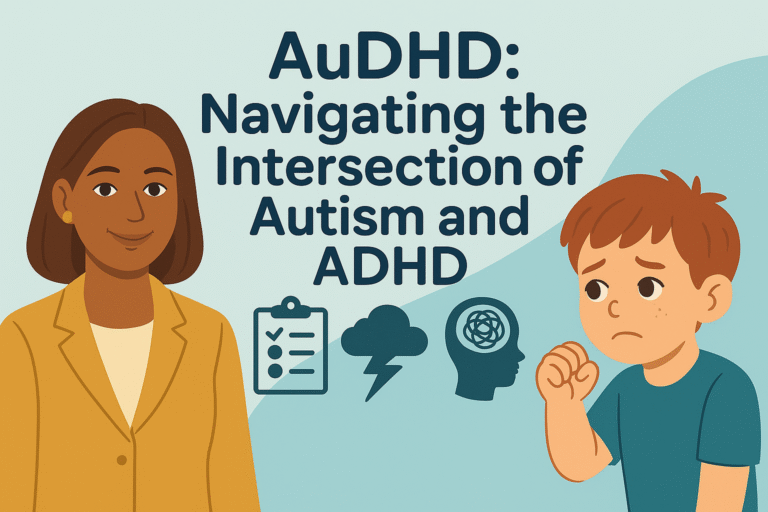
AuDHD: Navigating the Intersection of Autism and ADHD

AuDHD is a term used to describe the co-occurrence of autism spectrum disorder (ASD) and attention-deficit/hyperactivity disorder (ADHD) in the same individual. While autism and ADHD are distinct neurodevelopmental conditions, they often overlap. In fact, clinicians now recognize that many children meet criteria for both ASD and ADHD. This dual diagnosis presents unique challenges – and strengths – for the affected child. For parents and special education teachers, understanding AuDHD is crucial in providing the right support. This article offers a comprehensive overview of AuDHD, including its symptoms, diagnostic considerations, recent research insights, and practical strategies for home and school.

What Is AuDHD?

AuDHD (pronounced « awed-H-D ») is not an official medical term, but rather a blended term coined by the neurodiversity community to denote co-existing autism and ADHD. In clinical practice, this means an individual has been diagnosed with both ASD and ADHD. Historically, professionals hesitated to diagnose autism and ADHD together – prior to 2013, diagnostic guidelines actually prohibited dual diagnosis. This changed with the DSM-5 (Diagnostic and Statistical Manual of Mental Disorders, 5th ed.), which acknowledged that autism and ADHD can indeed co-occur.

Research in recent years has revealed that AuDHD is more common than previously thought. Various studies estimate that roughly 30% of autistic children also have ADHD, and about 10–20% of children with ADHD have autism. (Some clinical studies using broader criteria have even reported higher overlap rates.) Boys are more likely to be identified with both conditions than girls, though this may partly reflect underdiagnosis in girls. Importantly, one study found that only about 15% of children with both autism and ADHD had been correctly diagnosed with both conditions, highlighting that many cases of AuDHD still go unrecognized. Early and accurate identification of co-occurring ASD and ADHD is vital so that children receive support for all of their needs rather than just one diagnosis.

Symptoms and Diagnostic Challenges

Autism and ADHD each have hallmark symptoms that can sometimes appear to be opposites. ADHD is characterized by developmentally inappropriate levels of inattention, hyperactivity, and impulsivity. A child with ADHD may be very active, seek constant stimulation or novelty, act without thinking, and have trouble staying focused or organized. Autism, on the other hand, is defined by differences in social communication and the presence of restrictive or repetitive behaviors and interests. An autistic child might prefer routine and consistency, have specialized intense interests, struggle with social cues, and be sensitive to sensory input.

In an AuDHD individual, these trait profiles mingle and interact, creating a unique presentation. For example, a child with AuDHD may have the autistic tendency to crave structure and predictability, yet also experience the ADHD-driven urge for novelty and spontaneity. They might intensely focus on a favorite topic (a trait of autism) but also get easily distracted in other settings (a trait of ADHD). One autistic trait is difficulty with social interaction, while ADHD can lead to socially impulsive or overly talkative behavior – a child with both might be unsure how to connect with peers and occasionally overstep social boundaries. As Autistica (a UK autism research charity) describes, individuals with AuDHD often feel like « a walking contradiction, » experiencing an internal struggle between their brain’s need for routine and its drive for stimulation. They may also show a heightened expression of traits common to both conditions, such as sensory sensitivities, sleep difficulties, and emotional dysregulation (intense emotions, difficulty with self-regulation).

Because of these overlapping and sometimes contrasting features, diagnosing AuDHD can be challenging. Many symptoms of autism and ADHD can mask or mimic each other. For instance, an autistic child might appear inattentive in class not due to classic ADHD but because they are overwhelmed by sensory input or not understanding social expectations. Conversely, a child with ADHD might seem socially disengaged not due to autism per se, but because impulsivity and distractibility hinder their social interactions. Clinicians must conduct a careful, comprehensive assessment, gathering information from parents, teachers, and direct observation to tease apart the root causes of behaviors. They use standardized questionnaires and DSM-5 criteria for both ASD and ADHD, ensuring the child meets full diagnostic criteria for each condition and that symptoms aren’t better explained by one diagnosis alone. Evaluation may involve speech-language assessments (for autism-related communication issues) and tests of attention/executive function (for ADHD). It’s also important to rule out other conditions that can co-occur (or be mistaken for these), such as anxiety disorders, learning disabilities, or sensory processing disorder.

The diagnostic process can be lengthy, but getting it right has tangible benefits. A dual diagnosis allows the child access to targeted interventions for both autism and ADHD. It validates the child’s diverse experiences – for example, understanding that both their social communication differences and their attention difficulties are neurodevelopmental in origin, not willful misbehavior. For parents and educators, a clear AuDHD diagnosis can bring clarity and guide more effective support strategies.

Research Findings and Neurological Basis

Researchers are actively studying how autism and ADHD intersect on a biological level. Both are highly heritable conditions, and modern genetics research suggests that they share some common genetic risk factors. In other words, the same gene variants may increase likelihood for both ASD and ADHD, which could explain why they so frequently co-occur in families and individuals. Brain imaging studies also reveal areas of neurobiological overlap. Autism and ADHD both involve atypical development of neural networks responsible for executive functions (like attention, impulse control, and organization) and sensory processing. One large-scale analysis found significant overlaps in brain structure differences in people with autism-plus-ADHD compared to those with just one condition. Interestingly, having both conditions may produce its own distinct brain profile: for example, a 2023 study noted that autism’s effect on certain brain regions was altered when ADHD was also present, indicating that co-occurring ADHD can modulate the neuroanatomy of ASD. This line of research is still emerging, but it underscores that AuDHD is a real, biologically based combination, not a coincidental or “made-up” label.

From a clinical perspective, children with AuDHD often face greater challenges with executive functioning than those with either condition alone. Executive functions include attention, working memory, planning, and impulse control – skills commonly impaired in ADHD and sometimes in ASD. When autism and ADHD combine, these deficits can compound, making it harder for the child to stay organized, follow multi-step instructions, or transition between tasks. Similarly, emotional and behavioral regulation can be more difficult; studies have found that kids with both ASD and ADHD tend to have more pronounced emotional dysregulation and behavior issues compared to those with only ASD. On the positive side, they may also exhibit remarkable strengths such as intense focus on areas of interest (often called “hyperfocus” in ADHD) paired with deep knowledge or skills in those areas (common in autism). Many AuDHD individuals are described as creative, empathetic, and resilient problem-solvers, especially when their environment is supportive of their neurodivergence.

Overall, recent research is validating that AuDHD is a distinct neurodevelopmental profile. By better understanding its genetic and neurological underpinnings, scientists hope to improve interventions – for example, tailoring therapies or educational supports to the unique needs of those with both autism and ADHD.

Strategies for Parents of AuDHD Children

Parenting a child with AuDHD can be both challenging and rewarding. These children often need some extra support and structure, but with patience and the right strategies they can thrive. Here are several evidence-based approaches for parents and caregivers:

  • Establish Routines and Structure: Children on the autism spectrum typically do best with predictable routines, and those with ADHD need clear structure to stay on track. Create a daily schedule for home activities (morning routine, homework time, bedtime, etc.) and use visual supports (e.g. picture charts or checklists) to make it understandable. Consistency helps reduce anxiety. However, try to build in a little flexibility or variety within the routine – for example, allow choice of two different play activities – to accommodate the child’s ADHD-driven need for novelty and to practice handling small changes.
  • Use Clear and Positive Communication: Give concise, simple instructions one step at a time. Children with AuDHD may get overwhelmed or lose focus if given complex, multi-part directions. Get down to your child’s eye level, use their name, and make sure you have their attention before speaking. Phrase requests positively (say “Please put your toys in the bin” rather than “Don’t make a mess”), as this tells the child exactly what you expect. Whenever possible, preview transitions or changes in advance (“In 10 minutes we’ll need to turn off the TV and start dinner”) to help them prepare.
  • Support Sensory and Emotional Needs: Many AuDHD kids have sensory processing differences – they might be sensitive to noise, light, textures, or they might seek out sensory input. Create a home environment that is sensory-friendly. For example, provide a quiet corner or a small tent where the child can retreat if they feel overwhelmed, use noise-cancelling headphones during loud events, or give opportunities for sensory play (sand, water, play-dough) to help them regulate. Be attentive to signs of meltdown or shutdown (extreme distress common in autism when overloaded). If the child is in emotional distress, stay calm and offer comfort without excessive talking; give them time and a safe space to recover. Teaching simple relaxation techniques (deep breathing, squeezing a stress ball, swinging on a swing) can over time help them learn self-calming.
  • Behavioral Strategies and Positive Reinforcement: Like any child, those with autism and ADHD respond well to positive reinforcement. Catch your child being good and praise specific behaviors (“I love how you started your homework after the reminder!”). Use reward systems strategically – for example, a sticker chart or token system to earn a small reward for completing tasks or using gentle hands with a sibling. Consistency is key: calmly follow through with consequences when rules are broken, but avoid harsh punishments, as children with neurodevelopmental differences often aren’t acting out on purpose. Instead of punishment, think in terms of prevention and redirection: if your child has trouble sitting still at the dinner table, allow a fidget toy or a wiggle cushion, or let them get up briefly to throw away trash during the meal.
  • Encourage Communication and Self-Expression: Some AuDHD children, especially if they have language delays or social communication difficulties, struggle to express their needs and feelings. Help your child develop communication skills by being patient and giving them opportunities to express themselves, in whatever mode works (speech, sign, pictures, etc.). Practice visual communication aids – for example, emotion cards or a feelings chart they can point to if they’re upset and can’t find the words. Read social stories together about common situations (like handling frustration or making friends). Importantly, listen actively when your child does communicate – show you value their words or gestures, which builds their confidence and trust. If needed, speech therapy or social skills groups can provide additional help in this area.
  • Provide Outlets for Energy and Focus: Hyperactivity and impulsivity can be channeled in positive ways. Make sure your child has plenty of physical activity and movement throughout the day – go for walks, play on playgrounds, dance, or do family yoga. Physical exercise can improve focus and mood. At home, if you need your child to sit for a while (during meals or homework), try allowing short movement breaks in between or use seating alternatives like an exercise ball chair or a standing desk. Additionally, harness their interests to build attention span – for instance, if they hyperfocus on astronomy or trains, use those topics as entry points for learning math, reading, or socializing with others who share the interest.
  • Collaborate with Professionals: Don’t hesitate to seek guidance from healthcare and educational professionals. Talk to your pediatrician or a child psychologist about the best treatments for your child’s specific needs. Many kids with ADHD benefit from medication to improve attention and self-control; this can often be used alongside autism interventions (there is no medication for autism itself, but for ADHD symptoms it can be effective). Behavioral therapy (like parent management training or applied behavior analysis tailored to autism) can provide you with more tools to handle challenging behaviors. Occupational therapy can help with sensory issues and daily skills, and speech therapy can aid communication. Parent training programs can be very empowering by teaching specialized strategies for kids with ADHD or ASD – consider joining one if available. Importantly, connect with support networks (online forums, local parent support groups) so you don’t feel alone and can learn from others’ experiences.
  • Advocate for Your Child: You know your child best. If they are struggling at school or in community activities, work with teachers, coaches, or group leaders to explain your child’s needs and brainstorm supports. Ensure your child’s school is aware of the AuDHD diagnosis so they can provide appropriate accommodations. In many countries, children with dual ASD/ADHD diagnoses qualify for Individualized Education Programs (IEPs) or 504 Plans that legally guarantee support services in school (such as a dedicated aide, therapy services, modified assignments, or extra time for tests). Keep open communication with the school and share what techniques work at home. When parents and teachers adopt consistent approaches, children feel a greater sense of stability. Don’t be afraid to politely educate others (family members, friends) about AuDHD – raising awareness will help create a more understanding environment for your child.

Above all, remember to celebrate your child’s strengths and talents. Children with AuDHD often have incredible creativity, unique perspectives, and passion for the things they love. By focusing on their positive qualities and providing patient guidance in areas of challenge, parents can help these children flourish. And be kind to yourself as a parent – caring for a neurodivergent child is a learning journey for you as well. Reach out for help when you need it, and know that with time and support, you are helping your child build a foundation for success and happiness.

Strategies for Educators and Specialists

Teachers and school specialists (such as special education teachers, learning support staff, and school counselors) play a pivotal role in supporting students with AuDHD. In the classroom, these students might present with a mix of needs – they may require autism-related supports and ADHD-related accommodations. Here are key strategies for educators working with students who have autism+ADHD:

  • Create a Structured, Predictable Classroom: Consistency and routine are beneficial for both autistic and ADHD students. Establish clear daily schedules and class routines so the student knows what to expect. Post the schedule on the wall or on the board using visual icons if possible. Provide warnings for transitions (« Five minutes until we switch to math ») to help the student prepare for changes. A structured environment helps reduce anxiety and inattentiveness. At the same time, build in varied, engaging activities within that structure – for example, alternate between short lessons, hands-on exercises, and movement activities – to help maintain the student’s attention and prevent boredom.
  • Use Visual Supports and Clear Instructions: Many AuDHD learners are visual thinkers. Support their comprehension by using visual aids: illustrated schedules, color-coded folders, charts outlining step-by-step instructions, and demonstration of tasks. When giving directions, keep them short and concrete. Rather than saying « Everyone, get ready for recess, » be explicit: « James, put your worksheet in the finished tray, push in your chair, then line up at the door. » You might also check back to ensure the student understood (have them repeat directions back to you). Posting classroom rules and expectations in simple language with pictures can serve as a constant gentle reminder. Overall, multimodal teaching (combining spoken words with written or visual cues) can help bridge attention gaps.
  • Optimize the Classroom Seating and Environment: Small adjustments to the environment can significantly help an AuDHD student focus. If possible, seat the student in an area of the classroom with fewer distractions – for instance, away from a busy doorway or window, ideally near the front where the teacher’s instruction is central. Some students benefit from preferential seating close to the teacher or board, while others might do better at the edge of a group to reduce social stimuli – gauge what works best for the individual. Consider allowing flexible seating options: a standing desk, an exercise ball chair, or a wiggle cushion can let a fidgety student move without disrupting others. Similarly, a designated quiet workstation (like a study carrel or a noise-reduced corner) can be useful for independent work, especially for a child who is easily overstimulated. Ensure the classroom provides access to sensory tools if needed – for example, headphones to muffle noise during quiet work time, fidget toys, or a small “calm-down corner” with items like a beanbag or weighted lap pad. These tools and environmental supports help create a sensory-friendly classroom that meets the student’s needs.
  • Incorporate Movement and Breaks: Children with ADHD often struggle to sit still for long periods, and autistic children can also experience restlessness or stress if made to stay put too long. Plan for frequent movement breaks that benefit the whole class – e.g. a quick stretching routine, a few jumping jacks, or a short game between lessons. You can also assign the student brief errands (like taking a note to the office) or tasks (wiping the board, handing out papers) to channel their energy productively. During lessons, if you notice the student’s concentration fading, a quick brain break can reset their focus. Additionally, consider allowing the student to stand at their desk or pace at the back of the room during instruction, if it helps them attend better (some students listen best when moving). By proactively giving outlets for physical movement, you can preempt behavior problems and improve the student’s ability to engage when it matters.
  • Differentiate Instruction and Assignments: An AuDHD student might work very unevenly – excelling when the material aligns with their interests or learning style, but struggling with tasks that tax their weaker areas (e.g. long writing tasks may be hard due to attention and fine-motor issues, or open-ended group projects might be overwhelming due to social and organizational demands). As much as possible, individualize the student’s learning plan. This could mean breaking large tasks into smaller, more manageable chunks with intermediate deadlines, providing written outlines or graphic organizers to scaffold their work, or allowing alternative ways to demonstrate knowledge (like creating a poster or doing an oral presentation instead of a long written report). Check in frequently to keep them on track, and give immediate, constructive feedback. During tests or independent work, limit unnecessary distractions – for example, let them use a quiet testing room or noise-cancelling headphones if concentration is an issue. Many students with ADHD or ASD qualify for accommodations such as extended time on tests or reduced homework load; implement these as needed to set the child up for success rather than frustration.
  • Behavior Support: Positive and Proactive. In managing behavior, a positive reinforcement approach is typically most effective. Work with the child to establish a few classroom goals (e.g. « raise hand to speak » or « stay in seat during circle time ») and reward progress toward these goals with specific praise or tangible rewards (like earning points toward a preferred activity). Avoid punitive or shaming strategies for misbehavior related to their neurodivergence. For instance, if the student blurts out answers or struggles to wait their turn, calmly remind them of the hand-raising rule and later privately reinforce the appropriate behavior. Sometimes ignoring minor, non-disruptive behaviors (fidgeting, doodling, lightly rocking) is better than calling attention to them, as long as safety isn’t an issue. Develop a discreet signal or cue with the student to gently redirect them when they’re off-task (e.g. a tap on their desk or using their name in a question). If the student becomes upset or has a behavioral outburst, treat it as a cue that they are overwhelmed – remove triggering stimuli if possible and guide them to a calming activity. An individualized behavior intervention plan created with input from a school psychologist or behavior specialist can be very helpful for AuDHD students, outlining specific strategies for prevention and response to challenging behaviors.
  • Support Social Integration: Social life at school can be particularly hard for neurodivergent kids. Autistic students may be isolated or targeted by bullies; ADHD can lead to conflicts with peers due to impulsivity. Teachers should strive to foster an inclusive, accepting classroom culture. Educate the class (in age-appropriate ways) about differences and kindness. Consider pairing the student with kind, patient classmates for group activities – being included with positive peer role models can help the student practice social skills. Keep an eye out for bullying or teasing; AuDHD children might not always report it or may react in ways that teachers misinterpret, so be vigilant and address issues proactively. Provide structured opportunities for the student to interact with peers, such as structured play, buddy programs, or social skills groups with the school counselor. Teaching the whole class strategies for communication (for example, how to be a good listener, or how to invite someone to play) can also indirectly benefit the student with AuDHD. The goal is to ensure they are a fully participating member of the class, not just sidelined with an aide all day.
  • Collaborate and Communicate: Effective support for an AuDHD student often requires a team effort. As a teacher or specialist, maintain open communication with the child’s parents – share the student’s successes and challenges, and exchange tips about what works at school vs. home. Consistency between home and school (like using similar reward systems or behavioral cues) can reinforce positive behaviors. If the student has an IEP or 504 Plan, familiarize yourself with it and coordinate with the special education team or therapists on how to implement the accommodations and recommendations. Regular team meetings (including parents, teachers, school psychologists, etc.) can help fine-tune the support plan as the child grows and their needs evolve. Additionally, keep educating yourself about autism and ADHD – understanding the underlying reasons for the child’s behaviors will help you respond with empathy and effectiveness. Many schools offer professional development on neurodiversity or have access to external autism/ADHD specialists; take advantage of these resources.

By employing these strategies, educators can create a learning environment where a child with AuDHD doesn’t just cope but can truly learn and shine. It may require some extra planning and creativity, but the payoff is a student who feels understood, included, and empowered to reach their potential. As one educational guide on AuDHD puts it, it’s about developing an “inclusive & strength-based approach” – recognizing the student’s abilities and interests, and leveraging those to overcome challenges. With patience, flexibility, and teamwork, schools can set up AuDHD learners for success academically, socially, and emotionally.

Conclusion

Navigating life with both autism and ADHD can be complex, but with the right support, individuals with AuDHD can thrive. For parents and teachers, the journey involves learning, adaptation, and collaboration. It’s about understanding that the child who can memorize every fact about dinosaurs yet forgets to pack their school bag isn’t being lazy or oppositional – rather, their brain works differently, with incredible strengths in some areas and genuine hurdles in others. By recognizing those dual facets, we can respond with empathy and effective strategies.

Key takeaways include the importance of early and accurate identification of co-occurring ASD and ADHD, since a dual diagnosis opens the door to more tailored interventions. We’ve also seen that autism and ADHD share more in common than one might think, from genetic influences to overlapping symptoms like sensory issues and executive function deficits. An AuDHD profile is not a defect to be “fixed” but a neurologically different way of experiencing the world – one that comes with its own challenges and talents. Embracing a neurodiversity perspective means we support the individual in developing skills and coping strategies while also valuing their unique way of thinking.

For parents, this may mean trial and error to find what calming technique helps your child or which routine makes mornings doable – but remember, you are your child’s strongest advocate and ally. For educators, it means going the extra mile to adapt lessons or environments – but in doing so, you often improve your classroom for all students, because inclusive practices benefit everyone.

Finally, continue to seek out resources and support networks. There is a growing community of professionals and neurodivergent individuals sharing insights about AuDHD. You are not alone in this journey. With knowledge, compassion, and creativity, we can ensure that children with AuDHD get the support they need to learn, connect, and flourish both in school and in life.


References

  1. Medical News Today – “AuDHD: What does it mean to have both ADHD and autism?” (Mia Blake, medically reviewed by Dr. Nicole Washington, Oct 21, 2024). This article provides an overview of the co-occurrence of autism and ADHD, noting that research suggests it may be more common than previously thought. It reports that between 50% and 70% of autistic people also have ADHD, and about 9.8% of children with ADHD have autism, citing recent studies. The article also discusses how DSM-5 (2013) allowed dual diagnosis of ASD and ADHD for the first timemedicalnewstoday.commedicalnewstoday.com.
  2. Autistica – “ADHD and autism” (Autistica.org, information page). Autistica (UK autism research charity) highlights the frequent co-occurrence of ADHD and autism, using the term « AuDHD. » It lists common overlapping traits such as sensory differences, intense focus on interests (hyperfocus), executive dysfunction, sleep issues, and emotional dysregulation. The page notes that about 21% of children with ADHD are also autistic and ~28% of autistic children meet criteria for ADHD, underlining a strong link with shared genetic factors. It vividly describes how someone with both may feel an internal struggle between ADHD’s novelty-seeking and autism’s need for routine, while also experiencing heightened shared characteristicsautistica.org.ukautistica.org.uk.
  3. Canals et al. (2024) – “Prevalence of comorbidity of autism and ADHD in a school population: EPINED study” (Autism Research, 17(6), pp.1276–1286). A large 2024 epidemiological study from Spain that assessed thousands of children for ASD and ADHD. It found that 32.8% of autistic children had ADHD, and 9.8% of children with ADHD had ASD. Notably, it revealed that only 15.8% of the children who actually had both conditions had been previously diagnosed with both, highlighting underdiagnosis. The authors emphasize the need for early detection and accurate recognition of comorbid autism/ADHD to address these children’s educational and developmental needspubmed.ncbi.nlm.nih.gov.
  4. Hours et al. (2022) – “ASD and ADHD comorbidity: What are we talking about?” (Frontiers in Psychiatry, 13:837424). This review explores the conceptual and clinical implications of the high comorbidity between ASD and ADHD (noting literature that around 50–70% of individuals with ASD may have ADHD). It raises questions about overlapping symptomatology – for example, whether attention problems in autism might sometimes be mistaken for ADHD. The paper discusses the ongoing debate about the neurobiological reality of ASD-ADHD comorbidity and cautions that stimulant medications (common for ADHD) can have paradoxical effects in autistic patientspmc.ncbi.nlm.nih.govpmc.ncbi.nlm.nih.gov. This source underscores the complexity of disentangling symptoms and the importance of personalized clinical evaluation.
  5. Neuroscience News: Suarez et al. (2023) – Neuroanatomical substrates of autism and ADHD and genomic underpinnings (published in Molecular Autism, referenced via PMC). A research study examining brain imaging data of autistic individuals with and without co-occurring ADHD. The findings indicate that having ADHD can modulate the typical autism-related neuroanatomy. In particular, differences in cortical thickness and surface area were observed in certain brain regions only in those with both ASD+ADHD. The study also linked these brain differences to autism-related genes. In conclusion, the authors suggest that AuDHD individuals may have specific neuroanatomical and genetic profiles distinct from autism-only or ADHD-only groupspmc.ncbi.nlm.nih.govpmc.ncbi.nlm.nih.gov. This supports the idea that co-occurring ADHD and autism is a distinct neurodevelopmental condition warranting further research.
  6. Autism360 – “ADHD and Autism in the Classroom” (Autism360.com, FAQ section, 2024). This online resource (aimed at parents and educators) provides practical tips for supporting students with both autism and ADHD in school. It emphasizes strategies such as using clear instructions, structured routines, visual supports, regular movement breaks, and creating sensory-friendly environments in the classroom. It also highlights the importance of positive reinforcement, flexible seating arrangements, and individualized support plans to help these students focus and learn effectivelyautism360.comautism360.com. These recommendations align with best practices in inclusive education for neurodiverse learners.
  7. CDC – “ADHD in the Classroom: Helping Children Succeed in School” (Centers for Disease Control and Prevention, updated 2022). Although focused on ADHD generally, this official CDC guide offers evidence-based strategies that are highly relevant to AuDHD students. It recommends behavior management techniques (like reward systems and daily report cards), organizational aids, and accommodations under IEP/504 plans. Key tips include providing extra time on tests, short, clear assignments, breaks to move, minimizing distractions, using positive discipline instead of punitive measures, and close communication between teachers and parentscdc.govcdc.gov. The CDC also notes the value of teaching methods that play to the student’s strengths and the necessity of collaboration among educators, families, and healthcare providers.
  8. Boomerang Health Centre – “8 Realistic Parenting Strategies for Children with ADHD and Autism” (Boomerangcc.ca blog, March 13, 2024). A parent-oriented article that outlines practical strategies for home life with an AuDHD child. It covers tips such as providing visual schedules and guides for routines, maintaining consistent parenting and rules (while using positive reinforcement), helping the child develop communication skills through active listening and role-play, and being mindful of nonverbal communication. The article reinforces that consistent structure and empathetic, patient parenting can greatly assist children with ADHD/autism in daily activitiesboomerangcc.caboomerangcc.ca. It also encourages parents to view challenging behaviors as a form of communication and to respond with understanding rather than punishment.
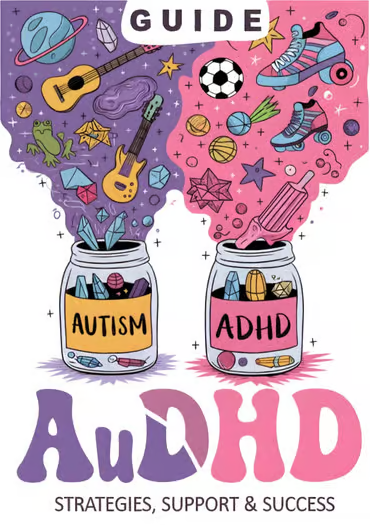
  9. AuDHD Guide: Strategies, Support & Success for Educators & Families (Prof. BerMed, 2025). [User’s own resource] – This comprehensive guide (available via TeachersPayTeachers) is dedicated to supporting individuals with co-occurring autism and ADHD. It includes practical strategies for both educators and families, covering topics like understanding the unique characteristics of AuDHD, effective support approaches in home and school settings, navigating professional interventions, and building long-term support systems. Notably, the guide takes an inclusive, strength-based approach, emphasizing actionable techniques (with printable tools like checklists and templates) that empower rather than “fix” the neurodivergent individualteacherspayteachers.comteacherspayteachers.com. It serves as an invaluable resource for those seeking in-depth strategies and real-life case examples of success with AuDHD children.

Comprehensive Overview of Sensory Processing Disorder (SPD)

Imagine a child who screams and covers her ears at the sound of a vacuum cleaner, or another who constantly fidgets and crashes into furniture seeking intense sensations. Such behaviors are hallmarks of Sensory Processing Disorder (SPD), a condition in which the brain struggles to correctly process and respond to sensory information from the environment. Children with SPD may be overwhelmed by ordinary sensations (like noises, touches, or lights) or, conversely, under-responsive, not reacting to stimuli that others notice easily. In either case, their responses to sensory input appear atypical for their age and situation, often causing challenges in daily life at home and school.

SPD is not currently recognized as an official diagnosis in standard manuals like the DSM-5 or ICD-11. However, it is widely acknowledged by occupational therapists and other professionals as a real and impactful condition – especially in children with developmental differences. In fact, the most recent diagnostic classification for early childhood (DC:0–5) specifically includes SPD as a distinct disorder. Epidemiological studies estimate that between 5% and 16% of children in the general population have notable sensory processing difficulties. Prevalence is even higher in certain groups: up to 60–90% of children with neurodevelopmental conditions (like autism) experience significant sensory challenges. Parents are often the first to notice that their child’s reactions to sound, touch, or movement are unusual, and these observations can lead to an SPD evaluation. Early identification is important, because sensory difficulties can affect a child’s learning, behavior, emotional regulation, and social participation. The good news is that with understanding and support, children with SPD can learn coping strategies to navigate their sensory world more comfortably.

Clinical Features of SPD

Sensory Processing Disorder can manifest through a wide range of clinical features, depending on which senses are affected and whether the child is over- or under-sensitive. Many kids with SPD have a mix of sensory responses. Some common signs and behaviors include:

  • Oversensitivity to stimuli (sensory over-responsivity) – The child may have extreme reactions to everyday sensations. For example, they might cover their ears or melt down in response to loud noises, become very upset by clothing tags or certain food textures, avoid messy play (disliking sand, finger paint), or refuse to be touched unexpectedly. What others consider mild sensations can feel painfully intense to a child with SPD.
  • Under-sensitivity or lack of response (sensory under-responsivity) – In contrast, some children seem not to notice sensory inputs that others do. They may have a high pain threshold (not reacting much to bumps or scrapes), fail to respond when name is called, or appear oblivious to noxious odors or mess on their face. These children might seem disengaged or lethargic because typical levels of input don’t register strongly for them.
  • Sensory seeking behaviors (craving) – Many children with SPD actively seek out intense sensory experiences. They might constantly fidget, touch everything, chew on non-food items, make loud noises, or crash into people and objects on purpose. They crave more sensation than others do, but even after getting it they may still appear disorganized or overstimulated rather than satisfied. For instance, a sensory-seeking child might spin in circles repeatedly without getting dizzy, or squeeze into tight spaces for deep pressure input.
  • Motor coordination and body awareness issues – Some sensory processing issues affect the proprioceptive and vestibular senses (body position and balance). A child might have poor posture, slouching or tiring easily (postural disorder), or appear clumsy, bumping into things frequently. They could have difficulty with motor skills like catching a ball, using scissors, or handwriting (this is often linked to a subtype called dyspraxia, meaning trouble planning and executing movements). These children may also seek sensory input to know where their body is in space (e.g. pushing heavy objects or jumping frequently).
  • Emotional and behavioral responses – Because sensory input can feel overwhelming or insatisfyingly faint, children with SPD often have strong emotional reactions. An unexpected touch or a bright, crowded room might trigger a fight-or-flight response, resulting in tantrums, anxiety, or avoidance behavior. On the flip side, an under-responsive child might seem withdrawn or difficult to engage. Over time, these kids may develop secondary behavior issues – for example, anxiety about going to places that have triggered sensory overload before, or frustration and low self-esteem from constantly encountering everyday activities that “feel wrong” to them. Parents and teachers often describe these children as being “on edge” or “in their own world,” not out of willfulness but due to their atypical sensory perceptions.

Each child with SPD has a unique profile – one might be hypersensitive to sound and touch but not to movement, while another seeks vigorous physical input yet is a picky eater due to texture aversions. What is common is that their responses to sensory stimulation are not well-tuned: the brain isn’t filtering, interpreting, or modulating sensory signals in the typical way. This can lead to confusion and stress for the child, who may not understand why certain sensations bother them so much (or why they crave others so intensely). It can also be bewildering for parents and educators until they recognize these behaviors as sensory-driven and not merely “bad behavior.”

Types of Sensory Processing Disorder

Researchers and clinicians have categorized SPD into several types or subtypes, which help describe the particular pattern of sensory challenges a person experiences. A widely used framework (originally developed by occupational therapist Dr. A. Jean Ayres and later expanded by Miller et al.) breaks SPD into three main categories with specific subtypes:

  • Sensory Modulation Disorder (SMD): Difficulties regulating the degree of response to sensory input. This category includes:
    • Sensory Over-Responsivity (SOR) – extreme sensitivity and overreaction to sensory stimuli (e.g. pain or fear response to normal sounds, touch, etc.).
    • Sensory Under-Responsivity (SUR) – muted or delayed responses, as if not perceiving stimuli adequately (e.g. doesn’t notice name being called, slow to react to pain).
    • Sensory Craving (SC) – an insatiable desire for sensory stimulation, leading to excessive sensory-seeking behaviors (e.g. constantly touching, moving, crashing into things) that are often disorganized or risky.
      These modulation issues can apply to any sensory modality (vision, hearing, touch, taste, smell, as well as the vestibular/balance and proprioceptive/body awareness senses). Children with SMD struggle to grade their responses – they may go too high or too low in how they react to sensory input, rather than the moderated response one would expect.
  • Sensory Discrimination Disorder (SDD): Problems with distinguishing between different sensory stimuli or discerning the nature of input. A child with SDD can detect that a sensation is present, but cannot reliably interpret its qualities. For example, they might hear sounds but struggle to tell whether a sound is coming from the front or behind, or not distinguish between similar letters by touch. In essence, the fine details of sensation are hard to interpret – the child may mix up similar sounds, misjudge the force needed to hold objects (due to poor proprioceptive feedback), or have trouble recognizing objects by feel with eyes closed. This can affect one or multiple senses. Difficulties with sensory discrimination can impact academic skills (like differentiating letter shapes or sounds) and day-to-day tasks (such as knowing how much force to use when closing a door or writing with a pencil).
  • Sensory-Based Motor Disorder (SBMD): Challenges with balance, motor coordination, and planning of movements due to faulty processing of sensory information. This category includes:
    • Postural Disorder: Poor core stability and difficulty maintaining upright posture or balance. Children may have low muscle tone, get fatigued easily, and struggle with activities that require physical stability (sitting upright, climbing stairs, etc.).
    • Dyspraxia: Difficulty with motor planning – that is, thinking of and carrying out new or complex movements in the correct sequence. Kids with dyspraxia often seem clumsy or uncoordinated; they might have trouble learning to tie shoes, ride a bicycle, or perform tasks that have multiple steps. They may also avoid sports or playground activities because those skills are extra challenging.

It’s important to note that many children with SPD have a combination of subtypes rather than one isolated pattern. For instance, a child could have sensory over-responsivity in touch and sound, yet also have dyspraxia affecting motor skills. In one clinical study of young children with “idiopathic” SPD (SPD with no other diagnosis), over half of the children exhibited more than one type of SPD profile simultaneously. This overlap is common and suggests that the sensory systems are interconnected. Therefore, professionals will often assess a child across all these domains to build a comprehensive picture of their sensory processing profile.

Causes and Neurobiology of SPD

The exact cause of Sensory Processing Disorder is not fully understood. SPD is considered a neurodevelopmental condition, meaning it originates in the way the brain and nervous system develop and function. Genetic factors likely play a role – research suggests that sensory processing differences can run in families, hinting at an inherited component. At the same time, environmental factors and early experiences may influence sensory development. For example, premature infants or children who had extended stays in NICU can show sensory regulation difficulties later, possibly due to atypical early sensory experiences (though SPD also occurs in children with typical early histories).

Modern brain research is starting to reveal measurable differences in how children with SPD process sensation. Studies using tools like MRI and EEG have found that some kids with SPD show altered patterns of brain connectivity, especially in areas that manage multisensory integration (how different senses combine) and sensory “gating” (filtering out irrelevant input). In one review of neural mechanisms, children with SPD (particularly those with autism) were found to have atypical activity in brain networks responsible for modulating sensory input, which could explain their hypersensitivity or hyposensitivity. Another line of research measures physiological responses – for instance, the strength of a child’s skin conductance (sweat) response to sensations – and has noted that kids with SPD can have much bigger reactions than neurotypical children or those with ADHD, indicating a real difference in their bodies’ sensory reactivity.

Despite these insights, SPD’s etiology remains complex and multifactorial. There is no single “SPD gene” or lesion identified. Instead, it seems to result from subtle differences in how sensory neural pathways develop and how the brain learns to regulate responses. It’s also clear that SPD often coexists with other conditions (discussed below), which raises questions: are those conditions contributing to the sensory issues, or are the sensory issues a separate trait? Ongoing research aims to untangle these relationships.

One encouraging aspect is that the brain, especially in young children, is quite plastic – it can change and adapt. This means that with appropriate therapy and sensory-rich experiences, children’s sensory processing abilities can improve over time. Early intervention tapping into this neural plasticity may help “rewire” or strengthen the sensory processing networks. Conversely, extreme sensory deprivation or chronic stress during early childhood could potentially exacerbate sensory problems. Overall, the cause of SPD likely involves an interplay of a child’s genetic makeup and their developmental environment, affecting how their brain circuitry handles sensory input.

SPD in Autism, ADHD, and Other Conditions

Sensory processing difficulties are very common in individuals with certain neurodevelopmental disorders. In fact, atypical sensory responses are now part of the diagnostic criteria for Autism Spectrum Disorder (ASD) – many autistic children are hyper- or hypo-reactive to sensory stimuli or have unusual sensory interests (e.g. fascination with lights or textures). Research indicates that as many as 90% of children with autism have significant sensory processing challenges, with hypersensitivities (especially to sound or touch) being the most frequent pattern. Families of autistic children often report sensory issues as some of the most pressing daily challenges, whether it’s a child who cannot tolerate certain clothing fabrics or one who finds loud public spaces overwhelming. Sensory differences in autism can manifest in diverse ways: one child might cover their ears and cry in noisy environments (sound over-responsivity) while another might not respond to their name being called (auditory under-responsivity) yet be extremely picky about food textures.

SPD also frequently co-occurs with ADHD (Attention-Deficit/Hyperactivity Disorder). Children with ADHD can be very sensitive to sensory distractions – for example, the slight sound of a classmate tapping a pencil might derail their focus. They may also seek sensory stimulation, appearing fidgety or hyperactive not just from attention difficulties but because they crave movement (this can overlap with the sensory seeking subtype of SPD). Studies have found a large subset of children with ADHD who exhibit unusual sensory processing patterns beyond what is typically seen in ADHD alone. Likewise, clinicians note that some children initially thought to have ADHD (due to inattention or hyperactivity) actually primarily have sensory modulation issues – once their sensory needs are addressed, their focus and behavior improve. There is a diagnostic dilemma in teasing apart SPD and ADHD, since symptoms can overlap (both may have trouble sitting still, for instance). However, emerging evidence suggests differences: one study showed that children with sensory modulation disorder had more intense sensory symptoms and higher anxiety than those with ADHD, and also exhibited distinct physiological responses (greater electrodermal reactivity) to sensory stimuli. This indicates that while ADHD and SPD can co-occur, SPD is not simply “attention problems” by another name – it has unique features.

Besides autism and ADHD, sensory processing problems are reported in a variety of other conditions. Many children with anxiety disorders have sensory sensitivities; for example, a child with generalized anxiety might find unexpected touch or loud noises especially triggering, compounding their anxiety. Developmental Coordination Disorder (DCD), a motor skills disorder, often overlaps with sensory-based motor issues (by definition, children with DCD struggle with movement, and many also have poor processing of proprioceptive and vestibular input). Conditions like OCD (Obsessive-Compulsive Disorder) and bipolar disorder have also been associated with sensory processing differences in some cases. And notably, a subset of children have “pure” SPD – sensory challenges significant enough to impair daily life, but without meeting criteria for any other neurological or psychiatric diagnosis. These children might be labeled as having “idiopathic SPD” or “sensory processing disorder – standalone.”

Understanding the interplay between SPD and other diagnoses is important for both treatment and validation of SPD as a diagnosis. For years, skeptics argued that SPD was not a distinct disorder but just a feature of autism, ADHD, or anxiety. It is true that most autistic individuals and many kids with ADHD have sensory issues, yet there are also kids who have disabling sensory issues without autism or ADHD. The question “Is SPD its own disorder or just part of others?” has been debated in research and practice. The consensus today leans toward recognizing SPD as a useful clinical descriptor regardless of formal diagnostic status: whether or not a child has autism or ADHD, if they have sensory processing difficulties that cause problems, those difficulties should be identified and addressed. Indeed, the absence of an official DSM code for SPD has practical downsides – families of children with pure SPD often struggled to get insurance coverage for therapies. This has been slowly changing as awareness grows. The key takeaway is that sensory processing is a dimension of experience that cuts across many conditions, but some children (and adults) have extreme difficulties with sensory processing that warrant targeted support in their own right.

It’s also worth noting that unmanaged SPD can contribute to other issues over time. Children with SPD, especially if not supported, are at higher risk for secondary emotional and social problems. They may experience chronic stress from the onslaught of uncomfortable sensations, leading to anxiety or even depression in the long run. They might also develop behavioral disturbances (e.g. aggression or oppositional behavior) as a reaction to sensory overwhelm, or social isolation if they avoid play dates, school events, or other activities that are sensory-rich. Appreciating these ripple effects underscores why addressing SPD is so important – it’s not just about tolerating lights or sounds, but about a child’s overall well-being and ability to engage with the world.

Supporting Children with SPD: Educational and Behavioral Strategies

Helping a child with SPD thrive involves a combination of therapy, accommodations, and practical strategies at home and school. While there is no “quick fix” or medication to cure SPD, occupational therapy (OT) is the cornerstone of treatment and can make a significant difference in a child’s sensory functioning. Occupational therapists are specially trained to work on sensory integration and can design activities to improve a child’s ability to process and respond to sensory input. Below are key approaches and strategies for supporting children with SPD:

1. Sensory Integration Therapy (OT-SI): Typically delivered by a pediatric occupational therapist, this therapy involves guided, play-based activities that provide structured sensory experiences. The idea is to gradually retrain the brain to respond to input in a more adaptive way. For example, an OT session might include swinging in a hammock (to provide vestibular input), crawling through a Lycra tunnel (deep pressure and proprioception), playing in a bin of rice or beans (tactile input), or balancing on a wobble board. These activities are tailored to the child’s needs – giving just the right level of sensory challenge: enough to engage and build tolerance, but not so much as to overwhelm. Over time, sensory integration therapy can help a child become more comfortable with sensations they once avoided and more organized in their responses. Parents often notice improvements in regulation and even skills like attention and coordination after consistent therapy. In fact, some studies have shown that a well-implemented sensory integration program can increase concentration, improve behavior, and decrease anxiety in children with SPD. While results vary per individual, engaging the child in meaningful sensory play under the guidance of a therapist is considered one of the most effective interventions for SPD. Importantly, occupational therapy can also address specific skill deficits – for instance, if a child’s SPD includes dyspraxia (motor planning issues), the OT will work on fine and gross motor skills through fun activities (obstacle courses for balance and strength, craft projects for fine motor control, etc.).

2. “Sensory Diets” and Routine Accommodations: A “sensory diet” is a personalized plan of sensory activities embedded throughout the child’s day to help keep their nervous system regulated. Just as a nutritional diet spreads meals and snacks to nourish the body, a sensory diet schedules regular sensory input to nourish the child’s neurological needs. An occupational therapist usually creates this plan, which might include movement breaks (e.g. jumping on a trampoline in the morning, or doing animal walks in between homework tasks), texture experiences (like playing with putty or sand to desensitize tactile aversions), or calming inputs (such as slow rocking or deep-pressure massage before bedtime). Parents and teachers can incorporate these activities at home and in class. For instance, a school-age child with SPD might benefit from having: (a) access to noise-cancelling headphones to wear during loud events or while concentrating, (b) a box of fidget toys or stress balls at their desk for tactile stimulation, (c) permission to take a movement break in a designated sensory corner – maybe doing wall push-ups or using a swing – when they start to feel overwhelmed. These tools help the child self-regulate before sensory input becomes too much. In the classroom, simple accommodations like allowing the child to sit at the edge of group rug (if touch is an issue), providing a seat cushion or TheraBand on the chair legs (for kids who need to wiggle), or giving advance warning before fire drills or bell rings can prevent sensory meltdowns. At home, strategies might include creating a quiet “sensory retreat” space (a cozy tent or nook with dim lighting and soft pillows where the child can go to calm down), using white noise or earplugs at night if the child is sound-sensitive, or serving lukewarm/room-temperature foods if the child is sensitive to extreme temperatures in the mouth. The key is to anticipate and modify the environment in ways that help the child engage successfully, rather than expecting the child to simply “tough it out” through severe discomfort. With these supports, children with SPD can participate more fully in learning and play.

3. Behavioral Strategies and Coping Skills: While SPD is not a behavioral problem at its core, children may develop challenging behaviors (tantrums, refusal, aggression) as a communication of sensory distress. Thus, a big part of supporting these children is through empathy, patience, and teaching them alternative coping skills. Caregivers and teachers are encouraged to validate the child’s sensory experience (“I know the noise is bothering you; let’s put on your headphones”) so the child feels understood, rather than punished, for reactions they can’t help. Over time, adults can help the child identify early signs of sensory overload (e.g. hands on ears, pacing) and proactively use a coping strategy – such as asking for a break, doing slow breathing or a big tight self-hug for calming, or using words/picture cards to express “Too bright” or “Too loud.” Visual schedules and social stories can prepare children for potentially overwhelming activities (“We will go to the gymnasium; it might be loud, but you can wear your headphones and stand with me”). For some kids, gradual exposure techniques are useful: for example, a child terrified of haircuts due to tactile sensitivities might first practice by cutting a doll’s hair, then just visiting the salon for a few minutes, then eventually sitting for a trim with rewards and support at each step. The goal is to gently expand the child’s tolerance in a safe, controlled way. Throughout, it’s important to reinforce and praise the child’s efforts to cope (“Great job telling me it was too bright – you used your words instead of crying”). Over time, many children with SPD do make significant gains in self-regulation. They learn what helps them (perhaps an older child comes to realize that chewing gum or doodling in class helps them focus, or a teen learns they feel better wearing certain fabrics). Parents and teachers can then foster the child’s independence in using these strategies.

4. Collaboration and Consistency: Managing SPD is truly a team effort involving parents, teachers, therapists, and often the child themselves. Regular communication between the family and the school is crucial – for example, an occupational therapist can share a sensory profile and recommendations with the teacher, so that strategies are consistent across home and classroom. An understanding teacher who implements simple accommodations can prevent many sensory-related disruptions and help the child feel included. At home, parents might continue therapy techniques by setting up playful sensory activities or routines as advised by their OT. Consistency is key: the more regularly a child engages in regulating sensory activities, the more their nervous system can be maintained in an optimal zone (not too over- or under-stimulated). Support groups for parents can also be valuable, as they provide practical tips and emotional support. Finally, as children grow, it’s important to periodically re-assess their sensory needs – SPD symptoms can change with age (some sensitivities may lessen; new challenges can emerge in puberty, etc.), so their sensory diet or strategies might need updates. With ongoing support, many children with SPD learn to manage their sensory issues effectively, building confidence and skills that allow them to thrive in everyday activities.

Recent Research and Debates

In recent years, SPD has been the subject of increasing research interest, and with that has come some debate in the medical and educational communities. Here are a few of the key research discussions and developments from the past 5 years:

  • Is SPD a distinct disorder or part of other diagnoses? This question has been at the heart of the SPD debate. As noted, SPD is not in the DSM-5, partly because committees felt there wasn’t enough evidence to define it as a separate condition. Skeptics have argued that what we call “SPD” might just be a feature of existing disorders (like autism, ADHD, anxiety) rather than an independent disorder. However, emerging evidence is bolstering the case that SPD can stand on its own. For example, a 2021 study examining children with “idiopathic” SPD (children who had sensory issues without autism or other diagnoses) found that these children showed patterns of sensory symptoms and even physiological responses that differed from children with ADHD or typical children. The researchers concluded that SPD, ASD, and ADHD are related but distinct conditions, since the SPD-only group had unique sensory difficulties (and not merely milder forms of autism/ADHD). Additionally, SPD has now been formally recognized in the DC:0–5 (the diagnostic guide for early childhood) as a separate condition, which lends some clinical legitimacy. Many professionals take a pragmatic view: whether or not we call it a distinct “disorder,” identifying sensory processing problems is important because it guides effective intervention. The debate continues, but there is growing acceptance that some children’s sensory challenges cannot be fully explained by other diagnoses, and thus the SPD label has practical value for intervention planning.
  • Developing objective diagnostic measures: One challenge has been the lack of universally accepted assessment tools for SPD. Diagnosis often relies on caregiver questionnaires and clinical observations. Researchers are seeking more objective ways to identify SPD – for instance, neurophysiological markers. Recent studies have used methods like EEG brainwave recordings or measuring autonomic responses (heart rate, skin conductance) when a child encounters sensory stimuli, to see if children with SPD show distinct patterns. Some findings (as mentioned earlier) indicate they do – e.g. differences in sensory evoked potentials in the brain, or stronger galvanic skin responses during sensory challenges. Efforts are also underway to refine standardized tests. In fact, a new performance-based assessment called the Sensory Processing Three-Dimensional (SP3D) Assessment has been developed and is in validation testing. Such tools aim to measure sensory processing more directly and comprehensively. The push for better diagnostics is not just academic – it ties into the debate above, because demonstrating that SPD can be reliably identified (and distinguished from other issues) would strengthen the case for recognizing it as a specific disorder. Researchers have noted that “psychometrically sound measures of SPD are needed, and further study of the neural mechanisms is vital for validating idiopathic SPD as its own diagnostic entity”.
  • Effectiveness of interventions: Another debate surrounds the therapies for SPD, especially sensory integration therapy. Anecdotally, many families and OTs report significant improvements in children who undergo sensory-based therapies. But critics have pointed out that for a long time, the scientific evidence lagged – early studies were often small or methodologically weak. Over the last 5 years, larger and more rigorous studies have been conducted. Some randomized controlled trials with autistic children (who had sensory issues) showed that those receiving manualized sensory integration therapy made greater gains in functional skills (like self-care and social responsiveness) compared to control groups receiving usual care. Systematic reviews have also reported positive outcomes, such as improvements in autistic children’s goal attainment and motor skills, after a course of OT-SI intervention. These results are promising, yet not all studies are uniformly positive. A 2020 review by Camarata et al. (with input from Dr. Lucy Miller, a leading SPD researcher) noted that while sensory integration interventions are widely used, the evidence base is still “emerging but limited,” and more high-quality research is needed. Essentially, we are at a point where the field recognizes that sensory therapies can help, but we are still mapping out for whom and how much. The debate here isn’t so much whether to provide sensory support (most agree it helps at least some children), but rather how to optimize these interventions and objectively measure their impact. Researchers are calling for larger trials with clear outcome measures, to move the evidence from anecdote to strong empirical support. Meanwhile, occupational therapists are increasingly required to use evidence-based practices, and the good news is that sensory-based OT for autism was recently listed as an evidence-based practice by one authoritative review. As research continues, we expect to see refinements in therapy techniques (for example, identifying which specific sensory techniques yield the best results for certain profiles of kids).
  • Innovations and future directions: Beyond traditional OT gym activities, new and innovative approaches are being explored to help individuals with SPD. One exciting area is the use of technology and virtual reality (VR). Because VR can simulate environments in a controlled way, therapists can use it to gradually expose or engage children with different sensory stimuli. For example, a VR program might help a child get used to the sounds and visual complexity of a classroom by slowly increasing the volume or number of people in a virtual scene, providing real-time coaching on coping strategies. Early case studies suggest VR might help some children build tolerance in a fun, game-like format – though research is in its infancy here. Another avenue is neuromodulation techniques, such as gentle brain stimulation or neurofeedback, to directly influence the brain’s sensory networks. Researchers have begun preliminary trials of techniques like transcranial direct current stimulation (tDCS) in adolescents with sensory issues, aiming to see if altering excitability in certain brain areas can reduce sensory over-responsivity. It’s too early to draw conclusions, but this line of investigation underscores that SPD is being taken seriously as a neurological condition worthy of novel treatments. Even more straightforward tech like noise-reducing headphones, vibrating sensory gadgets, or apps that guide deep breathing are being studied as tools to empower children to self-calm and focus despite sensory distractions.
  • Integrating sensory knowledge into broader contexts: Finally, a recent trend in research and advocacy is emphasizing “sensory health” as part of overall health. Professionals argue that just as we consider mental health crucial for quality of life, we should also recognize sensory processing as a vital aspect of health – something that can profoundly affect a person’s daily functioning and happiness. This perspective pushes for sensory-friendly designs in public spaces (e.g., sensory-friendly movie screenings or quiet rooms in schools) and greater community awareness. The debates here revolve less around “is SPD real” and more around “how can we accommodate sensory differences in society.” Given how common sensory issues are (in both neurodivergent and neurotypical people – think of how you might feel unsettled by nails on a chalkboard or get dizzy easily on a boat), there’s growing empathy that accommodating sensory needs benefits everyone.

In summary, the past several years have seen SPD gain traction in research circles, with a shift from questioning its existence to figuring out best practices for identification and intervention. There are still lively debates – particularly about diagnostic classification and intervention efficacy – but the trajectory is toward greater understanding. For parents and educators, these developments are encouraging because they validate the experiences of those dealing with SPD and promise even better tools and strategies in the future.

Conclusion

Sensory Processing Disorder can present significant challenges, but with knowledge and support, children with SPD can learn to navigate the world more comfortably. It’s important for parents and teachers to remember that these children are not “misbehaving” on purpose – they are responding to a sensory world that feels vastly different to them. By recognizing SPD and implementing tailored strategies, we can help these kids feel safe, focused, and ready to learn. As research continues to evolve, we anticipate even more effective ways to assist individuals with sensory differences. In the meantime, a combination of compassionate understanding, sensory-smart environments, and occupational therapy can greatly improve the day-to-day lives of children with SPD and their families. Every child deserves to engage with the world in a way that makes them feel “in sync” rather than “out of sync,” and building that bridge is at the heart of addressing Sensory Processing Disorder.


References:

  1. Galiana-Simal, A., et al. (2020). Sensory processing disorder: Key points of a frequent alteration in neurodevelopmental disorders. Cogent Medicine, 7(1), 1736829. DOI: 10.1080/2331205X.2020.1736829 ivysci.comivysci.com
  2. Patil, O., & Kaple, M. (2023). Sensory Processing Differences in Individuals With Autism Spectrum Disorder: A Narrative Review of Underlying Mechanisms and Sensory-Based Interventions. Cureus, 15(10): e48020. DOI: 10.7759/cureus.48020 pubmed.ncbi.nlm.nih.govpubmed.ncbi.nlm.nih.gov
  3. Mulligan, S., et al. (2021). Characteristics of Idiopathic Sensory Processing Disorder in Young Children. Frontiers in Integrative Neuroscience, 15, 647928. DOI: 10.3389/fnint.2021.647928 frontiersin.orgfrontiersin.org
  4. Frontiers in Integrative Neuroscience (2020). Evaluating Sensory Integration/Sensory Processing Treatment: Issues and Analysis (Camarata, S., Miller, L.J., & Wallace, M.). Front. Integr. Neurosci. 14:556660. DOI: 10.3389/fnint.2020.556660 frontiersin.orgfrontiersin.org
  5. Passarello, N., et al. (2022). Sensory Processing Disorders in Children and Adolescents: Taking Stock of Assessment and Novel Therapeutic Tools. Brain Sciences, 12(11):1478. DOI: 10.3390/brainsci12111478 pubmed.ncbi.nlm.nih.govpubmed.ncbi.nlm.nih.gov
  6. Cleveland Clinic (2025). Sensory Processing Disorder (SPD): Symptoms & Treatment. Cleveland Clinic Health Library (medically reviewed 03/20/2025)my.clevelandclinic.orgmy.clevelandclinic.org
  7. Child Mind Institute (n.d.). The Debate Over Sensory Processing. ChildMind.org childmind.orgchildmind.org
  8. Findler, E., et al. (2021). Sensory Over-Responsivity as an Added Dimension in ADHD. Frontiers in Human Neuroscience, 15, 645788. DOI: 10.3389/fnhum.2021.645788 frontiersin.orgfrontiersin.org
  9. American Occupational Therapy Association (2018). Advances in Diagnosis and Treatment of Sensory Processing Disorders. OT Practice, 23(7), 8-12. frontiersin.orgfrontiersin.org
  10. Schaaf, R.C., et al. (2020). Efficacy of Occupational Therapy Using Ayres Sensory Integration®: A Systematic Review. American Journal of Occupational Therapy, 74(2), 7402180010p1–7402180010p10. DOI: 10.5014/ajot.2020.037226 my.clevelandclinic.orgpmc.ncbi.nlm.nih.gov

Pathological Demand Avoidance (PDA): A Comprehensive Overview for Parents and Educators

Pathological Demand Avoidance (PDA) is a term used to describe a profile of behavior characterized by an extreme avoidance of everyday demands and an obsessive need to remain in control. Individuals with a PDA profile often appear anxious and will go to great lengths to evade even ordinary requests or expectations. This pattern of behavior is currently the subject of considerable debate – PDA is not formally recognized as a distinct diagnosis in standard medical manuals (it does not appear in the DSM-5 or ICD-11), and experts disagree on whether it represents a unique condition or a variation within the autism spectrum. Despite the controversy, many families and professionals find the PDA concept useful for understanding certain children (and adults) whose extreme demand-avoidant behavior cannot be easily explained by typical autism or other diagnoses. This article provides a comprehensive overview of PDA, including its characteristics, relationship to autism, challenges in daily life and education, interventions and support strategies, and the ongoing debates surrounding it, with a focus on information from recent scientific research (primarily from the last five years). The target audience is parents and special education teachers seeking an in-depth, yet accessible, understanding of PDA.

Defining PDA and Key Characteristics

PDA was first described in the 1980s by British psychologist Elizabeth Newson, who noticed a group of children in her autism clinic who did not fit the usual profiles of autism. These children shared a persistent and marked resistance to demands unlike anything seen in typical developmental conditions. Newson believed this pattern warranted a distinct label (rather than lumping the children into broad categories like “atypical autism” or PDD-NOS) and published the first paper on PDA in 2003.

What does PDA look like? Newson and subsequent researchers have identified a range of hallmark behaviors that characterize the PDA profile. These include:

  • Resisting and avoiding everyday demands – a chronic avoidance of ordinary requests or expectations, from simple instructions to daily routines.
  • Using social strategies to evade demands – for example, distracting the person making the demand, giving excuses (even fantastical ones), negotiating, or pretending not to understand, all in service of avoiding compliance.
  • Superficially sociable behavior – the individual may appear socially fluent or sociable, often using charm or humor, yet they show differences in social understanding (e.g. not recognizing authority or hierarchy, and difficulty following social rules).
  • Intense mood swings and impulsivity – sudden changes in mood, often driven by the need for control or frustration with demands, leading to impulsive reactions.
  • Comfort in role-play and pretence – an ease with imagination and role-playing, sometimes to the point of blurring reality and pretend as a means to avoid real-life demands (for example, adopting the role of an animal or another persona to escape expectations).
  • Obsessive interests, often focused on people – having very strong interests or obsessions, frequently centering on particular individuals (peers, teachers, fictional characters, etc.), which can also serve as an avoidance tactic (e.g. obsessing over a person instead of doing schoolwork).

Not every individual with a PDA profile will show all of these traits, but extreme demand avoidance (and the anxiety that drives it) is the core feature present in all cases. Clinicians who see PDA-like behaviors often describe the child as “controlling” or “Jekyll and Hyde” in their moods – switching from calm to extremely resistant or panic-stricken when a demand arises. If avoidance strategies fail, the person may have a meltdown or panic attack, suggesting that their refusal is rooted in panic and overwhelm rather than simple disobedience.

Origins and Diagnostic Recognition

Historical background: As mentioned, PDA originated from Newson’s work in the UK. Newson observed that these demand-avoidant children had often been labeled as “atypical autism,” yet they differed from other autistic children in important ways (for instance, they were more socially engaging on the surface, and some had imaginative play skills not usually associated with classic autism). The central feature, however, was their obsessive avoidance of demands to alleviate anxiety, using what Newson called “social manipulation” as a key strategy. Newson argued that if these children were managed as if they were typical autistic cases, “the wrong advice will be given,” because the approaches that help most autistic children (like highly structured routines or strict behavioral programs) often backfired with PDA. She advocated for different strategies (for example, using novelty, humor, and flexibility instead of demands and compliance-based methods) for this group.

Current diagnostic status: Importantly, PDA is not an officially recognized diagnosis in any international classification system. It does not appear as a condition in the DSM-5 or ICD-11, which means clinicians cannot formally diagnose « Pathological Demand Avoidance » as an independent disorder. In practice, what this means is that a child showing PDA traits will typically receive another diagnosis (often Autism Spectrum Disorder, sometimes with co-occurring conditions like anxiety or ODD), with some clinicians adding a descriptive note such as “autism with a demand avoidant profile” to acknowledge the presentation. In the UK (where PDA has gained the most recognition), professionals and parents increasingly use the term PDA profile to describe these individuals within the autism spectrum. Some clinicians are willing to mention PDA traits in their reports, whereas others remain skeptical or unfamiliar with the term, reflecting the lack of consensus in the field. Individuals and families who identify with PDA sometimes use the label “PDAer” to describe themselves. It should be noted that one cannot currently get a standalone medical diagnosis of PDA – any mention of PDA is typically informal or adjunct to another diagnosis.

Because of the controversies around the label, there have been suggestions to change the terminology. Many in the community object to the word “pathological” (which can sound judgmental) in PDA. As an alternative, advocates have proposed names like “Pervasive Drive for Autonomy” or “Persistent Demand Avoidance” to emphasize that the person’s extreme need for autonomy is a driving force, rather than implying the person is simply being pathological. Others, however, feel that “pathological” does capture the all-consuming nature of the avoidance for them. For now, PDA remains the widely used term in literature, but you may see these other phrases in some sources.

Prevalence: Due to the lack of official recognition, estimating how common PDA is can be tricky. Early research suggested that the PDA profile was quite rare – for example, a 2015 study in the Faroe Islands estimated about 0.18% of children showed an extreme demand-avoidant profile. This would be a small minority even among autistic individuals. However, more recent perspectives indicate that demand-avoidant traits might not be exclusive to a tiny subset of autism. Some researchers (notably the team of child psychiatrist Christopher Gillberg) have argued that PDA behaviors may be more common than initially thought and can occur across a range of conditions, not just in autism. For instance, pronounced demand avoidance has been noted in individuals with ADHD, complex PTSD, or oppositional defiant disorder, and even in some cases of other disorders like language impairments or anorexia nervosa=. In 2024, Gillberg and colleagues went so far as to suggest that research should focus on demand avoidance as a cross-cutting trait – meaning it could be a feature (or “extreme” phenotype) present in various neurodevelopmental or psychiatric conditions. While there is not yet a consensus on prevalence, it’s clear that interest in PDA has grown internationally in the last five years, with more clinicians acknowledging that a subset of children (especially autistic children) exhibit this distinctive demand-avoidant profile.

Underlying Causes and Theories

What drives the demand avoidance? A key insight into PDA is that the extreme avoidance of demands is rooted in anxiety. In fact, PDA is often described as an anxiety-driven need for control. The child isn’t avoiding demands simply to be defiant; rather, complying with demands triggers intense panic or stress, so avoidance becomes a coping mechanism. Research and clinical reports describe PDA behavior as an attempt to reduce unbearable anxiety by controlling the environment and the people in it . In other words, when an individual with PDA refuses a request or insists on doing things on their own terms, they are often subconsciously trying to create a sense of safety and predictability in a world that feels threatening to them. PDA behaviors (like negotiating, running away, or having a meltdown) can thus be seen as self-protective responses rather than intentional misbehavior.

Recent studies support the central role of anxiety. For example, one mixed-methods study in 2023 examined adults with PDA traits and reinforced that anxiety and intolerance of uncertainty are significant factors in the development and maintenance of PDA behaviors. In children, similar findings have emerged: O’Nions et al. (2018) found that a need for control and “anxiety about the unknown” were major triggers for behavioral meltdowns in children identified with PDA, highlighting that fear of not being in control or not knowing what will happen next can set off extreme reactions. Clinicians often observe that PDA children have an acute sensitivity to even subtle expectations – simply knowing that something is scheduled or expected of them can induce stress. As a result, these children might even avoid activities they normally enjoy if those activities are presented as obligations or put on a schedule (the moment it becomes a “demand,” it provokes anxiety). A parent of a PDA child might notice, for instance, that telling their child “We will go to the park at 3 PM” could cause the child to vehemently resist going, even if the child loves the park – because the scheduled nature of the outing feels like a demand and thus a source of anxiety.

Beyond anxiety, researchers have proposed broader models to explain PDA. One influential idea is the transactional model of PDA. This model suggests that extreme demand avoidance arises from a dynamic interaction between the individual’s predispositions and their environment. Certain neurological or psychological vulnerabilities in the person make them more prone to feeling overwhelmed by demands. These vulnerability factors can include: high sensory sensitivities (e.g., being distressed by noise, touch, or other stimuli, which makes environments overwhelming), a low tolerance for uncertainty (feeling very anxious when things are not predictable or when outcomes are unclear), a strong need for sameness and routine, difficulty with emotion regulation, and even a reduced sensitivity to typical rewards or consequences. When a person with some of these vulnerabilities encounters a world full of demands – many of which involve uncertainty or unwanted change – they may learn that avoiding or controlling those demands is the only way to feel safe. Over time, this avoidance behavior can become entrenched: each time the individual successfully avoids a demand and thereby sidesteps anxiety, that behavior is reinforced (it’s like the relief they feel rewards the avoidance). This can create a feedback loop where demand avoidance becomes the default response to any expectation.

Another way to look at PDA (especially advocated by some autistic authors) is that it might not be a separate “disorder” at all, but rather an adaptive response by an individual with autism (or another condition) who is overwhelmed by their environment. From this perspective, demand avoidance could be a rational behavior: if certain demands consistently lead to distress, the person learns to avoid them as a form of self-preservation. This view ties into the debate about whether the term « pathological » is appropriate – is the person’s avoidance truly pathological, or could it be seen as a logical reaction to circumstances that cause them extreme anxiety? We will discuss these debates shortly, but it’s useful for parents and teachers to remember that PDA behaviors have underlying reasons. The child is not simply being difficult; they are responding to genuine feelings of threat or panic, even if those feelings seem out of proportion to us. Recognizing this root cause (anxiety/need for control) is crucial, because it informs a more compassionate and effective approach to supporting the child.

Impact on Daily Life and Education

Living or working with a young person who has a PDA profile can be extremely challenging. The demand avoidant behaviors pervade many aspects of daily life, often in ways that outsiders might not immediately understand. Parents of children with PDA often report that even routine activities can become battlegrounds. For example, a mother might prepare her child’s favorite meal, only for the child to meltdown and refuse to eat it because “it wasn’t what I asked for” or “you used the wrong color bowl”. The child wants the food, but as one parent explains, “they just can’t [eat it] because it’s a demand.” Similarly, a child might cheerfully announce a plan to play a game or go to the park, but if a parent or teacher says “Please do this now” or formalizes it as a task, the child feels they no longer can do it. Some PDA children come up with very creative excuses or imaginary scenarios to avoid demands – for instance, insisting “I can’t get dressed because I’m a dog, and dogs don’t wear clothes!”. These examples illustrate that their avoidance is deep-seated and reflexive: it’s not about the specific task (they may truly want to do it) but about the control and expectation attached to it.

When avoidance is not possible and demands are pressed, the outcome is often a fight-or-flight response. The overwhelming anxiety of a demand that cannot be escaped may lead to a panic-driven meltdown or explosive behavior. During these episodes, the child is not in control of their reactions – they might scream, hit, run away, destroy property, or hurt themselves. It is essentially an acute stress response (some compare it to a panic attack or a fight/flight surge) rather than a calculated tantrum. These meltdowns are distressing for both the child and those around them, and they reinforce to everyone involved just how intolerable demands feel to the person with PDA.

School environment: In educational settings, PDA can be particularly impactful. School, by its nature, is full of demands – from following a schedule, to completing assignments, to adhering to rules. Children with PDA often struggle with the structure of school. They may refuse to follow teacher instructions, avoid participating in activities (even ones they ostensibly like, if they feel pressured), or they might become the “class clown” or use distraction in an attempt to derail demands placed on them. In some cases, the anxiety about demands at school becomes so intense that the child develops school refusal or phobia. Recent research from Ireland, for instance, has documented high levels of school-related distress and chronic non-attendance in autistic students with a PDA profile, especially when appropriate supports are not in place. Parents of PDA children frequently report that their child is in a constant state of stress around school mornings, often leading to frequent lateness, psychosomatic illnesses, or complete inability to attend school for periods of time. This can be misinterpreted by schools as willful non-compliance or bad behavior, when in fact it is the child’s extreme anxiety driving their avoidance of the school environment.

Family life: At home, living with PDA means everyday parenting strategies might not work as expected. Typical reward-and-consequence systems, or firm enforcement of rules, often escalate conflicts rather than resolve them. Parents describe walking on eggshells, having to carefully choose their battles, and constantly finding creative ways to make necessary things (like taking a bath, doing homework, or going out the door) seem nonthreatening and optional. This can be exhausting and isolating for families. Research indicates that families of children with a PDA profile often feel high levels of stress, and they may struggle to find understanding or support from professionals who are unfamiliar with PDA. The behavior of the child can also be misunderstood by extended family or the community – e.g. others might see the child as simply “spoiled” or the parents as failing to discipline, which adds to parents’ feelings of guilt or frustration. In reality, standard discipline often doesn’t work for PDA children, and alternative approaches are needed (as we discuss in the next section).

In summary, PDA can significantly impair a child’s ability to engage in normal daily activities and access education. It also affects siblings, peers, and parents. However, with the right understanding and accommodations, many PDA individuals can succeed in home and school life – but this requires adapting the environment and expectations to reduce anxiety, rather than expecting the child to simply suppress their avoidance. The next section will delve into strategies that have been found helpful in supporting individuals with PDA in practical settings.

Support Strategies and Interventions

Managing PDA requires rethinking traditional approaches to parenting, teaching, and therapy. Strategies that might work for other children (including autistic children without a PDA profile) often need to be modified or replaced with approaches tailored to the PDA mindset. The guiding principles of PDA support are to lower anxiety, reduce the feeling of being controlled or cornered, and to collaborate with the individual rather than confront them. Below are key strategies, backed by recent research and expert recommendations, for supporting children with PDA:

  • Collaborative and child-led approach: Building trust is essential. Rather than a top-down “you must do this” style, adults should aim to work with the child as a team. In practice, this means involving the child in decision-making as much as possible – for example, letting them help set schedules or choose between options (“Which of these two tasks would you like to do first?”). Giving the child a sense of control and agency can preempt opposition. In a school context, teachers might negotiate goals with the student or incorporate the student’s special interests into assignments to make them feel more autonomous. Research emphasizes that when students feel respected and heard, their engagement increases, whereas feeling forced breeds resistance. A collaborative approach also extends to communication style: use friendly, non-authoritarian language and tone. Instead of “Do your work now,” a teacher might say, “I wonder if we should tackle this math problem together – maybe we can make it fun?” Such techniques signal to the PDA child that the adult is an ally, not an adversary.
  • Avoid direct demands: Because direct instructions often trigger the reflexive “No!”, a core strategy is to disguise or soften demands. This can be done by offering choices (“Do you want to brush your teeth before or after putting on pajamas?”), turning tasks into games or imaginative play, or embedding demands within the child’s interests (for example, if a child loves dinosaurs, a parent might roar like a T-Rex who also needs to put toys away, making cleanup part of the pretend scenario). Indirect approaches include making statements that invite participation without ordering it (e.g. “These toys are sure messy… I’m thinking of a fun way to sort them by color!”), or using humor and novelty to defuse tension. The goal is to reduce the perception of a demand, thereby reducing anxiety. Studies and practitioner reports show that when teachers used more indirect requests and provided structured choices, children with PDA were more likely to cooperate and less likely to erupt, as opposed to when they were given blunt commands. It’s also helpful to give advance notice for transitions in a casual way (without making it a demand) and to avoid sudden imposition of tasks whenever possible. However, even with the best planning, it’s wise to have a flexible plan B in case the child still resists – flexibility is key.
  • Adapt the environment: Many children with PDA are also autistic or have sensory sensitivities, so a supportive environment can make a big difference. Reducing sensory stressors (such as loud noises, glaring lights, or chaotic clutter) can lower baseline anxiety. A well-structured but low-pressure setting is ideal – for instance, a classroom with visual schedules and a quiet corner for breaks, or a home with predictable yet relaxed routines. Environmental adaptation might also mean minimizing unnecessary demands: pick your battles and allow autonomy where you can. If a child is particularly sensitive to feeling watched or controlled, giving them a bit of space and privacy to do tasks in their own way can help. For example, a teacher might let a student with PDA do an assignment in a quiet hallway or a designated « chill » spot rather than insisting they sit with everyone, if being in the group feels too demanding. By making the environment PDA-friendly – low arousal, safe, and respecting the child’s need for control – we create conditions where the child’s anxiety isn’t constantly in overdrive, which in turn can reduce the severity of demand-avoidant behavior.
  • Focus on anxiety management and emotional regulation: Since anxiety is the driving force behind PDA, addressing that anxiety directly can yield improvements. Therapeutic interventions for PDA often borrow techniques from Cognitive Behavioral Therapy (CBT) or Dialectical Behavior Therapy (DBT), adapted to be neurodiversity-affirming and accepting of the child’s need for control. For instance, modified CBT might involve teaching the child about feelings and anxiety through their special interests or using visual supports, and introducing very gentle exposure to tolerating small uncertainties (always with the child’s consent and collaboration). Adapted DBT strategies, which focus on coping skills for big emotions, have also shown promise – therapists may use games, storytelling, or visual aids to teach PDA individuals how to self-calm during moments of overwhelm. Additionally, play-based therapies (including elements of drama or art therapy) can be effective because they allow the child to explore fears and practice control in a non-directive way. The common thread in these interventions is that they aim to reduce the overall anxiety level of the child and help them find alternative ways to feel in control (such as self-regulation techniques or gradual trust in supportive adults), thereby hopefully reducing the need for pathological avoidance. It’s worth noting that some clinicians have also experimented with medication (for example, using anti-anxiety or antidepressant medications) in severe cases – one small study (2024, under review) reported that an SSRI medication, fluoxetine, helped reduce anxiety and PDA behaviors in a group of adolescents. However, medication for PDA is not a clear-cut solution and is usually considered only as part of a broader, individualized treatment plan focusing on therapy and environmental accommodations.
  • Support and educate families (and staff): Helping a child with PDA is a team effort. Parents often benefit from specialist coaching or training to learn PDA-specific strategies. This might involve sessions with a therapist or attending workshops (in person or online) about demand avoidance. Learning techniques like those described above (collaborative approaches, indirect demands, etc.) and being able to troubleshoot challenging situations can significantly reduce family stress. At the same time, it’s critical to support the well-being of caregivers. Studies note that parents of PDA children can experience high levels of anxiety, depression, and burnout if they don’t get support for themselves. Thus, part of intervention is ensuring parents have respite, support groups, or counseling as needed. In schools, staff training is equally important – teachers and aides should understand what PDA is (and what it isn’t) so they can approach the student with empathy and effective strategies, rather than using discipline methods that might escalate the situation. Consistency and communication between home and school are key: a child with PDA will cope best when everyone is on the same page, using similar approaches and sharing what works or doesn’t work for that individual. This might mean regular team meetings that include parents, teachers, and any therapists or psychologists involved (when possible) to fine-tune support plans. Overall, the mantra is “connect, don’t confront.” By building a trusting relationship and reducing pressures, adults can create an environment in which the child feels safe enough to learn and engage, gradually expanding their tolerance for everyday demands.

Implementing the above strategies doesn’t necessarily make PDA behaviors disappear overnight – progress is often gradual. But many families and educators report that with these low-demand, collaborative techniques, they see fewer explosive episodes and improved participation in daily activities. For example, a teacher might note that a student with PDA who used to spend most of the day in refusal now, in a more flexible classroom setting, is able to complete some work and build positive relationships. Parents often find that once they stop battling over every demand and start giving the child more control in acceptable ways, family life becomes calmer and the child’s anxiety decreases. It’s about meeting the child where they are. Success in PDA support is measured not by making the child comply with all demands, but by helping them feel secure enough that they can meet important demands (like attending school, basic self-care, etc.) in their own way, and by preserving the child’s emotional well-being and trust in others.

Debate and Controversies

Ever since PDA was first proposed, it has been surrounded by debate. Within the autism community and among professionals, there are stark disagreements about the nature and even the existence of PDA as a separate entity. Here we outline the main points of contention:

  • Is PDA truly distinct from autism (or other conditions)? Critics of the PDA concept argue that there is not enough solid evidence to treat PDA as a separate diagnostic category. They point out that the behaviors described as PDA can often be explained by a combination of known factors. For example, an autistic child might avoid demands due to sensory overload, communication difficulties, or anxiety – all of which are already well-known issues in autism. From this perspective, PDA might simply be a profile of autism with more extreme avoidance, rather than a unique syndrome. Some researchers (e.g., Milton, 2013; Moore, 2020) have suggested that PDA lacks clear differentiation from autism and could even be seen as an expression of an autistic person asserting control in an overwhelming situation. The absence of a clear diagnostic boundary – and the fact that PDA isn’t recognized in manuals – supports their view that we should not rush to label it a new disorder. Additionally, skeptics note that pathologizing these behaviors might be misguided. They argue that calling it “pathological” demand avoidance implies the problem lies entirely in the individual, when in fact the behaviors may be a logical response to an environment or demands that are a poor fit for that person. In this vein, PDA behaviors could be reframed as a form of self-advocacy or self-protection by the individual, rather than a pathology to be “cured”. Moreover, some worry that the PDA label might lead parents or clinicians to selectively interpret a child’s actions as confirming PDA, a kind of confirmation bias or « looping effect » – for instance, once someone believes a child has PDA, they might overlook times when the child does comply and only focus on the avoidance, thus strengthening belief in the label without objective verification.
  • If PDA is real, how should we categorize it? Among those who do believe PDA is a useful concept, there is still discussion on where it fits. One camp sees PDA as a profile on the autism spectrum – basically a subtype of ASD. This is the stance taken by the PDA Society and, to some extent, the UK’s National Autistic Society, which present PDA as a way some autistic people present, requiring different educational strategies. These proponents often emphasize that recognizing the PDA profile within autism can help autistic individuals who have been misunderstood or underserved. Another view is that PDA might be a separate (but often overlapping) condition – perhaps a comorbid condition that some autistic people have, but which could also occur in non-autistic individuals. The fact that some cases of extreme demand avoidance have been reported in people without autism (though perhaps with ADHD or other issues) is sometimes cited as evidence that PDA is not entirely subsumed under autism. A few have even theorized it could be its own neurodevelopmental disorder, but this remains highly speculative. On the flip side, the German review by Kamp-Becker et al. (2023) concluded that PDA is not a distinct disorder or an autism subtype, but rather a behavioral profile that can appear in various contexts – essentially advising that we focus on the behavior and its causes, rather than treating PDA as a separate disease. They caution that viewing PDA as an independent diagnosis might lead clinicians to overlook the bigger picture of a child’s condition (for example, focusing on PDA could mean not fully addressing the autism or trauma that underlie the avoidance).
  • Usefulness vs. harm of the label: Beyond academic classification, there is a real-world debate about whether using the PDA label is helpful or harmful. Parents and some professionals often report that discovering the PDA profile concept was immensely helpful. It gave them an explanation for why standard autism strategies weren’t working and validation that their child wasn’t just « badly behaved » or their parenting wasn’t to blame. It also opened up a community of other PDA families and resources. These proponents argue that, semantics aside, recognizing PDA traits can lead to better support plans – for example, schools making accommodations once they understand the child’s avoidance is rooted in anxiety, not just oppositional defiance. Indeed, Newson’s original assertion was that identifying PDA is crucial because “if [PDA is] perceived as autism, the wrong advice will be given”, meaning a purely autism-standard approach (which might emphasize consistency, routine, and compliance) could backfire. Many who support the PDA concept feel this has borne out in practice and that acknowledging PDA has helped prevent inappropriate interventions for these kids. On the other hand, critics worry about over-labeling. Some autistic self-advocates feel that carving out PDA might inadvertently stigmatize those individuals further (as if they are even more “pathological” than typical autism) or might divert attention from the need to accommodate all autistic people’s anxiety and need for autonomy, not just those with a PDA label. They also question whether some professionals might use “PDA” to sidestep deeper issues – for example, labeling a child PDA when the real issue might be an unmet communication need or trauma history that could be addressed if properly identified.
  • Community divide: Within the autism community, PDA can be a polarizing topic. Some autistic adults embrace PDA as part of their identity, or at least as a useful description of their childhood. Others are more skeptical, sometimes viewing PDA as a concept promoted by certain clinicians or parents without enough input from autistic individuals themselves. There have been strong voices on both sides – for example, the late autism researcher Zilda Milivojevic and others raised concerns that PDA was being promoted without scientific backing, whereas PDA advocates (including some autistic adults like Harry Thompson in the UK) have been very vocal about needing the profile recognized so people like them get the right support. The National Autistic Society (NAS) in the UK has taken a cautious stance: it provides information about PDA on its website and acknowledges the profile, but it also notes that its engagement with PDA concepts should not be seen as a full endorsement beyond what evidence supports. NAS highlights that more research is needed and has updated its materials to reflect the ongoing debate. Meanwhile, the PDA Society (a charity in the UK) actively advocates for recognition of PDA and supports families, operating on the premise that PDA is a real and distinct profile.

Where does the debate stand now (2025)? Broadly, we can say that PDA is still a contested concept, but it is being taken increasingly seriously as a subject of research. Five years ago, there were only a handful of studies on PDA; now there is a growing body of work – including psychological studies, qualitative research with families, and even special issues of journals dedicated to PDA – trying to clarify its nature. There is an emerging consensus on at least one point: more high-quality research is needed. Both skeptics and proponents agree that questions like “How do we reliably identify PDA?”, “What causes these extreme avoidance behaviors?”, and “What interventions help the most?” require further investigation. Recent reviews call for standardized assessment tools for PDA traits and more longitudinal studies to understand outcomes. Until such evidence is available, the diagnosis debate will likely continue. In practice, many professionals adopt a middle-ground approach: they don’t issue formal “PDA diagnoses,” but they do recognize the pattern and adapt their support strategies accordingly – essentially addressing the needs of the child (which everyone agrees are very real) without getting too hung up on the label.

Conclusion

Pathological Demand Avoidance is a complex and evolving area of understanding in the autism and neurodevelopmental field. For parents and teachers, the term PDA offers a framework that can explain why a child might go to extraordinary lengths to avoid demands and why typical strategies often fail with these children. Whether or not one views PDA as a separate syndrome, the practical implications are clear: these individuals need approaches centered on reducing anxiety and respecting their need for autonomy. Label aside, the profile highlights an important reality that one size does not fit all in autism support – some children will not thrive under conventional behavior plans or educational methods, and may even worsen if their unique profile is not recognized.

The past five years have seen an uptick in research shedding light on PDA. Contemporary studies tend to support the idea that PDA is best thought of as a profile of traits (especially within autism) rather than a standalone disorder with a clear-cut boundary. The extreme demand avoidance seems to arise from an interplay of autism-related characteristics, anxiety, and possibly other co-occurring factors, and it can be present (to varying degrees) in different conditions. Interventions, therefore, are focusing on those underlying issues: anxiety management, flexibility, and environmental accommodations, rather than trying to enforce compliance. Encouragingly, many families who implement PDA-friendly approaches report improvements – not a “cure” of demand avoidance, but better wellbeing and functionality for the child (for example, being able to attend some school, or have calmer mornings at home). Children with PDA can learn and achieve, but they need trust, creative support, and patience from the adults in their lives.

Looking ahead, experts widely acknowledge that there is much more to learn about PDA. Ongoing research aims to develop more objective ways to identify PDA traits, understand the prevalence in the population, and test which interventions yield the best outcomes. Neurodiversity-focused perspectives are also enriching the conversation, ensuring that the voices of autistic individuals (including those who identify with PDA) are heard in shaping how we understand and support these behaviors.

For now, parents and educators dealing with PDA are encouraged to stay informed (through reputable sources and support organizations), be flexible, and prioritize the relationship with the child over rigid expectations. By creating an environment of safety and understanding, we can help a young person with PDA gradually expand their tolerance for demands and navigate the world with less fear. In essence, demand avoidance is not about “won’t”, it’s about “can’t” – and when we recognize that, we can shift our approach from trying to force compliance to working together with the child toward positive outcomes.

References

  1. Attwood, T., & Garnett, M. (2025). What Does the Research Say About Current Best Practice to Support Individuals With PDA? Attwood & Garnett Events – Blog post (July 15, 2025)attwoodandgarnettevents.comattwoodandgarnettevents.comattwoodandgarnettevents.comattwoodandgarnettevents.comattwoodandgarnettevents.comattwoodandgarnettevents.comattwoodandgarnettevents.com. (Insights on PDA as an anxiety-driven profile within autism, prevalence, and best-practice support strategies.)
  2. Kamp-Becker, I., Schu, U., & Stroth, S. (2023). Pathological Demand Avoidance: Current State of Research and Critical Discussion. Zeitschrift f. Kinder- und Jugendpsychiatrie und Psychotherapie, 51(4), 321–332pubmed.ncbi.nlm.nih.govpubmed.ncbi.nlm.nih.govpubmed.ncbi.nlm.nih.gov. (Review article in German with English abstract, concludes PDA is not an independent diagnosis but a behavior profile; emphasizes anxiety-driven control and need for more research.)
  3. Haire, L., Symonds, J., Senior, J., & D’Urso, G. (2024). Methods of studying pathological demand avoidance in children and adolescents: a scoping review. Frontiers in Education, 9, Article 1230011frontiersin.orgfrontiersin.orgfrontiersin.org. (Summarizes PDA as a contested construct not in DSM/ICD, originated from Newson’s work; notes families struggle and calls for more research.)
  4. National Autistic Society (2023). Demand avoidance – NAS Information Pageautism.org.ukautism.org.ukautism.org.ukautism.org.ukautism.org.ukautism.org.ukautism.org.uk. (Provides an overview of demand avoidance and PDA, including history, proposed characteristics, the debate around the PDA label, and perspectives from the autism community.)
  5. Frontiers in Education – PDA Special Issue (2023). Johnson, M., & Saunderson, H. Examining the relationship between anxiety and pathological demand avoidance in adults: a mixed methods approachfrontiersin.orgfrontiersin.orgfrontiersin.orgfrontiersin.orgfrontiersin.org. (Research finding that anxiety and intolerance of uncertainty play key roles in PDA; discusses conceptualizations of PDA vs. autism and the transactional model of demand avoidance.)
  6. Examples from Lived Experience. Quotes illustrating PDA behaviors and parenting insightsautism.org.ukautism.org.ukautism.org.uk (sourced from personal accounts compiled by the National Autistic Society). These provide real-world context for how PDA can manifest (e.g. avoiding even desired activities if demanded, meltdowns from anxiety, and the need for flexible parenting).


AuDHD: What Parents and Specialists Need to Know + Recommended Resources

AuDHD refers to the co-occurrence of Autism Spectrum Condition (ASC) and Attention-Deficit/Hyperactivity Disorder (ADHD). It is a combined neurodivergent profile with both overlapping and distinct traits. This article addresses the main questions parents, educators, and specialists often have, and provides strategies and resources to support individuals with AuDHD. At the end, you will find recommended guides by BerMed for deeper help.

What Is AuDHD and Why Does It Matter?

Definition: AuDHD means someone meets diagnostic criteria for both autism and ADHD. These are not just two separate labels but conditions whose traits interact in complex ways.

Importance: Understanding the overlap helps with diagnosis, support, and adapting environments at home, school, and in therapy. Without recognizing both, interventions may miss essential needs.

Frequently Asked Questions

How common is it?

Many individuals on the autism spectrum also show ADHD traits. Research increasingly shows that co-occurrence is not rare. Because diagnostic systems often treated them separately, many people with AuDHD go undiagnosed or misdiagnosed for years.

What are the common signs, and how do autism and ADHD traits overlap or differ?

AreaAutism traitsADHD traitsWhat AuDHD can look like
Attention and focusDeep interest, sometimes intense focus on specific topics, resistance to switching tasksDistractibility and difficulty staying focused on less interesting tasksHyperfocus on special interests but struggle with routine tasks like homework or chores
Impulsivity and inhibitionSocial impulsivity such as blurting out, difficulties knowing when to stopImpulse control issues across settings, quick responses without planningEmotional outbursts are more frequent, especially under stress or overload
Sensory sensitivityHeightened reaction to sound, light, texture, need for predictable routinesEnvironmental distractions worsen attention, lower tolerance for chaotic settingsOverwhelm becomes stronger, sensory overload intensifies attention and regulation issues
Social and emotionalChallenges with reciprocity, reading nonverbal cues, understanding social normsImpulsive social behaviour, difficulty adapting sociallyMasking, feeling misunderstood, frequent social fatigue
Executive functionStruggles with planning, organizing, switching tasks, strong need for structureTrouble initiating tasks, procrastination, weak time managementCombined challenges that require both strong structure and flexibility with frequent reminders

How is AuDHD diagnosed and what are the challenges?

Diagnostic criteria rely on standard tools such as DSM-5 or ICD. Clinicians assess symptoms across settings and developmental history.

Challenges include:

  1. Masking or compensation, especially in girls or high-ability individuals.
  2. Overlap and misattribution, where ADHD traits are explained as autism or vice versa.
  3. Symptom onset timing, as ADHD requires evidence of early symptoms that may have been overlooked.
  4. Co-occurring issues such as anxiety, depression, sensory processing difficulties, and learning disabilities.

What Helps: Support and Intervention

Support is most effective when individualized, flexible, and mindful of both conditions. Helpful approaches include:

  • Adjusting environments with quieter spaces, reduced distractions, and sensory tools.
  • Building routines that are predictable yet flexible enough to reduce rigidity.
  • Providing executive function supports like checklists, timers, and task breakdowns.
  • Teaching emotional regulation and coping strategies for frustration and overload.
  • Offering structured opportunities for social and communication skills practice.
  • Ensuring collaboration between parents, educators, and therapists for consistency.
  • Using therapeutic and medical support when appropriate, including ADHD medication or occupational therapy.

What Parents and Specialists Often Worry About

  • Will traits improve with age or can skills develop? Many people learn coping skills. ADHD symptoms often change over time. Autism traits remain lifelong but may shift in how they present.
  • Are medications safe? Families should work with professionals, try monitored doses, and watch for side effects.
  • Will schools or systems provide adequate support? Advocacy, documentation, and knowledge of education laws are often required.
  • How will self-esteem and social life be affected? With acceptance and support, individuals can build strong identities and confidence.
  • What about family or caregiver burnout? Building in rest, support networks, and realistic expectations is essential.

Research Gaps

  • Long-term outcomes of individuals with AuDHD.
  • Interventions designed specifically for AuDHD instead of for autism or ADHD alone.
  • Cultural, gender, and socioeconomic influences on diagnosis and experience.
  • Tailored strategies for adults with AuDHD.

Video and Multimedia Resources

Videos and real stories help families and specialists better understand AuDHD. Useful examples include:

  • How to ADHD YouTube channel, covering executive function and coping strategies.
  • What is ADHD? video from the American Psychological Association for a clear overview.
  • Parent panels or personal stories from individuals with AuDHD to show lived experiences.

These can be embedded in parent workshops, professional trainings, or classroom sessions.

Recommended Guides by BerMed

For more structured and practical resources, BerMed has published two guides on Teachers Pay Teachers. They provide ready-to-use tools for educators and families:

  1. AuDHD Guide: Strategies, Support and Success for Educators and Families
    A 47-page resource with case studies, worksheets, checklists, and accommodations.
    Find it here
  2. Supporting Students with AuDHD: Strategies and Insights for Educators
    A 40-page guide with classroom strategies, differentiated instruction ideas, and behaviour support tips.
    Find it here

Both guides are practical for teachers, parents, and specialists who want reliable strategies that save time and address real challenges.

Conclusion

AuDHD is not just autism and ADHD side by side. It is a unique combination that shapes how someone learns, interacts, and experiences the world. With proper recognition, flexible strategies, and strong resources like the BerMed guides, individuals with AuDHD can thrive and reach their potential.

10 Simple Strategies to Manage Hyperactivity in the Classroom

Hyperactivity is one of the most common challenges teachers face in inclusive classrooms. According to the Centers for Disease Control and Prevention (CDC, 2023), more than 6 million children in the United States have been diagnosed with ADHD, and hyperactivity is a core symptom. While these students may struggle with constant movement, impulsivity, and difficulty staying focused, research shows that with the right support, they can thrive both academically and socially.

This guide explores 10 detailed, evidence-based strategies that teachers can use to manage hyperactivity, reduce classroom disruptions, and build supportive, inclusive learning environments. Each strategy is paired with recent findings from 2023–2025 to ensure practical, up-to-date relevance.

1. Establish Clear and Predictable Routines

Children with hyperactivity benefit from structure and predictability. According to DuPaul & Stoner (2014) and a 2025 teacher survey on effective classroom practices, consistent routines are among the top-rated methods for supporting students with ADHD.

PracticeExampleWhy It Works
Post a visual scheduleUse illustrated daily chartsReduces uncertainty and impulsivity
Start with morning previewReview the day’s activities with the classHelps students mentally prepare and focus
Consistency across subjectsSame structure for math, reading, etc.Increases security and reduces transitions stress

Recent studies (2025, Taylor & Francis) confirm that teachers using visual and structured routines report higher levels of student engagement and lower behavior disruptions.

2. Provide Regular Movement Breaks

Movement is not a distraction — it’s a necessity. Research from Pontifex et al. (2013) and more recent physical activity studies (2022–2024) confirm that exercise boosts attention, executive function, and motor skills in students with ADHD.

Type of BreakDurationClassroom Example
Brain Break2–3 minStretching, jumping jacks, clapping games
Task-Oriented Break5 minDelivering papers, cleaning the board
Sensory BreakFlexibleUsing fidgets, calm corner, sensory walk

Tip for Teachers: Build breaks into lesson plans rather than waiting for disruptions to happen. For example, after 15 minutes of focused work, allow a short “movement burst.”

3. Use Positive Reinforcement Instead of Punishment

Hyperactive students often hear more criticism than praise. Positive reinforcement shifts the focus to desired behaviors. A 2023 systematic review (PMC, 2023) found that only 32% of schools consistently apply behavioral reinforcement strategies — despite their proven effectiveness.

Reinforcement StyleExampleBenefit
Verbal Praise“I love how you’re staying in your seat!”Builds self-esteem
Token SystemsStickers, points, digital badgesEncourages long-term motivation
Group IncentivesWhole-class reward for collaborationPromotes teamwork and peer support

Key Insight: Rewards do not have to be material. Praise, recognition, and classroom privileges are often more motivating than prizes.

4. Create a Structured Physical Environment

The classroom setup itself can either support or hinder hyperactive students. The American Academy of Pediatrics (2019) emphasizes environmental design as a critical intervention for ADHD management.

Classroom ElementSupportive Adjustment
SeatingPlace student near teacher, away from distractions (windows, doors)
Classroom LayoutDeclutter with organized shelves and bins
Regulation SpaceA calm corner for self-regulation when overwhelmed

Research Spotlight: A 2024 review in School Psychology International confirmed that structured classroom spaces correlate with fewer incidents of off-task behavior.

5. Break Down Tasks Into Manageable Steps

Large, multi-step tasks overwhelm hyperactive learners. Barkley (2015) and new reports (Talkspace, 2025) emphasize “chunking” as an effective approach.

MethodExample
Step-by-step instructionGive one short instruction at a time
Task CardsProvide visual checklists
Frequent Check-insMonitor progress every 5–10 minutes

Teacher Tip: Pair chunking with immediate feedback. Students with ADHD perform best when they receive recognition after each step, not just after the final outcome.

6. Incorporate Multi-Sensory Learning Approaches

Multi-sensory learning increases engagement and retention. A 2023 study in Frontiers in Psychology demonstrated that lessons combining visual, auditory, and kinesthetic elements significantly improved outcomes for ADHD students.

Sensory ChannelExample Activity
VisualInfographics, diagrams, flashcards
AuditoryChants, read-aloud, discussions
KinestheticRole-play, manipulatives, movement games

Insight: Rotate between modalities every 10–15 minutes to maintain attention.

7. Teach Self-Regulation and Coping Skills

Self-regulation empowers students to manage impulses rather than relying on constant adult correction. Zylowska et al. (2008) and recent mindfulness-based interventions (2024 meta-analysis) highlight significant improvements in focus and emotional regulation.

StrategyApplication in ClassBenefit
Breathing Exercises“Smell the flower, blow the candle”Immediate stress relief
Mindfulness Minute1–2 min guided meditationImproves calmness and focus
Self-Monitoring ToolsDaily charts to track behaviorBuilds independence and awareness

New Finding (2024): Schools integrating short mindfulness practices reported a 20% decrease in classroom disruptions within 8 weeks.

8. Offer Flexible Seating Options

Not every child learns best sitting still at a desk. Flexible seating, from wobble stools to standing desks, supports natural movement needs.

Seating TypeBenefit
Wobble ChairAllows safe, controlled fidgeting
Standing DeskPromotes posture and focus
Stability BallEngages muscles, channels energy

Recent Evidence: A 2023 pilot study (Journal of Special Education Innovation) found flexible seating increased on-task behavior by 15% in inclusive classrooms.

9. Collaborate With Parents and Support Staff

Consistency across home and school is key. Research by DuPaul et al. (2011) and newer findings emphasize that collaborative intervention leads to higher success rates.

PartnerRole in Student Support
ParentsReinforce strategies at home
Special EducatorsAdapt assignments and provide accommodations
School CounselorsAddress social-emotional needs

Insight: Regular communication (weekly check-ins, digital updates) ensures all adults stay aligned.

10. Model Patience, Empathy, and Understanding

Teacher behavior sets the tone. According to the American Psychological Association (2020), patient and empathetic approaches reduce escalation and improve teacher-student relationships.

Teacher ActionClassroom Effect
Calm correctionReduces escalation
Positive framingMaintains dignity and respect
Flexible responseEncourages effort, not perfection

Reminder: Hyperactivity is not intentional disobedience. When students feel valued and understood, they are more likely to stay engaged.

Final Thoughts

Managing hyperactivity in the classroom requires a shift in mindset: from control to support. Evidence from 2023–2025 confirms that combining structured routines, movement breaks, reinforcement, self-regulation, and collaboration builds inclusive classrooms where every student can succeed.

Teachers are not alone in this — parents, specialists, and the students themselves all play a role. With patience and the right tools, hyperactivity can be transformed into engagement and creativity.


Recent References

  • CDC (2023). ADHD Data and Statistics.
  • DuPaul, G. J., & Stoner, G. (2014). ADHD in the Schools: Assessment and Intervention Strategies. Guilford Press.
  • Kazdin, A. E. (2017). Behavior Modification in Applied Settings. Waveland Press.
  • Pontifex, M. B., et al. (2013). Exercise improves attention in children with ADHD. Journal of Pediatrics.
  • Zylowska, L., et al. (2008). Mindfulness meditation in adolescents with ADHD. Journal of Attention Disorders.
  • Taylor & Francis (2025). Teachers’ perspectives on effective ADHD classroom strategies.
  • Frontiers in Psychology (2023). Multisensory instruction and ADHD learning outcomes.
  • Journal of Special Education Innovation (2023). Flexible seating pilot study in inclusive classrooms.
  • Talkspace (2025). ADHD classroom interventions and teacher support.

Understanding Echolalia in Children: What Parents and Teachers Need to Know

Echolalia refers to the repetition of words, phrases, or sentences that a child has previously heard. At first, it may appear unusual or even concerning, but in reality echolalia plays an important role in communication and language development for many children. For parents, teachers, and therapists, understanding echolalia is essential to offering the right support.

What is Echolalia?

Echolalia can take different forms depending on how and when it is used.

Immediate echolalia happens when a child repeats something right after hearing it. For example, if you ask “Do you want juice?” the child may respond by echoing “Do you want juice?” instead of answering directly.

Delayed echolalia happens when a child repeats something heard earlier, such as a line from a cartoon, a phrase from a teacher, or a conversation at home. This repetition might occur hours, days, or even weeks after the original moment.

Echolalia can also be functional, when it is used to communicate, or non-functional, when it seems unrelated to the immediate context. Both forms, however, give insight into the child’s thinking and communication style.

Why Children Use Echolalia

Echolalia should not be seen as meaningless. In fact, it serves several important purposes, such as:

  • Learning and practicing language. Repetition helps children expand vocabulary and speech skills.
  • Processing information. Saying words again helps children understand and make sense of what they hear.
  • Expressing emotions. A child might repeat comforting words like “It’s okay, don’t worry” as a way to soothe themselves.
  • Regulating feelings. Familiar scripts can help children calm down in stressful situations.
  • Engaging socially. Repetition can be a way for children to join conversations or show interest in others.

Echolalia and Developmental Differences

Many toddlers naturally go through a stage of repeating words while learning to talk. For some children, however, echolalia remains an ongoing part of communication. This is often seen in children with autism spectrum disorder, ADHD, or language delays.

Research has shown that echolalia is not simply “echoing.” For many autistic children, it is a first step toward developing original and spontaneous speech. Instead of being discouraged, it should be guided so that the child can use it in meaningful ways.

Types of Echolalia in Practice

Professionals often distinguish between different ways echolalia is used:

Mitigated echolalia is when a child changes part of the phrase. For example, instead of repeating “Do you want juice?” they might shorten it to “Want juice.”

Interactive echolalia is when repetition is used as part of a conversation, allowing the child to answer or keep the interaction going.

Non-interactive echolalia is when repetition is more self-directed, often used for comfort or self-regulation.

Strategies to Support Children with Echolalia

The goal is not to stop echolalia but to guide it into functional communication. Here are some effective strategies:

  • Model simple and clear language, such as “I want water” instead of long sentences.
  • Give the child time to process and respond before repeating your question.
  • Pair words with visual supports, pictures, or gestures.
  • Expand on what the child echoes. For example, if they repeat “Time to clean up,” you can respond with “Yes, time to clean up the toys.”
  • Recognize that repetition may reflect emotions and offer comfort when needed.
  • Work closely with speech therapists to shape echolalia into useful communication.

A Practical Resource for Parents and Teacher

Supporting children with echolalia can be challenging without clear guidance. To make this easier, the Internal Echolalia Strategy Toolkit provides 25 detailed strategy tables with over 250 practical ideas. It is designed for parents, teachers, and therapists who want to transform echolalia into meaningful communication. The toolkit includes strategies for home, classroom, and therapy sessions, making it a flexible resource for different settings.

Final Thoughts

Echolalia is not simply repetition. For many children, it is a bridge to communication, a tool for understanding the world, and a way to express feelings. With patience and the right strategies, parents and teachers can help children move from repeating words to using language in a purposeful and independent way.

Instead of trying to silence echolalia, we should see it as a doorway to growth and connection. By combining understanding, professional guidance, and practical tools, we can empower children to build stronger communication skills and more confident voices.

IEP Planner 2025–2026: A Must-Have Tool for Special Education Teachers Facing Caseload Challenges

In the dynamic world of special education, effective planning isn’t just a best practice — it’s a necessity. Teachers are expected to manage IEP meetings, collect data, collaborate with multiple stakeholders, and provide personalized instruction to students with a wide range of learning needs. Without a clear and consistent system in place, important deadlines can be missed and student progress may suffer.

The IEP Planner 2025–2026 is more than just a calendar — it’s a structured system that helps special education teachers take control of their responsibilities. This article explores the growing need for planning tools, the daily challenges teachers face, and how using a planner can transform your approach to special education.

1. The Growing Complexity of Special Education Roles

Over the years, the role of special education teachers has evolved. Today, teachers are expected to:

  • Manage multiple IEPs (often 20–30 students)
  • Write detailed and legally compliant documentation
  • Coordinate services with speech therapists, OTs, school psychologists, and families
  • Monitor academic, behavioral, and social-emotional progress
  • Prepare for frequent evaluations, reviews, and meetings

These responsibilities require precise organization and long-term planning — and that’s where a tool like the IEP Planner 2025–2026 becomes critical.

2. Common Planning Challenges Faced by SPED Teachers

Despite their dedication, many special educators report feeling overwhelmed by:

❌ Too Many Tasks, Too Little Time

Managing a high caseload often means juggling IEP deadlines, service logs, lesson planning, and compliance paperwork — all within limited prep periods.

❌ Inconsistent Documentation

Without a centralized system, it’s easy to lose track of IEP goals, parent communication logs, and accommodations provided — putting legal compliance at risk.

❌ Lack of Administrative Understanding

Many SPED teachers feel unsupported by administration when it comes to scheduling time for IEP writing, collaboration, or progress monitoring.

❌ Burnout and Stress

Without structure and support, the emotional weight of the role can lead to stress and burnout, especially when teachers feel like they’re constantly « catching up. »

3. The Role of the IEP Planner 2025–2026 in Solving These Problems

An IEP planner is more than a scheduling tool — it’s a lifeline for organization, compliance, and peace of mind.

Centralized Student Information

Keep essential data for up to 30 students in one place: names, eligibility dates, service minutes, accommodations, parent contacts, and IEP review dates.

Built-In Templates and Forms

Use pre-designed templates for:

  • Present Levels of Performance (PLOP)
  • Measurable goals and objectives
  • Behavior tracking logs
  • Communication records
  • Meeting notes
  • Progress monitoring

Monthly and Weekly Planning Pages

Stay ahead of deadlines with calendars designed for IEP due dates, reevaluations, and service tracking. Prioritize tasks and prevent last-minute stress.

Customizable Sections for Flexibility

Every SPED teacher’s caseload is unique. The IEP Planner 2025–2026 allows for customization so you can tailor your system to your own workflow.

Digital or Printable Format

Choose the format that works best for you — many teachers prefer printing and binding their planners, while others use digital annotation tools.

4. Best Practices for Using an IEP Planner Effectively

To get the most out of your IEP Planner 2025–2026, try these strategies:

✏️ Schedule Weekly Check-Ins with Yourself

Dedicate 30 minutes each week to review student progress, update notes, and ensure you’re meeting upcoming deadlines.

✏️ Use Color-Coding for Quick Access

Assign each student or type of task a color (e.g., green for behavior plans, blue for communication logs) to navigate your planner efficiently.

✏️ Log Communication in Real-Time

Use designated planner pages to write down phone calls, emails, or meetings with families. This documentation can be essential for compliance and advocacy.

✏️ Align IEP Goals with Instruction

Use the planner to break down IEP goals into actionable steps you can implement in your lessons. This creates a clear link between planning and classroom practice.

5. What to Look for in a High-Quality IEP Planner

If you’re shopping for the right tool, make sure the planner includes:

  • Caseload overview for 30+ students
  • IEP tracking charts
  • Progress monitoring templates
  • Parent communication logs
  • Calendars (monthly, weekly, yearly)
  • Goal writing cheat sheets
  • Meeting preparation pages

The IEP Planner 2025–2026 available on Teachers Pay Teachers is an excellent example of a professional-grade resource created by an experienced SPED teacher, designed specifically for real-world classroom needs.

Conclusion: Don’t Just Survive the Year — Plan to Thrive

A disorganized IEP process leads to missed goals, increased stress, and potential legal risks. With the IEP Planner 2025–2026, special education teachers can take control of their time, stay ahead of caseload demands, and focus more energy on what really matters — supporting students.

Whether you’re a new SPED teacher or a seasoned pro, investing in a planner tailored to your role isn’t just helpful — it’s essential.

Want to explore the IEP Planner 2025–2026 or share tips with other educators?
➡️ Visit this link or join the conversation in your favorite SPED community!

Educational Management for Students with Cerebral Palsy: A Complete Guide for Inclusive Classrooms

Cerebral palsy (CP) is one of the most common motor disabilities in childhood, and it presents unique challenges within the educational setting. However, with the right strategies, tools, and mindset, educators can create an inclusive learning environment that supports the full potential of students with CP.
In this article, we explore effective and compassionate educational management strategies that can transform the learning experience for these students.

🔹 What Is Cerebral Palsy?

Cerebral palsy is a neurological disorder caused by brain damage that affects movement, muscle tone, and posture. The condition varies widely from one student to another — some may have mild coordination issues, while others may use wheelchairs or communication devices.

Common characteristics:

  • Muscle stiffness or floppiness
  • Difficulty with fine motor skills
  • Limited balance or coordination
  • Difficulty speaking or swallowing
  • Fatigue due to extra energy used for motor tasks

🔹 Understanding the Educational Impact

Children with CP often face challenges in:

  • Mobility: moving around the classroom, sitting comfortably, participating in physical activities
  • Communication: expressing thoughts, needs, or answers verbally
  • Writing and hand use: due to fine motor limitations
  • Fatigue: requiring more breaks or shorter tasks
  • Social interaction: especially if mobility or communication differences create isolation

Every child is unique. Educational plans must reflect their specific strengths, limitations, and goals.

🔹 Inclusive Classroom Strategies

Creating a classroom that supports students with CP begins with intention and flexibility. Here are essential strategies:

1. Accessible Physical Environment

  • Use wide, clutter-free pathways for wheelchairs or walkers.
  • Provide height-adjustable desks and tables.
  • Ensure materials and tools are reachable without needing assistance.

2. Assistive Technology Support

  • Speech-generating devices for nonverbal students
  • Touchscreen tablets with large icons or visual schedules
  • Voice-to-text software for writing assignments
  • Switch-activated tools for students with limited hand control

3. Adapted Instruction

  • Break instructions into clear, small steps
  • Use multi-sensory teaching methods: visual, tactile, auditory
  • Allow flexible timing for tasks, tests, and transitions
  • Give multiple options for students to show understanding (oral response, drawing, video)

🔹 Building Individualized Education Plans (IEPs)

For students eligible for special education, IEPs are essential tools. Key components for students with CP may include:

  • Physical and occupational therapy goals (mobility, strength, posture)
  • Assistive communication supports
  • Modified physical education participation
  • Transportation arrangements
  • Accommodations for testing, breaks, seating

IEP teams should include:

  • The student (when appropriate)
  • Parents/caregivers
  • Teachers
  • Therapists (OT, PT, SLP)
  • Special education coordinator

🔹 Collaboration with Specialists and Families

No teacher should support a child with CP alone. A team-based approach is vital.

  • Schedule regular meetings to review goals and adapt strategies.
  • Share daily or weekly updates with parents to track success and concerns.
  • Align in-class strategies with therapy recommendations.

Example: If a therapist teaches a student how to use a slant board for writing, the teacher can reinforce this tool during classroom tasks.

🔹 Encouraging Participation and Independence

Students with CP should be active participants, not observers.

  • Assign leadership roles suited to their abilities (e.g., passing out papers, helping with technology).
  • Let students make choices in assignments, topics, or seating.
  • Teach self-advocacy: encourage them to express when they need a break or help.

Even small actions like choosing their preferred pencil grip or method of response can boost confidence.

🔹 Addressing Social and Emotional Needs

Students with CP may feel isolated or different. Teachers can:

  • Foster peer connections through structured group work
  • Use inclusive language and model respect
  • Teach classmates about diversity and empathy (without singling out the student)

Tip: Pair the student with a classmate buddy during transitions or collaborative projects.

🔹 Training and Support for Educators

Many teachers feel unprepared to support children with physical disabilities. Schools should offer:

  • Professional development on inclusive strategies and tools
  • Time to collaborate with special educators and therapists
  • Mental health support for teachers managing complex needs in the classroom

🔹 Real-Life Example

Case Study: Mia, a 9-Year-Old with Spastic Diplegia
Mia uses a walker and struggles with handwriting. Her IEP includes:

  • Occupational therapy twice a week
  • Use of a keyboard for written work
  • Extra time for tests
  • Peer buddy for recess transitions

Her teacher uses visual schedules and gives oral instructions alongside written ones. Mia feels included, participates actively in class discussions, and loves reading time.

🔹 Final Thoughts

Supporting a student with cerebral palsy is not just about accommodations — it’s about believing in their abilities, adapting with empathy, and creating a learning space where they can thrive. With collaboration, creativity, and compassion, educators can make a lasting impact.

How to Prepare for an IEP Meeting for Your Autistic Child

If you’re a parent of an autistic child, attending an IEP meeting can feel overwhelming. But with the right preparation, you can become a confident advocate and ensure your child receives the support they truly need.

In this guide, we’ll explore 10 essential steps to prepare for your child’s IEP meeting, from reviewing evaluations to advocating for autism-specific accommodations.

What Is an IEP Meeting for Autistic Students?

An IEP (Individualized Education Program) is a legal document developed by schools to support students with disabilities — including autism — by outlining specific goals, services, and accommodations tailored to the child’s needs.

An IEP meeting is where this plan is created or reviewed. Parents, teachers, specialists, and school staff collaborate to build a path to success.

Step 1: Understand the IEP Process and Your Rights

Before attending the meeting:

  • Read about IEP rights under IDEA (Individuals with Disabilities Education Act).
  • Know that you are an equal team member in this process.
  • The school must ensure your input is valued in decisions about your child’s education.

Step 2: Review All Relevant Documents in Advance

Gather and read:

  • The current IEP (if applicable)
  • Evaluation reports (psychological, OT, speech, academic)
  • Progress notes from teachers and therapists

Highlight strengths, concerns, and any missing support your autistic child may need.

Step 3: Write Down Observations About Your Child with Autis

Create a short list of:

  • Challenges at school (e.g. transitions, social interaction, sensory overload)
  • Triggers (loud noise, bright lights, unstructured time)
  • Strengths (visual learning, memory, routine-following)
  • Desired supports (visual schedules, sensory breaks, social skills training)

Step 4: Gather Documentation from Outside Providers

Bring:

  • Reports from private therapists (ABA, speech, OT, psychology)
  • Medical letters or diagnoses
  • Behavioral data
  • A parent input statement (short, focused, emotionally honest)

This validates your child’s needs with evidence.

Step 5: Know Who Will Attend the IEP Meeting

The team usually includes:

  • Special education teacher
  • General education teacher
  • School psychologist
  • Therapists (speech, OT, PT)
  • Administrator
  • Parent(s)
  • Advocate (optional)

💡 You can request to bring someone with you, like an advocate or therapist.

Step 6: Learn the Most Common IEP Terms

Examples:

  • FAPE: Free Appropriate Public Education
  • LRE: Least Restrictive Environment
  • BIP: Behavior Intervention Plan
  • Related Services: OT, speech, counseling

Understanding these will help you follow and contribute meaningfully to discussions.

Step 7: Be Emotionally Prepare

It’s normal to feel anxious. Tips:

  • Bring notes and a support person if needed
  • Focus on your child’s growth
  • Keep emotions calm, but advocate clearly
  • Ask for breaks during the meeting if needed

Step 8: Create a One-Page Profile of Your Child

This short sheet can include:

  • A recent photo
  • Name, age, diagnosis
  • Strengths and challenges
  • “What works for me” and “What doesn’t work for me” sections

This humanizes the data and helps the team remember your child’s individuality.

Step 9: Plan What You Want to Say and Ask

Some helpful phrases:

  • “Can we add more support during transitions?”
  • “What measurable goals will track progress in social skills?”
  • “How can we adjust this if it’s not working?”

Step 10: After the IEP Meeting — What’s Next?

  • Ask for a copy of the draft IEP before signing
  • Review it at home
  • Follow up with any corrections
  • Track services and progress through communication logs and teacher reports

Key Takeaways for Parents Preparing for an Autism IEP Meeting

  • Know your legal rights and come prepared with documents
  • Focus on your child’s unique strengths and needs
  • Use clear, respectful advocacy
  • Don’t hesitate to request changes or support
  • Follow up — and stay involved year-round

Final Note:

Advocating for your autistic child in an IEP meeting is not always easy — but your voice matters. You know your child best, and with preparation, your input can transform their educational journey.