Most lists of craft ideas for individuals with Rett syndrome are written for people who have never met anyone with Rett syndrome. They recommend scissor projects, beading, intricate collages. Then they add a footnote: “adapt as needed.” That footnote is doing a lot of heavy lifting.
Rett syndrome involves significant motor challenges. Purposeful hand use is limited, often severely. Hand stereotypies (wringing, mouthing, clapping) replace voluntary movement for much of the day. The nervous system is not uncooperative — it is wired differently, and the gap between intention and execution is real and profound.
So this article starts from a different place. These craft ideas for individuals with Rett syndrome are built around what the hands can engage with, not what they cannot do. Every activity here has been selected or adapted with apraxia, limited grip, and sensory sensitivity in mind.
Understanding Rett Syndrome and What It Means for Craft Activities
Rett syndrome is a rare neurological condition that affects primarily girls and women. It is caused by mutations in the MECP2 gene on the X chromosome, and it leads to a wide range of developmental and motor challenges that directly shape how any creative activity needs to be designed.
Rett syndrome progresses through four clinical stages. The regression stage — typically between ages 1 and 4 — involves significant loss of purposeful hand use, a defining feature that persists across the lifespan. Hand stereotypies become dominant: the hands move, but not purposefully. The person may want to reach, grab, or create, but the motor signal does not translate reliably into action.
For craft activities, this means:
- Grip-dependent tasks (scissors, small brushes, pencils) are not accessible without significant adaptation
- Activities with rich sensory input often bypass motor demands and create genuine engagement
- Hand-over-hand support is frequently needed, and this is participation — not “cheating”
- Fatigue affects performance significantly; shorter sessions with high sensory reward are more meaningful than longer, effortful ones
- Communication about preferences and choices remains possible, even without speech
Many individuals with Rett syndrome retain strong eye contact, emotional responsiveness, and social engagement. They respond to beauty, novelty, and sensory richness. Craft activities, when properly adapted, tap directly into that. The goal is not a finished product. It is the doing, the noticing, the feeling of contributing something.
Principles Behind Every Adapted Craft for Rett Syndrome
Before getting to specific activities, these four principles should guide every craft session. They apply regardless of the individual’s current functional level.
1. Minimize grip requirements
If an activity requires a pincer grasp, a functional grip, or sustained hand pressure, it needs to be adapted or replaced. Flat materials, large sponges, foot painting, and contact paper all remove grip as a barrier entirely.
2. Build in sensory richness
Sensory input is both motivating and calming for many individuals with Rett syndrome. Textures, temperatures, smells, and visual contrasts increase engagement without requiring more motor output. Cold shaving cream on a tray is more engaging than colored pencils on paper, and significantly more accessible.
3. Design for choice and autonomy
Present two materials or two color options using eye gaze or simple yes/no communication. Let the person choose the color of paint, the texture they want to touch, or whether to continue or stop. This transforms a passive experience into an active one.
4. Celebrate process, not product
The value of the activity is not on the wall. It is in the engagement, the sensory experience, and the participation. A finished piece that required full hand-over-hand support is just as meaningful as one completed independently.
15 Craft Ideas for Individuals with Rett Syndrome: Adapted for Limited Hand Use
1. Sensory Collage (Tear and Touch)
Materials: Tissue paper, fabric scraps, sandpaper pieces, feathers, dried leaves, glue stick or pre-applied adhesive sheet
Adapted approach: Use a sticky contact paper base (adhesive side up, secured to a tray or easel) instead of glue. The individual places or drops materials onto the surface — no spreading required. Items adhere on contact. Hand-over-hand support can guide placement without requiring independent grip.
Motor demand: Minimal. Items can be dropped, pushed, or placed with the palm.
Sensory benefits: Tactile variety (rough, soft, smooth, crinkly), visual contrast, proprioceptive input from pressing materials down.
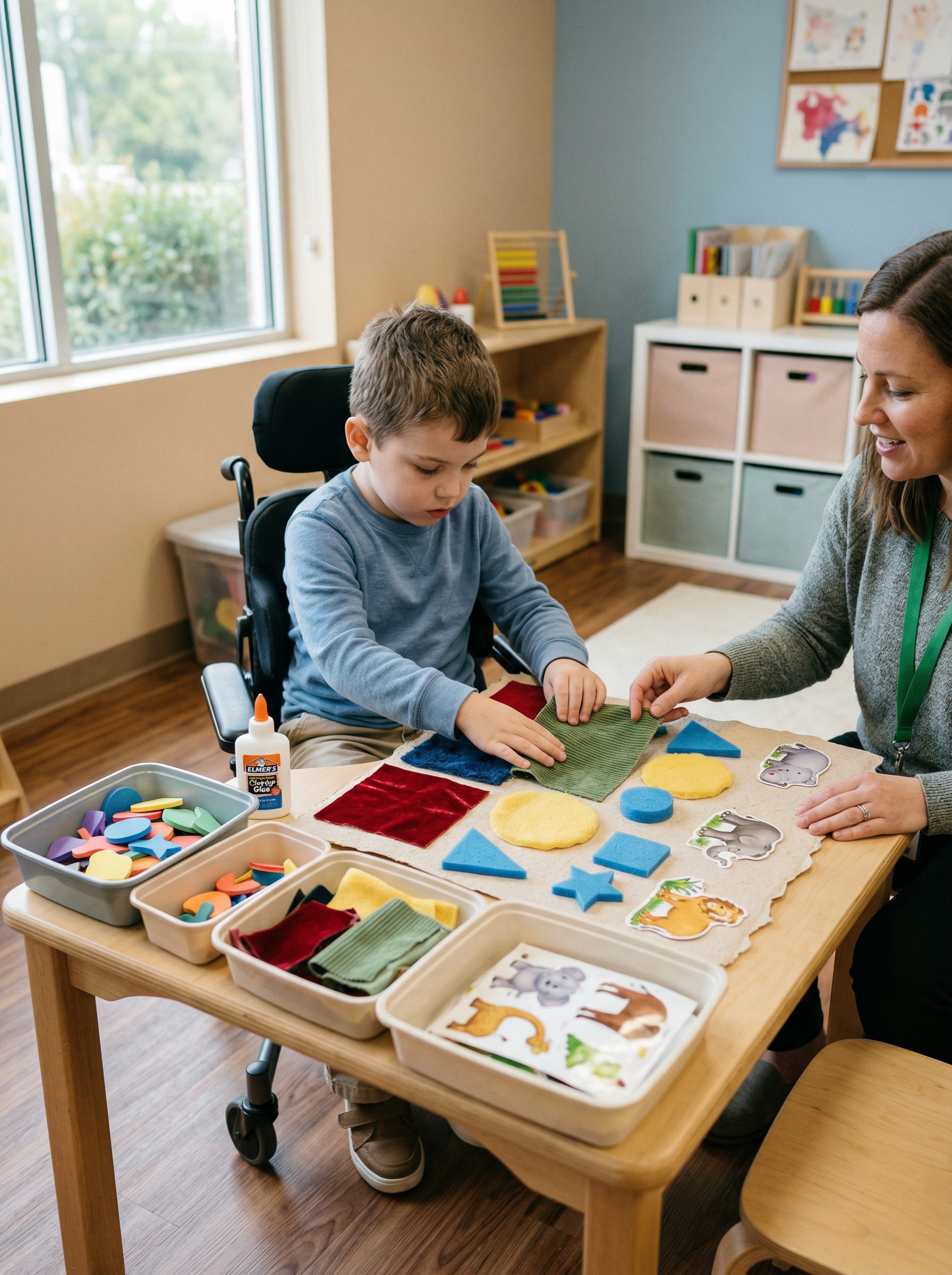
Sensory collage in action: large materials, minimal grip demand, and a supportive facilitator make this one of the most accessible craft activities for individuals with Rett syndrome.
2. Sponge Painting
Materials: Large sea sponges or cut foam sponges, washable tempera paint in trays, large paper on a flat surface or easel
Adapted approach: Place sponge in palm (no gripping needed), press downward. The motion is a palm press, not a grip-and-stroke. Velcro straps can loosely attach the sponge to the hand if needed. Multiple colors in separate trays allow color choices.
Motor demand: Low. Pressing motion accessible with hand-over-hand support.
Sensory benefits: Tactile compression, visual color mixing, cause-and-effect feedback (press = color appears).
3. Contact Paper Art
Materials: Clear contact paper (shelf liner), tissue paper, leaves, fabric, foil, colored cellophane
Adapted approach: Tape contact paper adhesive-side-up on the table. Place pre-cut or torn materials within reach. The individual touches or places materials onto the sticky surface. No glue, no squeezing, no precision. A second sheet of contact paper pressed on top seals everything in a window-displayable piece.
Motor demand: Minimal. Works with open-palm touch or guided placement.
Sensory benefits: Tactile sensation of stickiness, visual light-play if held up to window, variety of textures within one activity.
4. Shaving Cream Marbling
Materials: Shaving cream (unscented), food coloring or liquid watercolors, spatula or card, watercolor paper
Adapted approach: Spread shaving cream in a tray. Drop colors onto the surface. The individual can swipe, push, or tap with their palm or a large foam block to create marble patterns. Lay paper over the surface, press, and lift for a print. The messy phase is the activity.
Motor demand: Very low — the swipe motion requires minimal precision. Palm contact is sufficient.
Sensory benefits: Cool, soft, fluffy texture; pleasant smell (if scented); visual color-blending that responds immediately to touch.
5. Finger Painting with Sensory Trays
Materials: Finger paint or washable tempera, large tray, thick paper
Adapted approach: Pour paint directly into the tray rather than on a brush. The individual touches, swirls, and moves paint with their full hand — no gripping, no tools, no precision. For individuals who resist wet textures, try dry versions: kinetic sand tracing, cornstarch mixture, or Kool-Aid playdough on a smooth tray.
Motor demand: Very low. Open-hand engagement, any movement creates art.
Sensory benefits: Heavy proprioceptive and tactile input; strong visual feedback; calming for many individuals with sensory-seeking behaviors.
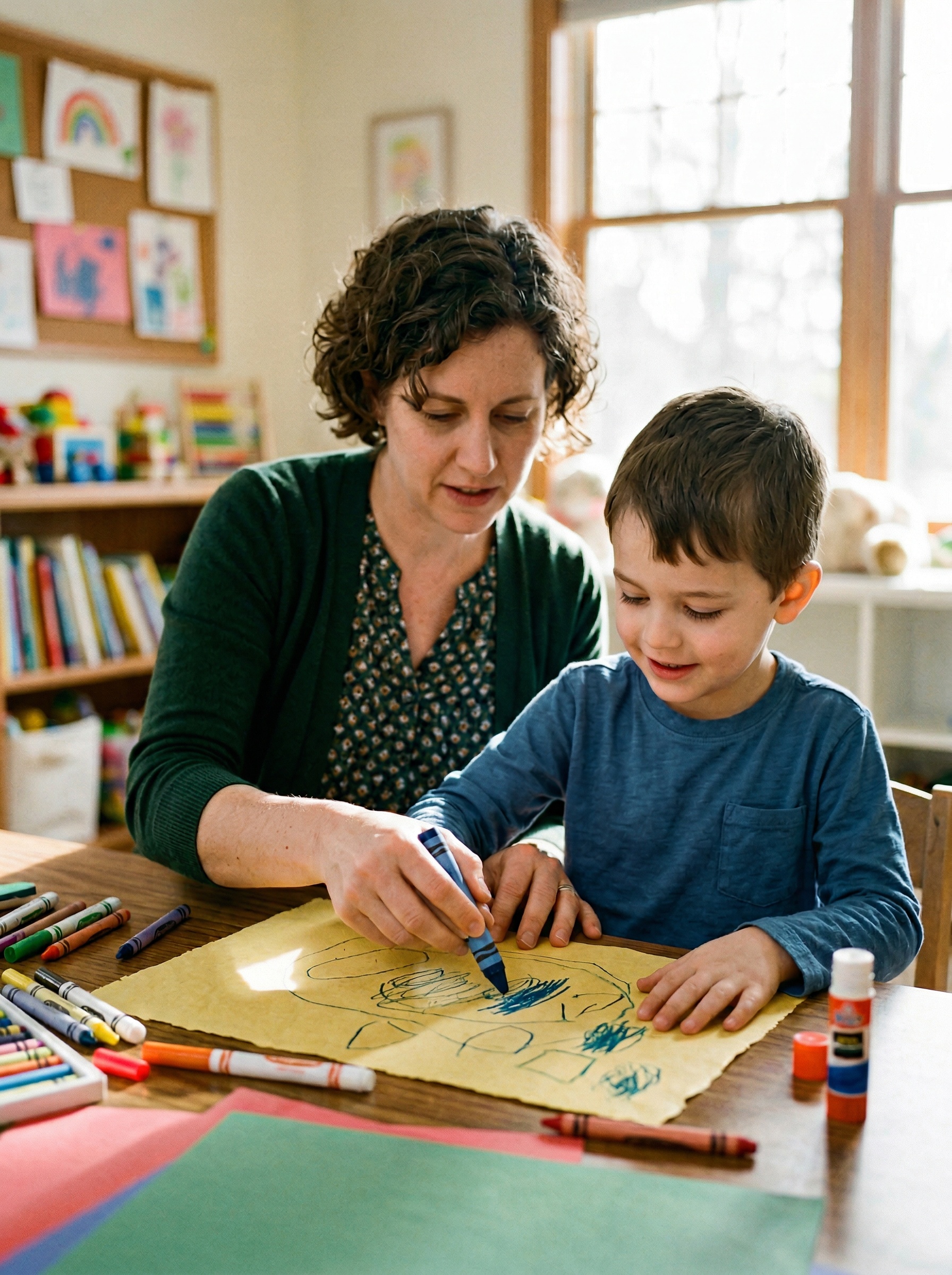
Hand-over-hand guidance during finger painting is full participation, not a workaround. The individual is directing, experiencing, and creating.
6. Sticker Art
Materials: Large dot stickers, foam stickers, or foam shapes with peel-back adhesive, cardstock or canvas
Adapted approach: Pre-peel stickers and place them on the edge of a tray or table so the individual can press them directly onto paper. This removes the peeling demand entirely. Large foam stickers are especially accessible because they require less finger dexterity to pick up and place. The resulting artwork can be layered, colorful, and genuinely striking.
Motor demand: Low. Press motion only.
Sensory benefits: Visual color selection, satisfying press-and-stick feedback, choice-making opportunity.
7. Playdough Exploration
Materials: Soft homemade or commercial playdough, optional: scents (lavender, cinnamon), textured rollers, stamps
Adapted approach: Place playdough in the individual’s hand or onto a flat surface. The activity is sensory engagement, not production. Pressing, smooshing, dropping, and poking are all valid. Scented playdough significantly increases engagement and can double as a sensory regulation tool before or after more demanding tasks.
Motor demand: Very low. Any hand contact creates change in the material.
Sensory benefits: Proprioceptive input from squeezing, olfactory stimulation, tactile variety, visual transformation.
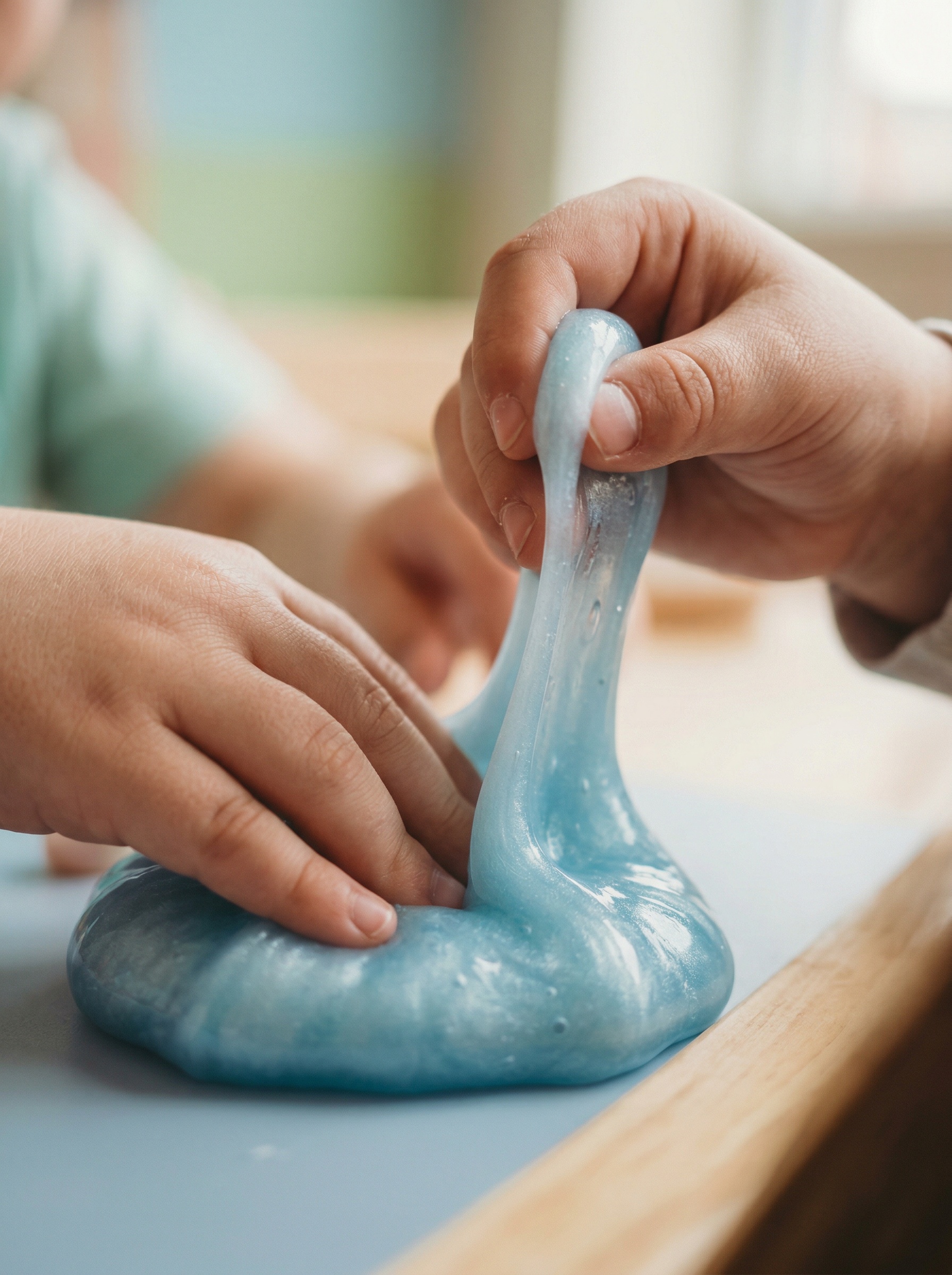
Close-contact sensory exploration with materials like slime and playdough delivers intense tactile and proprioceptive input without requiring any grip or fine motor control.
8. Textured Art Boards
Materials: Cardboard base, white glue applied by facilitator, natural materials (sand, dried flowers, leaves, bark, rice, seeds)
Adapted approach: Facilitator applies glue to sections of the board. The individual presses materials into the glue — palm pressing works. Dried flowers, seeds, and leaves offer varied textures and visual interest. The finished piece can be sprayed with a clear sealer for a tactile display piece.
Motor demand: Low to moderate. Pressing into glue requires some downward force.
Sensory benefits: Strong tactile variety, natural scents, visual complexity.
9. Water Painting on Chalkboard or Brick
Materials: Large chunky brushes or foam brushes, bowl of water, chalkboard, patio, or brick surface
Adapted approach: Dip foam brush in water and “paint” on a dark surface. The marks appear and then disappear as they dry, allowing infinite repetition. No mess, no clean-up pressure, and the cause-and-effect is immediate and satisfying. A large sponge block attached to the wrist is an alternative to the brush.
Motor demand: Low. Brush can be held loosely or attached with a soft cuff.
Sensory benefits: Cool water sensation, visual feedback (dark mark appears, then fades), repetition-friendly.
10. Nature Collage
Materials: Collected natural items (pinecones, smooth stones, acorns, bark, dried leaves), contact paper or glue board, wooden frame
Adapted approach: Collect items during a walk or outdoor session — the collection itself is part of the activity. Use contact paper base for assembly. Stones can be dropped, leaves pressed in with a palm. The finished collage connects to a real sensory experience (the walk, the textures outside).
Motor demand: Minimal. Objects can be dropped or guided.
Sensory benefits: Connection to outdoor sensory memory, varied textures and weights, visual natural palette.
11. Balloon Painting
Materials: Balloons (inflated), tempera paint in trays, large paper
Adapted approach: Dip balloon in paint, press onto paper. The balloon is easy to grip (large surface area) or can be pressed with both hands together. The resulting pattern is circular and visually interesting. The balloon’s texture and slight bounce add a tactile novelty that increases engagement.
Motor demand: Low. Two-handed press is accessible even with limited unilateral control.
Sensory benefits: Smooth rubber texture, visual surprise of print shape, proprioceptive input from pressing.
12. Marble Run Painting
Materials: Cardboard box with lid, paper to fit inside, marbles, washable paint
Adapted approach: Place paper in box lid. Add drops of paint. Drop a marble in (facilitator can assist). Tilt the box to roll the marble through paint. The individual tilts, taps, or holds the box — the marble does the painting. This is a cause-and-effect activity with strong visual feedback and low motor demand on the hands.
Motor demand: Low-moderate. Holding or tilting a box; marble can also be rolled with palm.
Sensory benefits: Visual tracking of marble movement, auditory feedback (marble rolling), unpredictable visual outcome.
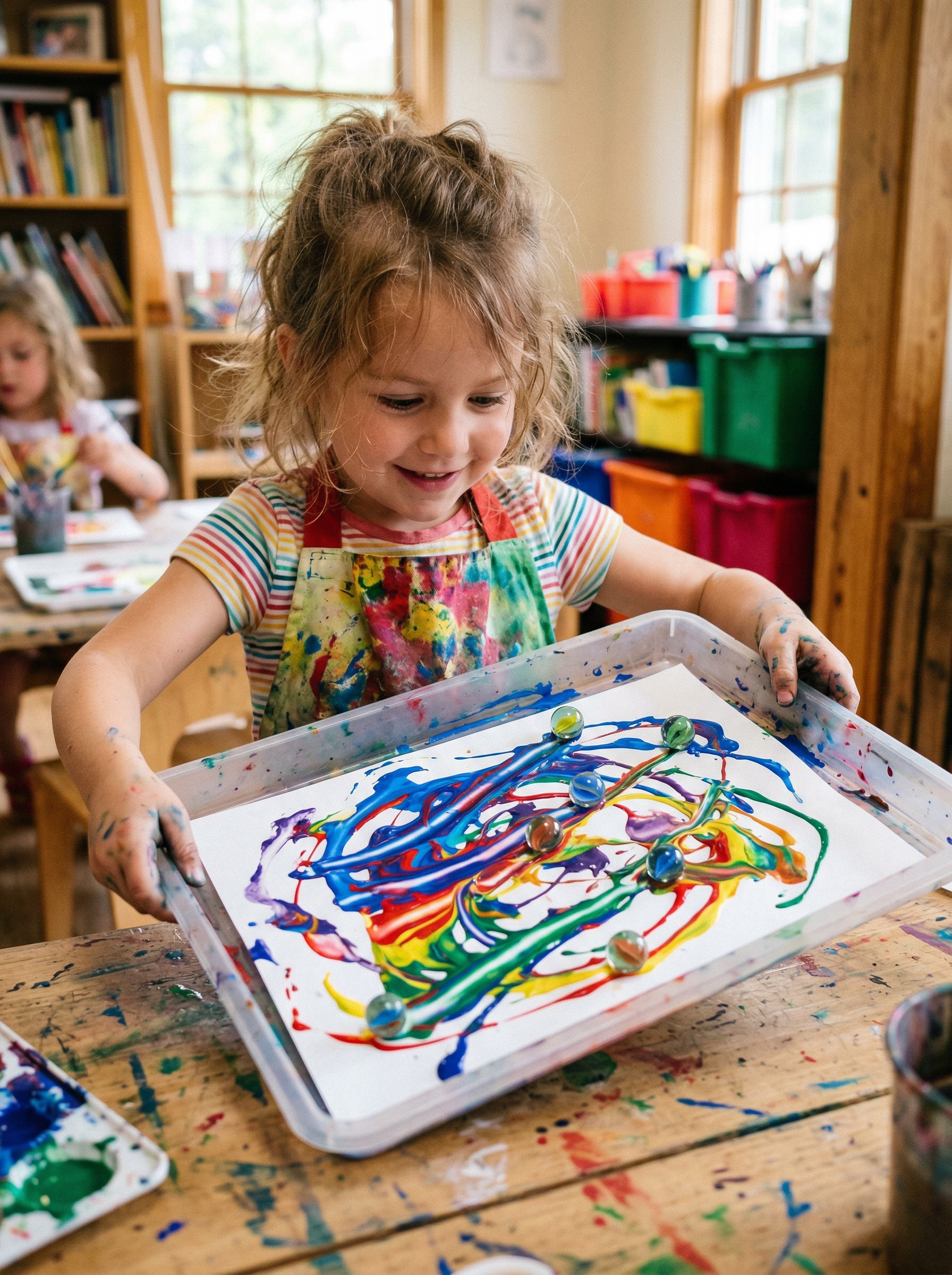
Marble run painting creates genuine art through tray movement — no fine motor control required. The child tilts, taps, and watches the marble do the work.
13. Foot or Arm Painting
Materials: Body-safe tempera paint, large paper roll, damp cloth for cleanup
Adapted approach: When hand use is very limited, foot painting or arm printing creates authentic artistic participation. The bare foot pressed into paint and then onto paper creates a unique print. Arm painting (using the inner forearm) bypasses hand stereotypies entirely. These prints are often the most treasured art pieces families display.
Motor demand: Minimal. Supported sitting or lying position; facilitator guides positioning.
Sensory benefits: Intense tactile input on foot or arm, visual immediacy, highly personal art output.
14. Light Table Exploration with Translucent Materials
Materials: LED light panel or light table, translucent color chips, colored cellophane, glass gems, transparent tiles
Adapted approach: Place materials on the light table. The individual moves, pushes, or touches items while watching color and light change. No end product required. The visual reward is immediate, bright, and responsive to even small movements. This is especially engaging for individuals with strong visual attention, which is common in Rett syndrome.
Motor demand: Minimal. Any touch or movement changes the visual field.
Sensory benefits: Strong visual stimulation, color mixing without materials touching, calming glow effect.
15. Adapted Resist Painting (Oil Pastel + Watercolor)
Materials: Large chunky oil pastels or crayons (consider loop scissors adapted grip), watercolor wash, thick paper
Adapted approach: Use hand-over-hand to create marks with a chunky oil pastel (a large rubber grip or built-up handle makes this easier). Then apply a watercolor wash over the entire surface — the pastel resists the wash and the hidden drawing appears. The “reveal” moment creates genuine excitement and engagement.
Motor demand: Moderate for pastel phase; low for wash phase (sponge or foam roller).
Sensory benefits: Waxy texture of pastel, visual surprise of reveal, wet-on-dry sensory contrast.
Adaptive Tools That Make These Activities More Accessible
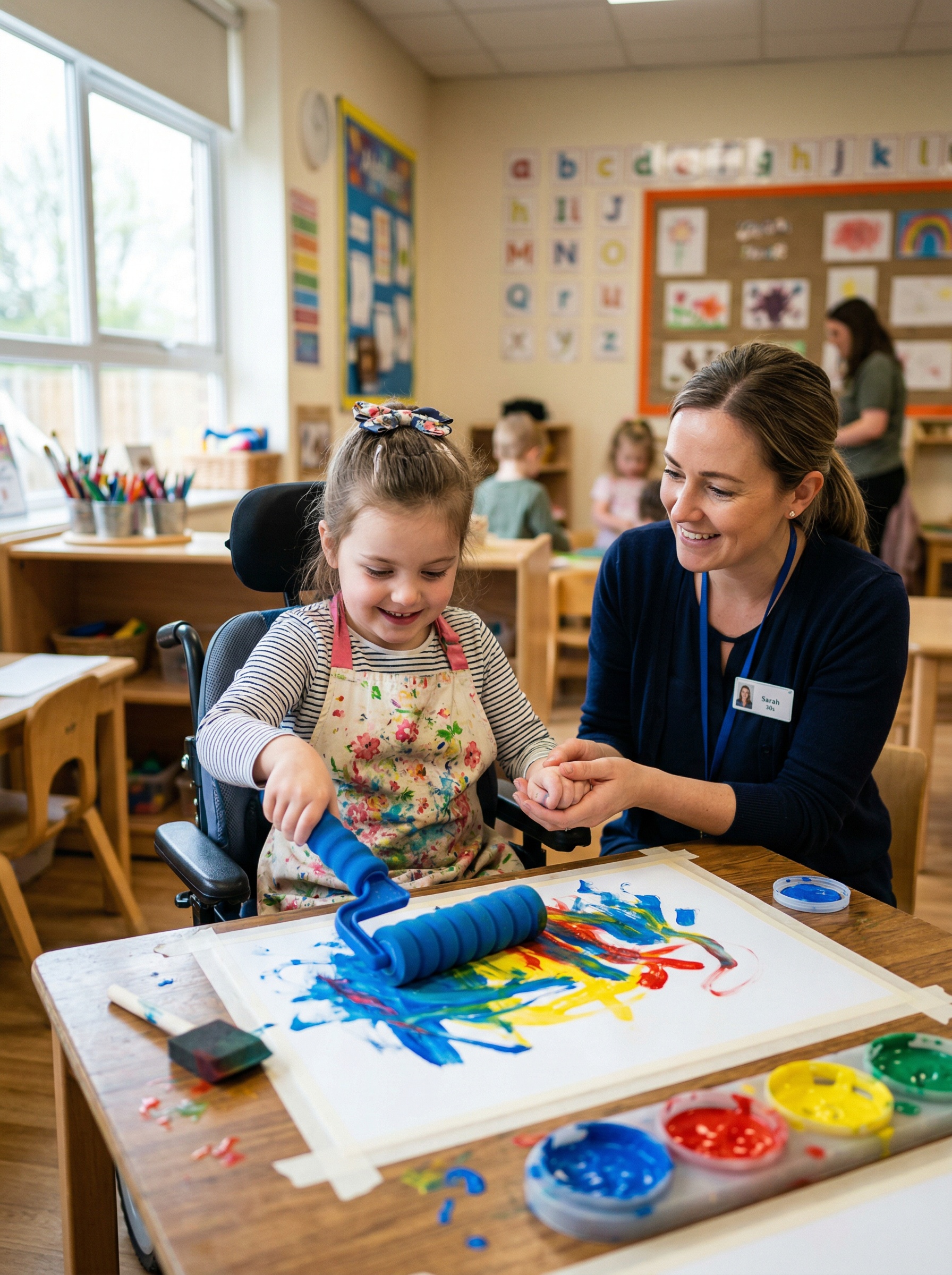
Adaptive painting tools like wide-grip brushes, wrist cuffs, and easel stands allow students with Rett syndrome to engage in creative work with meaningful support from caregivers and educators.
The right materials make the difference between a craft activity that is genuinely accessible and one that is frustrating for everyone. These tools address the specific motor profile of Rett syndrome.
| Tool | What It Addresses | Where to Use It |
|---|---|---|
| Universal cuff / hand strap | Secures tools to palm; removes grip requirement | Brushes, sponges, crayons |
| Large foam brushes (2-4 inch) | Large surface area; works with palm press | Painting, water painting, glue application |
| Built-up crayon / pencil grips | Increases diameter to require less precise grip | Coloring, pastel drawing |
| Tabletop easel or angled board | Positions work at better angle for arm movement | Painting, collage, sticker art |
| Non-slip mat (Dycem) | Prevents materials from sliding; reduces frustration | Under trays, under paper, under boards |
| Weighted wrist bands | May reduce stereotypy and increase purposeful movement | Before and during craft sessions (consult OT) |
| Contact paper / pre-adhesive surfaces | Removes glue application entirely | Collage, sticker art, texture boards |
| Spray bottles (pump type) | Full-hand pump requires less finger precision than trigger | Watercolor application, wet paper preparation |
| Foam stamps with T-bar handles | Press motion only; no grip needed | Stamp printing, pattern art |
Consult your occupational therapist before introducing weighted tools or wrist cuffs. These can be highly effective for some individuals with Rett syndrome but may not be appropriate for everyone, depending on current functional status and sensory profile.
Setting Up a Craft Session for Success
The setup is often more important than the activity itself. A poorly positioned person with the wrong materials in an overstimulating environment will not engage, regardless of how well-adapted the craft is.
Positioning first, always
Ensure the individual is seated with trunk and head support. Feet should be flat. The work surface should be at elbow height or slightly above to allow arm movement without shoulder elevation. An adaptive chair with lateral trunk support significantly increases available arm movement for many individuals with Rett syndrome.
Timing matters
Schedule craft activities after a calm period, not after high-demand therapeutic work or transitions. Most individuals with Rett syndrome have better availability for voluntary movement in the morning. Afternoon sessions may work for sensory-exploration activities (which are less demanding) but may be less appropriate for activities requiring even minimal hand use.
Keep sessions short and meaningful
Fifteen to twenty minutes is often the sweet spot. Ending while the person is still engaged is better than continuing until fatigue sets in. A positive ending creates positive associations that support future sessions.
Reduce auditory background noise
Background television or loud music competes with the sensory experience of the craft itself and can trigger dysregulation. Calm, predictable sound environments (or quiet music chosen by the individual via eye gaze) support focus and engagement.
Sensory Benefits by Activity Type
| Craft Type | Tactile Input | Visual Feedback | Proprioceptive | Calming or Alerting |
|---|---|---|---|---|
| Shaving cream marbling | High (cool, soft) | High (immediate color) | Moderate | Calming |
| Finger painting | High (wet, textured) | High | High (pressing) | Alerting to calming |
| Contact paper collage | Moderate (varied textures) | Moderate-High | Low | Calming |
| Playdough exploration | High (pressure, texture) | Low-Moderate | High (squeezing) | Calming |
| Light table exploration | Low (smooth surface) | Very High | Low | Calming |
| Water painting | Moderate (cool, wet) | Moderate (mark appears) | Moderate | Calming |
| Foot/arm printing | Very High | High | High | Alerting |
| Sponge painting | Moderate | High | Moderate-High | Alerting to neutral |
If you are using craft activities as part of a sensory regulation routine, lead with calming activities (shaving cream, playdough, light table) and use alerting activities (foot printing, finger painting) when you want to increase arousal and engagement. Always observe the individual’s response and adjust accordingly.
Connecting Craft Activities to IEP Goals
For students with Rett syndrome receiving special education services, craft activities are not extracurricular. They are intervention opportunities. Many IEP goals connect directly to adapted craft work.
- Fine motor / reaching goals: Reaching toward materials, sustaining contact with a surface, releasing objects with intent
- Communication and choice-making: Using eye gaze to select a color, using AAC to request more/stop, indicating preferences during activity
- Sensory processing goals: Tolerating tactile materials, sustaining engagement in sensory activities for X minutes, transitioning out of craft without behavioral dysregulation
- Engagement and participation: Maintaining visual attention to activity, demonstrating positive affect during creative work
Document craft sessions with photos and brief observational notes. Over time, this data tells a meaningful story about preferences, tolerances, and progress that supports IEP planning. For guidance on writing IEP goals tailored to complex motor profiles, the special education glossary includes definitions for key terms (AAC, sensory processing, apraxia) that often appear in Rett-related IEPs. For families navigating the medical side, the Rett Syndrome Research Trust maintains an updated resource library on current research and daily living strategies.
Frequently Asked Questions
Can individuals with Rett syndrome do crafts independently?
Some individuals, particularly those in earlier stages or with milder motor involvement, can engage with certain craft activities with minimal support. Most will need some degree of hand-over-hand guidance, positioning support, or facilitator assistance for material preparation. Independent participation is not the goal — meaningful engagement is. Hand-over-hand craft participation is genuine creative expression.
What is the best time of day for craft activities with someone with Rett syndrome?
For activities involving any voluntary hand use, morning sessions after a calm period tend to work best. Many individuals with Rett syndrome have higher alertness and motor availability in the first half of the day. Sensory exploration activities (playdough, light table, shaving cream) can be more flexible and may also serve as regulation tools before transitions.
How do I adapt crafts for someone with very severe hand limitations?
Focus entirely on activities that do not require hand use: foot printing, arm printing, light table exploration with visual tracking only, and activities where the facilitator does the motor work while the individual directs through eye gaze or facial expression. The person is still making creative choices — they are just directing rather than executing.
Are there occupational therapy benefits to craft activities for Rett syndrome?
Yes. Adapted craft activities support goals in sensory processing, upper limb engagement, reaching and grasping, and sustained attention. Occupational therapists working with individuals with Rett syndrome often incorporate adapted art activities into treatment plans specifically because they provide meaningful sensory input and motivation. Always share planned activities with the treating OT to ensure they align with current therapeutic goals and any contraindications.
Where can I find more resources on Rett syndrome and motor activities?
The International Rett Syndrome Foundation, Rett University, and the Rett Syndrome Research Trust all publish evidence-based resources for families and educators. The American Occupational Therapy Association (AOTA) also has resources on adapting activities for complex motor disabilities.