
The hidden profile, the exhausted masker, the “gifted but struggling” student and what parents and educators need to know to finally get it right.
1. Why Autism in Girls Is So Frequently Missed
For most of autism research history, the condition was studied almost exclusively in boys. The diagnostic criteria that emerged from that research, codified through the DSM and ICD, reflect a male-typical presentation of autism. Girls whose autism looks different from those criteria are systematically overlooked, misdiagnosed, or told they cannot be autistic because they make eye contact, have friends, or are doing well in school (Lai et al., 2023).
The consequences of this diagnostic gap are severe and well-documented. The average age of autism diagnosis for girls is significantly later than for boys, and many autistic girls receive incorrect diagnoses of anxiety, depression, eating disorders, borderline personality disorder, or ADHD before their autism is identified, if it ever is (Duvekot et al., 2017). Across all studies, autistic girls are diagnosed on average two to five years later than their male peers.
The diagnostic gap is not because girls are less autistic. It is because the clinical tools used to identify autism were not designed with female presentations in mind, and because clinicians are trained to look for a profile they were taught is more common in boys: restricted interests in objects and systems, poor social skills, obvious communication differences, and visible behavioral rigidity. These features exist in autistic girls, but they are expressed, managed, and concealed differently (Hull et al., 2020).
Autism diagnostic criteria were built on research conducted almost entirely with white, male participants. The result is a clinical picture of autism that was never designed to capture the breadth of the autistic experience, particularly for girls, women, and anyone whose presentation diverges from that narrow original template.
2. The Masking Phenomenon: What It Is and What It Costs
Masking, also called camouflaging, is the process by which autistic individuals conceal, suppress, or compensate for their autistic traits in order to appear neurotypical and avoid social consequences. It is not a deliberate performance in most cases. It is an automatic, exhausting, often unconscious adaptation to a world that consistently signals that the authentic autistic self is unwelcome (Pearson & Rose, 2021).
While masking occurs across genders, research consistently shows that autistic girls and women mask more extensively, more effectively, and at greater personal cost than autistic boys and men. This is in part because girls face more intense socialization pressure around social conformity from early childhood, and because the social expectations placed on girls more closely resemble what many autistic girls naturally study and imitate (Tierney et al., 2016).
How Masking Works: Inside vs. Outside
The Cost of Masking
Masking is not a coping skill. It is a survival strategy with a significant neurological and psychological cost. Research by Cassidy and colleagues (2020) found that autistic women who mask extensively show dramatically elevated rates of suicidal ideation compared to autistic women who mask less. The constant cognitive and emotional load of performing neurotypicality produces what researchers describe as “autistic burnout”: a state of profound physical, cognitive, and emotional exhaustion that can last months or years (Raymaker et al., 2020).
Sudden withdrawal from friends and activities previously enjoyed / Dramatic increase in meltdowns at home after periods of apparent success at school / Inability to do tasks previously managed independently / Regression in skills (speech, self-care, executive function) / Sleeping excessively or not at all / Refusing school without being able to articulate why / Loss of connection to previously meaningful special interests
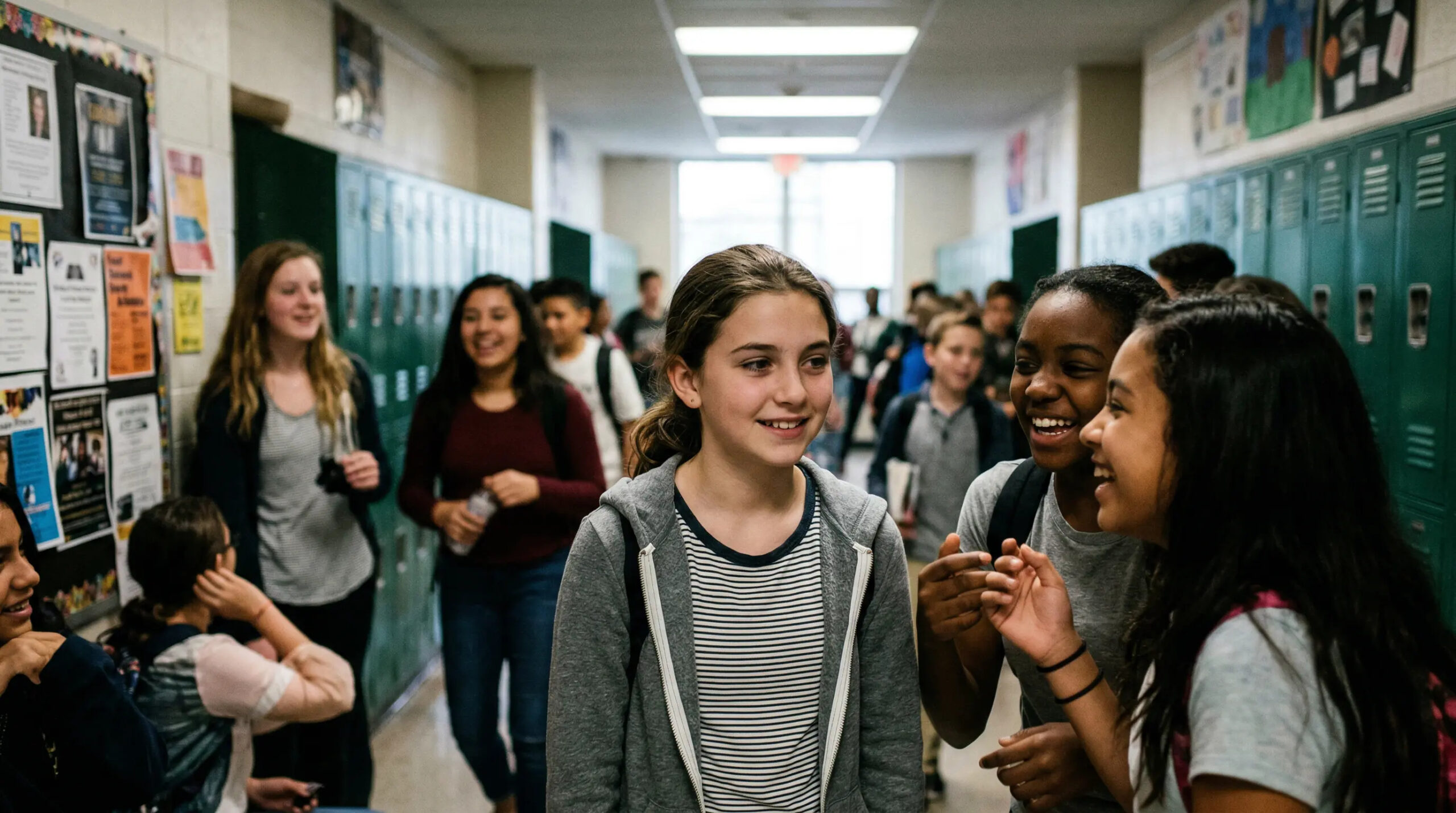
“She seemed fine at school all day. We had no idea.” This sentence, repeated by thousands of parents after an autistic daughter’s crisis, is not a mystery. It is masking working exactly as it was forced to work. Adapted from Hull et al., 2020
3. How Autism Actually Presents in Girls: The Real Signs
The following signs are not replacements for formal diagnostic criteria. They are the clinically recognized female-typical patterns that are frequently absent from standard diagnostic checklists but appear consistently in the research and clinical literature on autistic girls (Cridland et al., 2014; Lai et al., 2023).
Social Profile
- Appears sociable but friendships are shallow, fragile, or based on proximity rather than genuine connection
- Tends to have one intense friendship rather than a social group; devastated by its loss
- Mimics the social behavior of peers with precision — scripts interactions by watching others first
- Overwhelmed in group social situations; retreats to one-on-one or adult company
- Can appear mature and articulate but misses subtext, sarcasm, and unstated social rules
- May be described as “naive,” “too trusting,” or “a target for other kids” by teachers
Special Interests
- Intense, absorbing interests that others may not find unusual in their topic (animals, books, a celebrity, a TV show, history, fashion)
- The intensity and depth of the interest, not the subject itself, is the diagnostic marker
- May be described as “obsessed” or “too much” by peers when she talks about her interests
- Uses her interest as a regulatory tool — retreats to it when overwhelmed
- May have collected detailed knowledge and can hold lengthy monologues on her topic
Emotional and Sensory Profile
- Experiences emotions very intensely but may struggle to identify or name them (alexithymia)
- Delayed emotional processing — the meltdown happens hours after the triggering event
- Significant sensory sensitivities, particularly to clothing textures, food, sound, and light
- Extreme reaction to perceived injustice or unfairness, often described as “too sensitive”
- Holds it together publicly and collapses at home — “the after-school restraint collapse”
- Perfectionism and extreme fear of failure, often misread as anxiety or personality trait
Executive Function and Learning
- Uneven academic profile: exceptional in some areas, significantly behind in others
- Difficulties with organization, transitions, and open-ended tasks despite apparent ability
- May go unnoticed academically because she works very hard to compensate and appear capable
- Homework often takes three times as long as it should due to perfectionism and processing differences
- Struggles with group work, class discussions, and any task with unclear expectations
4. Girls vs. Boys: A Diagnostic Comparison
The following table is not a statement that all autistic boys present one way and all autistic girls present another. Autism is deeply individual. This comparison reflects the research-documented statistical patterns in presentation that lead to girls being systematically underidentified when clinicians apply a male-typical template (Lai et al., 2023).
| Feature | More Common in Girls | More Common in Boys |
|---|---|---|
| Social interaction | Appears socially motivated; scripted but socially engaged | More visibly withdrawn or disinterested in peers |
| Special interests | Socially acceptable topics (animals, celebrities) at extreme depth | Unusual, narrow, or system-based topics (trains, coding, numbers) |
| Masking | Extensive, automatic, exhausting — often invisible to teachers | Less camouflaging; autistic traits more visible in social contexts |
| Emotional expression | Internalizing: anxiety, depression, self-blame, eating disorders | Externalizing: behavioral outbursts, hyperactivity, meltdowns in public |
| Diagnosis received first | Anxiety, depression, OCD, ADHD, eating disorder, BPD | ADHD, autism identified earlier and more directly |
| School presentation | “Struggling but trying hard” — accommodated informally | More likely to be referred for assessment through behavior |
| After-school behavior | Extreme meltdown at home after holding together all day | More consistent presentation across home and school |
“She can’t be autistic, she has friends” and “she makes eye contact” and “she’s doing well academically” are not evidence against autism. They are evidence of masking. Social ability, eye contact, and academic performance in girls do not rule out autism. They must be interpreted alongside internal experience, sensory profile, and after-school presentation.
5. The Mental Health Toll of Late and Missed Diagnosis
Late-identified autistic girls accumulate years, sometimes decades, of experiences that shape their mental health in measurable ways. Years of not understanding why they feel different. Years of trying harder and still failing socially. Years of being told they are “too sensitive,” “too intense,” or “too much.” Years of performing neurotypicality at full cognitive cost every single school day (Camm-Crosbie et al., 2019).
The mental health outcomes for unidentified autistic girls are among the most concerning in developmental psychology. Studies consistently show dramatically elevated rates of anxiety disorders, depressive disorders, eating disorders, self-harm, and suicidal ideation compared to both neurotypical girls and autistic boys (Cassidy et al., 2020).
Anxiety disorders
Present in up to 84% of autistic girls. Often misread as primary disorder when it is actually a symptom of unmet autistic need and chronic masking load.
Eating disorders
Autistic girls are significantly overrepresented in eating disorder clinics. Restrictive eating often connects to sensory sensitivities, demand avoidance, or need for control.
Depression
Chronic social exhaustion, repeated social failure despite immense effort, and identity confusion produce high rates of clinical depression in unidentified autistic girls.
Self-harm
Used as a regulation strategy when no other tools are available or understood. Often begins in adolescence when masking demands intensify dramatically.
Autistic burnout
A distinct state of profound exhaustion following extended masking. Can cause regression in skills, complete withdrawal, and inability to function in daily life.
Identity disruption
Girls who have masked extensively often do not know who they are beneath the performance. Late diagnosis can trigger deep identity reconstruction work.
The most consistent finding across the mental health literature is this: identification and appropriate support dramatically improve outcomes. Autistic girls who receive accurate diagnosis and genuine accommodation report significantly better quality of life, stronger self-concept, and lower rates of secondary mental health conditions (Cage & Troxell-Whitman, 2019).
6. The School Experience for Autistic Girls
School is simultaneously the place where autistic girls often perform most convincingly and the place where they are most profoundly exhausted. The masking required to navigate a full school day, from the hallways to the cafeteria to group work to unstructured lunch, produces a cognitive and emotional load that few neurotypical people would recognise as effort, because the girl sitting in class looks fine (Tierney et al., 2016).
What teachers often see is a diligent, well-behaved, perhaps slightly anxious student. What is happening internally is a constant background process of social monitoring, rule-checking, script-retrieval, sensory management, and identity performance. By 3:00 PM, many autistic girls have nothing left.
What Goes Wrong at School
Group work — unpredictable, socially complex, and dependent on skills that are genuinely difficult for many autistic girls.
Unstructured social time — lunch, recess, and free periods are often the most distressing parts of the day, hidden beneath apparent social participation.
Open-ended assignments — “write about anything you like” produces paralysis when executive function and perfectionism combine.
Public speaking and presentations — performance demands in front of peers trigger intense anxiety even in girls who appear confident.
Transition points — moving between classes, teachers, buildings, and school years is acutely difficult and rarely accommodated.
Being described as “fine” — the most dangerous school experience for an autistic girl is being too good at masking for anyone to intervene.
What Helps at School
Designated safe person
One trusted adult who checks in daily, who the student can access without explanation, and who advocates within the school system.
Structured social support
Lunch clubs, interest-based activities, structured peer interaction — anything that reduces the unpredictability of unstructured social time.
Sensory accommodations
Seating away from high-traffic areas, noise-cancelling headphones, lighting adjustments, and alternative routes through busy hallways.
Explicit social information
What is expected, when, and why. Autistic girls often cannot read implicit expectations that neurotypical peers absorb automatically.
Alternative to group work
Individual projects, paired work with a chosen peer, or adult-supervised small groups as consistent alternatives to standard group assignments.
Recognition of masking fatigue
Teachers should know that a student who appears calm at 2:30 PM may be in crisis by 3:05. Post-school communication with parents matters.
7. IEP Supports and School Accommodations
An IEP for an autistic girl must account for the invisible nature of her experience at school. Goals and accommodations that are appropriate for a visibly struggling student may be entirely missed for a girl whose primary struggle is the cost of appearing fine. The IEP team needs to understand masking, after-school collapse, and the mismatch between school performance and genuine wellbeing.
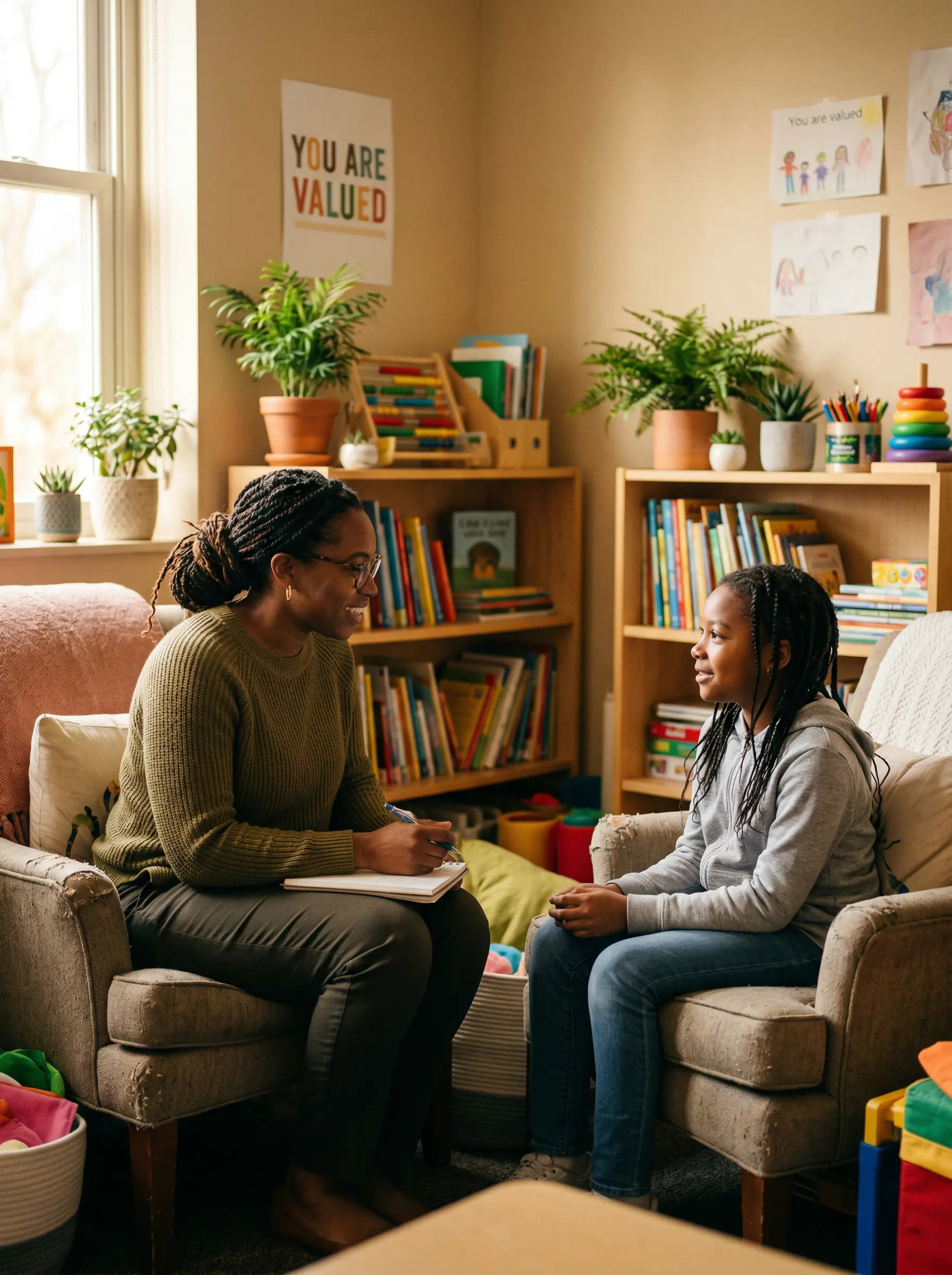
Essential IEP Accommodations
- Access to a designated safe space during sensory or social overload, with no questions and no consequences for use
- Reduced group work requirements, with individual or small-group alternatives documented in the plan
- Flexible homework expectations — particularly important given the after-school collapse pattern
- Written instructions for all multi-step tasks provided in advance
- Extended processing time for all assessments — autistic girls frequently know more than timed tests reveal
- Advance notice of schedule changes, substitute teachers, and transitions
- Alternative assessment options for presentations and group-based tasks
- Regular check-ins with trusted adult (brief, structured, not interrogative)
- Sensory accommodations across all environments, including hallways, cafeteria, and physical education
- Student included in IEP development with genuine choice about accommodation preferences
- Communication plan between school and home that flags early warning signs of burnout
Avoid goals that increase performance pressure or target masking as a deficit to remediate. Focus on genuine wellbeing, self-advocacy, and skill-building in authentic low-pressure contexts. Example: “Student will identify and communicate one sensory need to her designated support person once per week.” Not: “Student will increase eye contact during class discussions.”
Never include goals that target eye contact, social performance, or “appropriate emotional expression” as outcomes. These goals increase masking, erode authentic identity, and are associated with worse long-term mental health outcomes. The goal of support is reduced suffering, not improved performance of neurotypicality.
8. Case Studies: Three Girls, Three Paths
Nadia, 9: “The Perfect Student” Who Fell Apart at Home
Nadia’s teacher describes her as one of the most cooperative and capable students in the class. Her parents describe an entirely different child at home: explosive meltdowns lasting up to two hours every evening, inability to manage basic routines after school, and intense distress about friendships that “seem fine” at school but consume her at home. Her parents are told repeatedly she cannot be autistic because “she’s doing so well.”
After a comprehensive assessment that specifically sought information from parents about the after-school experience, Nadia received an autism diagnosis. Her IEP included a 30-minute decompression period immediately after school before any demands were introduced at home. School accommodated her by reducing group work and providing written instructions in advance. Her parents stopped trying to “discuss” the meltdowns during them and began co-regulation strategies. Within three months, the evening meltdowns had reduced from daily to twice weekly. Nadia described feeling “like someone finally believed me.”
Sofía, 13: Anxiety Diagnosis, Three Years, No Improvement
Sofía has been treated for generalized anxiety disorder since age 10. She sees a therapist weekly and is on medication. Her anxiety has not improved. She has recently developed restrictive eating patterns and refuses to attend school more than three days per week. Her therapist refers her for autism assessment after noticing patterns inconsistent with primary anxiety.
Autism assessment identified a clear autistic profile with extensive masking. Sofía’s anxiety was reconceptualized as a symptom of unmet autistic needs rather than a primary disorder. Her therapy shifted to autistic-identity work and self-advocacy skill building. The eating restriction was identified as connected to sensory sensitivities around food texture and was addressed through OT rather than eating disorder protocols. Her school attendance plan was rebuilt around genuine accommodations rather than graduated exposure. Within six months she was attending four days per week and described feeling “less crazy” for the first time.
Imani, 16: Burnout and Complete Withdrawal
Imani was a high-achieving student who, at the start of Year 11, stopped being able to go to school, complete schoolwork, or maintain her previous friendships. She sleeps 12-14 hours per day. She has lost interest in the book series she has collected since age seven. Her family describes a “complete personality change.” She was diagnosed with depression and did not respond to treatment.
A late autism diagnosis at 16 identified that Imani had been masking extensively for her entire school career and had entered autistic burnout. The primary intervention was radical demand reduction: no school, no expectations, no recovery timeline imposed. Her family provided unconditional presence without performance pressure. After four months of genuine rest, Imani began reconnecting with her books. She gradually returned to education through a flexible remote learning program. Her educational plan was rebuilt entirely around her own identified needs. She has since described her diagnosis as “the most important thing that ever happened to me.”
9. Talking to Your Daughter About Her Diagnosis
How an autistic girl first learns about her diagnosis shapes how she understands herself for years. A diagnosis delivered with stigma, ambivalence, or excessive focus on deficits can compound the shame many autistic girls already carry. A diagnosis delivered with honesty, warmth, and genuine affirmation can be profoundly transformative.
Lead with her strengths
Begin with what autism means for who she already is: her depth of interest, her loyalty, her perceptiveness, her ability to think differently.
Explain the masking
“You’ve been working incredibly hard to fit in, and that’s exhausting. You don’t have to keep doing that with us.” This can be life-changing to hear.
Let her lead the pace
Some girls want to talk for hours. Others need days to process alone. Both are valid. Follow her lead on how much, how quickly, and in what direction.
Connect her to autistic community
Finding other autistic girls, through books, YouTube channels, social media communities, or groups, can provide the “I’m not alone” experience that changes everything.
Name the injustice honestly
Many girls feel angry that they were missed. That anger is valid. Acknowledge that the system failed her and that the diagnosis was long overdue.
Revisit the conversation
Understanding develops over time. One conversation is not enough. Keep the door open and revisit as she moves through adolescence and builds her identity.
10. Trusted External Resources
Cambridge ARC: Female Autism Research
Lai, Hull, and colleagues publish leading research on the female autism phenotype and masking. Access peer-reviewed papers directly.
Visit Cambridge ARCAWN Network: Community & Advocacy
The leading US community organization for autistic women and nonbinary individuals. Resources, webinars, and peer support.
Visit AWN NetworkGirls and Women on the Spectrum
An accessible overview of the female autism profile, diagnostic differences, and support strategies for families new to the topic.
Visit Autism SpeaksWomen and Girls with Autism
European policy and research context for female autism, useful for international families and educators.
Visit Autism EuropeAutistic Women Writing Their Own Stories
First-person narratives from autistic women about diagnosis, masking, school, and identity. Invaluable for parents and for girls themselves.
Visit The MightyAutism in Girls: Educator Resources
Our full catalog of autism-informed IEP guides, accommodation templates, and educator training materials for supporting autistic girls.
Browse IEP FocusEssential Reading
- “Camouflage: The Hidden Lives of Autistic Women” (Dr. Sarah Bargiela, 2019) — the most accessible clinical and personal guide to the female autism experience.
- “Odd Girl Out” (Laura James, 2017) — a memoir of late autism diagnosis that many autistic women describe as the first time they felt understood.
- “I Think I Might Be Autistic” (Cynthia Kim) — written by an autistic woman for women questioning their own neurology.
- Hull et al. (2020), “Putting on My Best Normal” — the foundational academic paper on autistic camouflaging and its consequences. Freely available via PubMed.
- Lai et al. (2023), “Understanding Autism in Women” — current comprehensive research review. Essential for any clinician or educator.
References
- Cage, E., & Troxell-Whitman, Z. (2019). Understanding the reasons, contexts and costs of camouflaging for autistic adults. Journal of Autism and Developmental Disorders, 49(5), 1899-1911. https://doi.org/10.1007/s10803-018-03830-2
- Camm-Crosbie, L., Bradley, L., Shaw, R., Baron-Cohen, S., & Cassidy, S. (2019). “People like me don’t get support”: Autistic adults’ experiences of support and treatment for mental health difficulties, self-injury and suicidality. Autism, 23(6), 1431-1441. https://doi.org/10.1177/1362361318816053
- Cassidy, S., Rodgers, J., & Gernsbacher, M. A. (2020). Identification of suicidal ideation and intent in autistic adults: A mixed-methods study. Autism in Adulthood, 2(2), 101-113. https://doi.org/10.1089/aut.2019.0031
- Cridland, E. K., Jones, S. C., Caputi, P., & Magee, C. A. (2014). Being a girl in a boys’ world: Investigating the experiences of girls with autism spectrum disorders during adolescence. Journal of Autism and Developmental Disorders, 44(6), 1261-1274. https://doi.org/10.1007/s10803-013-1985-6
- Duvekot, J., van der Ende, J., Verhulst, F. C., Slappendel, G., van Daalen, E., Maras, A., & Greaves-Lord, K. (2017). Factors influencing the probability of a diagnosis of autism spectrum disorder in girls versus boys. Autism, 21(6), 646-658. https://doi.org/10.1177/1362361316672178
- Hull, L., Petrides, K. V., & Mandy, W. (2020). The female autism phenotype and camouflaging: A systematic review and evidence synthesis. Review Journal of Autism and Developmental Disorders, 7(4), 380-401. https://doi.org/10.1007/s40489-020-00197-9
- Lai, M. C., Anagnostou, E., Wiznitzer, M., Allison, C., & Baron-Cohen, S. (2023). Evidence-based support for autistic people across the lifespan: Maximising potential, minimising barriers, and optimising the person-environment fit. The Lancet Neurology, 22(5), 433-446. https://doi.org/10.1016/S1474-4422(23)00049-7
- Pearson, A., & Rose, K. (2021). A conceptual analysis of autistic masking: Understanding the narrative of stigma and the illusion of choice. Autism in Adulthood, 3(1), 52-60. https://doi.org/10.1089/aut.2020.0043
- Raymaker, D. M., Teo, A. R., Steckler, N. A., Lentz, B., Scharer, M., Delos Santos, A., & Nicolaidis, C. (2020). “Having all of your internal resources exhausted beyond measure and being left with no clean-up crew”: Defining autistic burnout. Autism in Adulthood, 2(2), 132-143. https://doi.org/10.1089/aut.2019.0079
- Tierney, S., Burns, J., & Kilbey, E. (2016). Looking behind the mask: Social coping strategies of girls on the autistic spectrum. Research in Autism Spectrum Disorders, 23, 73-83. https://doi.org/10.1016/j.rasd.2015.11.013


[…] PDA also presents differently across genders. Research from 2026 notes that females may be more likely to be identified or mislabeled with a PDA profile because PDA shares many features with female autism presentations, including stronger social skills and behavior differences across settings (Waizbard et al., 2025). For a deeper look at this overlap, see our article on Autism in Girls: Why It Looks Different and Why It Gets Missed. […]