Why Life Skills Outperform Academic Drilling for Long-Term Independence
Most special educators know the scenario: a student can decode text at a third-grade level but cannot independently pack a bag, navigate a hallway transition, or ask for a break without escalating. The skill hierarchy is inverted, and the cost shows up years later. A 2024 Springer review on meaningful curriculum for autistic adults found that poor adult outcomes in employment, housing, and community participation are largely attributable to inadequate preparation during the school years, not to the disability itself. The authors call for a deliberate merge of evidence-based instruction with individualized, meaningful curriculum applied to the actual complexity of students’ daily lives. Meanwhile, the CDC’s 2025 ADDM Network report now places autism prevalence at 1 in 31 eight-year-old children in the U.S., up from 1 in 36 just two years prior. That means larger caseloads, more diverse profiles, and more students whose IEP goals hinge entirely on functional, not academic, outcomes. The pressure to “keep up with grade-level content” is real, but for many autistic students in self-contained or resource settings, the highest-leverage instruction is not a reading unit. It is a life skills unit they will use every single day for the rest of their life.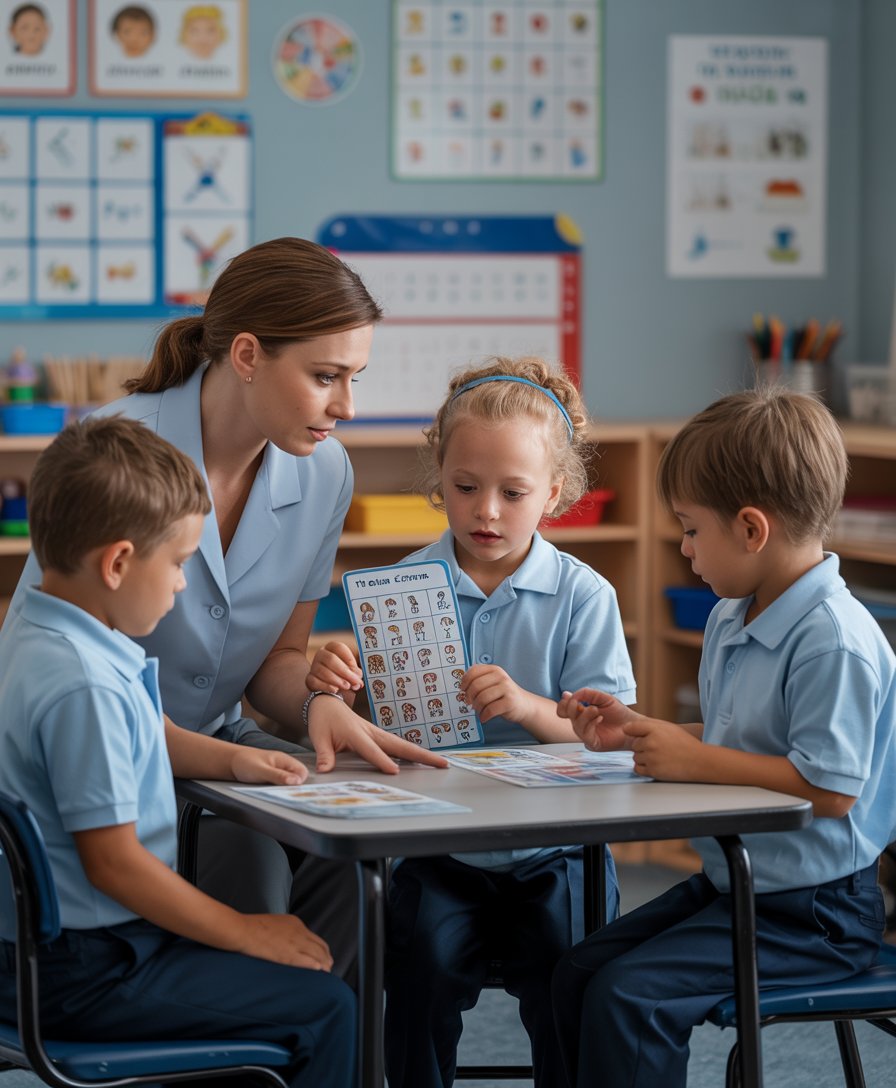
The Real Gap: What Most Curricula Get Wrong
Walk into any SPED resource room and ask a teacher what they actually use from commercial life skills curricula. The honest answer is: fragments. A worksheet here. A visual schedule downloaded from Pinterest. An activity adapted on a Sunday night. The structural problem is not a lack of content. It is a lack of classroom-ready usability. Most available resources:- Assume ample prep time that doesn’t exist during a full caseload week
- Teach skills in isolation, with no plan for real-environment transfer
- Provide materials that look structured on paper but fall apart in actual instruction
- Offer little differentiation across ability levels within the same classroom
The 6 Core Units of an Effective Life Skills Curriculum
Not all life skills carry equal urgency. The following six domains represent the highest-priority areas based on what research and experienced SPED teachers consistently identify as essential, and most underserved by existing resources.1. Daily Living Skills
Personal hygiene, dressing, basic food preparation, cleaning, and organization. These are the skills autistic students will need before they need algebra. A PMC study on pictorial self-management demonstrated that autistic students with low support needs could independently complete daily living sequences using picture-based systems, and maintain those skills at follow-up with reduced stereotypic behavior as a secondary effect. In practice: Teach one routine per week using task analysis. Post the visual steps at the point of performance (the bathroom mirror, the coat hook, the locker). Do not re-teach from the desk.2. Emotional Regulation and Self-Awareness
Identifying emotions, recognizing triggers, using calming strategies, and requesting support, these skills directly reduce behavioral crises that interrupt the entire classroom. This unit should not be a one-time lesson. It is daily infrastructure. In practice: Integrate a 5-minute emotion check-in at the start and end of every session. Use the same visual scale consistently across all staff. Neurodivergent students benefit from predictability in the tool itself, changing the format resets the learning.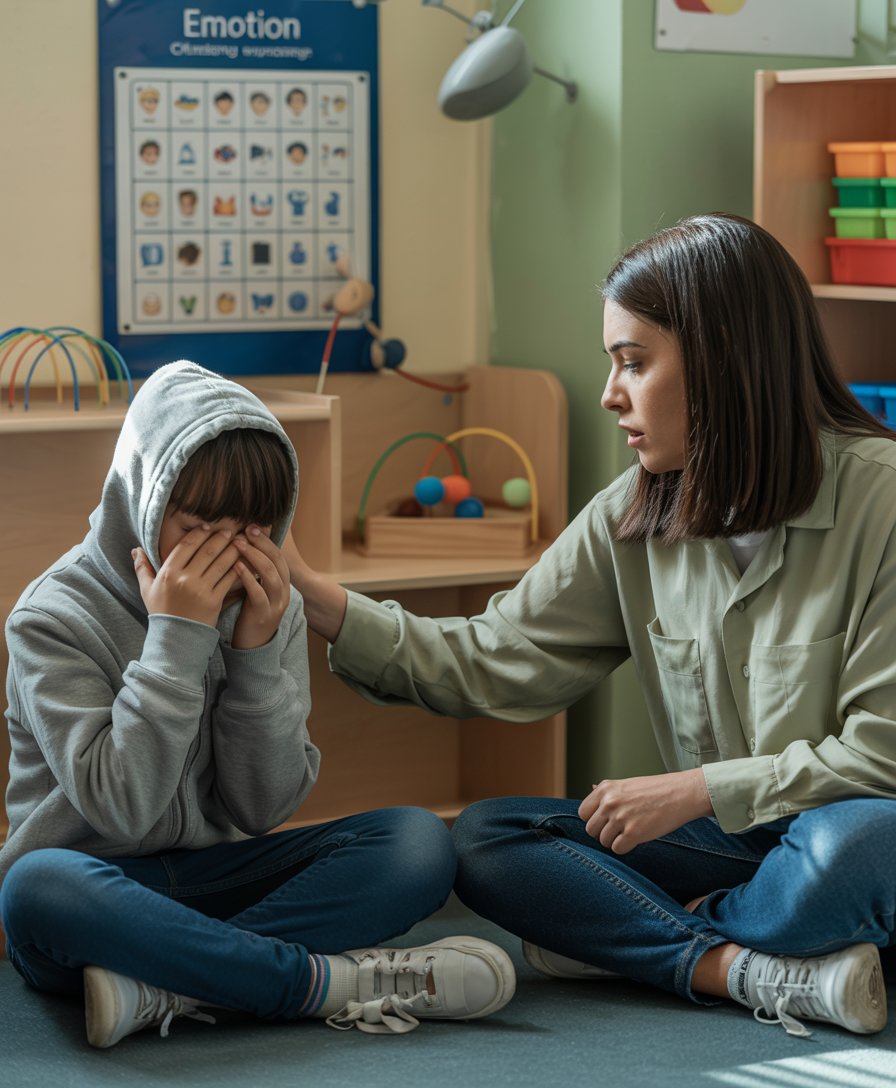
3. Social Communication Skills
Initiating conversations, taking conversational turns, understanding tone, managing proximity. A 2025 PMC study on communication and functional life skills found that visual script fading, using picture-based action sequences, significantly improved autistic students’ ability to complete functional social routines independently, with reductions in disruptive behaviors as a secondary outcome. In practice: Role-play specific high-frequency situations: asking to use the bathroom, greeting a substitute teacher, asking a peer to move over. Keep scenarios hyper-realistic and repeat them across settings.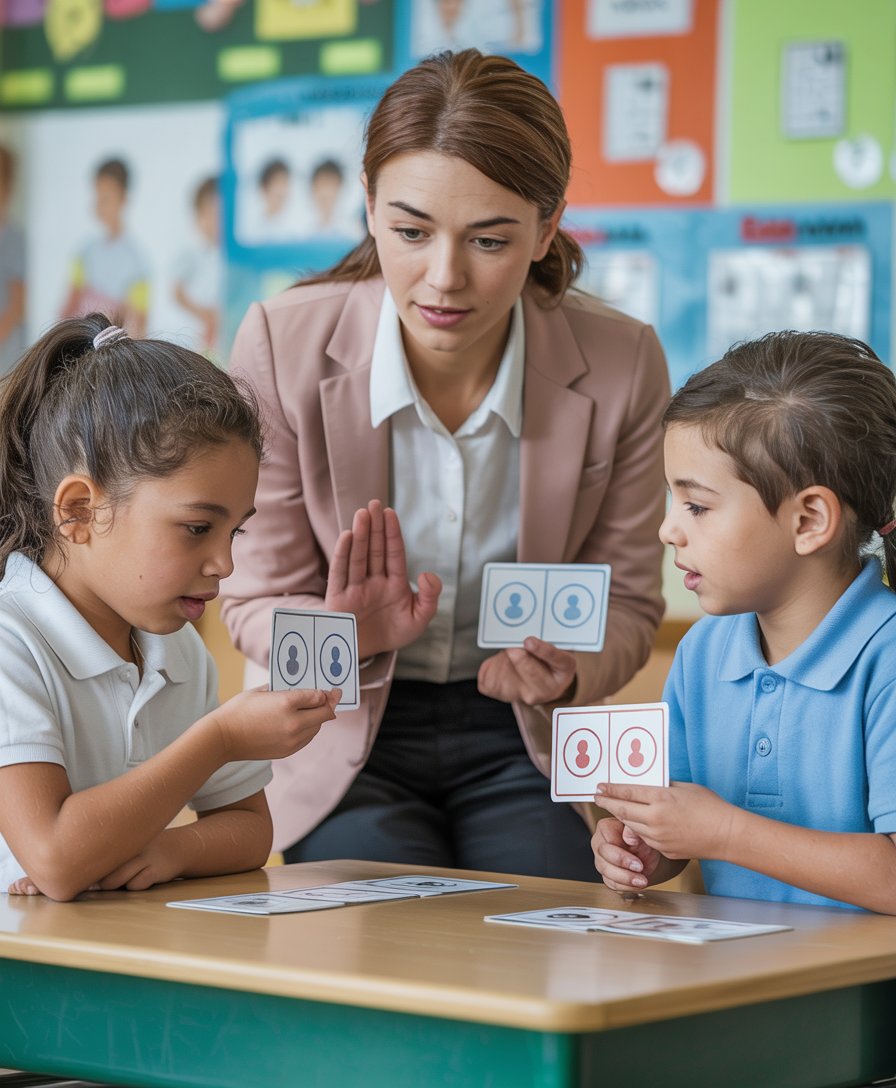
4. Functional Independence and Routine Management
Following schedules, completing multi-step tasks without prompting, managing transitions between activities. This is the skill that reduces the per-student adult supervision load, and it is the skill that most commercial curricula treat as an afterthought. In practice: Teach the routine, not just the task. A student who can wash hands but cannot transition to hand-washing without a physical prompt is not independent yet. The curriculum must address the full routine chain.5. Community and Real-World Skills
Using money, shopping, ordering food, understanding public safety. These skills cannot be fully taught in a classroom, but they must be introduced there, in simulated and structured form, before any community-based instruction occurs. In practice: Use real coins, real menus, real product labels. Authenticity of materials directly predicts transfer. A laminated worksheet of coins is not the same neurological experience as handling actual change at a pretend register.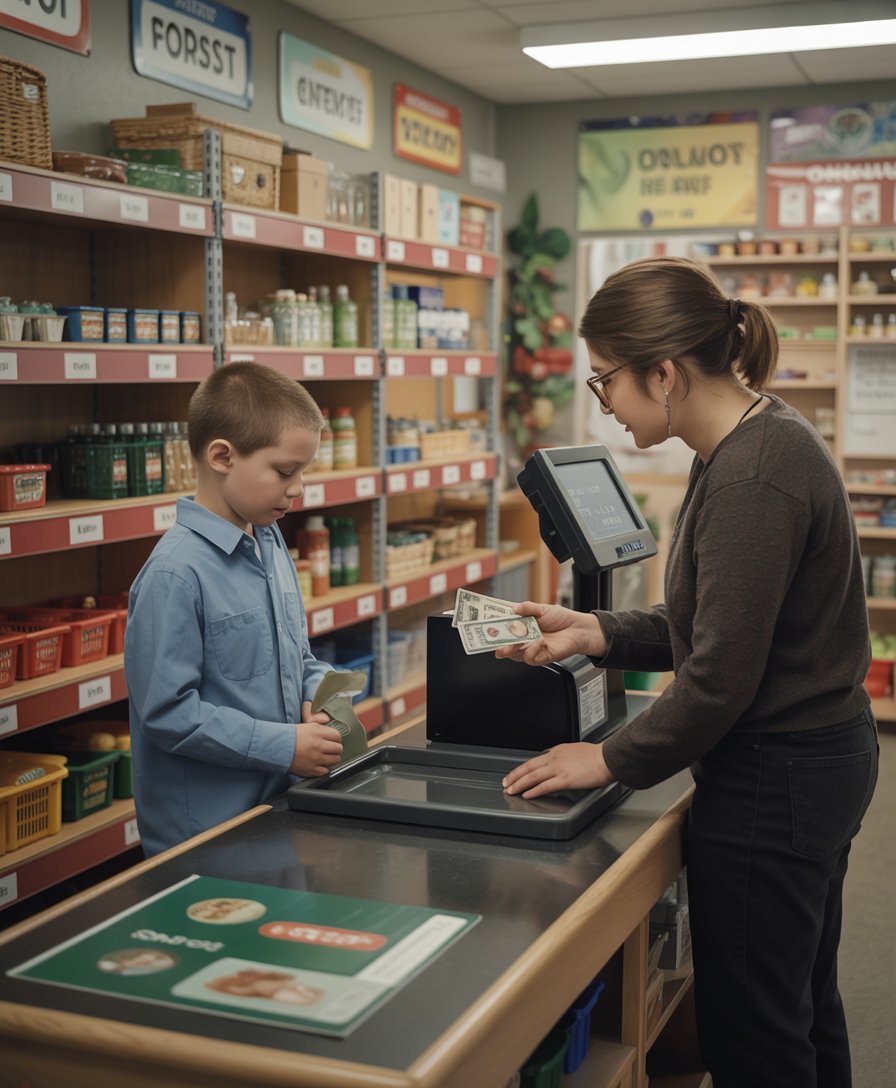
6. Self-Advocacy Skills
Expressing needs, saying no appropriately, asking for help, understanding personal boundaries. For autistic students, especially those with limited verbal output, self-advocacy is not a “bonus” unit, it is a safety skill.The BERMED Lesson Structure: A Repeatable Template for Any Unit
One of the most time-consuming problems in life skills instruction is not knowing what to teach, it is rebuilding the lesson format from scratch every time. A consistent structure eliminates that waste.- B: Brief Objective (1 sentence): State the specific observable skill being practiced today.
- E: Environmental Setup: Position the visual support at the point of performance, not on the whiteboard.
- R: Real-Object or Role-Play Practice: Use actual materials or realistic scenarios, never abstract worksheets for new skills.
- M: Modeled Demonstration: Teacher or peer models the full routine before the student attempts it.
- E: Embedded Repetition: Embed 3–5 practice opportunities within the existing day, not in an isolated block.
- D: Data Collection (30 seconds): One checkbox per target behavior, per student, per session. Quick is sustainable.
Visual Supports That Actually Reduce Dependence on the Teacher
The goal of a visual support is independence, not compliance. A visual that requires the teacher to point to it each time is not a support; it is a prompted instruction. The distinction matters for fading. Effective visual supports in a life skills curriculum share three characteristics: they are placed at the point of performance, they use the student’s actual comprehension level (not the teacher’s preference), and they are designed to be faded as mastery develops.| Visual Support Type | Best Used For | Fading Strategy |
|---|---|---|
| Visual schedule (daily) | Transitions, routine predictability | Remove items as they become automatic; shrink size over time |
| Task analysis chart | Multi-step daily living routines | Cover completed steps; move to single-word cues |
| First-Then board | Transition resistance, low-motivation tasks | Shift to verbal-only “First/Then” once pattern is internalized |
| Emotion scale (5-point) | Regulation check-ins, de-escalation | Student points independently; eventually self-reports verbally |
| Social script cards | Communication routines, greetings, requests | Fade from full sentence to key-word prompt to no card |
| Mini schedule (activity-level) | Multi-step tasks within a session | Reduce number of pictures; transition to written list |
The Generalization Problem, and How to Solve It in Your Classroom
Teaching a skill in one location to one teacher with one set of materials is not teaching a skill. It is teaching a stimulus-response chain locked to a specific context. This is the core limitation of clinic-based or pull-out-only life skills instruction. Research published in the Journal of Early Intervention (PMC, 2023) confirms that social and functional skills taught within ongoing natural routines produce significantly stronger generalization than those taught in decontextualized, pull-out settings. The mechanism is simple: skills learned in context are tagged to context-appropriate cues, which are also present during real-world use. Practical generalization strategies that work across the six core units:- Multiple adults, same skill: Have at least two different staff members implement the same life skill target, using the same visual, in the same week. Vary the person, not the procedure.
- Multiple settings, same skill: If a student learns to greet in the resource room, practice the same greeting in the hallway, at lunch, and at a community setting within 5 school days.
- Variation with consistency: Keep the objective identical but vary the materials. Use real coins one day and a store mock-up another. Use the actual school cafeteria menu instead of a printed one.
- Family loop-in: Send a one-paragraph note home describing exactly what skill the student practiced and how the family can embed it in one household routine this week.
Curriculum Comparison: What to Look For in Ready-to-Use Resources
Not all commercial life skills resources are created equal. Before purchasing or downloading, evaluate any resource against these five non-negotiable criteria.| Criterion | What to Look For | Red Flag |
|---|---|---|
| Visual density | More pictures than text; supports multiple learner profiles | Text-heavy worksheets with no visual alternative |
| Real-world connection | Activities tied to actual school/community environments | Scenarios that exist only in worksheets |
| Prep time | Print-and-use OR minimal setup; clear teacher instructions | Requires laminating, cutting, and assembling every session |
| Differentiation | Multiple ability levels within the same unit | One-size-fits-all approach |
| Data tracking | Built-in simple data collection (checkbox or frequency) | No progress monitoring component at all |
In Class, Concretely: A Week in a Functional Life Skills Routine
Here is what a well-structured life skills week actually looks like for a middle school resource room with mixed profiles (verbal autistic students, one AAC user, one student with co-occurring intellectual disability): Monday: Introduce / Re-activate: 5-minute emotion check-in (visual scale, each student self-reports). Review this week’s target skill using a modeled demonstration. Post the task analysis at the point of performance. Tuesday: Guided practice: Small group completes the skill with teacher narrating each step. Data collected on prompt level (independent, gestural, verbal, physical). Wednesday: Varied context: Same skill practiced in a different room or with a different staff member. No new instruction, same visual, same steps, new environment. Thursday: Peer-supported practice: Higher-support student partners with a more independent peer for one practice round. Teacher observes without prompting unless safety requires it. Friday: Independence check + generalization note home: Each student completes the skill independently. Teacher notes prompt level for IEP data. One-paragraph note home for families.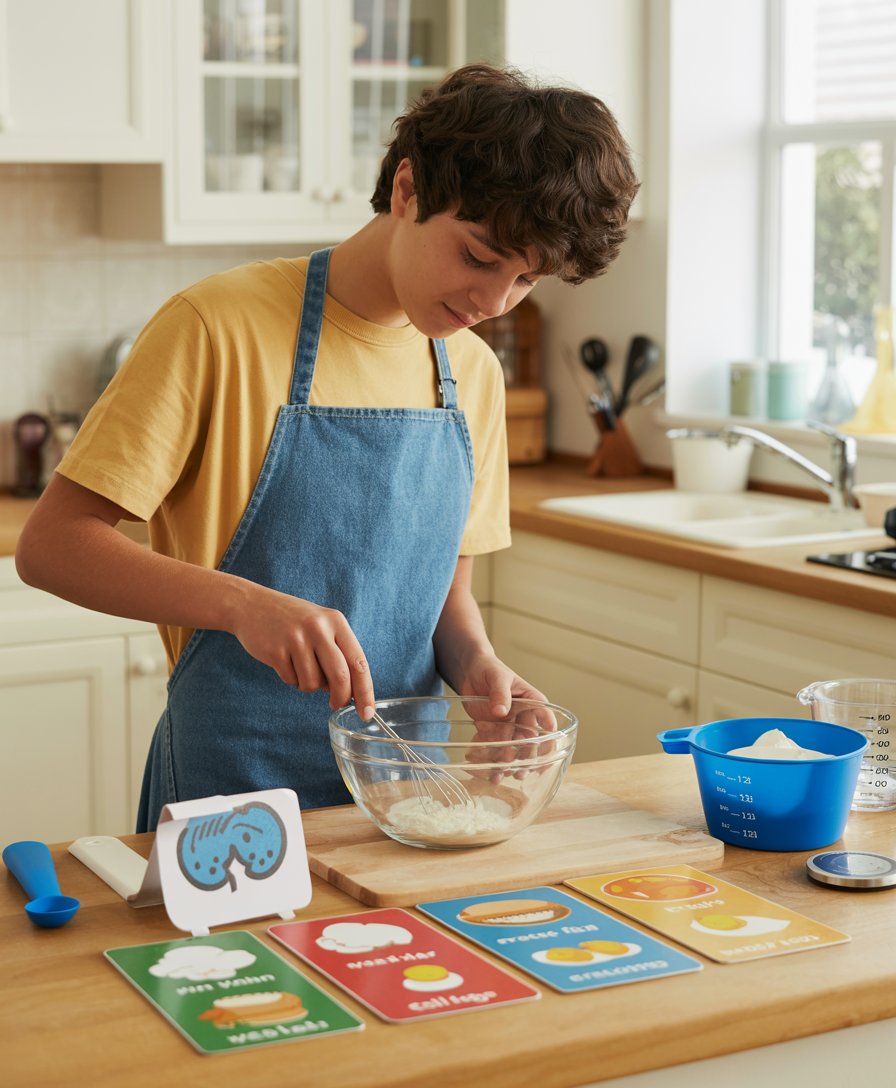
More Functional Life Skills Resources
Frequently Asked Questions
What to Do This Week
A functional life skills curriculum does not have to be built from scratch or purchased as a complete commercial package. Start with what matters most for your specific students, right now:- Audit your current IEP goals against the six core units. Which domain has the least coverage? That is your first priority.
- Identify one daily embedded opportunity for a target skill you are already teaching. Move practice out of the isolated lesson block and into a real routine.
- Review your visual supports and build a fading plan for any support that has been in place for more than 60 school days without a progress checkpoint.
- Send one “generalization note” home this Friday. One paragraph, one skill, one family routine. That loop-in is more powerful than any worksheet.
- Collect one day of prompt-level data on your highest-priority skill target. Thirty seconds. You need it for the IEP, and it will tell you immediately whether your current approach is working.
Centers for Disease Control and Prevention (CDC). Data and Statistics on Autism Spectrum Disorder: ADDM Network, 2022 Data. Published April 2025. cdc.gov/autism
National Institute of Mental Health (NIMH). Autism Spectrum Disorder: Prevalence Statistics. Updated 2025. nimh.nih.gov
Leaf, J. B., et al. Meaningful Curriculum and Functional Intervention for Adults with Autism. Springer, 2024. SpringerLink
Bateman, K. J., et al. Visual Supports to Increase Conversation Engagement for Preschoolers with ASD During Mealtimes. Journal of Early Intervention, 2023. PMC11527399. PMC
Gonçalves, R., et al. Teaching Communication and Functional Life Skills in Children Diagnosed with Autism Spectrum Disorder. Behavioral Sciences, 15(2), 198. 2025. PMC
Falligant, J. M., et al. Life Skills Evaluation in a Kindergarten Special Education Classroom. PMC12689243. PMC
Pierce, K. L., & Schreibman, L. Teaching Daily Living Skills to Children with Autism in Unsupervised Settings through Pictorial Self-Management. PMC1297828. PMC